21.09.2026
Can I Rent a Car in Poland With a Digital Driving License?
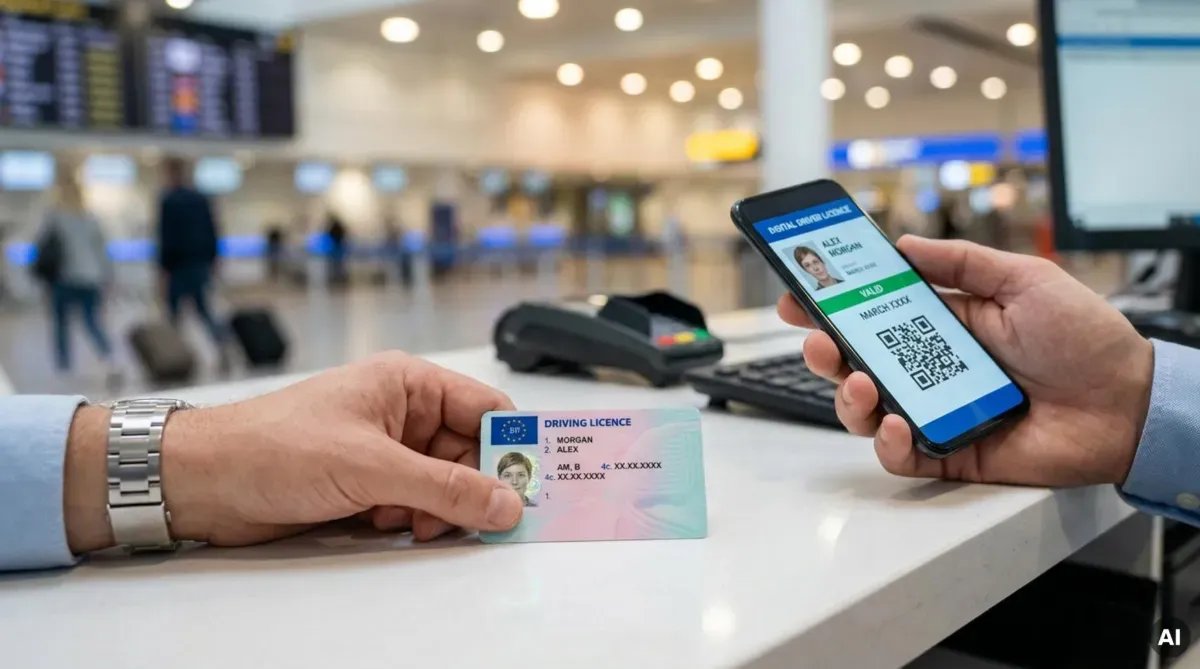
Can you rent a car in Poland with a digital driving license? No, car rental companies in Poland require your original, physical driving license card at vehicle pickup.
Polish rental agreements and fleet insurance policies mandate a physical inspection of security features on the card, meaning a mobile app or digital image won't be accepted to release the vehicle.
Can You Rent a Car in Poland With a Digital Driving License?
Car rental companies throughout Poland don't accept a mobile or digital driving license as a standalone document. Whether you're picking up at an airport location like Warsaw Chopin or a city branch in Wrocław, rental agents must follow strict operational and insurance guidelines. These policies require hands-on verification of physical security features that simply can't be checked on a smartphone screen.
While digital identity services are expanding across Europe, rental operators remain cautious. Vehicle theft, identity fraud, and rejected insurance claims present significant operational risks. If you want a smooth journey without unexpected hurdles at the counter, packing your government-issued physical license card is an absolute necessity.
A Digital Driving License Usually Does Not Replace the Original Physical License
A license displayed on a mobile screen lacks the tactile and physical security elements rental staff are trained to verify. Modern physical licenses feature microprinting, raised surfaces, ultraviolet ink, and holograms. Smartphone screens and digital wallets can't replicate these elements for manual inspection, nor do they interface directly with international law-enforcement databases during desk verification.
Standard car rental terms in Poland clearly outline identification requirements. Under transparent rental terms, both the primary driver and any additional driver must provide an original, valid physical license card. If you can't present the physical card when collecting your vehicle, you won't meet the pickup criteria, and the branch will have to cancel the reservation.
When a Digital License May Be Accepted as a Supplementary Document
In certain scenarios, a digital credential can serve as helpful supplementary documentation. Some rental providers offer online check-in or pre-registration through mobile platforms, allowing you to upload license details ahead of time to accelerate desk collection.
However, this digital pre-check doesn't replace the in-person inspection. You'll still need to hand over your original card at the counter before receiving the keys. A digital version might help clarify a worn digit on a physical card or confirm a residential address, but it functions only as a supporting record, never as the primary legal document.
[Check required rental documents]
Which Driving Licenses Are Accepted in Poland?
Poland recognizes various foreign driving licenses based on international agreements and European Union regulations. Acceptance depends on the issuing country, the script used on the card, and your duration of stay. Knowing the rules before you travel helps you choose your vehicle and start your journey with complete confidence.
Short-term visitors and tourists can drive legally in Poland using an eligible foreign license for up to 180 days after arrival. If you establish long-term residency beyond six months, you'll generally need to exchange your foreign permit for a Polish license. For short-term rentals, your document must meet specific international formatting standards.
Valid EU and EEA Driving Licenses
If your license was issued by a European Union (EU) or European Economic Area (EEA) country, the rental process is straightforward. Under reciprocal EU frameworks, member-state licenses are fully recognized across borders without requiring certified translations or additional permits.
Whether your license originates from Germany, France, Italy, or Norway, rental desks will accept it, provided it remains valid throughout your entire rental period. The card must be intact, legible, and display the appropriate category-typically Category B for standard passenger cars and SUVs.
Non-EU Driving Licenses With Latin Characters
Travelers from non-EU nations such as the United States, the United Kingdom, Canada, and Australia typically hold licenses printed in the Latin alphabet. Under the Vienna Convention on Road Traffic, these licenses are generally valid for driving in Poland if they contain standardized data fields.
Even so, individual car rental policies can be more restrictive than statutory road regulations. While traffic police might accept a US state plastic license during a routine check, certain rental providers mandate an International Driving Permit (IDP) alongside non-EU licenses as a condition of their fleet insurance coverage.
Licenses That Require an International Driving Permit
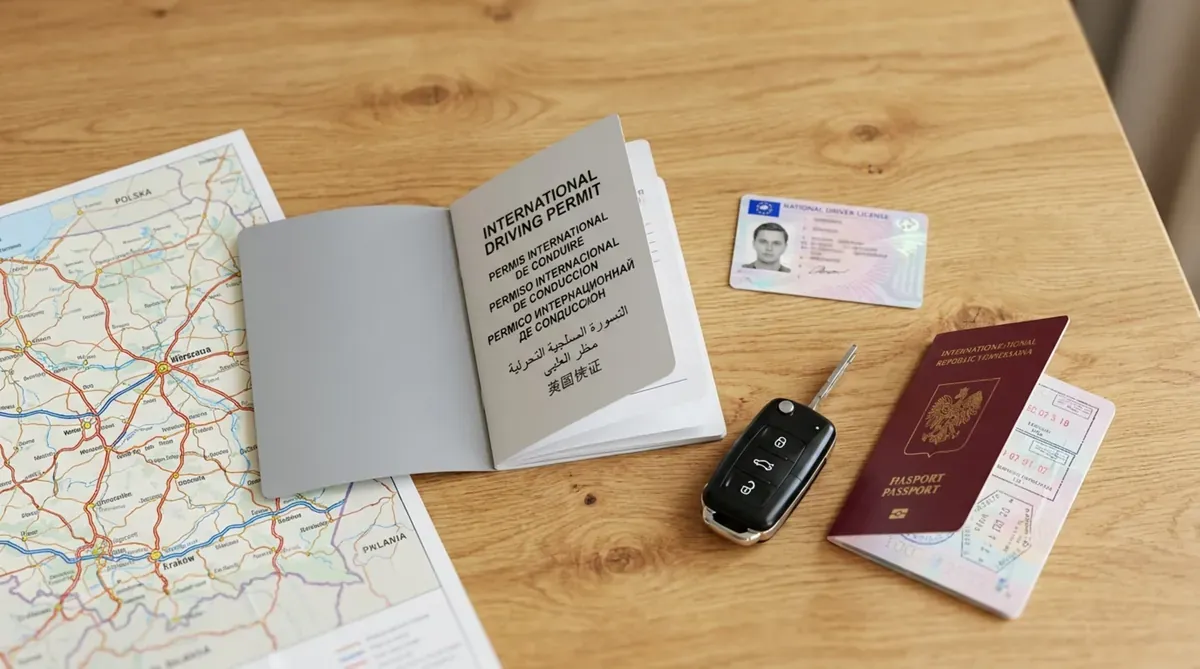
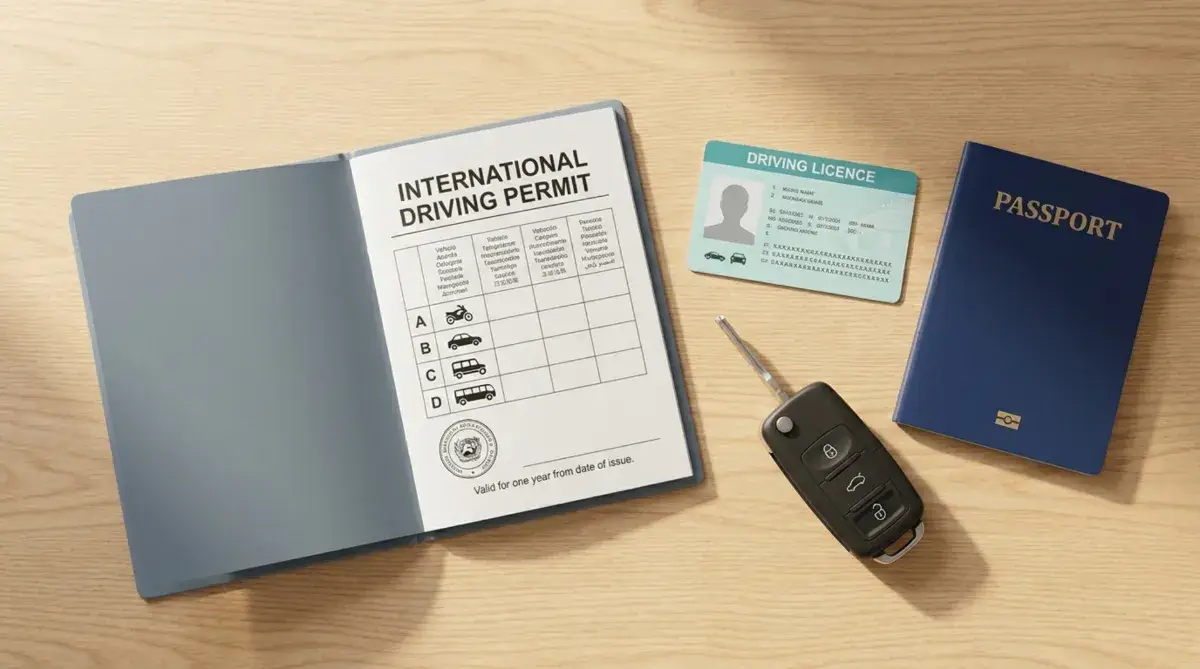
If your domestic driving license uses a non-Latin script-such as Arabic, Cyrillic, Chinese, Japanese, or Hebrew-it isn't valid on Polish roads on its own. You must accompany it with an International Driving Permit. Rental staff and law enforcement officers must be able to read and verify your identification details and category entitlements directly.
While a certified sworn translation into Polish can occasionally fulfill statutory traffic obligations, rental companies strongly prefer the standardized layout of an IDP booklet. Presenting a non-Latin license without an IDP will result in an immediate refusal at the pickup desk.
What Documents Do You Need to Rent a Car in Poland?
Picking up a rental vehicle in Poland requires specific documentation to establish your rental agreement. Preparing these items in advance ensures a swift, convenient booking experience, especially after landing at busy transport hubs like Kraków, Gdańsk, or Katowice.
All documents must match the primary renter named on the booking. If you plan to add an additional driver, that person must also be physically present at the desk to submit their original documentation.
Original Driving License and Passport or National Identity Card
Your primary driving document must be an unexpired, original physical license. Most car rental categories require drivers to have held their license for at least one full year, while premium car rental options or larger vans may require two to three years of driving experience. Paper learner permits, photocopies, and digital wallet passes aren't accepted.
You must also show official photographic proof of identity. EU citizens can present a valid national ID card, while travelers from outside the EU must present an unexpired passport. The full name across all documents must match exactly.
Payment Card, Rental Deposit, and Proof of Booking
A physical payment card in the main driver's name is required to cover the rental charge and security deposit. Most providers require a credit card to place a pre-authorization hold, which protects against unpaid tolls, fuel shortfalls, or accidental damage.
Some companies allow debit cards for select vehicle categories, often requiring higher coverage options to minimize excess liability. You should also present your booking confirmation, either printed or on your phone, detailing your rental period, reserved vehicle class, and pre-selected add-ons.
Additional Documents for Young Drivers and Long-Term Stays
Drivers under 25 may face specific criteria depending on the provider's terms. Companies frequently apply a standard young-driver surcharge and may limit rentals to compact or mid-size categories. Similarly, senior drivers over 70 should check the supplier's terms for any specific experience requirements.
If you're visiting Poland for medium-term car rental or extended business travel, keep your entry documentation accessible. Border stamps or visa records may be requested to verify that you haven't exceeded the 180-day driving limit on your home-country license.
Do You Need an International Driving Permit in Poland?
Whether you need an International Driving Permit in Poland depends on two factors: Polish statutory traffic law and your rental company's terms. While the law permits certain foreign licenses to be used independently, rental terms often enforce stricter requirements to satisfy insurance regulations.
An IDP acts as an internationally recognized translation of your domestic driving license. It doesn't replace your domestic permit; rather, it functions as a companion document standardized under United Nations conventions.
When an IDP Is Recommended or Legally Required
An IDP is legally mandatory if your domestic license doesn't originate from an EU/EEA state and isn't compliant with the 1968 Vienna Convention standards, or if it's printed in a non-Latin script. Without it, you cannot legally drive in Poland.
For visitors from the US, Canada, or Australia, carrying an IDP alongside your physical card is strongly advised. Many rental companies require an IDP for all non-European license holders as part of their rental conditions. Arriving without one can prevent you from collecting your vehicle.
Which IDP Convention May Apply to Your Home-Country License
International driving permits fall under two main conventions: the 1949 Geneva Convention and the 1968 Vienna Convention. Poland is a signatory to both, but primarily operates under the 1968 framework.
The 1968 convention booklet includes standard multi-language translations and remains valid for up to three years, or until your domestic license expires. Make sure the motoring organization in your home country issues a version recognized under the 1968 treaty to ensure full validity across Poland and Central Europe.
Why an IDP Must Accompany Your Valid Physical License
An IDP holds no standalone legal authority. It's strictly a verified translation of your primary driving permit. Presenting an IDP on its own without your underlying plastic license is invalid.
Both at the rental counter and during roadside inspections by the Polish police (Policja), you must show both the physical national license card and the physical IDP booklet. Presenting one without the other invalidates your driving privileges.
How To Obtain an IDP Before Traveling
You must secure an IDP in your country of residence before departing for Poland. Neither the Polish government, foreign embassies, nor local car rental desks can issue an IDP for a foreign license once you've arrived.
In the US, legitimate permits are issued exclusively by the American Automobile Association (AAA). In the UK, they're obtained through designated Post Office branches, and in Canada via the Canadian Automobile Association (CAA). Be cautious of unauthorized online vendors selling unofficial "digital international driver's permits" or PDF downloads; these are not legally recognized and will be rejected at the counter.
How Rental Companies Verify Digital Driving Licenses
Travelers often wonder why rental desks can't simply scan a state-issued digital ID from a smartphone. The core challenge stems from differing cross-border technical standards and operational liability. Car rental providers manage valuable modern fleets, and cross-border verification software for domestic apps isn't universally integrated across commercial rental platforms.
Rental companies carry direct responsibility for the vehicles they hand over. Handing over a modern car without physically verifying identity and licensing creates substantial fraud and insurance risks. As a result, physical checks remain the operational standard.
Why Airport and Local Rental Desks May Apply Different Rules
Verification workflows can vary slightly by location. High-volume airport desks at Warsaw Chopin, Kraków Airport, or Gdańsk Lech Wałęsa handle substantial international travel volume and utilize specialized document scanners to read machine-readable security bands on physical cards.
Downtown or regional branches may rely on manual visual checks using standardized verification manuals. However, neither airport hubs nor regional offices have systems to validate unverified foreign phone apps. Company software generally blocks rental agreement generation without entering verified physical document parameters.
What To Confirm With the Rental Company Before Pickup
Before your trip, review the rental terms included with your booking. Reputable mobility providers outline all required identification, licensing, and payment standards clearly within their rental policies.
If you have any doubts regarding your specific documents, contact customer support or the pickup branch directly ahead of travel. Requesting clear written confirmation ensures you arrive with the exact paperwork needed for an easy collection process.
What Happens if the Desk Rejects Your Digital License
If you arrive at the counter carrying only a mobile license, the representative will refuse to release the vehicle. The booking will typically be marked as a failed document verification or customer no-show.
Because presenting appropriate identification is the customer's contractual responsibility, prepaid booking fees may not be refundable under standard terms. Other rental desks at the terminal will apply the same physical card requirement, potentially forcing you to rely on public transportation for your trip.
Driving Rules and Legal Risks for Foreign Renters in Poland
Driving through Poland gives you the freedom to travel across diverse regions, from the northern Baltic coastline to the southern mountain passes of the Tatras. However, renting a reliable vehicle also requires following Polish traffic regulations, which are strictly enforced through high-density traffic cameras and frequent police patrols.
Poland's highway infrastructure features modern expressways and motorways. Complying with local driving laws protects you from substantial fines and keeps your journey safe and stress-free.
Carry Required Documents During Every Journey
Polish law requires drivers to carry essential documentation at all times. This includes your valid physical driving license, an IDP (if required), and your passport or national ID card. Additionally, you must carry the vehicle registration card (dowód rejestracyjny) and proof of valid third-party liability insurance (ubezpieczenie OC).
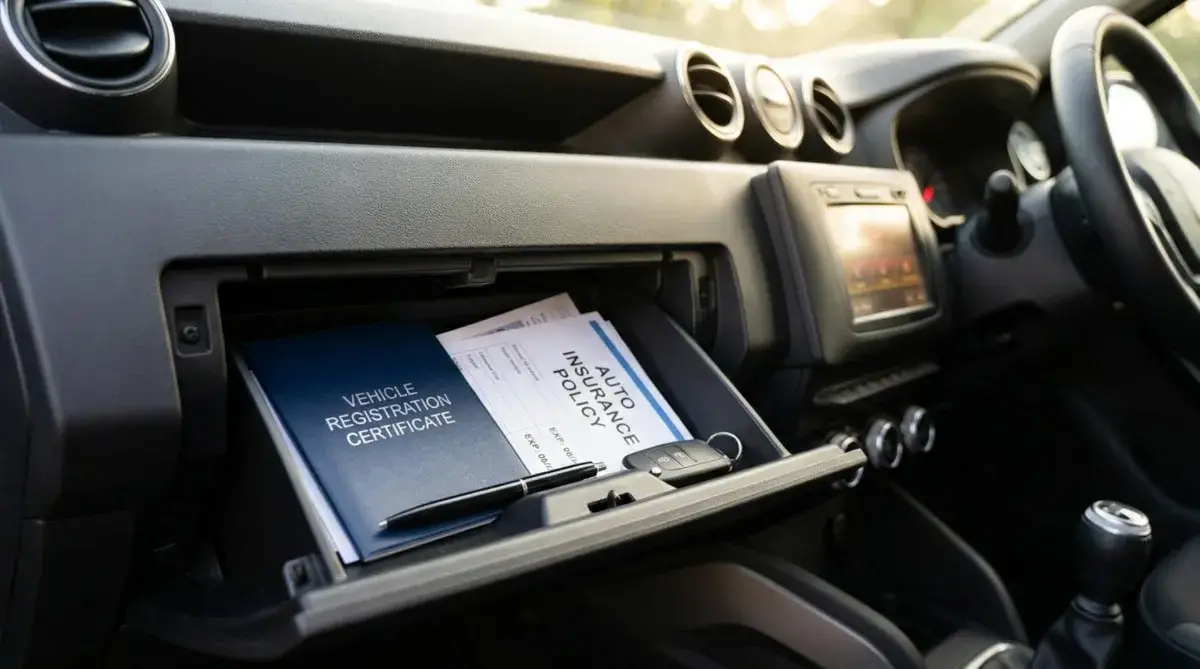
When you rent a car, the rental agent provides the vehicle registration certificate and insurance documents, which are typically stored inside the glove compartment. Always confirm these papers are in the car before leaving the rental lot, as officers will ask for them during any traffic check.
Fines, Insurance Problems, and Rental Liability for Unauthorized Driving
Operating a vehicle without recognized physical documentation carries severe penalties under Polish traffic law. You may be classified as driving without authorization, which leads to heavy administrative fines that non-resident foreign drivers must settle immediately on the spot.
More critically, unauthorized driving directly undermines your rental insurance. If you're involved in an incident without an accepted physical license, your Collision Damage Waiver (CDW) and supplemental protection can be rendered void. In that scenario, you become personally liable for vehicle repair costs, third-party damages, and associated medical expenses.
Traffic Rule / Parameter | Standard Limit in Poland | Main Legal Risk or Penalty |
Blood Alcohol Content (BAC) | 0.02% (0.2 mg/ml) | Exceeding 0.02% results in severe fines and license confiscation. Above 0.05% constitutes a criminal offense carrying up to 2 years' imprisonment. |
Urban Speed Limits | 50 km/h (unless posted otherwise) | Monitored heavily by automated speed traps. Exceeding the urban limit by more than 50 km/h incurs an immediate 3-month driving ban. |
Expressways & Motorways | 100-120 km/h (Expressways) / 140 km/h (Motorways) | Automated section-control cameras enforce limits. Fines are billed directly to the rental agency, which forwards the charges alongside standard processing fees. |
Mobile Phone Use | Hands-free systems only | Holding a smartphone while driving is strictly prohibited. You must use Bluetooth connectivity or a built-in vehicle system. |
Headlights | Mandatory 24/7 year-round | Dipped headlights or automatic daytime running lights must be illuminated at all times, day and night. |
Does a Digital License Work for Police Checks, Insurance, and Border Crossings?
Your driving license serves critical functions beyond the rental desk. While traveling, you may need to present your documents to traffic police, border guards, or insurance adjusters. In each of these situations, a foreign digital license is not recognized as a substitute for your physical credentials.
Polish authorities enforce document standards strictly. Displaying a smartphone credential during an accident investigation or roadside stop can lead to citations, vehicle impoundment, or unnecessary delays.
Why Insurance Providers May Require Original Documents
If your rental vehicle is involved in an accident, incurs hail damage, or experiences mechanical failure resulting from an incident, a formal insurance report must be filed. Fleet insurers adhere to rigorous claims verification processes. To validate coverage, they require recorded verification of the original physical license presented at contract signing.
If an insurer determines that a vehicle was released without compliant physical documentation, they can deny the claim entirely. This leaves the customer liable for the total repair or replacement value. Carrying your physical card prevents costly liabilities and protects your travel plans.
Additional Documents for Crossing From Poland Into Another Country
Poland's central location makes it an ideal base for road trips into neighboring countries like Germany, the Czech Republic, or Slovakia. While internal Schengen borders don't typically have static checkpoints, authorities frequently run spot-checks along transit corridors such as the A2 and A4 motorways.
If you plan to drive outside Poland, secure cross-border authorization from your rental provider beforehand. During a roadside check in another country, you'll need to show your passport, cross-border permit, vehicle registration, and your physical driving license. Stricter protocols apply near Poland's eastern external borders, where proper physical documentation is monitored closely.