
14.09.2026
Driving the Trail of the Eagles' Nests - Castles Near Krakow
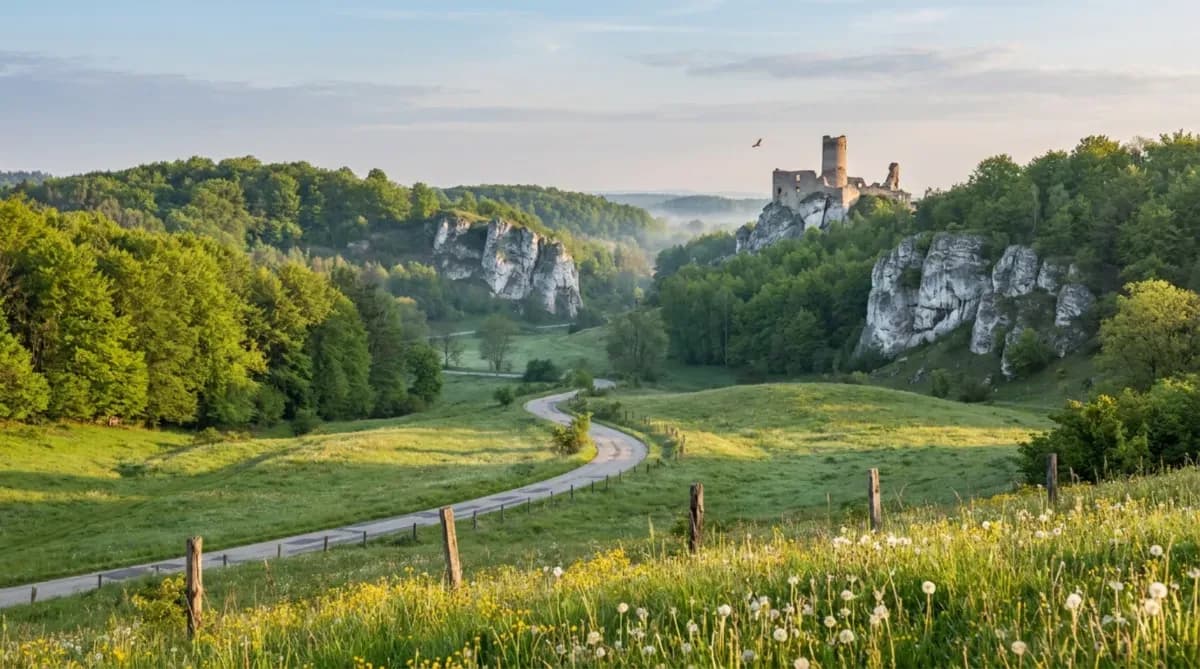
What is the best way to explore the Trail of the Eagles' Nests from Krakow? Traveling this 160-kilometer route by car gives you the freedom to travel at your own pace, connecting over a dozen medieval fortresses, dramatic limestone valleys, and quiet rural landscapes in a single weekend.
Driving the Trail of the Eagles' Nests from Krakow
What Is the Eagles' Nests Trail?
The Trail of the Eagles' Nests (Szlak Orlich Gniazd) is a marked cultural and geographic route across the Krakow-Częstochowa Upland (Jura Krakowsko-Częstochowska). Originally mapped as a long-distance red hiking trail, it's evolved into one of Central Europe's most rewarding driving routes. The trail stretches across roughly 160 kilometers, tracing a protective line of 14th-century watchtowers and royal strongholds commissioned by King Casimir III the Great.
The name isn't just poetic-it accurately describes the defensive design. Medieval engineers positioned each fortress atop jagged limestone pinnacles rising high above the surrounding forests. Viewed from a distance, the weathered stone walls seem to emerge naturally from the pale cliffs, resembling birds of prey perched in their aeries. Touring by car allows you to easily connect the major fortresses with remote ruins tucked away along rural backroads.
Why Medieval Castles Were Built on the Jura's Limestone Rocks
In the 14th century, Poland faced persistent geopolitical pressure along its western frontier. Bohemia controlled Silesia, placing a rival border just tens of kilometers from Krakow, the royal seat. To counter this threat, King Casimir the Great established a defensive perimeter to protect the capital and secure vital merchant routes extending toward Wielkopolska and the Baltic coast.
The Jura's natural karst topography provided exceptional defensive benefits. Instead of excavating deep ground-level foundations, masons anchored towers directly into the bedrock. Sheer drop-offs surrounded the perimeters, neutralizing heavy siege equipment. These elevated positions also served as an early warning network; garrisons used horn signals and signal fires to alert neighboring strongholds within minutes of approaching threats.
How the Krakow-Częstochowa Route Connects Castles, Ruins, and Landscapes
As you leave the Vistula River basin, the driving route ascends onto a dramatic karst plateau. The landscape transitions between wooded gorges, exposed limestone bluffs, and sweeping farmland, where chalk-white crags frequently frame the silhouette of a gatehouse or crumbling tower.
This trip stands out because architecture and nature are tightly interwoven. You aren't just driving between traditional museums. The road winds through scenic river canyons like the Prądnik Valley, climbs ridge lines with panoramic views, and cuts through tranquil hamlets preserving historic regional timber architecture.
Planning the Castle Road Trip Near Krakow
Should You Drive the Entire Trail or Choose Selected Castles?
Your ideal itinerary depends on how much time you have and your personal travel style. Completing the entire route from Krakow to Częstochowa reveals the complete historical story of Poland's defensive frontier, concluding at the Jasna Góra fortress complex. This full journey works exceptionally well for photographers, history enthusiasts, and travelers who enjoy open road touring.
If you're operating on a tighter schedule or traveling with young children, focusing on a curated selection of highlights is often the best approach. The southern cluster-featuring Ojców National Park, Pieskowa Skała, and Ogrodzieniec-delivers the trail's most dramatic scenery without requiring long stretches behind the wheel. Choosing three or four key stops leaves plenty of time for leisurely lunches, museum visits, and quiet walks through the valley.
How Many Days Do You Need for the Driving Route?
Planning for two to three days gives you ample time for comfortable travel without feeling rushed. On a standard weekend schedule, you can spend your first morning exploring Ojców, tour Pieskowa Skała by midday, wander the sprawling ruins of Ogrodzieniec in the afternoon, and stay overnight near Zawiercie or Bobolice. Day two lets you discover the northern strongholds-Mirów, Olsztyn, and the historic sanctuaries of Częstochowa-before returning south or continuing your journey across Poland.
A single-day excursion from Krakow is also practical if you focus on the southern section within a 45-minute drive of the city. While one day offers a great introduction to the Jura's castles, an extra day or two gives you the breathing room to hike trails, visit caves, and explore hidden ruins off the main tourist track.
A Practical 5-Stage Itinerary from Krakow to Częstochowa
We recommend dividing the drive into five manageable stages to keep your journey organized and smooth:
Stage 1: Krakow to the Prądnik Valley. Depart Krakow via national road 94 into Ojców National Park to visit the ruins of Ojców Castle and admire the limestone ravines.
Stage 2: Ojców to Pieskowa Skała and Rabsztyn. Take regional road 773 through the park to the Renaissance courtyard at Pieskowa Skała, then branch northwest toward Olkusz to inspect Rabsztyn's restored drawbridge.
Stage 3: The Heart of the Jura (Podzamcze). Head northeast to Ogrodzieniec Castle in Podzamcze, the largest defensive complex along the trail.
Stage 4: The Twin Fortresses of Mirów and Bobolice. Move into the central uplands, where two prominent castles sit along an exposed limestone ridge connected by an easy walking path.
Stage 5: The Northern Frontier and Olsztyn. Head north through rolling country toward the towering cylindrical keep of Olsztyn Castle, finishing your drive in Częstochowa.
This structure balances driving time with outdoor exploration. Stops within each stage are generally under 45 minutes apart, meaning you'll spend more time walking through historic courtyards and viewpoints than sitting in traffic.
What to Expect from Roads, Parking, and Driving Times
Most roads along the Trail of the Eagles' Nests consist of paved regional highways (drogi wojewódzkie) and quiet municipal routes. Road surfaces are generally well-kept, though rural sections can be narrow with sharp curves and deep roadside ditches. Typical driving speeds range between 50 and 70 km/h, which is great for sightseeing, though agricultural machinery may occasionally slow your progress.
Primary attractions like Ogrodzieniec, Pieskowa Skała, and Bobolice provide designated gravel or paved parking lots. Most lots charge a modest parking fee, payable via cash or contactless card. During peak summer weekends, these areas fill quickly, so getting an early start or planning visits for late afternoon will help you secure convenient parking and avoid lines.
Castles and Ruins to Visit Between Krakow and Ojców
Wawel Royal Castle as a Krakow Starting Point
Starting your journey at Wawel Royal Castle in Krakow provides valuable historical perspective. As the ancient seat of Polish monarchs, Wawel was the vital political center that the entire defensive network in the Jura was designed to shield. Its grand brick bastions along the Vistula River represent the crown wealth and authority that justified constructing such extensive northern defenses.
Before hitting the road, step into Wawel's arcaded Italian Renaissance courtyard. Experiencing the refinement of royal court architecture highlights the sharp contrast with the rugged, purely utilitarian garrison fortresses you're about to explore among the limestone crags.
Ojców Castle and Ojców National Park
Just 30 minutes north of Krakow lies Ojców National Park. While it's Poland's smallest national park, it boasts remarkable biological and geological diversity. The remnants of Ojców Castle rest on a steep cliff commanding the Prądnik Valley. King Casimir the Great established the stronghold, naming it Ociec ("Father") to honor his father, King Władysław the Elbow-high.
Visitors enter through a restored octagonal brick watchtower and timber gatehouse. From the surviving parapets, you'll look out across dense beech and hornbeam woods punctuated by brilliant white rock pillars. It's a picturesque starting point that introduces the region's unique geography.
Pieskowa Skała Castle and the Hercules' Club Rock
Continuing north along the Prądnik canyon brings you to Pieskowa Skała, one of the best-preserved architectural sites on the trail. In the late 16th century, the noble Szafraniec family transformed what was a austere Gothic outpost into an elegant Renaissance palace, complete with an open loggia and an arcaded courtyard.
Directly below the castle terraces stands the iconic Hercules' Club (Maczuga Herkulesa), an isolated 30-meter limestone monolith that looks as if it's balancing upside down on its narrow base. The combination of manicured castle walls and this geological landmark makes it one of southern Poland's most recognizable views.
Rabsztyn Castle and Its Limestone Hilltop
Situated near the historic mining town of Olkusz, west of the main park route, Rabsztyn Castle takes its name from the German term Rabenstein ("Raven's Rock"). This hilltop stronghold evolved from a rugged Gothic outpost into an ornate Renaissance residence before falling victim to Swedish forces during the Deluge of 1657.
Extensive archaeological work has revitalized the site. Today, you can cross a reconstructed timber drawbridge over the dry defensive moat, climb the upper observation tower for wide views across the Olkusz forests, and walk through vaulted cellars that once stored armaments and supplies for royal garrisons.
The Most Impressive Castles in the Central Jura
Ogrodzieniec Castle Ruins in Podzamcze
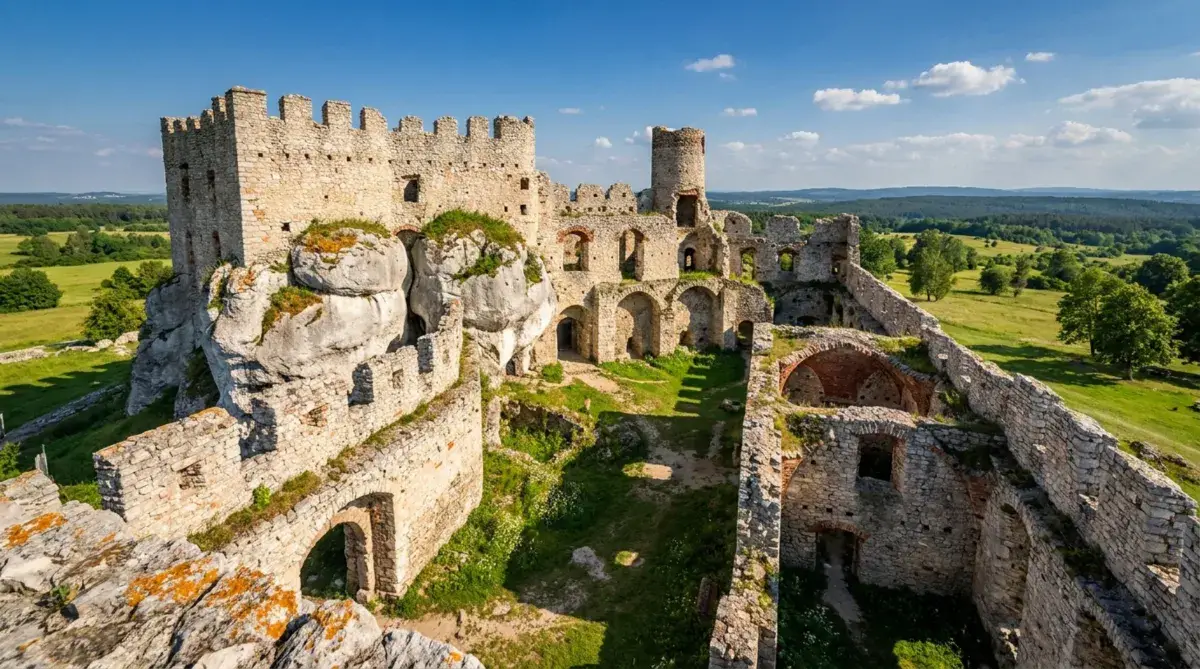
Ogrodzieniec Castle is the undisputed crown jewel of the trail. Perched atop Mount Janowski-the Jura's highest elevation at 515 meters above sea level-this vast defensive network showcases medieval construction at its best. The fortress walls, battlements, and bastions are built directly into the limestone labyrinth, making it difficult to distinguish natural cliff from masoned stone.
The prominent Boner family later expanded the property into a lavish private estate known locally as the "Little Wawel." Even as an unroofed ruin, its scale is stunning. You can wander extensive courtyards, navigate narrow stairwells leading to high viewing decks, visit historical torture chambers, and walk along perimeter walls featured in numerous film and fantasy productions.
Bąkowiec Castle in Zawiercie
Located in the settlement of Morsko near Zawiercie, Bąkowiec Castle caters to travelers seeking raw, unpolished ruins. The surviving masonry wraps around a steep conical limestone outcrop surrounded by dense pine woods. Dating to the 14th century, it served as a classic knight's watchtower designed to deter small detachments of infantry.
While the interior structure remains closed to protect visitor safety, the perimeter trail provides exceptional photo opportunities. Inspecting the base reveals how medieval builders cut beam pockets directly into bedrock, using local limestone mortar to extend the cliff face upward into fortified walls.
Mirów Castle and Its Restored Medieval Character
A short drive eastward leads to Mirów Castle, a site straight out of medieval folklore. Featuring a narrow residential stone keep overlooking open rolling meadows, Mirów spent centuries as an exposed, romantic ruin vulnerable to the elements.
Carefully managed preservation work has stabilized the surviving masonry while maintaining its authentic, weathered character. Rather than building a modern reproduction, conservators reinforced loose mortar and left the original Gothic stonework intact, preserving its timeless silhouette on the ridge.
Bobolice Castle and the Lady Within Its Walls
Just two kilometers from Mirów, Bobolice Castle offers a completely different experience. Left in ruins after the 17th-century Swedish wars, the site was meticulously reconstructed in the early 2000s by private owners utilizing archival blueprints and traditional masonry techniques.
Today, Bobolice operates as a fully functioning medieval fortress, equipped with drawbridges, timber portcullises, and exhibition rooms showcasing historical arms and period furniture. It also carries local folklore: the resident ghost, known as the White Lady, is said to haunt the parapets on moonlit nights following a bitter dispute between the noble brothers of Mirów and Bobolice.
Final Stops on the Eagles' Nests Trail
Olsztyn Castle Ruins Near Częstochowa
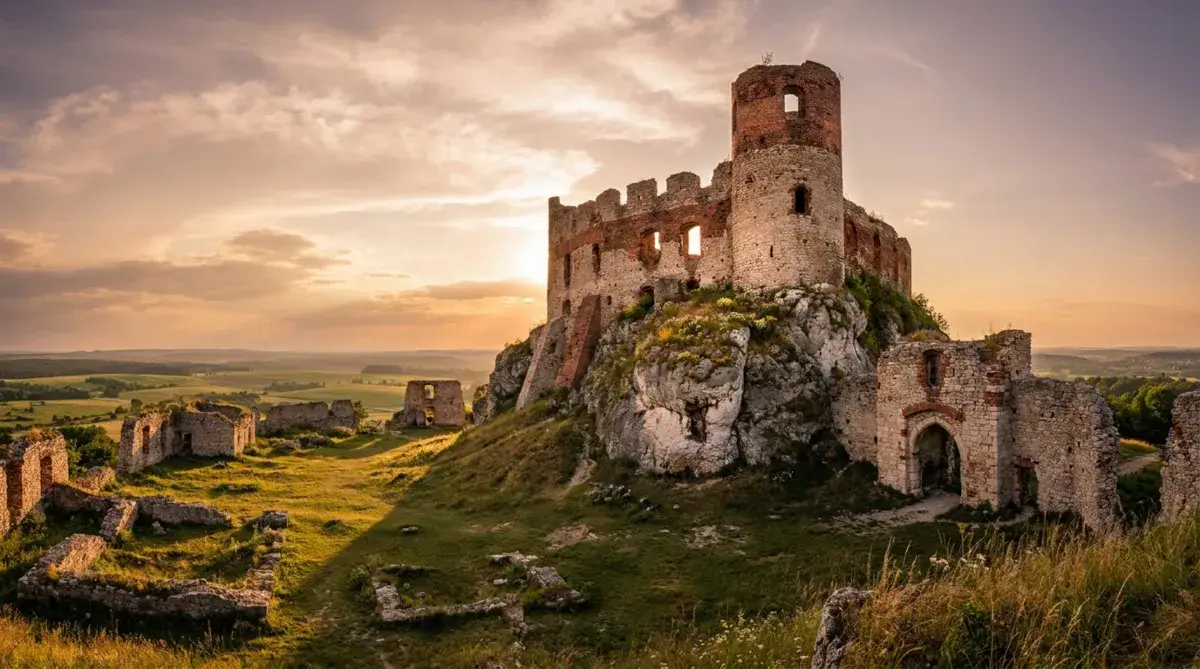
Marking the northern end of the upland, the sprawling ruins of Olsztyn Castle dominate the surrounding plains. Situated on a massive limestone hill, its defining feature is a towering cylindrical keep built of mixed brick and limestone. This tower served as a final defensive refuge and a high-security dungeon; its most famous prisoner, nobleman Maciej Borkowic, died here after rebelling against King Casimir the Great in 1360.
The grounds feature expansive lower wards, collapsed gatehouses, and karst caves running beneath the foundation. Climbing up to the primary tower provides sweeping views across the northern Jura toward Częstochowa. In the late afternoon, the pale stone takes on a warm golden hue, making Olsztyn an exceptional sunset stop.
Jasna Góra Stronghold and Monastery
The northern terminus of the Trail of the Eagles' Nests is Jasna Góra in Częstochowa. Globally celebrated as Poland's premier spiritual shrine and home to the venerated Black Madonna icon, it's also a formidable four-pointed bastion fortress deeply tied to national defense.
During the Deluge in 1655, a modest garrison of Polish soldiers and Pauline monks successfully repelled weeks of heavy siege operations by Swedish troops, inspiring a nationwide resistance movement. Walking along the massive brick ramparts, inspecting historical artillery pieces, and touring the Baroque basilica provides a powerful conclusion to this historical road trip.
Walking, Sightseeing, and Activities Along the Route
Limestone Cliffs, Caves, and Jura Landscapes
While a car offers the easiest way to travel between distant sites, exploring on foot lets you truly appreciate the region's natural beauty. Over millennia, water erosion carved through the soft limestone, producing thousands of caves, sinkholes, and vertical rock formations. Caves like Dark Cave (Jaskinia Ciemna) and Łokietek's Cave (Jaskinia Łokietka) in Ojców open up underground chambers rich in prehistoric archaeology and regional legend.
Above ground, rock climbing enthusiasts gather at vertical bluffs near Podlesice and Rzędkowice. You don't need technical climbing gear to appreciate them; walking along the base of these stark white pillars rising from green meadows is one of the trail's highlights.
Short Walks Around Ojców, Pieskowa Skała, and Ogrodzieniec
You can easily pair short, rewarding walks with your castle stops. In Ojców National Park, park in the valley and take the 40-minute trail down the gorge toward the Krakow Gate (Brama Krakowska), an impressive natural rock archway surrounded by woodlands and mountain streams.
At Ogrodzieniec, follow marked footpaths weaving through the Skalny Mur (Rock Wall) behind the ruins. Towering limestone boulders create natural labyrinths and concealed corridors, offering a quick 30-minute side walk that steps away from the main crowds and provides alternative angles of the western ramparts.
The Mirów-Bobolice Trail on Foot
The ridge walk connecting Mirów and Bobolice stands out as one of the best pedestrian stretches in the uplands. Extending roughly two kilometers across the exposed Grzęda Mirowska (Mirów Ridge), most hikers complete the route in 30 to 40 minutes at a comfortable pace.
The trail crosses open terrain filled with wildflowers, low brush, and weathered rock formations. As you walk, one fortress stands ahead while the other recedes behind you. It clearly demonstrates how closely linked these military stations were, allowing garrisons to coordinate defense across the highlands.
Where to Stop for Lunch During the Castle Drive
A full day of climbing battlements builds up an appetite, and the Jura serves up hearty regional cuisine. When in Ojców, try the local trout (Pstrąg Ojcowski), raised in natural spring water ponds since the 1930s and served freshly smoked or wood-grilled at valley food stands and bistros.
Along the central and northern stretches, traditional inns (karczmy) serve filling regional dishes. Look for prażonki-a classic Jura dish of sliced potatoes, smoked bacon, sausage, and onions slow-cooked over wood embers in cast-iron cauldrons-along with scratch-made pierogi and forest mushroom soups. You'll find reliable dining spots clustered around the base of Bobolice Castle and within Podzamcze village near Ogrodzieniec.
When to Drive the Eagles' Nests Trail
Spring and Autumn for Mild Weather and Fewer Crowds
Late spring (May to June) and early autumn (September through mid-October) offer ideal conditions for this road trip. In May, meadows are vibrant green, wildflowers bloom across forest floors, and long daylight hours give you plenty of sightseeing time. Temperatures remain comfortable for hiking up steep stone stairwells and exploring exposed ridges.
Autumn paints the broadleaf canopies of Ojców in vibrant shades of gold, amber, and red. Crisp air keeps visibility sharp across long valley viewpoints, and summer crowds thin out significantly. Morning mist settling around the ruins adds an atmospheric quality to every stop.
Summer for Longer Days and Open Attractions
July and August bring extended opening hours, historical reenactments, and access to smaller exhibits that stay shuttered outside peak season. Over summer weekends, venues like Ogrodzieniec and Bobolice frequently host evening tours, medieval tournaments, and outdoor theater.
Keep in mind that summer also brings peak visitor traffic and midday heat. Unshaded stone courtyards can heat up quickly, so we recommend touring major castles in the early morning or late afternoon, reserving hot midday hours for relaxed indoor lunches or cool cave tours.
Winter Conditions Around Castle Ruins and Country Roads
Winter transforms the Jura into a quiet landscape of white limestone, snowbanks, and crisp skies. Seeing snow dusted across medieval watchtowers is remarkable, and you'll often have ruins entirely to yourself. However, traveling during winter requires extra preparation.
Rural secondary roads can turn icy quickly following snowfall, making a reliable vehicle equipped with proper winter tires essential for comfortable travel. Many castle interiors operate on reduced schedules or close entirely from November through March. In addition, outdoor masonry stairs and wooden bridges become slick when wet or frozen, so wear high-traction footwear and plan your days around early sunsets.
[Rent a car at Krakow Airport]
Practical Advice for a Safe Castle Road Trip
How to Check Opening Hours, Tickets, and Restoration Work
The fortresses along the trail are operated by various entities, including national park authorities, regional museums, local municipalities, and private owners. Consequently, operational calendars vary widely. Major destinations like Pieskowa Skała and Ogrodzieniec publish up-to-date seasonal schedules on their official websites, whereas smaller watchtowers might open only on select summer weekends.
We advise confirming operating details on official websites before heading out to remote sites. Ongoing conservation projects can temporarily close specific keeps, walkways, or towers. Advanced online booking is rarely necessary outside of major national holiday weekends, but confirming hours ensures you won't arrive to locked gates.
Where to Find Parking and Overnight Accommodation
The central Jura provides a broad selection of overnight accommodations, from renovated historic estates to cozy rural farmstays (agroturystyka). In Bobolice, you can even stay in a hotel situated directly within the castle complex. Comfortable hotels and wellness centers around Zawiercie and Podlesice also make great bases for hikers and climbers.
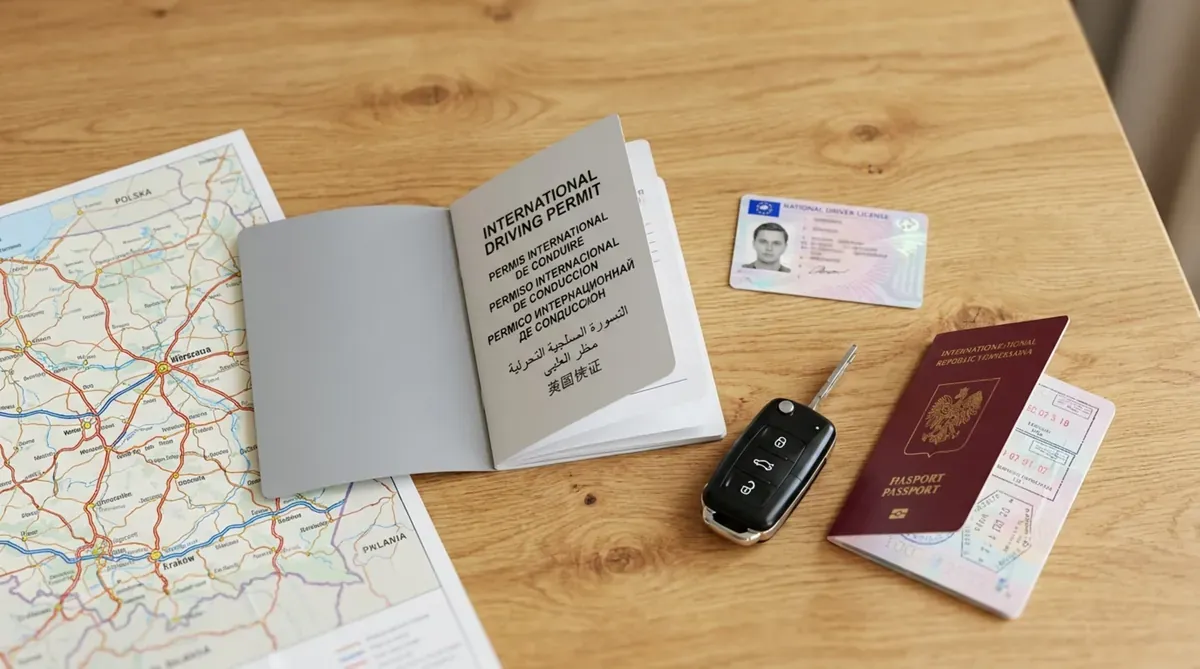
Always select lodging that includes secure on-site parking. When visiting castles, use designated parking lots, which are usually within a 5- to 10-minute walk of the main gates. Avoid leaving your vehicle on narrow road verges or blocking farm access roads, as local police strictly enforce parking regulations in these rural zones. If you've picked up a rental car for the trip, this is especially worth confirming before setting off each morning.
What to Pack for the Limestone Terrain
Exploring medieval fortifications requires practical gear suited for uneven, rocky terrain. Pack supportive walking shoes or light hiking boots with dependable rubber grip. Worn stone stairs, tree roots, and loose limestone chips make thin-soled or smooth footwear both uncomfortable and hazardous.
Bring a small daypack with drinking water, sun protection, and a light windproof shell. Strong winds often sweep across exposed hilltop towers, even on warm sunny days. If your itinerary includes underground stops like Łokietek's Cave, bring a warm mid-layer-subterranean temperatures stay around 7-8°C year-round.
How to Stay Safe on Steep Rocks and Uneven Ruins
Historic ruins feature uneven terrain that demands careful footwork. At extensive sites like Ogrodzieniec and Olsztyn, open masonry ledges overlook sheer vertical drops. While guardrails protect designated visitor walkways, always follow posted signs and stay behind perimeter ropes. Never climb over safety barriers or scale unsecured stone walls for a photo.
Wet limestone can become as slick as ice, especially after morning dew or a rain shower. Move deliberately on steep steps, hold onto available handrails, and keep a close eye on young travelers, who might be tempted to explore dark rock crevices or unguarded drops.
Useful Maps, Trail Information, and Local Travel Links
While digital navigation apps handle driving directions between towns reliably, mobile cellular reception can drop out in deeper limestone gorges and rural hollows. We recommend downloading offline maps of Lesser Poland and Silesia to your smartphone before leaving Krakow.
If you plan to hike trails between fortresses, pick up a printed topographical map published by Compass (look for their Jura Krakowsko-Częstochowska sheet). These maps clearly outline trail markers, cave entrances, viewing bluffs, and elevation changes. You can also pick up regional guides and trail updates at tourist offices in Ojców and Podzamcze.
Questions About Driving the Castles Near Krakow
How Far Is the Eagles' Nests Trail from Krakow?
The southern gateway to the trail sits right on Krakow's northern perimeter. Korzkiew Castle and the southern entrance to Ojców National Park are situated just 18 to 22 kilometers from central Krakow. Under standard traffic conditions, the drive takes around 30 to 40 minutes.
This proximity makes the southern cluster an effortless day-trip destination. You can comfortably explore historic river gorges and royal keeps during the day and return to Krakow in time for dinner in the Old Town.
Which Castle Is Closest to Krakow?
Korzkiew Castle is the closest fortress along the official route, sitting roughly 15 kilometers north of Krakow's historic center. This compact 14th-century knight's tower has been fully restored and today houses a boutique hotel, event venue, and private museum surrounded by quiet woods.
Ojców Castle is situated just past Korzkiew, roughly 22 kilometers from downtown Krakow. Its dramatic position above the Prądnik Valley and direct link to King Casimir the Great make it the traditional first stop for travelers heading north.
What Is the Prettiest Castle on the Eagles' Nests Trail?
Travelers usually debate between Pieskowa Skała and Ogrodzieniec for top honors. If you appreciate refined aristocratic architecture, manicured Renaissance courtyards, and scenic balance against natural rock pillars, Pieskowa Skała is hard to beat.
If you're drawn to sheer scale and dramatic ruin, Ogrodzieniec is the standout choice. Its weathered limestone ramparts merge seamlessly into Mount Janowski, presenting a raw, powerful picture of medieval frontier life.
Is the Eagles' Nests Trail Better by Car or by Bicycle?
The best choice comes down to your timeframe, gear, and travel goals. Traveling by car gives you the freedom to travel with speed, flexibility, and comfort in any weather. You can easily connect sites spread across 160 kilometers in a weekend, pack luggage without hassle, and travel with confidence regardless of seasonal rain.
Biking the marked Jura Bicycle Trail offers a slower, physically demanding immersion into nature. The route features steep climbs, loose limestone gravel, and sandy woodland trails that require strong fitness and a capable mountain bike. For travelers seeking a balanced trip combining castle visits, comfortable dining, and easy transit, touring by car is the most practical and relaxing choice.