
31.08.2026
Gdansk, Sopot, Gdynia: A Baltic Coast Road Trip Itinerary
How do you plan the ultimate Baltic Coast itinerary through Gdansk, Sopot, and Gdynia?
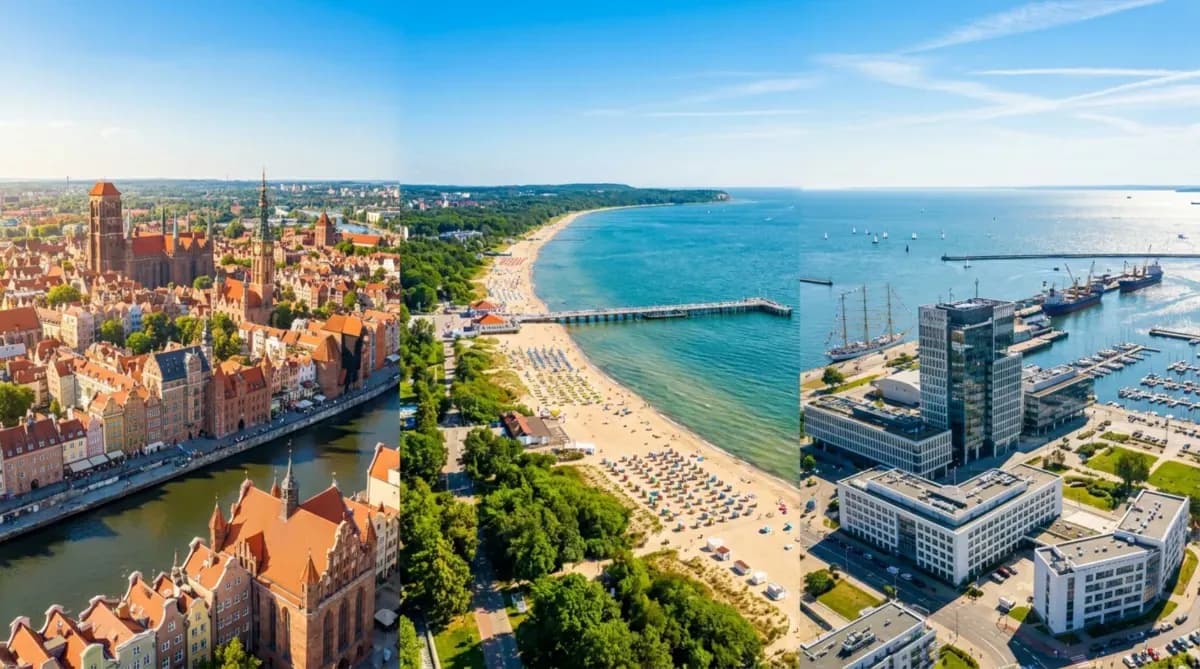
Spanning 30 kilometers of scenic northern coastline, the Tri-City combines Hanseatic heritage, relaxed seaside resorts, and modern maritime culture into an accessible 3-to-7-day journey.
Whether you explore urban highlights by transit or secure a rental car for regional day trips, this guide delivers a practical route for comfortable travel across Poland's Baltic shore.
Baltic Coast Road Trip: Why Visit Gdansk, Sopot, and Gdynia?
Poland’s Baltic Coast offers far more than standard seaside towns. The region presents a compelling mix: historic Hanseatic trading centers, busy commercial ports, wide sandy beaches, coastal dunes, and landmarks that shaped modern European history. You can easily transition from centuries-old architecture to seaside promenades and active harbors within a single afternoon, making the Tri-City an appealing destination for cultural travelers and summer vacationers alike.
What Is the Tri-City and Where Is It Located?
The “Tri-City” (known locally as Trójmiasto) is a connected metropolitan area extending across roughly 30 kilometers of Poland’s northern coastline along the Bay of Gdansk. It comprises three distinct municipalities positioned side by side: Gdansk, Sopot, and Gdynia. Excellent public transportation and well-connected roadways make moving between them effortless.
Gdansk serves as the cultural and historic anchor, known for its restored medieval architecture and rich political heritage. Sopot functions as a premier spa and seaside resort, often referred to as the Polish Riviera. Gdynia, the youngest of the three, developed in the early 20th century as a key commercial hub with a modern maritime character. Experiencing all three provides a comprehensive look at the region's diverse identity.
Top Reasons to Include the Baltic Coast in Your Europe Itinerary
A primary draw is the region's dense historical significance. Gdansk details centuries of maritime trade wealth, the opening salvos of World War II, and the birth of the Solidarity movement that altered Central and Eastern European history. It offers a fresh perspective if your previous European travels focused primarily on inland capitals.
The natural surroundings are equally compelling, featuring expansive sandy beaches, dramatic coastal cliffs, and shifting sand dunes near the Hel Peninsula and Słowiński National Park. Compared to Western European resort destinations, the region provides excellent value across accommodations, dining, and transit, all complemented by pleasant, moderate summer temperatures.
Planning Your Gdansk-Sopot-Gdynia Road Trip
While the Tri-City area is compact, practical planning ensures a smooth journey. Choosing the right season, determining your transit options, and setting a realistic schedule will keep your trip organized and stress-free.
Best Time to Visit the Baltic Coast
The primary travel season runs from May through September. July and August deliver the warmest weather and peak beach conditions, with water temperatures reaching 20-22°C (68-72°F). These months also bring the highest visitor numbers and peak pricing across Sopot and the Hel Peninsula.
For comfortable sightseeing, dining, and museum visits without peak crowds, June and early September are ideal. Daytime temperatures typically range from 15-22°C (59-72°F). Baltic weather can change quickly, bringing brisk winds or sudden showers, so packing adaptable layers is recommended. Winter visits present a quieter atmosphere with festive seasonal markets in Gdansk and crisp sea air.
Should You Travel by Train or Car?
Within the core urban corridor, public transit is exceptionally efficient. The SKM suburban train system connects Gdansk, Sopot, and Gdynia with departures running every 7 to 15 minutes. For walking-focused days centered on Gdansk’s historic core, Sopot’s pier, or Gdynia’s waterfront, the train is straightforward and eliminates the need to navigate summer parking.
If your itinerary extends beyond the urban center to regional highlights like Słowiński National Park, the Kashubian Lake District, or remote coastal stretches, choosing a car rental in Gdansk provides the freedom to travel on your own schedule. Having a reliable vehicle allows you to reach natural parks and coastal trails directly without depending on seasonal or limited bus connections.
How Many Days Should You Spend?
A duration of 3 to 4 days provides enough time to explore Gdansk’s historic center, visit flagship institutions like the Museum of the Second World War or the European Solidarity Centre, and dedicate a day to Sopot and Gdynia.
Allocating 5 to 7 days allows for a relaxed pace and broader exploration. A 5-day itinerary accommodates day trips to Malbork Castle or the Hel Peninsula, while a full week lets you establish a comfortable base in Gdansk and explore the entire coastline, including Słowiński National Park, without rushing.
Where to Stay in Each City
Selecting your base depends on your travel priorities:
Gdansk: Ideal for history enthusiasts, museum visits, and diverse dining. The historic center offers numerous boutique hotels and apartments within walking distance of key landmarks, such as the Hilton Gdansk along the waterfront.
Sopot: Recommended for a resort atmosphere focused on wellness and seaside relaxation. Properties like the Sheraton Sopot provide dedicated spa facilities right beside the beach.
Gdynia: Well-suited for modern accommodations and immediate port access. Accommodations such as My Story Gdynia Hotel offer convenient bases, though many visitors explore Gdynia via day trips from Gdansk.
Insider Tips for a Smooth Baltic Coast Road Trip
A few practical logistics tips will help streamline your daily schedule and ensure stress-free travel throughout the region.
Local Transportation and Getting Around
The SKM rail line is the most practical way to travel between Gdansk, Sopot, and Gdynia. To save time at regional stations, purchase day tickets or multi-ride passes in advance at major hubs like Gdansk Główny. City trams and buses efficiently cover neighborhoods beyond the center, with real-time transit schedules and digital ticketing accessible via mobile apps like Jakdojade.
During the summer months, water trams and passenger ferries run between Gdansk, Westerplatte, Sopot, Gdynia, and the Hel Peninsula, providing a scenic alternative on the water. Ride-hailing services like Bolt and Uber operate widely across the metropolitan area for point-to-point urban trips.
Packing Suggestions for the Baltic Coast
Maritime conditions along the Baltic can fluctuate within a single day. Prepare by packing adaptable clothing: lightweight base layers, long-sleeve tops, and a warm fleece or mid-layer. A windproof and water-resistant outer jacket is essential regardless of the season to handle coastal breezes.
Comfortable walking footwear is necessary for navigating the historic cobblestone lanes of Gdansk. During the summer, pack swimwear for Sopot alongside sunglasses and sun protection, as coastal UV reflection can be strong near the water. For travel between October and April, bring an insulated coat, thermal layers, a knit hat, and gloves.
Recommended Itinerary Pacing
Structuring your itinerary with adequate time at each stop ensures a much more enjoyable experience. Gdansk holds significant architectural and historical depth; allocate at least two full days to visit museums, walk the waterfront along the Motława River, and explore old neighborhoods at a relaxed pace.
Sopot and Gdynia can easily be combined into a single day using local rail or a short drive. Start your morning along Sopot's pier and Monte Cassino promenade, then continue north to Gdynia to tour the historic vessels and harbor sights. If you plan excursions to Malbork Castle or the Hel Peninsula, reserve an entire day for each destination.
Resource Links and Where to Book
For intercity rail connections across Poland-such as routes arriving from Warsaw or Krakow-the Koleo platform provides direct booking options. Local SKM transit does not require seat reservations; tickets can be purchased at station vending machines or through regional transit apps.
Review official museum websites prior to your visit to confirm operating hours and reserve entry tickets, particularly for high-demand sites like the Museum of the Second World War. Direct bookings through hotel websites often provide flexible cancellation terms for accommodations.
Day 1: Exploring Gdansk’s Historic Heart
Begin your itinerary in Gdansk’s historic core, meticulously reconstructed after the devastation of World War II. The district reflects centuries of merchant wealth, Hanseatic influence, and major historical milestones.
Walking the Royal Route and Dlugi Targ
Start your walk at the Upland Gate (Brama Wyżynna), the historic entry point for visiting Polish monarchs. Pass through the Golden Gate onto Długa Street (Long Street), lined with ornate merchant townhouses, amber workshops, and outdoor cafés. The avenue opens into Długi Targ (Long Market), the city's primary historic square.
The centerpiece of the square is the 17th-century Neptune Fountain, a defining civic landmark. Adjacent stands the Main Town Hall, featuring an 81.5-meter tower that offers expansive panoramic views across the city center. Inside, preserved chambers such as the Red Room showcase the elaborate decorative arts commissioned by the city's historic patrician families.
Gdansk Crane, Motlawa River, and the Canals
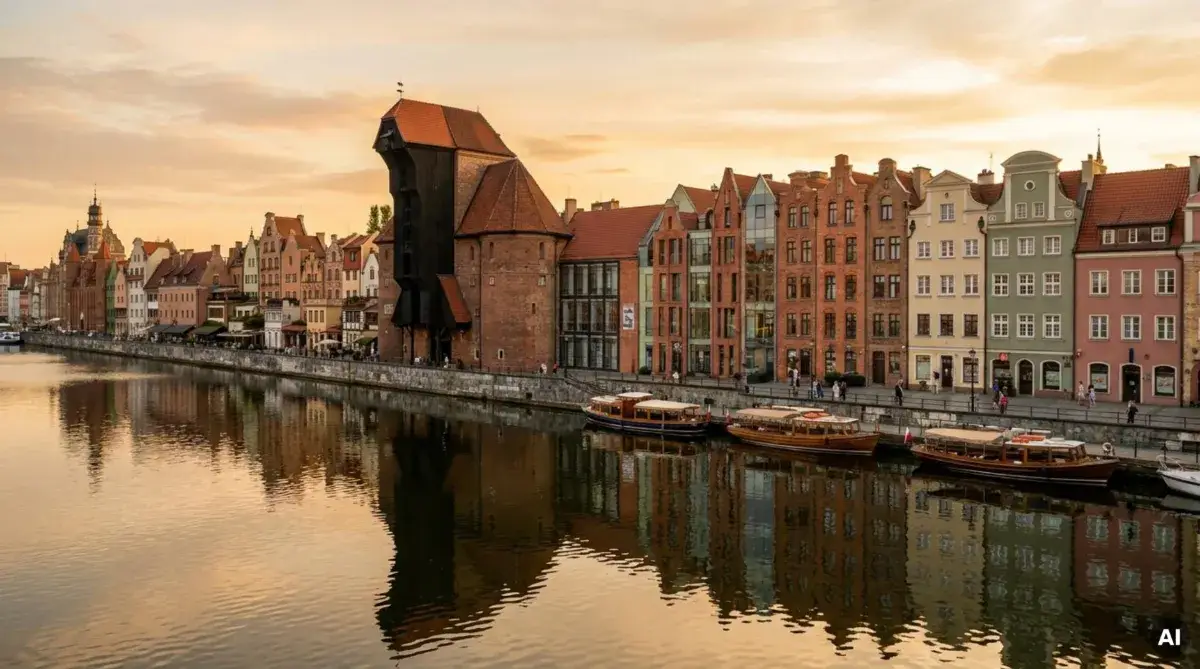
Pass through the Green Gate to access the Long Embankment along the Motława River. This bustling waterfront promenade is framed by historic maritime buildings and riverside dining. The dominant feature is the medieval Gdansk Crane (Żuraw), a 15th-century wooden harbor crane that once transferred cargo and stepped ship masts, now operating as part of the National Maritime Museum.
Strolling along the riverfront highlights Gdansk's enduring maritime legacy. From this embankment, you can also board passenger boats to Westerplatte, the coastal peninsula where the initial military engagement of World War II occurred on September 1, 1939.
Amber: The Gold of the North
Gdansk is internationally recognized as the capital of the Baltic amber trade. For thousands of years, fossilized tree resin harvested along this coastline was transported along the historic Amber Route toward Mediterranean markets. Today, local artisans craft raw specimens into diverse jewelry and decorative pieces.
To understand the geological and artistic history, tour the Amber Museum situated in the Great Mill. The collection features rare raw deposits, ancient botanical inclusions, and intricate historical artifacts. Nearby, St. Bridget’s Church houses a monumental amber altar, demonstrating the material's cultural importance in regional religious art.
Museum of World War II: Visitor Highlights
Opened in 2017, the Museum of the Second World War is one of the most comprehensive historical institutions in Europe. The permanent exhibition, situated primarily in an expansive subterranean space, frames the conflict from a global perspective with detailed focus on the civilian and military experience across Poland and Eastern Europe.
Plan for a 3-to-4-hour visit. The exhibition uses extensive primary artifacts, period footage, personal testimonies, and spatial reconstructions to document the causes, everyday reality of occupation, and broader geopolitical consequences of the war. Audio guides are available in multiple languages to provide context throughout the galleries.
Nightlife and Dining in Gdansk
Evenings in Gdansk offer an exceptional culinary range, from classic Polish specialties to modern Baltic seafood. Local establishments like Pierogarnia Mandu serve freshly made pierogi with traditional savory fillings or seasonal fruits. Regional staples like żurek (sour rye soup) and bigos (hunter's stew) are widely available across historic tavern settings.
For contemporary dining, seek out restaurants highlighting regional Kashubian ingredients such as smoked Baltic fish, marinated herring, and regional cheeses. Conclude your evening along Ulica Piwna (Beer Street) to sample regional craft brews, or visit rooftop venues like SASSY for skyline views overlooking the Motława River and historic shipyard cranes.
[Rent a car at Gdansk Airport]
Day 2: Gdansk Culture and Neighborhoods
Dedicate your second day to exploring Gdansk’s broader cultural institutions, notable architectural landmarks, and viewpoints that reveal the city's modern evolution.
St. Mary’s Church and the Great Armoury
Begin the morning at St. Mary’s Basilica, one of the largest brick Gothic churches in the world. Built over a period of 120 years, the basilica can accommodate up to 25,000 people. Visitors can tour the cavernous interior at no charge or climb roughly 400 steps to the top of the 77.6-meter bell tower for views across the city and industrial shipyard docks.
A short walk away stands the Great Armoury, an exceptional example of Dutch Mannerist architecture. While historically used for munitions storage, the building now hosts exhibitions associated with the Academy of Fine Arts, creating a striking contrast of historic design and contemporary creative work.
Mariacka Street and Amber Shopping
Mariacka Street is widely regarded as one of the most picturesque streets in northern Poland. The cobblestone lane extends from the Motława waterfront to St. Mary's Basilica, characterized by decorative rain gargoyles (rzygacze) and elevated stone terraces leading to basement workshops.
This street is the premier location for purchasing certified Baltic amber, offering handcrafted jewelry, carved objects, and raw collectible stones with natural inclusions. It is also an exceptional setting for architecture photography, particularly in the soft morning light.
Solidarity Center and Contemporary History
To engage with late-20th-century history, visit the European Solidarity Centre, located adjacent to the historic gates of the Gdansk Shipyard. The building's rust-toned, weathered-steel exterior mirrors the industrial hulls of ships once built on the adjacent slips.
The permanent exhibition documents the rise of the Solidarity movement, initiated by shipyard workers in 1980 under the leadership of Lech Wałęsa. Through archival footage, interactive installations, and historical documents, the center explains how nonviolent civic resistance contributed to the collapse of communist regimes across the Eastern Bloc. Plan approximately 2 to 2.5 hours for the comprehensive audio tour.
Views from Gora Gradowa
In the late afternoon, head to Góra Gradowa, a historic defensive fortification positioned on a hill overlooking the city. Now an open public park and viewpoint marked by a monumental cross, the summit provides clear sightlines over the Old Town spires, the main railway terminal, and the active shipyard cranes.
The site offers a calm environment for an evening walk and reflection on the structural transformation of the city before returning downtown for dinner.
Day 3: Sopot - The Polish Riviera
Day three centers on Sopot, a renowned seaside resort located just 13 minutes north of Gdansk by rail. Known for its elegant villas, wellness culture, and coastal promenade, it offers a refreshing change of pace.
The Longest Wooden Pier in Europe
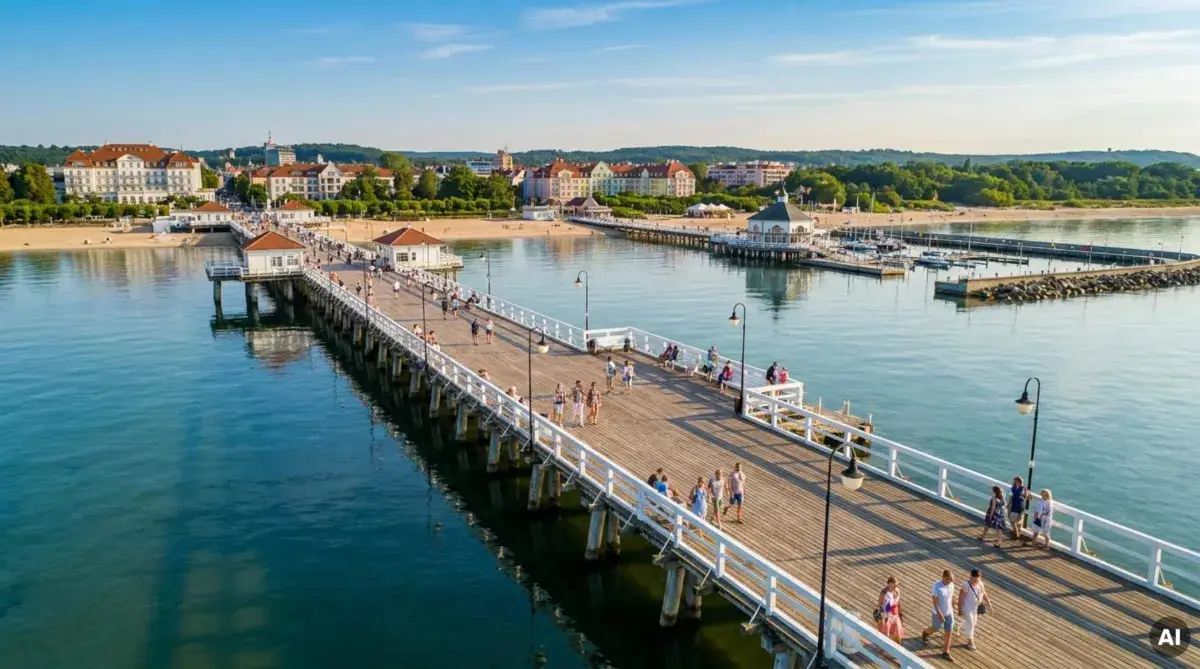
The signature landmark of Sopot is its wooden pier (Molo), which extends 511 meters into the Bay of Gdansk. Originally constructed in 1829, it remains the longest wooden pier in Europe. A small admission fee is charged during the peak summer season.
A walk to the end of the pier delivers sweeping views across the coastline toward Gdynia and Gdansk. The surrounding waters provide a rich marine microclimate, historically prized by health travelers visiting Sopot's coastal sanatoriums and spas.
Monte Cassino Street and the Crooked House
Extending inland from the beachfront is Bohaterów Monte Cassino Street (commonly known as "Monciak"), a pedestrian thoroughfare lined with restaurants, cafés, dessert shops, and boutiques. In the warmer months, the avenue is filled with street musicians and seasonal patios.
Along this corridor sits the Crooked House (Krzywy Domek), an architectural novelty constructed in 2004 with curved, undulating lines inspired by fairy tale illustrations. The complex houses retail shops and cafés and remains a popular photo stop for visitors.
Sopot Beach and Seaside Promenade
Sopot's sandy beach extends for more than four kilometers, flanked by a dedicated seaside promenade. During summer, the beach features fully serviced swimming zones, lounge rentals, and casual seaside dining serving fresh fish.
The paved trail running parallel to the sand is well-suited for cycling, rollerblading, and long coastal walks. In the shoulder season, the area is quiet and open, ideal for enjoying fresh sea breezes away from urban centers.
Oliwa Cathedral: Architecture and Organ Concerts
Located on the boundary between Gdansk and Sopot, Oliwa Cathedral makes a worthwhile stop during your coastal transit. The cathedral is famous for its massive Rococo organ, constructed in 18th century, which features over 7,000 pipes and moving decorative figures.
Check the daily schedule for short organ demonstrations; the instrument produces remarkable acoustic power. After visiting the cathedral, take time to walk through the adjacent Oliwa Park, which features manicured French gardens, landscaped waterways, and a quiet palm house.
Day 4: Gdynia - Modern Maritime Vibes
Your fourth day moves to Gdynia, the northernmost city of the metropolitan trio. Established primarily in the 1920s as Poland's sovereign seaport, Gdynia is defined by modernist architecture and rich naval heritage.
Museum Ships: Dar Pomorza and Błyskawica
Gdynia’s central waterfront along the Pomeranian Quay is home to two preserved museum vessels. The ORP Błyskawica is a 1930s destroyer and the oldest preserved vessel of its class worldwide, having served alongside Allied forces in the Atlantic and Mediterranean during World War II. Visitors can explore the main decks and naval interior exhibits (note seasonal closures between November and March).
Docked nearby is the Dar Pomorza, a full-rigged sailing ship built in 1909 that served for decades as a training vessel for Polish merchant naval officers. Touring its interior provides insight into the practical maritime training methods of the early 20th century.
Naval Museum and Maritime Heritage
Adjacent to the harbor stands the Polish Navy Museum, featuring an extensive outdoor exhibition of naval artillery, torpedoes, anti-aircraft weaponry, and military helicopters. The collection details Poland's coastal defense history through physical equipment.
Nearby, the Gdynia Aquarium showcases marine ecosystems, highlighting native Baltic fish species alongside international coral reef displays, making it an engaging stop for visitors of all ages.
Piers, Cliffs, and Coastal Walks
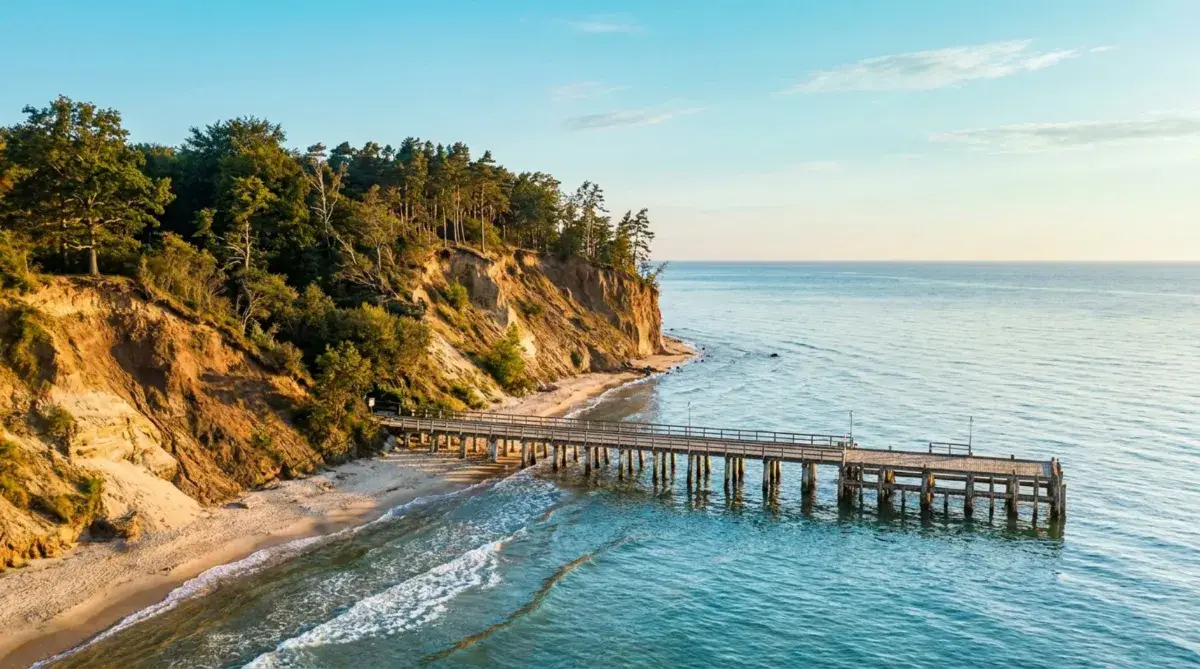
For coastal scenery, head to the Orłowo neighborhood in southern Gdynia. The Orłowo Pier is a quieter wooden structure providing direct views of the dramatic Orłowo Cliff, an active coastal headland that shifts through natural erosion.
Further north lies Cypel Rewski (Rewa Spit), a narrow sandy peninsula extending directly into the waters of the bay. It is a favored location for scenic nature walks, coastal birdwatching, and windsurfing.
Museum of Emigration and City Highlights
Housed in the historic 1930s Maritime Station-the departure point from which thousands of Polish citizens boarded transatlantic ocean liners-the Museum of Emigration explores the historical causes and personal stories of Polish migration. The multimedia exhibition is thoroughly documented in English and presents artifacts, personal letters, and a massive scale model of the transatlantic passenger ship MS Batory.
While moving between sights, observe Gdynia's urban layout, which showcases clean early-20th-century Modernist and Art Deco architecture built during the city's initial construction boom.
Day 5: Baltic Nature and Day Trips
Reserve day five for exploring the regional landscapes and historical sites surrounding the Tri-City. This is where a car rental provides the greatest flexibility, giving you the freedom to travel at your own pace.
Visiting Hel Peninsula: Beaches and Seals
The Hel Peninsula is a 33-kilometer narrow sandspit curving into the Baltic Sea, renowned for its pine forests, coastal dunes, and maritime culture. Summer visits offer active watersports, while shoulder seasons provide quiet, expansive coastal scenery.
Key sites in the town of Hel include the Seal Sanctuary (Fokarium), dedicated to the rescue and conservation of Baltic grey seals, and the Fisheries Museum, situated in a former Gothic church with a tower overlooking the bay. The peninsula also retains well-preserved concrete bunkers and artillery batteries from 20th-century coastal defense networks.
Malbork Castle: Teutonic History
Situated roughly 50 kilometers south of Gdansk, Malbork Castle is a UNESCO World Heritage site and the largest brick castle complex in the world by surface area. Constructed by the Teutonic Knights beginning in the 13th century, it served as the headquarters of the Grand Master of the Order.
The complex is accessible by direct rail or car in under an hour. Plan 3 to 4 hours to tour the High, Middle, and Lower Castles with an audio guide, exploring grand refectories, defensive battlements, and historical amber collections.
Slowinski National Park and Sand Dunes
For a distinct geological landscape, travel west to Słowiński National Park near Łeba. The park is internationally recognized for its massive shifting sand dunes, which rise up to 30 meters high and move continuously under the influence of coastal winds.
Reaching Słowiński National Park is significantly easier with a short-term rental, allowing you to bypass limited regional transit connections and arrive early in the morning. Walking across the vast, desert-like expanses between the Baltic Sea and Lake Łebsko is one of northern Poland's most memorable natural excursions.
Other Recommended Baltic Coast Day Trips
If you wish to extend your itinerary further, consider these nearby regional destinations:
Toruń: A preserved medieval Gothic city and UNESCO site, recognized as the birthplace of Nicolaus Copernicus and renowned for historic gingerbread traditions (located roughly 170 km south of Gdansk).
Kołobrzeg: A major historic port and spa town situated further west along the central Pomeranian coast.
Świnoujście: Located near the German border, known for wide beaches, historic coastal forts, and health resort facilities.
Making Memories: Why the Gdansk-Sopot-Gdynia Road Trip Stands Out
A journey through Gdansk, Sopot, and Gdynia delivers an exceptional travel experience along the Baltic Sea. By combining Hanseatic architecture, modern historical landmarks, refined seaside promenades, and coastal nature reserves, this route provides balanced variety within a short distance.
With its crisp sea air, distinct regional gastronomy, and smooth transit connections, northern Poland stands out as a rewarding destination. Whether you spend your days walking through restored medieval quarters, relaxing along sandy beaches, or exploring coastal national parks, the Tri-City offers a memorable itinerary from start to finish.
Frequently Asked Questions
Is the Tri-City Walkable or Do You Need a Car?
The urban centers of Gdansk, Sopot, and Gdynia are highly walkable and connected by the frequent SKM rail system. For exploring core city sights, public transit and walking are the most convenient choices. However, for regional day trips to Słowiński National Park or the Kashubian countryside, securing a vehicle through an easy booking process provides greater scheduling freedom and convenience.
What is the Best Time to Visit for Good Weather and Small Crowds?
June and early September provide the best balance of pleasant temperatures (15-22°C / 59-72°F) and moderate visitor numbers. July and August deliver peak beach warmth but bring larger crowds and higher accommodation rates throughout Sopot and Hel.
How Affordable is the Tri-City Compared to Other European Destinations?
The Tri-City provides substantial value compared to Western European destinations. High-standard accommodations, dining, and museum tickets are reasonably priced, allowing travelers to maintain a comfortable mid-range budget while enjoying quality services throughout the trip.
Can You Visit the Tri-City with Kids?
Yes. The region offers numerous family-friendly activities. Highlights include the wide sandy beaches of Sopot, the historic naval vessels and aquarium in Gdynia, and interactive science and history centers across Gdansk, alongside accessible parks and cycling routes.
Is English Spoken Widely in Gdansk, Sopot, and Gdynia?
English is widely spoken across hotels, restaurants, transit hubs, and cultural institutions throughout the Tri-City. Basic Polish courtesy phrases are always appreciated, but international travelers will have no difficulty communicating during their visit.
Must-Buy Local Products and Souvenirs
Certified Baltic amber jewelry and decorative items are the premier regional souvenir, with the widest selection found along Mariacka Street in Gdansk. Other authentic options include Kashubian embroidered textiles, locally produced fruit liqueurs, and regional herbal spirits like Goldwasser.