28.09.2026
How to Pay Motorway Tolls in Poland: A1, A2, A4 Explained
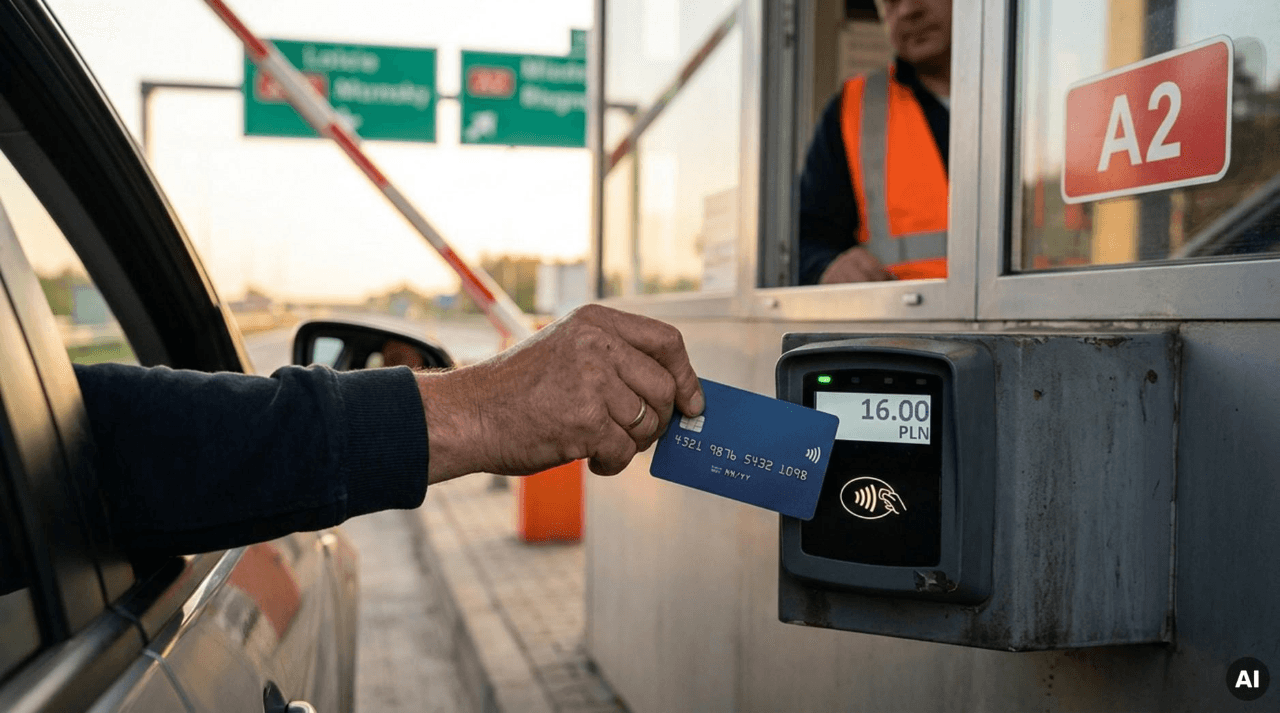
How do you pay motorway tolls in Poland? Drivers of passenger cars pay directly at toll booths using cash or a card, or automatically through registered video-tolling mobile apps on three privately run motorway stretches (A1, A2, and A4). All state-managed motorways remain completely free for light vehicles under 3.5 tonnes, and Poland does not use a national vignette sticker.
Navigating Poland's road network is straightforward once you understand how concession motorways and state routes differ. Knowing which sections require a fee, how toll barriers operate, and which payment methods save you time helps ensure a smooth journey wherever your travel takes you.
How Motorway Tolls Work in Poland
Poland's motorway network is divided into two operational models: state-managed routes and privately operated concession roads. While earlier national transport strategies envisioned widespread tolls across the primary transit corridors, public policy has shifted to simplify mobility and eliminate fees for everyday motorists.
Today, light passenger vehicles under 3.5 tonnes drive free of charge on all motorways managed directly by the General Directorate for National Roads and Motorways (GDDKiA). Tolls remain only on three specific corridors operated by private concessionaires. These private operators set their own pricing schedules, maintain independent toll plazas, and manage their own payment systems.
Which Roads in Poland Require Toll Payments?
If you're driving a passenger car, motorcycle, or light campervan, tolls apply exclusively to three private concession sections: the A1 AmberOne motorway between Rusocin (south of Gdańsk) and Nowa Wieś (near Toruń); the A2 Autostrada Wielkopolska between Świecko (at the German border) and Konin; and the A4 between Katowice and Kraków, operated by Stalexport Autostrada Małopolska.
All other motorways and expressways designated with an "S" (such as the S3, S7, and S8) are completely free for light passenger vehicles under 3.5 tonnes. Because long-distance routes often transition seamlessly from free public expressways to tolled private motorways, it helps to identify where private concession boundaries begin so you can plan your route with confidence.
Do Cars Need a Polish Vignette?
Poland does not use a time-based vignette system for passenger vehicles. Unlike neighboring countries such as the Czech Republic, Slovakia, Austria, or Switzerland, Poland does not offer a 10-day, monthly, or annual sticker that grants unlimited access to the national highway grid.
Third-party websites advertising an "official Polish digital vignette" for standard passenger cars are misleading. For standard passenger cars, you simply pay for the specific distance you travel on private concession motorways, either at barrier plazas or through a linked electronic billing service.
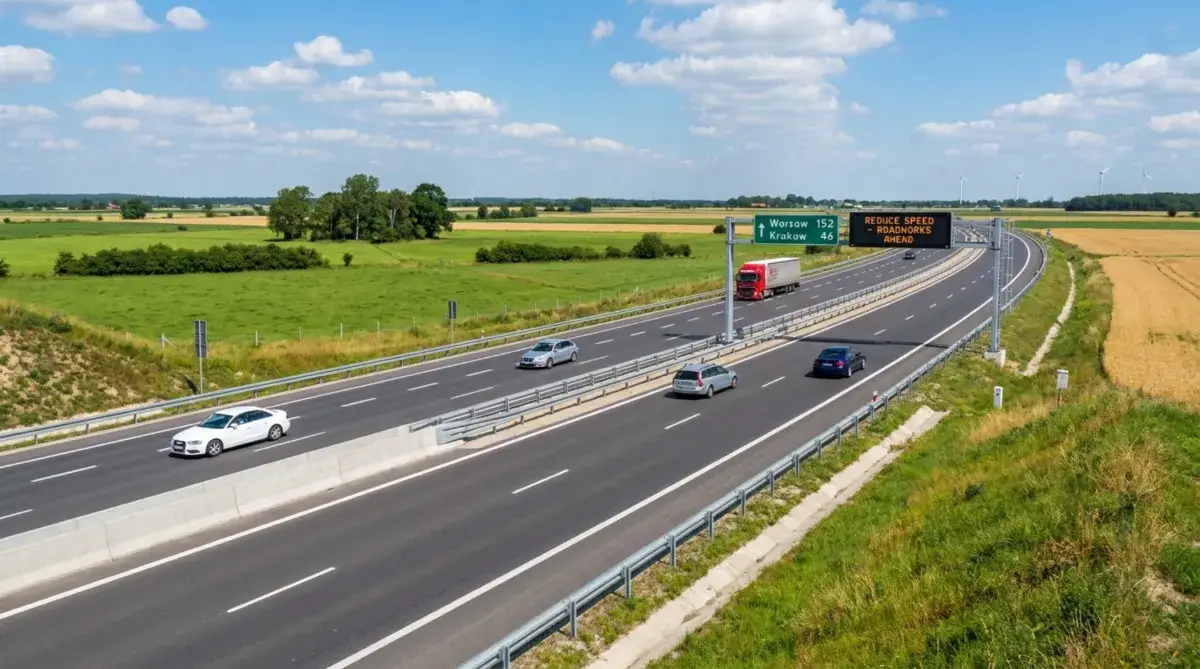
What Is the Difference Between State-Managed and Concession Motorways?
GDDKiA oversees state-owned motorways. Following statutory reforms, light passenger vehicles under 3.5 tonnes no longer pay tolls on any state-managed routes. This includes the A2 between Konin and Stryków (near Łódź) and the A4 between Wrocław and Sośnica (near Gliwice). You can travel across these state-run stretches without stopping at barriers or purchasing an electronic pass.
In contrast, private concession corridors were constructed and financed through long-term public-private partnership agreements. Concessionaires retain the statutory right to collect tolls to fund maintenance, debt service, and roadway improvements. Because these agreements remain legally binding, private operators continue to charge fees at their toll plazas independently of state policy changes.
How to Pay Motorway Tolls in Poland
Concession motorways use either an open or a closed toll collection system. In an open system, you pay a fixed fee whenever you pass through a mainline barrier plaza. In a closed system, you collect a paper ticket at your entry point and pay a distance-based fee when exiting. Both systems accept manual payment methods, while selected routes also offer automated digital solutions.
Deciding on your preferred payment method ahead of time helps you bypass congestion, particularly during holiday weekends and peak summer travel periods when physical toll lanes face heavy queues.
Pay at Toll Plazas With Cash or Card
Every concession toll plaza features staffed lanes equipped with card payment terminals and cash windows. They accept major international debit and credit cards, including Visa, Mastercard, and Maestro, as well as contactless mobile payments via Apple Pay and Google Pay. Paying by card is fast and eliminates currency exchange issues.
Staffed cash booths accept Polish złoty (PLN). Many concession booths also accept paper euro banknotes (EUR) and occasionally US dollars (USD). Acceptance policies depend on the operator, and any change is returned exclusively in Polish złoty based on the operator's daily exchange rate.
Use a Mobile App for Automatic Toll Payments
Video tolling linked to an approved mobile application provides the most convenient way to pass through toll gates. Platforms such as Autopay, SkyCash, and mPay allow you to create an account, register your vehicle's registration number, and link a payment card.
When you approach a toll plaza equipped for video tolling, high-definition overhead cameras read your front license plate and match it to your active profile. The gate opens automatically, and the exact toll is billed directly to your payment card. Dedicated automated lanes allow you to bypass long queues during peak travel hours.
Buy and Keep the Ticket on Ticket-Based Motorways
Closed toll systems-such as the A1 between Rusocin and Nowa Wieś or the A2 between Nowy Tomyśl and Konin-require you to retrieve a paper transit ticket at the entry barrier before entering the motorway.
Store this ticket in a safe, cool place in your cabin, away from direct sunlight or dashboard heat. When you reach your exit, insert the ticket into the automated terminal or hand it to the attendant to calculate your exact fee. If you lose your entry ticket, the operator will charge you the maximum toll applicable for that entire route.
When Vehicles Must Use Poland’s e-TOLL System
While light passenger cars travel toll-free on state roads, commercial vehicles and heavy transport operate under a separate legal framework. Poland's electronic toll network for commercial traffic is called e-TOLL, managed directly by the National Revenue Administration (KAS).
The e-TOLL platform relies on Global Navigation Satellite Systems (GNSS) to track registered vehicles along designated national roads, automatically deducting mileage-based charges from an online balance.
Which Vehicles Over 3.5 Tonnes Require e-TOLL?
Any motor vehicle or vehicle combination with a Maximum Authorised Mass (known in Poland as DMC, or Dopuszczalna Masa Całkowita) exceeding 3.5 tonnes must register with e-TOLL to travel on tolled state highways. This includes heavy goods vehicles, articulated trucks, and large transport vans.
Passenger buses and coaches designed to carry more than nine individuals (including the driver) are also classified as heavy vehicles under toll regulations, regardless of their actual unladen weight. Operating within the designated network without an active e-TOLL tracking session results in strict administrative penalties.
When a Car With a Trailer Exceeds 3.5 Tonnes
Recreational drivers and holidaymakers can inadvertently cross into heavy transport classifications when towing utility trailers, horseboxes, or large caravans. If the combined Maximum Authorised Mass of your towing vehicle and trailer exceeds 3,500 kilograms (as stated in fields F.1 or F.2 of your registration certificates) the entire combination falls under commercial toll laws.
A standard station wagon or modern SUV pulling a tandem-axle trailer often pushes total vehicle mass past the 3.5-tonne threshold. If your vehicle combination exceeds this limit, you must register with e-TOLL and transmit location data during your trip, even when driving on public state motorways that are free for standard cars.
How to Register a Vehicle and Start an e-TOLL Journey
Before driving an eligible heavy vehicle on tolled roads, register the vehicle through the official government portal at etoll.gov.pl or at an authorized customer service point. You will need your vehicle registration papers, documentation of your Euro emissions standard, and a verified identity profile or corporate tax identifier.
Once registered, configure a prepaid billing account or sign a post-payment agreement. You must link an authorized tracking device to the vehicle's profile before you depart.
Use the e-TOLL PL App, OBU, or EETS Provider
Drivers can choose from three main methods to transmit satellite positioning data to the e-TOLL system:
The e-TOLL PL Mobile App: A free government smartphone app using internal device GPS. While economical, it requires constant internet connectivity, stable battery power, and manual activation before every trip.
On-Board Units (OBU) or External Location Systems (ZSL): Dedicated hardware units plugged into the 12V auxiliary socket, OBD-II port, or hardwired directly into the vehicle's electrical system, offering higher operational reliability.
EETS Transponders: International fleet operators often use European Electronic Toll Service certified transponders (such as DKV, UTA, or Telepass) to manage tolling across Poland and neighboring EU member states on a consolidated invoice.
For longer journeys, an OBU or dedicated ZSL tracking device is significantly more reliable than a smartphone. A software crash, flat phone battery, or dropped mobile signal interrupts data logging, which can trigger automatic regulatory fines.
A1 Motorway Tolls: Gdańsk-Toruń
The A1 motorway-widely known as AmberOne-stretches south from the Baltic coastline near Gdańsk toward the southern border. The tolled concession section, managed by the Gdańsk Transport Company (GTC), spans approximately 152 kilometers between the Rusocin toll plaza in the north and the Nowa Wieś plaza south of Toruń.
This corridor sees substantial traffic during summer holidays, connecting central metropolitan areas with Baltic beach destinations.
How to Pay the A1 Toll at AmberOne Gates
AmberOne runs on a closed toll collection system. When entering an interchange, take a paper ticket from the barrier dispenser to open the gate. Hand this ticket to the attendant or scan it at an automated terminal when exiting.
For faster transit, AmberOne offers dedicated video-tolling lanes marked with green camera overhead signs. You can use the AmberOne app or register your license plate in Autopay. Optical cameras read your registration details upon entry and exit, raising the barrier without requiring you to roll down your window.
What Does the A1 Cost for Cars, Trailers, and Motorhomes?
Tariffs on the A1 reflect the distance traveled across five distinct vehicle categories. Category 1 includes standard passenger cars and motorcycles with two axles and single tires. Category 2 applies to two-axle vehicles pulling trailers, vehicles with dual rear wheels, and two-axle motorhomes.
Driving the complete 152-kilometer stretch between Rusocin and Nowa Wieś in a standard Category 1 vehicle costs roughly 30 PLN. Category 2 vehicles, including passenger cars pulling caravans, pay approximately double the base rate. Tariffs are subject to periodic inflationary adjustments approved by national infrastructure authorities.
A2 Motorway Tolls: Świecko-Konin and Beyond
The A2 serves as Poland's core east-west transit backbone, linking Berlin to Warsaw and continuing toward the eastern frontier. Tolling policies vary along this route because management responsibilities are split between public and private entities.
The state-managed segment extending from Konin through Łódź to Warsaw is completely toll-free for light vehicles under 3.5 tonnes. However, the western 255-kilometer section between the German border and Konin is operated by Autostrada Wielkopolska and remains tolled.
Which A2 Sections Are Tolled?
The tolled corridor extends from Świecko at the border crossing through to Konin. Autostrada Wielkopolska (AWSA) runs this route under two distinct operational arrangements:
The western section between Świecko and Nowy Tomyśl uses open mainline toll plazas crossing the motorway at fixed intervals. The eastern stretch between Nowy Tomyśl, Poznań, and Konin operates via a closed ticket system. The Poznań metropolitan bypass section is integrated into the motorway, allowing local commuter traffic to travel toll-free between regional junctions.
How the A2 Ticket System Works
On the closed segment between Nowy Tomyśl and Konin, take a ticket at your entry point and pay for your exact distance traveled when exiting. Along the western stretch between Świecko and Nowy Tomyśl, simply pay the flat fee at each mainline barrier plaza you cross.
Unlike the A1 and A4, Autostrada Wielkopolska does not currently support app-based video tolling for passenger vehicles. All drivers must stop briefly at a physical toll booth to pay using a debit or credit card, cash, or an accepted commercial fleet card (such as DKV or UTA).
What Does the A2 Cost for Cars and Campers?
The A2 concession charges some of the highest per-kilometer rates in Central Europe. Toll rates depend on your vehicle's physical dimensions, axle count, and wheel configurations. Standard passenger cars and light two-axle campervans without dual rear wheels fall under Category 1.
Driving the entire concession route from Świecko to Konin in a standard Category 1 vehicle costs over 100 PLN. Passenger cars towing caravans and heavy campers with dual wheels fall into Category 2, facing substantially higher fees. Clear rate boards display current fees above every toll plaza lane.
A4 Motorway Tolls: Katowice-Kraków
The 61-kilometer private concession of the A4 links the Upper Silesian urban area with Kraków. Stalexport Autostrada Małopolska (SAM) manages this section, which serves as one of the country's most heavily used business and commuter arteries.
Because the public A4 section between Wrocław and Gliwice is state-managed and toll-free for light cars, the Katowice-Kraków corridor is the only tolled segment along the southern trans-European corridor. Drivers picking up a vehicle in Katowice heading south should budget for this toll on their route.
How to Pay at A4 Toll Plazas
The Katowice-Kraków route operates on an open toll model with two mainline barrier stations: Mysłowice (near Katowice) and Balice (near Kraków). Drivers pay half the total journey fee at each plaza, regardless of intermediate junction entries.
You can pay using cash or payment cards in the standard lanes or use designated automated electronic lanes. The A4 fully supports video tolling through mobile apps such as Autopay, mPay, and SkyCash. It also accommodates microwave transponders, including the regional A4Go tag and international Telepass units.
What Does the A4 Cost for Cars, Trailers, and Motorhomes?
Fees are collected whenever you cross the Mysłowice or Balice toll gates. Standard two-axle passenger vehicles without trailers fall into Category 1. If you complete the entire trip between Katowice and Kraków, you will pass through both plazas and pay at each barrier.
For a standard passenger car, the combined charge for both plazas totals roughly 32 PLN. Passenger cars towing trailers, large utility vans, and motorhomes fitted with dual rear wheels fall into higher vehicle categories and pay increased rates at each plaza.
Practical Advice for Tourists and Rental Car Drivers
If you're exploring Poland in a rental vehicle or driving an imported car, familiarizing yourself with toll policies helps you avoid administrative delays. Many visitors encounter unexpected processing fees simply because they mistakenly assume road fees are bundled into their rental package.
Review your rental agreement and check your vehicle's equipment before leaving the airport or rental office to keep your travel stress-free.
Check Whether a Rental Car Has an Automatic Toll Device
Never assume that your rental vehicle comes with an active toll transponder or pre-configured video-tolling profile. Most car rental companies in Poland do not link their fleet plates to services like Autopay by default, expecting drivers to settle tolls at the booths.
Before entering an automated video-tolling lane, confirm whether your car's registration is connected to an active tolling profile. If you enter an automated lane without an active account and no cashier is present, the gate will remain down, requiring an attendant to manually clear the lane and delaying your trip.
Confirm Who Pays Tolls and Administrative Charges
Rental agreements across Poland place full responsibility for motorway tolls, bridge fees, and municipal parking charges on the renter during the rental period. Road tolls are not included in standard rental pricing.
If you pass through a toll plaza without paying or misuse an e-TOLL checkpoint with a vehicle combination exceeding 3.5 tonnes, authorities will send the enforcement notice to the vehicle owner. Your rental provider will charge your credit card for the original toll and fine, and apply a standard administrative processing fee (often ranging from 100 PLN to 250 PLN per notice) to cover statutory driver identification paperwork. Choosing a provider with transparent rental terms upfront helps you understand these charges before you set off.
Can You Pay Polish Tolls in Euros?
Staffed booths along the A1, A2, and A4 generally accept euro banknotes, which can be useful in a pinch, though it isn't the most practical payment method.
Toll plazas only take euro paper banknotes; coins aren't accepted under any circumstances. Furthermore, your change is returned exclusively in Polish złoty. Concession operators set internal currency exchange rates that are less favorable than standard retail banking rates, making contactless debit or credit card payments a much more cost-effective choice.
What Happens If You Miss or Avoid a Toll Payment?
Failing to settle a motorway toll-whether due to technical glitches, low prepaid balances, or confusion at the barrier-leads to different consequences depending on whether the incident occurred on a private concession road or within the state e-TOLL zone.
On private concession motorways, physical boom barriers generally prevent vehicles from departing without settling charges, logging a digital transit record, or signing a formal debt notice.
Penalties for Using a Toll Road Without Paying
On private routes like the A1, A2, and A4, barriers keep you in the lane until a valid payment is registered, an app transaction clears, or you complete a written declaration of debt at the booth. If a barrier lifts due to a system error but an app payment fails to process, the concessionaire's billing department issues a formal payment demand to the registered vehicle owner, along with recovery charges.
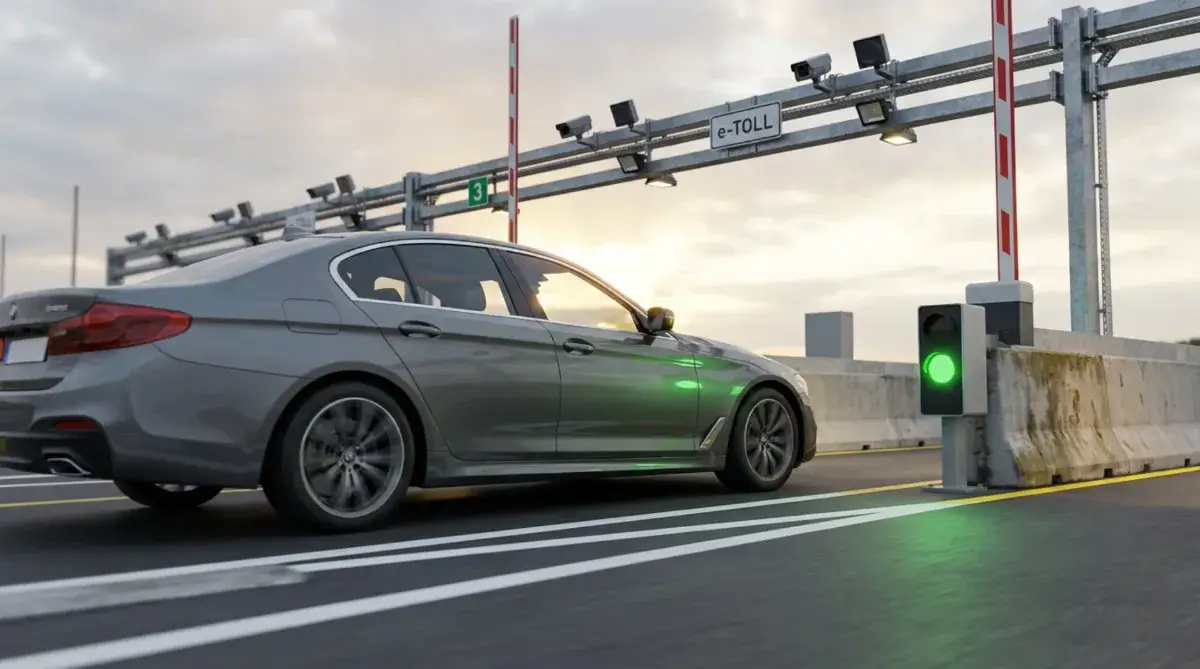
On state roads monitored by e-TOLL-applicable to heavy transport and car-trailer combinations exceeding 3.5 tonnes-automated gantry cameras record all passing traffic. Driving through these checkpoints without an active session or with an empty prepaid balance triggers automatic administrative penalties from the National Revenue Administration of up to 1,500 PLN per calendar day.
What to Do After a Payment or App Failure
If your toll app crashes, drops GPS tracking, or fails to raise the boom gate, never attempt to reverse out of a toll lane. Reversing in a toll plaza is illegal, extremely dangerous, and heavily penalized by motorway police.
Instead, press the intercom button on the pillar beside your window to connect with a control room operator. The attendant will verify your vehicle's license plate, print an unpaid toll slip containing direct bank transfer details, and raise the barrier. Operators generally grant you 7 to 14 days to settle the outstanding balance via online banking before initiating collection proceedings.
Avoid Suspicious Toll Payment Messages and Websites
International travelers are frequent targets for fraudulent phishing campaigns across Central Europe. Scammers distribute deceptive SMS messages and emails claiming you have an "overdue Polish motorway toll" or a "pending e-TOLL penalty," directing you to click an unverified link to submit card details.
Neither Polish road authorities nor private concession operators send unsolicited text messages demanding immediate card payments for unpaid tolls. If you need to check or settle an outstanding balance, use only the verified web portals of the official operators-such as a1.com.pl, autostrada-a2.pl, and autostrada-a4.com.pl-or the government's official e-TOLL site at etoll.gov.pl.