16.08.2026
How to Rent a Car in Poland - A Step-by-Step Guide for Foreigners
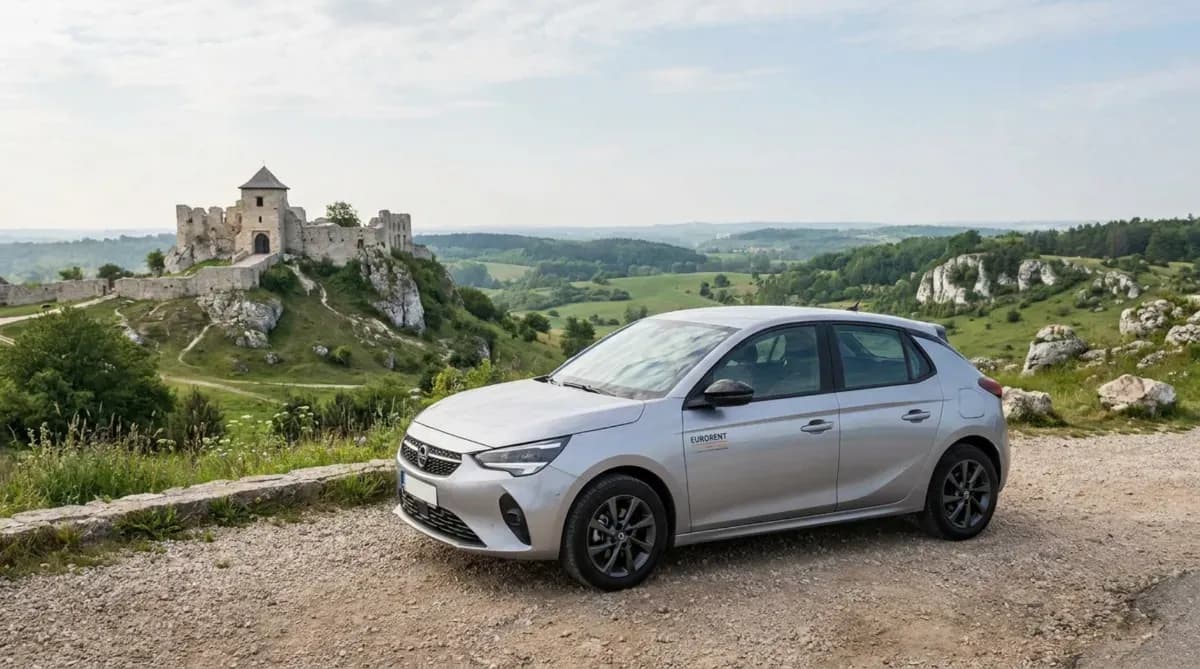
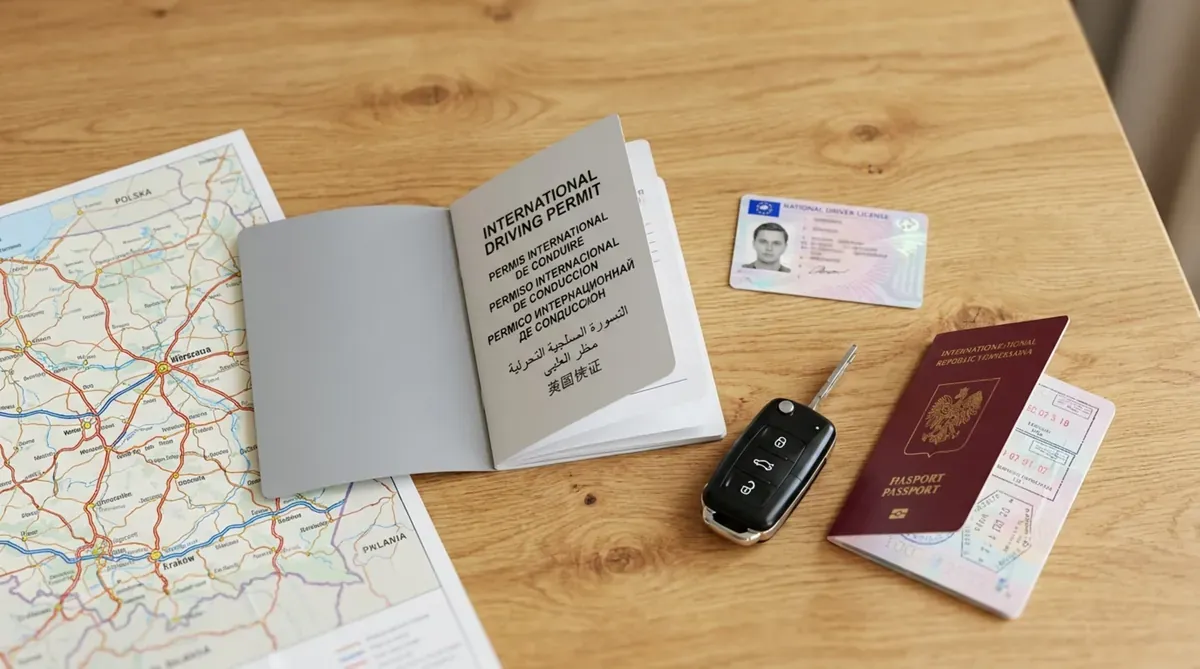
How do you rent a car in Poland as a foreign traveler? Securing a vehicle requires reserving online with your passport, a valid national driving license (along with an International Driving Permit for non-EU/EFTA drivers), and a credit card in the primary driver's name.
By reviewing transparent rental terms in advance and completing a thorough vehicle inspection at pickup, you can enjoy a smooth journey across Poland's modern road network.
Why Rent a Car in Poland?
Poland stands out as one of Central Europe's top road-trip destinations. Significant infrastructure investments completed over the last decade have created an extensive network of modern motorways and expressways. These dual-carriageway routes seamlessly connect major metropolitan hubs with scenic regional towns. Having your own reliable vehicle offers far more flexibility than fixed train schedules. It gives you the freedom to travel at your own pace, stopping at roadside markets, serene forest lakes, and historic landmarks that regional transit often bypasses.
A Polish road trip also delivers great value. While car rental rates in many Western European destinations surge during peak holiday periods, pricing in Poland remains relatively stable and accessible throughout the year. Fuel costs are competitive with neighboring countries, and choosing a car rental gives you complete control over your itinerary once you venture beyond the primary city centers.
When Is a Rental Car More Convenient Than Public Transport?
Poland's national rail operator, PKP Intercity, runs fast, dependable connections between primary hubs such as Warsaw, Kraków, Poznań, and Gdańsk. If your itinerary covers only the historic central districts of Warsaw and Kraków, public transit is often practical, as narrow streets, restricted zones, and limited parking can make city driving challenging. However, a car rental becomes an essential asset as soon as your travel plans include national parks, mountain trails, or smaller countryside towns.
Reaching cultural gems like the painted village of Zalipie, the medieval fortresses along the Trail of the Eagle's Nests, or remote trailheads in the Bieszczady Mountains usually requires multiple bus transfers and lengthy waits. A rental car provides direct, door-to-door convenience. It also offers ample space for family luggage and outdoor gear, allowing you to adapt your plans whenever you wish.
Which Polish Destinations Are Best Reached by Car?
Southern Poland is exceptionally well suited for road travel. With a car, you can set out from Kraków through the limestone valleys of the Polish Jura to explore sites like Rabsztyn Castle before heading south toward Zakopane and the High Tatras. Accessing popular trailheads like Morskie Oko early in the morning is far simpler by car than relying on early-morning regional shuttles.
Along the northern Baltic coast, having a vehicle allows you to visit the shifting sand dunes of Słowiński National Park, tour the scenic Kashubian lake district, and take flexible day trips beyond the Tri-City area of Gdańsk, Sopot, and Gdynia. To the east, driving makes it effortless to visit the ancient wilderness of Białowieża National Park, where you can see European bison in their natural habitat without relying on limited bus routes.
What Should Foreigners Know Before Renting a Car in Poland?
Before confirming your booking or collecting your keys, remember that Poland enforces its road safety regulations strictly. The country maintains a very low blood alcohol threshold and specific vehicle document rules. You'll need to follow all local traffic laws the moment you leave the rental facility.
Rental companies and local traffic authorities follow standard procedures for checking credentials, age requirements, and payment methods. Preparing these details beforehand helps you avoid pickup delays and ensures a stress-free start to your trip.
Which Driving Licence Can You Use in Poland?
If your driver's license was issued by an EU or EFTA member state-Iceland, Liechtenstein, Norway, or Switzerland-you can legally drive in Poland for up to 185 days per calendar year without converting your license. Your physical card must remain valid throughout your stay and cover the vehicle category you intend to operate.
Travelers from outside the EU and EFTA, including visitors from the United States, Canada, Australia, the United Kingdom, and New Zealand, should carry their domestic driving license accompanied by an International Driving Permit (IDP). While counter staff might occasionally review an English-language card without issue, rental agencies reserve the right to decline vehicle collection if an IDP isn't presented. This can lead to booking cancellations without a refund under standard terms.
What Documents Must You Bring to the Rental Desk?
You must present original, physical documents when you pick up the vehicle. Polish rental desks generally don't accept digital screenshots, app versions, or photocopies.
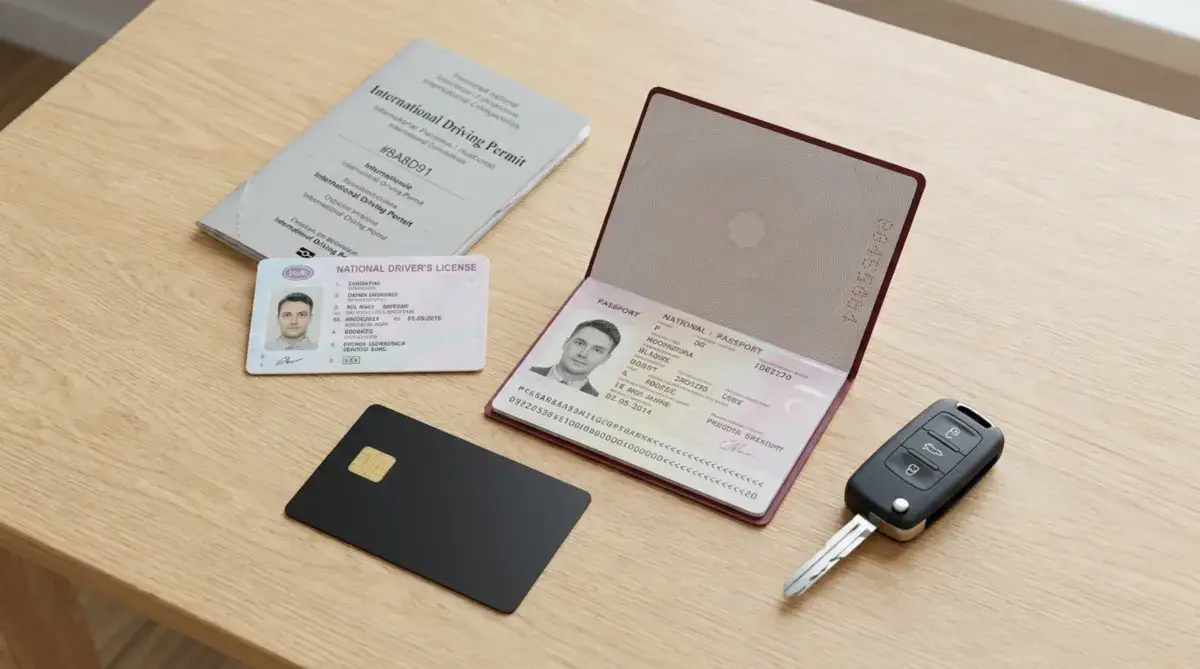
Have these items ready when you arrive at the counter:
Your valid, unexpired national driver's license, held for the required minimum duration.
An International Driving Permit if your license originates outside the EU or EFTA.
A valid passport or official EU national identity card.
Your booking confirmation voucher and reservation reference number.
A physical credit card issued in the primary driver's exact legal name.
What Are the Minimum Age and Driving Experience Rules?
While the statutory driving age in Poland is 18, rental providers establish their own policies. Most companies require drivers to be at least 21 years old for standard economy and compact models. Higher-category vehicles, such as premium sedans, large SUVs, and passenger vans, typically require the renter to be 25 or older.
Additionally, rental terms generally require you to have held your driver's license for at least one or two full years. Renters between the ages of 21 and 25 may incur a standard young-driver surcharge. Some providers also apply senior driver policies or request self-declarations for motorists aged 65 to 70 and above.
Can You Rent a Car Without a Credit Card?
Many online booking systems permit you to settle rental fees upfront using a debit card, digital wallet, or electronic transfer. However, securing the vehicle at the counter almost always requires a standard credit card issued in the primary driver's name. This card must have an adequate credit limit to cover both the insurance excess and a security fuel deposit.
While select rental providers in Poland offer debit card options, these packages typically require purchasing premium zero-excess protection or providing a substantial cash deposit. Presenting a physical credit card with your name embossed or clearly printed remains the most straightforward way to avoid unnecessary administrative delays.
How to Choose a Car Rental Company in Poland
When renting a car in Poland, you'll encounter a selection of global suppliers alongside well-established domestic providers such as CarFree, which brings over a decade of local market experience, nationwide availability, and a diverse modern fleet. The best partner for your trip will depend on your route, preferred pickup point, and service expectations.
While international franchises often maintain standard airport counters, reputable Polish car rental companies frequently provide more modern vehicles, flexible rental options, clear terms, and straightforward cross-border permissions, making long-distance regional touring more convenient.
How Can You Compare Rental Prices and Customer Ratings?
Reviewing verified customer ratings and clear rental conditions online helps you balance cost with dependable service. Look for suppliers that maintain high customer satisfaction scores and positive feedback regarding vehicle cleanliness and pickup speed.
Pay close attention to verified customer reviews rather than focusing strictly on the base daily rate. A lower upfront quote can sometimes mask rigid vehicle check-out standards, mandatory counter insurance packages, or inconvenient off-site terminal transfers that add unnecessary travel time.
What Car Type Suits Polish Cities, Motorways, and Rural Roads?
Select your vehicle category based on the itinerary you've planned:
Mini and Economy (such as Toyota Yaris or Škoda Fabia): Ideal for solo travelers and couples. These models navigate historic city centers, narrow parking garages, and compact bays in cities like Wrocław and Kraków with ease.
Compact and Intermediate (such as Volkswagen Golf or Škoda Octavia): A practical choice for families or groups. They deliver comfortable cruising along the A1, A2, and A4 motorways while providing generous luggage capacity.
SUVs and All-Wheel Drive: A sensible option for navigating southern upland regions such as Zakopane, Karpacz, or Krynica-Zdrój during late autumn and winter, where extra ground clearance and traction support comfortable travel in changing weather.
Manual transmissions remain standard across Poland. If you prefer or require an automatic car, it's wise to book early, as automatic models represent a smaller portion of available fleets and tend to book up quickly.
How Much Does It Cost to Rent a Car in Poland?
Poland remains an economical European destination for car rental. Operating on the Polish złoty (PLN) rather than the euro keeps local running costs, fuel, and rental fees competitive compared to destinations in Western Europe.
Rates vary based on seasonal demand, vehicle category, and how early you confirm your reservation. Standard economy cars generally range from €15 to €30 (approximately 65 to 130 PLN) per day during shoulder and low seasons. Mid-size SUVs, estate wagons, and automatic vehicles typically range between €40 and €80 per day.
What Affects the Daily Rental Rate?
Several standard factors influence your daily rate:
Seasonality: Demand peaks in July and August, leading to higher summer rates. For example, Warsaw rentals that average €28 per day in peak summer may settle around €16 per day by autumn, with modest increases around holiday periods.
Advance Booking: Reserving weeks or months ahead locks in better availability and pricing compared to arranging a vehicle on the spot at an airport desk.
Transmission Type: Manual gearboxes are standard and more budget-friendly. Reserving an automatic transmission typically increases the daily rate by 20% to 40%.
Pickup Location: Key international airports-including Warsaw Chopin, Kraków John Paul II, and Gdańsk Lech Wałęsa-feature strong fleet availability. Downtown branch locations offer convenient urban pickup points, though operating schedules may differ.
Which Extra Costs Should You Budget For?
When planning your budget, account for optional services and practical travel expenses. One-way rentals-such as collecting your car at Warsaw Chopin and dropping it off in Kraków or Wrocław-usually incur a standard domestic relocation fee between €30 and €80.
Additional items to consider include child safety seats, options for an additional driver, or standalone GPS units (though smartphone navigation apps work reliably across Poland). You'll also want to budget for motorway tolls and fuel. Polish fuel prices remain reasonable relative to the broader region, averaging around 5.65 PLN per liter (€1.34 / $1.58).
How to Book a Rental Car in Poland Online
Booking your car rental online before your departure ensures transparent rental terms and lets you choose the exact category you need. A few simple checks during the reservation process will help you travel with confidence and avoid unexpected surprises at pickup.
Follow these steps when organizing your booking online:
1. Compare Cars, Locations, and Rental Dates
Input your exact travel dates, airport arrival details, and flight numbers. If your flight lands late in the evening or early in the morning, check the desk's operating schedule, as collections past 10:00 PM or 11:00 PM may involve an after-hours service arrangement.
Pay close attention to the pickup instructions. Terminal-based counters provide straightforward walk-up access. If a supplier specifies a shuttle transfer or meet-and-greet service, factor in an extra 20 to 40 minutes to reach the off-airport vehicle bay.
2. Check the Mileage, Fuel, and Cancellation Policies
Review the mileage terms before finalizing your selection. While many holiday rentals offer unlimited mileage, some plans place daily limits between 150 and 250 km, charging a set fee for each additional kilometer driven.
We recommend selecting a straightforward "Full-to-Full" fuel policy. This ensures you only pay for the fuel you actually consume, avoiding unfavorable "Full-to-Empty" arrangements. Choosing a provider that offers flexible cancellation terms gives you peace of mind if your itinerary changes.
3. Save the Booking Confirmation and Rental Terms
Once your reservation is confirmed, download your voucher and save an offline copy to your phone. It should clearly outline your booking reference, counter operating hours, after-hours contact numbers, and an itemized summary of prepaid fees and counter balances.
It's also practical to keep a record of the rental conditions shown at checkout, particularly the pre-authorization deposit requirements, so you have all the facts readily accessible upon arrival.
What Insurance Do You Need for a Rental Car in Poland?
Car rental protection packages in Poland can seem complex due to varying terminology. Understanding what standard coverage includes, what your financial liability is, and how to minimize out-of-pocket exposure helps you make informed choices.
By Polish law, Third-Party Liability insurance is mandatory and included in every legitimate rental contract. Coverage for the rental vehicle itself depends on the Collision Damage Waiver provisions included with your booking.
What Does Collision Damage Waiver Cover?
Standard Collision Damage Waiver (CDW) and Theft Protection (TP) are typically included in baseline rental agreements. A CDW isn't comprehensive insurance; rather, it's a contractual agreement where the rental company limits your financial responsibility for vehicle damage to a predetermined sum.
This remaining liability is known as the deductible or excess, usually ranging from €500 to €1,500 depending on vehicle class. Basic CDW packages also routinely exclude vulnerable areas like the undercarriage, tires, windows, side mirrors, and roof. Repairing a cracked windshield or replacing a punctured tire remains the renter's responsibility under standard terms.
How Do Excesses, Deposits, and Credit Card Holds Work?
When you collect your vehicle, the counter staff places a pre-authorization hold on your credit card. This hold covers the insurance deductible alongside a standard fuel deposit, remaining blocked on your credit line until the vehicle is safely returned.
If you've purchased independent excess protection or rely on premium credit card benefits, the rental company will still require the standard pre-authorization hold at the counter. In the event of minor damage, the repair sum is deducted from your deposit, and you then file a claim with your independent insurer for reimbursement.
Alternatively, many travelers choose the rental provider's comprehensive zero-excess protection option at the desk. This reduces financial liability to zero and substantially lowers or eliminates the required security deposit hold.
What to Do at the Polish Rental Desk
The rental counter is where your reservation turns into a binding legal contract. Taking a few deliberate minutes to review documentation and complete an exterior inspection ensures stress-free travel and protects you from unfounded damage claims later on.
Whether you're picking up your keys at an airport terminal or a downtown city branch, careful verification during handover is well worth the time.
How to Complete the Rental Agreement
Present your booking confirmation, national driver's license, IDP, passport, and primary credit card to the representative. The agent will prepare your Polish rental agreement (Umowa Najmu), which typically includes English translations of all major clauses.
Before signing, review the itemized breakdown carefully. Confirm that the daily rate matches your reservation, verify that optional add-ons haven't been added without your request, and ensure the documented fuel level and odometer readings match the car's instruments.
How to Inspect and Photograph the Vehicle
Once you receive your keys and inspection sheet (protokół zdawczo-odbiorczy), walk around the vehicle before driving away. Check closely for existing paint scrapes, bumper scuffs, wheel curb marks, and minor windshield chips.
Take a continuous, clear video of the entire vehicle exterior using your smartphone, focusing on lower trim panels, tires, lights, and glass. Inside, photograph the illuminated dashboard with the engine running to record the exact fuel level and mileage. If you spot any unlisted blemish larger than a small coin, ask the staff member to record and sign off on it before you depart.
What Are the Main Driving Rules in Poland?
Driving in Poland is generally predictable, with well-enforced national traffic regulations. Vehicles travel on the right, overtake on the left, and all occupants must wear seatbelts at all times.
Dipped headlights or dedicated daytime running lights must be illuminated 24 hours a day, all year round, regardless of weather conditions. Operating a mobile device while driving is strictly prohibited unless used through a certified hands-free system.
What Are the Speed Limits in Poland?
Standard speed limits depend on the road classification:
Motorways (Autostrady, marked with "A"): 140 km/h (87 mph).
Dual-Carriageway Expressways (Drogi ekspresowe, marked with "S"): 120 km/h (74 mph).
Single-Carriageway Expressways: 100 km/h (62 mph).
Standard Open Country Roads: 90 km/h (56 mph).
Built-Up Urban Areas: 50 km/h (31 mph). The standard urban limit applies around the clock unless signposts state otherwise.
Designated Residential Zones (Strefa zamieszkania): 20 km/h (12 mph), where pedestrians have complete right of way.
Speed compliance is monitored via stationary speed cameras (fotoradary) and sectional average-speed enforcement zones (odcinkowy pomiar prędkości). Violations captured on camera are forwarded directly to the vehicle owner, meaning the rental company will charge your card for the fine alongside a standard administrative processing fee (typically 100 to 200 PLN).
Who Has Priority at Intersections and Roundabouts?
At uncontrolled crossings and intersections where no priority signs appear, Poland adheres to the standard priority-to-the-right rule (reguła prawej ręki). You must yield to all vehicles approaching from your right, including on quiet neighborhood streets.
At the vast majority of Polish roundabouts, circulating traffic maintains right of way over vehicles entering. This layout is marked by the circular blue roundabout sign (C-12) paired with a triangular yield sign (A-7). Indicate right only when preparing to exit the roundabout; do not indicate left while entering or traveling within the circulatory lanes unless changing lanes.
What Do Common Polish Road Signs Mean?
Polish road signs adhere to the international Vienna Convention standards. Key signs you'll encounter include:
Yellow Diamond with a White Border (D-1): Indicates you're on a priority road and have right of way through upcoming intersections. A black diagonal slash across this sign indicates your priority status has ended.
White Rectangular Sign with a Black City Silhouette (D-42): Marks the formal entrance into an urban built-up zone, automatically lowering the speed limit to 50 km/h regardless of surrounding building density. A red diagonal slash (D-43) indicates the end of the zone.
Flashing Green Arrow Beside a Red Light: Allows motorists to make a careful right turn while the main traffic light is red, provided you come to a complete stop first and yield to all crossing pedestrians and oncoming traffic.
Poland enforces one of the strictest blood alcohol limits in Europe at 0.02%. Operating a vehicle with a reading between 0.02% and 0.05% constitutes a serious driving offense that incurs heavy fines and immediate license suspension. Any reading above 0.05% is considered a criminal offense punishable by mandatory driving bans and potential imprisonment. The safest approach is simple: never consume alcohol before driving.
How to Drive Safely in Polish Cities and on Motorways
While long-distance travel on Polish express routes is smooth and efficient, navigating major urban centers requires careful observation. Historic street layouts, integrated tram corridors, and active city traffic require your complete attention.
Understanding local city driving dynamics before you set out will keep you confident, compliant, and safe in busy traffic.
How Can You Drive Around Tram Tracks, Bus Lanes, and Complex Intersections?
Trams play a primary role in transit across Warsaw, Kraków, Wrocław, and Poznań, and they enjoy right of way in nearly all driving scenarios. Trams often have priority when entering or clearing complex junctions. Never queue or come to a halt on active tram tracks while waiting to complete a turn. Watch closely for street-level tram stops, where disembarking passengers step directly from the tram carriage onto the road surface.
Many urban thoroughfares designate dedicated right-hand lanes for public transport, clearly marked "BUS" or "BUS / TAXI". These lanes often operate under time-specific restrictions. Driving in bus lanes during operational hours risks automated photo fines. Pay close attention to overhead and roadside lane signs before making turns so you don't inadvertently enter restricted lanes.
What Should You Do After a Breakdown or Collision?
If your vehicle experiences mechanical issues on a motorway or rural highway, activate your hazard warning lights immediately. Put on your high-visibility reflective vest before stepping out of the car, and position the red emergency warning triangle behind the vehicle: 100 meters back on motorways, 30 to 50 meters back on expressways, and directly behind the car in urban areas.
In the event of an accident involving injuries, dial the European emergency number 112 immediately. For minor incidents without injuries, drivers can exchange insurance details and complete a standard collision statement form (oświadczenie o zdarzeniu drogowym). However, most rental terms require you to notify local police and call your rental company's 24/7 support line immediately before leaving the scene.
How Do Parking, Tolls, and Fuel Work in Poland?
Managing daily vehicle expenses in Poland is straightforward, though municipal parking regulations and motorway toll collection systems vary across regions. Familiarizing yourself with local ticketing machines, electronic toll passes, and service station customs will keep your journey running smoothly.
Where Can You Park in Polish Cities?
Central urban areas enforce Paid Parking Zones, designated as Strefa Płatnego Parkowania (SPP). These areas are indicated by blue "P" signs accompanied by informational plaques detailing active enforcement days and hours. In most cities, paid hours run Monday through Friday from 8:00 AM to 6:00 PM or 8:00 PM, while popular historic districts may enforce charges on weekends as well.
Parking fees can be settled at curbside pay stations (parkomaty) using coins or contactless payment cards. Widely used mobile applications like mobiParking, moBiLET, and Flowbird also provide convenient digital payment options. When paying at a machine, display the printed paper ticket clearly on your dashboard. Note that parking partially on sidewalks is legal only if at least 1.5 meters of unobstructed clearance remains for pedestrians.
Which Polish Roads Require Tolls?
The vast majority of Poland's national highway and expressway network is toll-free for passenger vehicles under 3.5 tonnes. However, select sections of primary motorways (Autostrady) levy user fees:
A1 (Gdańsk to Toruń): Utilizes automated electronic vehicle registration or barrier toll gates.
A2 (Świecko border to Konin and Poznań): Managed by Autostrada Wielkopolska, featuring traditional toll plazas accepting PLN, EUR, USD, and major payment cards.
A4 (Katowice to Kraków): Operated by Stalexport, with manual payment lanes accepting cash or card, as well as electronic payment via apps like Autopay.
Certain state-operated stretches, such as the A2 between Konin and Stryków and the A4 between Wrocław and Sośnica, utilize the electronic e-TOLL system with no physical toll gates. Check with your rental company at pickup to see if your car is equipped with an electronic toll pass or if you'll need to purchase a digital highway ticket (e-bilet autostradowy) online or at a local petrol station prior to travel.
How Do You Refuel a Rental Car at a Polish Petrol Station?
Major service stations across Poland-including Orlen, BP, Shell, Moya, and Circle K-operate on a self-service basis. Pull up to the appropriate pump, select the correct fuel grade, fill the tank, and step inside the station shop to pay by quoting your pump number.
Ensure you select the right fuel type for your vehicle:
Pb 95 / Eurosuper 95: Standard unleaded petrol, dispensed from green nozzles.
ON / Olej Napędowy: Standard automotive diesel, dispensed from black nozzles.
LPG (Autogaz): Liquefied petroleum gas. Station staff must handle or oversee the dispensing of LPG.
Always retain the receipt from your final refueling stop before returning your vehicle. Return staff often check the timestamp and location on the receipt to verify that you topped off the tank within 10 to 15 kilometers of the drop-off facility.
Can You Take a Rental Car Across Poland's Borders?
Poland's central European geography makes it an excellent base for cross-border travel. Because Poland belongs to the passport-free Schengen Zone, you won't encounter routine border checkpoints when driving into neighboring Schengen countries.
However, crossing any national border without prior written approval from your car rental provider is a direct breach of your rental terms, which immediately invalidates your insurance coverage.
Which Countries Can You Visit with a Polish Rental Car?
Most Polish car rental companies permit cross-border itineraries into neighboring Central and Western European Schengen nations, such as Germany, the Czech Republic, Slovakia, and Austria. Many providers also accommodate travel into extended destinations, including Italy, France, and parts of Scandinavia.
Travel into non-EU eastern territories-specifically Belarus, Ukraine, and Russia (including the Kaliningrad exclave)-is universally prohibited by rental contracts. Some suppliers may also apply specific restrictions or specialized security requirements for transit into Lithuania. Always review your provider's approved country schedule before organizing your route.
How Do You Request Cross-Border Permission?
Notify your car rental provider of your plans to travel abroad during the online booking process or directly at the counter during pickup. The company will issue formal written travel authorization and provide the vehicle's original registration certificate (Dowód Rejestracyjny) alongside an international Green Card insurance certificate.
Rental companies generally charge a standard cross-border administrative fee, usually ranging between €60 and €90 (roughly 250 to 400 PLN). If your journey crosses into the Czech Republic, Slovakia, Austria, or Switzerland, remember to buy the respective country's digital motorway vignette before entering their toll highway networks.
Which Polish Road Trips Work Well with a Rental Car?
From the rugged peaks of the southern border to rolling central plains and expansive coastal dunes, Poland provides incredible scenic diversity for road touring. Here are two well-tested routes that showcase the best of the country for first-time road trippers.
Each route balances major highway connectivity with picturesque countryside detours and rich cultural landmarks.
Kraków, Auschwitz, and the Tatra Mountains
This classic southern route blends historical discovery with breathtaking alpine landscapes. Begin in Kraków, exploring the historic market square and Wawel Castle before collecting your rental car. Drive 90 minutes west along national roads to Oświęcim to visit the Auschwitz-Birkenau Memorial and Museum.
From there, head south along the scenic Zakopianka route toward Zakopane, nestled at the foot of the Tatra Mountains. Spend a few days enjoying mountain routes, relaxing at the geothermal baths in Chochołów, and exploring trails in the Kościeliska Valley. Conclude your road trip by driving through the picturesque Dunajec River Gorge in Pieniny National Park before returning your car to Kraków.
Gdańsk, Sopot, and the Baltic Coast
This northern seaside circuit combines maritime heritage, sandy beaches, and medieval architecture. Start in Gdańsk, touring the colorful facades of Długi Targ and the artisan amber stalls along Mariacka Street, before taking an easy coastal drive to the seaside piers of Sopot and Gdynia.
From the Tri-City area, drive southeast along the modern S7 expressway to visit Malbork Castle, the world's largest brick castle fortress. Next, turn westward toward Słowiński National Park to explore its massive coastal sand dunes. Wrap up your tour with a relaxed drive along the narrow Hel Peninsula, visiting historic fishing villages before returning your vehicle to Gdańsk Lech Wałęsa Airport.
How to Return a Rental Car in Poland
Returning your vehicle smoothly ensures your security deposit is released promptly and prevents any unexpected post-rental charges. Planning your return routine ahead of time keeps your final day stress-free.
Aim to reach the rental return facility 30 to 45 minutes before you need to be at the airline check-in counter, giving you plenty of time for check-in paperwork and a vehicle inspection.
How Do You Follow the Correct Fuel Policy?
Under a Full-to-Full fuel policy, locate a petrol station within 5 to 10 kilometers of the drop-off location. Refuel until the pump nozzle clicks off automatically; avoid overfilling beyond that point.
Keep your printed payment receipt handy. If the dashboard fuel indicator responds slowly after refueling, presenting the receipt showing the date, time, and nearby station location confirms to the check-in agent that the tank was returned full.
What Should You Photograph at Drop-Off?
Once you've parked in the designated return bay, turn off the engine and complete a quick visual walk-around with your phone camera. Take clear photos and a wide video showing all four body corners, alloy wheels, tires, window glass, and interior upholstery.
Switch the ignition on briefly to take a clear photograph of the dashboard cluster, confirming the final odometer reading and the full fuel gauge. If you return the vehicle outside normal counter hours via a secure key drop box, snap a quick photo of yourself depositing the keys into the drop slot to document your exact return time.
When Is the Security Deposit Released?
If an agent checks the car in person, ask for a signed return report (protokół odbioru). This document records that the vehicle was received in good order, clean, with a full tank and no new damage. Once this paperwork is signed, your contractual obligations are complete.
Rental companies typically release the pre-authorization hold on your credit card within 24 to 48 hours of return. Depending on your home banking institution and international processing channels, it may take 5 to 14 business days for the funds to reflect back in your available credit balance.
Safety Equipment, Wildlife Hazards, and Polish Winter Driving Laws
Driving safely across Poland also means following seasonal requirements and staying alert to rural hazards. By law, every vehicle operated in Poland must carry a certified red warning triangle and an approved 1-kilogram ABC fire extinguisher with a valid certification stamp. While Polish law doesn't strictly mandate carrying a high-visibility reflective vest inside private car boots, it does require any person walking along unlit roads outside built-up areas after dark to wear reflective elements. If your vehicle breaks down at night and you step onto the road, you are legally classified as a pedestrian and must wear a reflective vest to avoid fines and stay safe.
Stay particularly vigilant when driving through heavily forested provinces in eastern and northern Poland, such as Warmia-Masuria, Podlaskie, and Lubusz. Wildlife populations-including wild boar, red deer, and European moose-are abundant. Triangular warning sign A-18b, reading "Zwierzęta dzikie", marks active wildlife migration corridors. Collisions with a full-grown moose present significant hazards due to the animal's center of gravity and weight. If an animal appears on the road ahead, dim your headlights so it doesn't freeze in place, brake firmly, and maintain your lane rather than swerving into oncoming traffic.
Winter conditions demand careful preparation. While Poland doesn't enforce a blanket legal mandate requiring winter tires on specific calendar dates, equipping them between November and March is standard practice nationwide. Reputable rental providers supply vehicles fitted with M+S or 3PMSF winter tires, sometimes including a nominal seasonal equipment fee.
When traveling through mountainous regions such as the Tatras, Sudetes, or Karkonosze, watch for circular blue sign C-18 ("Nakaz używania łańcuchów"), which makes snow chains mandatory on drive wheels during heavy snow conditions. Checking your vehicle equipment, reviewing the local forecast, and observing regional road signs will ensure you enjoy a comfortable, smooth journey wherever your travels in Poland take you.