
05.09.2026
Parking in Krakow - Where to Leave Your Car Safely
Where can you park your vehicle safely in Krakow while avoiding costly fines and tight historic streets?
The most secure choices are barrier-controlled underground garages like Plac Na Groblach, Galeria Krakowska, and the National Museum, alongside monitored suburban Park and Ride (P+R) hubs connected directly to city tram lines.
Knowing the city's parking zones and restrictions before you arrive ensures a smooth journey and lets you travel with confidence.
Parking in Krakow: Where To Leave Your Car Safely
Leaving a vehicle in an unfamiliar city requires the right balance between convenience and security. In Krakow, modern car parks with barriers, CCTV monitoring, and on-site staff provide the best protection against break-ins, scratches, and parking violations. These garages also take the guesswork out of complex local street signs, keeping your car away from narrow kerbs where delivery vans, cyclists, and passing traffic can cause damage.
If you prefer on-street parking, you can use Krakow’s extensive paid parking zone. While street bays are generally safe from serious crime, your vehicle remains exposed to tight bumper scrapes, damaged mirrors, and frequent patrols by municipal enforcement vehicles equipped with mobile scanning cameras.
Before choosing where to leave your car, consider what matters most for your trip: immediate access to central sights, budget-friendly rates, or peace of mind.
Is Parking in Krakow Difficult?
Finding a parking space in Krakow depends heavily on how close you try to get to the Main Market Square. Inside the Planty Park perimeter, access for private vehicles is heavily restricted, and searching for an open street space is rarely successful. The surrounding historic neighbourhoods, such as Piasek, Nowy Świat, and Kazimierz, offer on-street bays, but demand remains high throughout the day.
Navigating the street layout can also be challenging if you aren't familiar with the city. Narrow residential streets often turn into dead ends, one-way systems, or tram corridors without much advance notice. Arriving during peak commuting hours without a designated garage in your navigation system can add unnecessary stress to your trip.
Which Parking Option Suits Your Visit?
The best parking option depends on your travel schedule and how often you plan to use the vehicle. If you're spending a weekend exploring the Old Town on foot, your car might sit parked for several days. In that situation, driving into the city centre isn't necessary. Leaving your car at a monitored P+R site on the outskirts or booking a multi-storey space near the main railway station saves both time and parking fees.
If Krakow serves as your base for regional road trips to the Tatra Mountains, the Dunajec River Gorge, or the Ojców National Park, you'll want quick access to major exit routes alongside secure overnight parking. For frequent day trips, large underground garages along Aleje Trzech Wieszczów or secure hotel facilities are much more convenient than suburban commuter lots. If you're picking up a rental car in Krakow for these excursions, choose a hotel near the garage to simplify daily access.
Parking Rules, Restricted Areas, and Vehicle Access
Krakow enforces strict traffic regulations to protect its historic architecture and reduce urban emissions. Vehicle access is managed in concentric rings, with rules becoming progressively stricter the closer you get to the Old Town. Entering a restricted zone without a valid permit can result in heavy municipal fines or wheel clamps.
Understanding local access and loading regulations helps you avoid costly errors during your stay. Krakow’s city wardens (Straż Miejska) actively monitor central districts on foot, on bicycles, and using automated patrol vehicles.
Which Vehicles Can Park in Krakow's Restricted Areas?
The centre of Krakow’s Old Town consists of restricted traffic zones, primarily designated as Strefa A (strictly pedestrian) and Strefa B (limited vehicular access). General visitors and non-resident drivers can't enter these areas by car. Access is limited to emergency services, municipal maintenance teams, postal carriers, and local residents holding valid municipal permits.
Commercial deliveries are allowed only during specified morning hours. Whether you're driving your personal car or a modern car rental, you aren't permitted to enter these pedestrian zones unless your hotel has registered a formal entry pass with the municipal traffic authority prior to your arrival.
Resident Permits, Disabled Parking, and Other Exemptions
Certain kerbside spaces carry signs marked with the letter “A” and sector numbers. These bays are reserved exclusively for local residents with an official permit called an Abonament Mieszkańca. Parking in these dedicated bays without the correct permit leads to immediate fines, even if you've bought a standard parking ticket from a meter.
Blue disabled parking spaces, known locally as koperty, are located throughout the city. International drivers may use them provided they display a valid European Parking Card or recognized disability badge clearly on the dashboard.
Keep in mind that payment rules vary by zone; in many central areas, a disability permit grants access to the dedicated space but doesn't exempt the driver from standard hourly parking fees.
Loading Bays, Pedestrian Streets, and No-Stopping Zones
Because central kerb space is limited, the city marks designated delivery bays as koperty dostawcze. These areas are reserved for commercial delivery vehicles during active hours, typically 07:00 to 10:00 and 14:00 to 16:00. Leaving an unauthorized car in a delivery bay disrupts traffic flow and often leads to towing.
Pedestrian streets are marked with blue circular signs depicting a parent and child; standard vehicular traffic is strictly prohibited unless an accompanying plaque lists a specific exemption. Pay close attention to standard B-36 "No Stopping" signs (a blue circular sign with a red cross). In central Krakow, these signs almost always feature an additional tow-away symbol, meaning that even a brief stop to unload luggage can result in your car being impounded.
How Planned Clean Transport Restrictions May Affect Drivers
Krakow continues to develop its Clean Transport Zone (Strefa Czystego Transportu, or SCT). This initiative aims to improve local air quality by restricting older, higher-emission vehicles from central parts of the city based on European emissions standards (Euro ratings) for petrol and diesel engines.
Before heading to Krakow, verify your vehicle's emissions classification. Modern fleet models and newer petrol or diesel cars comfortably meet these environmental requirements, but older diesel vehicles may face access restrictions or require registered identification stickers. Checking current SCT regulations ahead of time helps ensure comfortable travel throughout the city.
Why Road Signs Take Priority Over Online Parking Maps
While digital navigation apps are helpful tools, they don't always reflect immediate changes on Krakow’s roads. Ongoing tram improvements, facade renovations on historic tenements, and seasonal markets often lead to sudden street closures or temporary parking bans.
Physical road signs always override GPS recommendations, mobile parking applications, and printed travel guides. If an app indicates an open parking bay but a temporary metal sign bans stopping for street maintenance, parking there can result in an unexpected ticket or vehicle impoundment.
Paid Parking Zones in Krakow
Krakow manages on-street parking through a unified Paid Parking Zone (Obszar Płatnego Parkowania). The system controls vehicle turnover in busy inner-city districts, ensures residents have reasonable access to street parking, and supports public transit usage.
The paid zone is divided into distinct sectors with mandatory fees during operational hours. Confirming the sector boundaries, operating times, and payment procedures before leaving your car protects you from unexpected penalty fees.
Where the Paid Parking Zone Operates
The paid parking perimeter covers the entire Old Town and the surrounding Planty belt, extending across Kazimierz, Stradom, Kleparz, Piasek, and Nowy Świat. It also encompasses significant sections of Podgórze and Grzegórzki, alongside parts of Krowodrza, Dębniki, and Zwierzyniec.
As traffic patterns evolve, the city occasionally updates boundaries to prevent commuter congestion on residential streets. Clear road signs reading Strefa Płatnego Parkowania indicate whenever you cross into a paid district.
What Are the Parking Zone Sectors and Tariffs?
The system is organized into three primary subzones based on proximity to the central historic core:
Subzone A (Downtown Core): Covers the streets immediately surrounding the Old Town and major tourist corridors. It carries the highest hourly tariff to discourage long-term parking in the city's most congested areas.
Subzone B (Intermediate Ring): Encompasses historic districts like Kazimierz, parts of Grzegórzki, and central Podgórze. Hourly fees are slightly lower than Subzone A, while still encouraging short-term turnover.
Subzone C (Outer Districts): Encompasses commercial and residential areas farther out, including wider sections of Krowodrza and Dębniki. This zone operates at the most economical hourly rates.
Across all three subzones, the hourly rate increases incrementally for the second and third consecutive hours before returning to a baseline rate from the fourth hour onward.
When Do You Have To Pay for Parking in Krakow?
Paid parking rules apply Monday through Saturday, from 10:00 to 20:00. During these hours, any vehicle parked in a public on-street bay must have an active ticket or a verified mobile parking session linked to its registration number.
Street parking is generally free on Sundays and designated public holidays, including New Year’s Day, Easter, All Saints’ Day, and Christmas. However, always review local signage, as commercial parking garages and retail centres maintain their own operating hours and independent fee structures.
How To Pay for On-Street Parking
You can purchase parking time directly at street meters (parkomaty) or via approved smartphone applications. Krakow’s parking machines accept contactless payment cards, Polish coins, and BLIK mobile codes. Keep in mind that meters don't give change.
When using a meter, type in your full vehicle registration plate before completing the payment. Because the system is digital, your session records instantly in the central municipal database, meaning you don't need to walk back to place a paper receipt on your dashboard. Mobile apps like mPay, SkyCash, moBILET, Flowbird, and AnyPark provide added convenience by allowing you to start, stop, and extend your parking time remotely.
How To Avoid Incorrect Payments and Parking Fines
Enforcement across Krakow relies heavily on specialized electric patrol cars fitted with roof-mounted automated licence plate recognition cameras. These vehicles scan plates continuously and cross-reference them with the live payment registry. Entering a single mistaken digit or letter at the meter can cause the system to flag your car as unpaid.
To avoid an additional penalty fee (opłata dodatkowa), double-check your registration details carefully before confirming payment, taking extra care with characters like "0" (zero) and "O" (letter). If you relocate your car from one area to another-such as moving from Subzone C into Subzone A-make sure to update your parking session to reflect the higher applicable tariff.
Where To Park Near Krakow City Centre
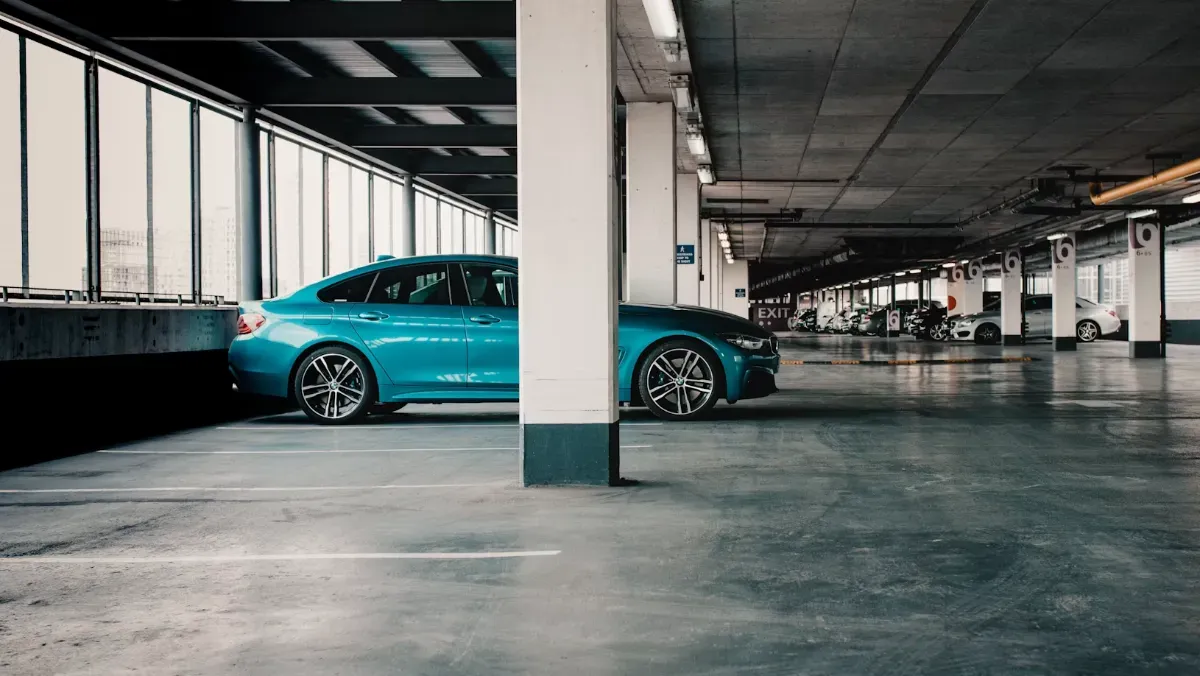
If you prefer keeping your vehicle within easy walking distance of central attractions, several secure multi-storey and underground garages surround the pedestrian perimeter. They offer well-lit environments, entry barriers, and dedicated surveillance.
While central garages charge higher rates than outer lots, they provide an ideal base for travelers who want to park their car once, check into their accommodation, and explore the city on foot.
Parking Garages Near Krakow Old Town and the Main Market Square
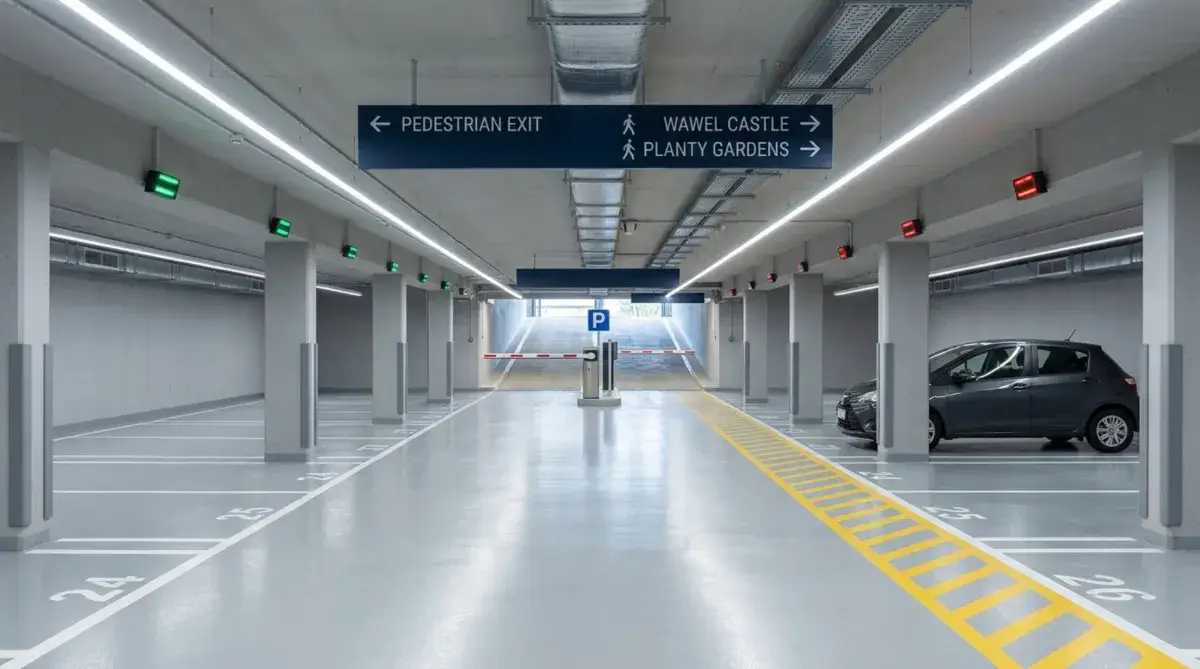
The primary underground facility serving the historic centre is situated at Plac Na Groblach, just steps from the western walls of Wawel Castle and the Vistula River. Walking from the garage to Wawel Castle takes around five minutes, and you can reach the Main Market Square in about ten minutes with a scenic stroll through the Planty Gardens.
Plac Na Groblach features automated entry barriers, continuous CCTV coverage, well-lit pedestrian corridors, and payment kiosks supporting international payment cards. It sees steady traffic during summer weekends, but its multi-level design ensures spaces become available regularly throughout the day.
Krakow Gallery and Krakow Railway Station Parking
Another convenient central option is the multi-level facility integrated with Galeria Krakowska and the Kraków Główny central railway station. Positioned on the north-eastern edge of the historic core, it features extensive rooftop and underground parking areas with hundreds of spaces.
This car park is particularly convenient if you're arriving via northern or eastern access routes. Direct elevator connections take you through the shopping centre to pedestrian underpasses, allowing you to walk to the historic Barbican and Floriańska Gate in less than five minutes.
Parking Near the National Museum on Mickiewicza Avenue
For parking on the western flank of central Krakow, the underground facility beneath the National Museum (Muzeum Narodowe) on Aleja 3 Maja and Mickiewicza Avenue is a reliable choice. Located directly beneath the museum forecourt, it features wide parking bays, barrier-controlled entry, and video monitoring.
This car park lets you bypass congested inner-city roads while remaining close to major transport links. Multiple tram lines stop right outside the garage, and you can easily walk through the university district to reach the central square in approximately fifteen minutes.
Private Car Parks Near Karmelicka and Starowiślna Streets
You'll find various open-air, guarded private lots positioned along major roads leading toward the centre, particularly along Ulica Karmelicka to the north-west and Ulica Starowiślna to the south-east. Many of these occupy courtyards or open ground tucked behind historic facades.
Most lots are enclosed by perimeter fencing and staffed by an on-site attendant. They're well-located for access to nearby boutique hotels and apartments, but their prices are set independently of municipal rates. Always check the posted tariff board before driving in, as daily rates can increase during peak holiday seasons.
Parking in Kazimierz and Near the Old Synagogue
Kazimierz, Krakow’s historic Jewish Quarter, is famous for its lively dining culture, historic synagogues, and vibrant atmosphere. However, finding on-street parking here can be challenging. The cobbled spaces around Szeroka Street near the Old Synagogue fill up quickly with residents and visitors from mid-morning onward.
Navigating Kazimierz involves narrow alleys, bustling pedestrian crowds, and busy outdoor cafe terraces. If you're visiting this area, we recommend parking in one of the guarded private lots on Dajwór Street or Starowiślna rather than circling tight residential streets like Józefa or Miodowa.
Parking in Podgórze and Near Jan Zamoyski Street
Located directly across the Vistula River from Kazimierz, Podgórze offers a quieter parking environment within easy reach of sites like Oskar Schindler’s Enamel Factory and Ghetto Heroes Square. Street bays are located along residential roads including Jan Zamoyski Street, Kalwaryjska, and around St. Benedict’s Church.
While Podgórze falls within the paid parking zone, turnover is higher and spaces are easier to locate than in the Old Town. Modern commercial garages and private lots around the Korona sports complex offer secure alternatives just a short tram ride across the river from the centre.
How Far Can You Park From Krakow's Main Square?
Because the area around the Main Market Square (Rynek Główny) is an active pedestrian zone, the closest legal parking spaces sit between 300 and 500 metres away along the Planty ring, on streets such as Straszewskiego, Podwale, and Dunajewskiego.
Securing an on-street bay here requires both timing and patience. For a more reliable arrival, garages like Plac Na Groblach or Galeria Krakowska position your vehicle roughly 800 to 1,200 metres from the Main Square-an easy, pleasant walk through the shaded park.
Where To Leave Your Car When Visiting Krakow's Historic Centre
Exploring central Krakow calls for a thoughtful approach to vehicle mobility. The Old Town was designed long before cars, making private vehicles impractical for sightseeing in the historic core.
The smoothest strategy is to leave your vehicle in a secure garage on the edge of the historic centre and complete your journey using Krakow's dependable tram lines or on foot.
Why Driving Into the Old Town Is Usually Impractical
Attempting to drive deep into the Old Town is stressful and often prohibited. Streets within the Planty ring are strictly controlled pedestrian zones, enforced by retractable bollards and municipal monitoring cameras. Standard mapping apps don't always distinguish clearly between permitted resident roads and fully pedestrianised walkways.
Even where access is permitted, travel is slow. Drivers share narrow cobbled lanes with tour groups, electric passenger carts, and cyclists, while uneven surfaces place unnecessary wear on your vehicle's suspension.
The Safest Parking Choices for a Day of Sightseeing
For a comfortable, full-day visit, modern underground garages provide the highest level of security. The facility at Plac Na Groblach is particularly practical, keeping your car sheltered from weather while providing 24/7 security right at the base of Wawel Hill.
Alternative covered facilities at Nowy Kleparz and the National Museum also offer secure, stress-free options. Both garages feature electronic display boards indicating open space availability before you enter, saving you from navigating into a full car park.
How Walking and Public Transport Complete the Journey
Once your car is parked safely outside the historic core, getting around is effortless. Krakow's public transport authority (MPK Krakow) operates an efficient network of modern trams and buses circling the central ring along Aleja Trzech Wieszczów and the Planty.
Tram stops feature digital arrival boards, and you can buy transit tickets inside vehicles using contactless payment cards or through mobile transit apps like Jakdojade. Walking through the Planty green belt-which traces the city's ancient defensive walls-remains one of the most enjoyable ways to enter the Old Town gates.
Park and Ride in Krakow: A Practical Alternative
For cost-conscious travelers, daily commuters, and visitors staying in outer districts, Krakow’s municipal Park and Ride (P+R) network provides a smart, affordable way to leave your car securely without battling central traffic.
Positioned along major arterial routes around the city outskirts, P+R facilities pair budget-friendly parking with direct, rapid transit connections directly into the historic centre.
How the P+R System Works
Krakow’s official P+R car parks are maintained by the municipal transport board (ZTP). Each site features secure perimeter fencing, round-the-clock CCTV cameras, and automated entry and exit barriers.
Upon arrival, the terminal issues an entry ticket linked to your vehicle’s registration number. P+R facilities operate seven days a week, typically open from 04:30 until 02:30 the following morning. This schedule gives you plenty of time to enjoy dining and sightseeing before the lots close for brief overnight maintenance.
How To Use a P+R Ticket With Public Transport
Krakow’s P+R facilities are integrated directly with public transit services. If you already hold an active period transit ticket-such as a 24-hour, 48-hour, or monthly MPK card-parking at municipal P+R hubs is generally included at no additional charge. You simply scan your valid transit card at the terminal to exit.
If you don't have a public transport pass, you pay a small daily parking tariff at the machine upon entry. This parking ticket automatically doubles as an all-day transit pass for city trams and buses, delivering exceptional value for solo drivers and families alike.
Czerwone Maki P+R for Visitors Arriving From the South
Travelers arriving from southern routes-including the A4 motorway, Zakopane, or the Slovak border-will find P+R Czerwone Maki exceptionally convenient. Situated in the Ruczaj district close to the southern bypass, it provides fast access from major approach roads.
Czerwone Maki offers both outdoor bays and a multi-level covered structure. A sheltered walkway leads directly from the parking bays to the integrated tram terminal serving routes 11, 17, 18, and 52. Boarding tram 18 or 52 delivers you to central landmarks like Teatr Słowackiego or Poczta Główna in 20 to 25 minutes, bypassing southern bottlenecks completely.
Other Useful P+R Locations Around Krakow
Krakow operates several well-equipped P+R hubs across strategic entry corridors:
P+R Górka Narodowa: Ideal for travelers approaching from northern Poland via route 7 (Warsaw and Kielce). This multi-level facility connects directly with the northern fast tram line heading into Kraków Główny.
P+R Kurdwanów: Conveniently located for drivers exiting the southern A4 motorway corridor. Fast tram lines 24 and 50 offer rapid connections directly into the central rail tunnel.
P+R Bieżanów: Serves traffic coming from south-eastern regions, including Wieliczka, Tarnów, and Rzeszów via the A4.
P+R Mały Płaszów: Positioned east of the centre, this hub accommodates drivers arriving via the S7 expressway, with frequent tram connections straight to the central station.
What To Check Before Leaving Your Car at a P+R Facility
Before planning your parking, review the operating rules regarding multi-day stays. Krakow’s municipal P+R sites are structured for daytime and evening transit rather than extended, multi-day vehicle storage. Leaving a car parked during the nightly maintenance window (typically between 02:30 and 04:30) can trigger a substantial overnight penalty fee.
Additionally, pay attention to the electronic variable-message signs positioned on approach roads. These displays show live bay availability, letting you verify open spaces before you arrive.
Free and Low-Cost Parking in Krakow
Because paid parking zones cover most central districts, finding free parking within walking distance of Krakow's main attractions is virtually impossible. The city uses zoning fees to keep central parking spaces accessible for residents and prevent traffic congestion.
However, practical, budget-conscious parking options still exist if you're comfortable parking in outer residential neighbourhoods and completing your trip by bus or tram.
Where Free Parking May Still Be Available
Unmetered street parking begins once you cross beyond the official paid parking perimeter. These areas are typically residential communities located roughly three to five kilometres from the central historic core.
Outer sections of Prądnik Czerwony, Bronowice, and parts of Podgórze Duchackie feature public streets that don't require parking payment. You're welcome to park freely in these areas provided you respect local driveways, observe pedestrian footpath clearances, and comply with standard Polish road rules.
Why Free Parking in the Centre Is Difficult To Find
While drivers could once find tucked-away courtyards or unregulated lanes near the centre, virtually every public curb within the central ring is now metered or reserved for residents.
Any non-metered spaces in central Krakow are almost exclusively private property, secured by barrier gates, private management operators, or access-control keypads. Searching for unregulated free spaces near the centre generally results in wasted fuel and lost travel time.
Parking Near Bagry Reservoir and Other Outer Districts
If you're traveling with an oversized vehicle, camper, or simply seeking an economical parking base on the outskirts, recreational areas provide practical alternatives. The district surrounding Bagry Reservoir (Zalew Bagry) in Płaszów features open-air public car parks designed for recreational visitors.
Outside of sunny summer weekends, these spaces generally have ample capacity and lie outside the municipal paid zone. From Bagry, an easy ten-minute walk connects you with the Mały Płaszów transit hub or the Kraków Płaszów railway station, where regular trams and urban trains reach central Krakow in around fifteen minutes.
Shopping Mall Parking: Time Limits and Customer Conditions
Major shopping centres throughout Krakow-such as Bonarka City Center, Serenada, and M1-maintain expansive surface and covered parking garages that provide complimentary parking for patrons during retail hours.
Always inspect the posted customer terms upon entry. Most shopping centres utilize automatic number plate recognition systems to monitor parking duration. While the initial two or three hours are often free, fees escalate significantly after that window to prevent daily commuters from utilizing retail bays as unauthorized P+R lots.
Why You Should Not Treat Hotel or Supermarket Parking as Public Parking
Leaving your car in private supermarket car parks (such as Biedronka, Lidl, or Aldi) or on private hotel forecourts carries considerable risk. Urban retail lots are managed by commercial parking management operators who enforce strict terms.
These sites usually require drivers to collect a complimentary ticket from an on-site dispenser to display on the dash, or log their plate details on a touch screen in-store. Failing to follow these rules-or overstaying the typical 60 to 90-minute allowance while sightseeing-often results in private contractual parking notices of 150 to 200 PLN.
[Rent a car at Krakow Airport]
Hotels and Private Car Parks in Krakow
If you prefer driving straight to your lodging, choosing a hotel with private on-site parking makes your arrival seamless. Because historic central properties operate under strict preservation rules, parking provisions vary significantly across accommodation providers.
Always verify parking details directly prior to booking. Some historic properties list parking amenities on their listings, only to direct guests upon arrival to external public garages several streets away.
How To Find a Hotel With Secure Parking
When filtering hotel amenities online, use the "parking on site" feature as a preliminary guide, then contact the hotel reception team to clarify the setup. Confirm whether your space is located in a subterranean garage, an enclosed inner courtyard, or on an unreserved public street outside.
Contemporary hotels established along the immediate border of the Old Town-particularly in Grzegórzki, Kleparz, and Dębniki-frequently feature modern underground facilities. Many provide direct elevator access from the garage up to guest rooms, making luggage handling simple and protected from street traffic.
Guarded, Underground, and Unguarded Parking Compared
Facility descriptions and roadside signs throughout Poland reference specific parking terminology. Here is what each classification provides:
Parking Type | Polish Term | Key Features | Best For |
Guarded Parking | Parking Strzeżony | Enclosed perimeter, entry barrier, 24/7 on-site attendant, and contractual liability for vehicle protection. | Premium vehicles, motorbikes, and cars carrying visible luggage. |
Monitored/Underground | Parking Podziemny / Monitorowany | Automated access barriers, digital CCTV coverage, and complete weather protection. | Hotel guests visiting the centre and extended city stays. |
Unguarded Curbside | Parking Niestrzeżony | Standard on-street municipal parking without physical security; parking remains at owner's risk. | Short daytime stops and parking during non-chargeable hours. |
If you're traveling with sports equipment, substantial luggage, or foreign plates, selecting an official Parking Strzeżony provides an added layer of reassurance during your stay.
What Parking Reservations Should Include
Because dedicated hotel spaces in central Krakow are limited, booking a hotel room doesn't automatically secure a parking bay. We suggest requesting parking as an explicit reservation add-on well ahead of your arrival date.
Ask for written confirmation that notes the garage height clearance-especially if you're traveling in an SUV or carrying a roof box. In addition, request detailed driving directions to the garage entrance, as access doors are frequently situated on quiet, one-way rear lanes requiring an intercom code to open.
How Private Parking Rules Differ From Municipal Parking
Commercial car parks in Poland are governed by private civil contract law rather than municipal traffic statutes. Passing through an entrance gate or drawing an automated ticket signifies legal acceptance of the facility's terms of service (Regulamin Parkingu), which must be clearly displayed near the entrance.
Private operators determine their own fee schedules, and municipal exemptions-such as free Sunday parking or public disability concessions-don't apply. Any disputes regarding extra charges or lost tickets must be resolved directly with the private operating firm rather than city parking administrators.
Parking at Krakow Airport and Major Attractions
Krakow serves as a popular gateway for exploring the wider Lesser Poland region. Airport transfers and excursions to regional landmarks involve distinct parking options tailored to short stops and extended stays.
Planning these stops ahead ensures your day trips run smoothly from start to finish.
Short-Term and Long-Term Parking at Krakow Airport
Kraków Airport (John Paul II International Airport Kraków-Balice) sits approximately 11 kilometres west of the city centre, directly beside the A4 motorway. The airport provides several designated zones directly adjacent to the main terminal:
For quick passenger drop-offs and pick-ups, the terminal features a dedicated Kiss & Fly bay directly outside departures. This zone offers free parking for a brief window-typically up to eight minutes. Staying beyond that threshold triggers increasing per-minute tariffs to maintain clear traffic flow.
For multi-day trips, the airport manages the multi-level covered P1 garage, alongside open-air P2 and P3 lots. The P1 facility connects directly to the terminal via a covered bridge, offering maximum convenience during rainy or winter conditions, while outdoor lots provide budget-friendly rates for longer journeys. If you're arriving by air, picking up your rental car at Kraków Airport directly saves you the trouble of transferring between long-term parking and the terminal.
How To Compare Airport Parking Operators Safely
A broad selection of private off-site parking operators line the roads around Balice Airport, including facilities in Balice, Chrosna, and Szczyglice. These independent lots frequently offer competitive daily rates for extended stays.
When selecting an off-site facility, choose lots with paved asphalt or concrete surfaces rather than gravel or dirt, which can turn muddy during wet weather. A reputable provider should feature complete perimeter fencing, 24/7 security presence, and a direct shuttle service to the departures hall. Checking recent customer reviews before booking helps verify the provider's reliability.
Parking Near Wieliczka, Museums, and Popular Tourist Attractions
Parking dynamics vary when visiting popular cultural destinations beyond the city centre. At the Wieliczka Salt Mine, located south-east of Krakow, both official mine facilities and private landholders offer parking options as you approach the Daniłowicza Shaft.
The official municipal and mine-operated parking lots are clearly marked, maintain published tariffs, and sit an easy walk from visitor entrance halls. Be cautious of unofficial roadside attendants motioning cars onto private unpaved lawns, which often lack proper surveillance and leave you with a long walk back to the tour entrance.
For attractions closer to the centre, such as the Polish Aviation Museum (Muzeum Lotnictwa Polskiego) in Czyżyny or the Schindler’s Factory Museum in Zabłocie, dedicated parking is limited. Expect to use nearby paid street parking or consider leaving your car in a shopping centre garage and completing the final leg on foot.
How Event Days Affect Parking Availability
Major sports events and entertainment concerts can significantly impact traffic and parking availability. The TAURON Arena Kraków, situated between the central district and Nowa Huta, regularly draws tens of thousands of event attendees.
On major event evenings, nearby car parks-including spaces around the adjacent shopping areas-often fill up hours before showtime. Local police may also restrict surrounding residential streets to permit holders only. If you're attending a performance or staying nearby on an event night, leaving your vehicle at your accommodation and using the tram lines along Aleja Pokoju or Ulica Mogilska is the most convenient approach.
Safe Parking Checklist for Krakow
Establishing a dependable parking routine helps you focus on Krakow’s stunning architecture, dining, and history rather than administrative tickets. Follow this checklist whenever you park your vehicle.
These simple habits will safeguard your car, ensure compliance with local rules, and guarantee a stress-free travel experience.
Check the Zone Sign, Tariff, and Maximum Stay
Before leaving your parking bay, inspect the street signage on your block. Identify the white rectangular sign detailing your subzone (A, B, or C) and confirm current hourly rates. Review any secondary plaques beneath the main sign, which may outline maximum parking durations (such as do 3 godzin, meaning up to three hours) or specify active enforcement hours.
Ensure your vehicle is positioned entirely within marked white lines. If the bay is painted blue with a wheelchair icon, or marked as a resident koperta, move to a general space to avoid immediate fines and towing.
Remove Valuables and Secure the Vehicle
While Krakow enjoys low vehicle crime rates compared to many European hubs, visible belongings can still attract unwanted attention. Avoid leaving bags, coats, mobile mounts, cameras, or loose change visible on seats, consoles, or floorboards.
Stow all luggage and purchases in the boot before arriving at your final parking space. Stashing items in the boot after you've parked reveals where valuables are stored to anyone watching. Ensure all windows and sunroofs are shut, and fold in exterior side mirrors to protect them from passing bicycles and traffic along narrow historical streets.
Photograph the Parking Location and Payment Confirmation
Taking a quick photo on your phone can save significant time when returning to your car. Capture your vehicle alongside a visible street sign, house number, or recognizable landmark, as Krakow's nineteenth-century tenement blocks can look quite similar after dark.
If you purchase a physical ticket at a meter, keep a quick photo of the receipt on your dashboard, or save your mobile payment confirmation screenshot. Having a digital, time-stamped record helps resolve any potential clerical errors quickly if an automated patrol camera issues an incorrect notice.
Use Official Apps, Machines, and Reputable Parking Operators
When paying for on-street spaces, always rely on official city parking meters or authorized mobile applications like mPay, SkyCash, AnyPark, or moBILET. Never hand cash to unauthorized individuals offering to "watch" your car or sell informal paper vouchers on the street.
When using private commercial facilities, select operators with clear signage, transparent posted terms, automated barriers, and computerized ticketing. Legitimate parking businesses always provide formal fiscal receipts featuring the company’s Polish tax identification number (NIP).
What To Do if Your Car Is Clamped, Towed, or Damaged
If you return to find a yellow wheel clamp attached to your wheel, don't attempt to drive away. Look for an official notice tucked beneath the windscreen wiper from the City Guard (Straż Miejska). The notice will list the national City Guard contact line: 986. Call the dispatch team, report your vehicle registration and exact location, and an officer will arrive to verify your documents, collect the statutory fine, and remove the clamp.
If your vehicle is missing from an area marked with a tow-away sign, it has likely been relocated to a municipal impound lot. Contact the City Guard at 986 to verify its location. You will need your personal identification and vehicle registration documents to claim the car, and you must pay both the towing fee and the municipal fine before the vehicle is released.
If your car is bumped or damaged while parked, contact the police non-emergency line (or dial 112 in an urgent situation). Request an official police incident report (Notatka Policyjna) for your insurance provider. Document all vehicle damage thoroughly with photos, and note any municipal or private security cameras on adjacent buildings that may have recorded the incident.