
23.09.2026
Poznan to Torun by Car: A Medieval Weekend Route
How can you experience Poland's medieval roots on a weekend road trip from Poznan to Torun? By trading the direct expressway for the historic Piast Trail via Kórnik, Gniezno, and Biskupin, you can turn a routine two-hour drive into a flexible 220-kilometer cultural journey.
Exploring by car gives you the freedom to discover fortified castles, lakeside archaeological reserves, and Gothic brick cities at your own pace.
Poznan to Torun by Car: Route at a Glance
Distance, Driving Time, and Best Route Options
The driving distance between Poznan and Torun ranges from 145 to 260 kilometers, depending on whether you take the direct highway or choose scenic regional detours. The quickest route heads northeast from Poznan along the S5 expressway toward Gniezno, then merges onto National Road 15 (DK15) through Inowroclaw. In standard traffic, that direct drive takes around 2 hours and 15 minutes.
If you're planning a weekend road trip, taking a slightly wider loop creates a far more memorable experience. Heading south to Kórnik before turning northeast through the Pałuki lake district lets you add stops in Gniezno, Biskupin, and even Bydgoszcz. This route covers between 220 and 260 kilometers, giving you a smooth journey through Greater Poland and Kuyavia over two relaxed days.
Why This Medieval Weekend Route Works
Few driving itineraries in Central Europe pack this much early history into such manageable distances. The route follows sections of the Piast Trail (Szlak Piastowski), connecting key locations where Poland's statehood and cultural identity formed between the 10th and 14th centuries. Along the way, the landscape shifts from glacial lakes and pine forests to broad, fertile river plains.
The drive is also practical and comfortable. Most roads are well-paved, and legs between major highlights rarely exceed 40 minutes behind the wheel. Because you aren't stuck driving for hours on end, you can spend most of your weekend enjoying outdoor heritage sites, castle grounds, and historic town centers without fatigue.
Route Planning, Roads, and Driving Costs
Choosing Between the Fastest Route and Scenic Detours
Your choice of route depends on your travel style and the weather. The direct path along the S5 and DK15 is ideal if you're traveling during shorter winter daylight hours or facing rain. The dual-carriageway S5 allows speeds up to 120 km/h, bypasses local bottlenecks, and delivers you to Torun quickly and efficiently.
Secondary routes-such as the DW434, DW251, and DW254-lead you through rural villages, past timber-framed churches, and along quiet lakesides. While you'll drive at lower speeds and need to watch for agricultural vehicles or cyclists, these regional roads show off classic countryside views, including nesting storks and tree-lined avenues you'd miss from the expressway.
Road Quality, Traffic, Tolls, and Parking
Road surfaces across Greater Poland (Wielkopolska) and Kuyavia-Pomerania are generally in solid condition. The S5 features modern tarmac, clear signage, and full-service rest stops. While rural roads are well-maintained, railway crossings and slow-moving local traffic can occasionally add time, especially on Friday afternoons.
For standard passenger cars, this entire route is toll-free. Unlike parts of the privately run A2 motorway further south, neither the S5 expressway nor the national roads charge toll fees. In city centers like Poznan, Gniezno, and Torun, paid parking zones (Strefa Płatnego Parkowania) operate during regular weekday hours and often on Saturday mornings. You can pay at street meters using contactless cards, cash, or mobile parking apps.
Fuel Costs and the Estimated Poznan to Torun Trip Budget
Budgeting for this road trip is straightforward. A modern petrol or diesel vehicle averaging 7 liters per 100 kilometers will consume roughly 15 to 20 liters of fuel over a 200-250 kilometer trip. Based on standard fuel rates in Poland, that comes out to approximately 100 to 150 PLN (around €23 to €35) in fuel for the entire weekend.
Entry fees and parking make up the rest of the on-road budget. Admission to Kórnik Castle, the Royal Crypt at Gniezno Cathedral, and the Biskupin archaeological reserve ranges from 20 to 40 PLN per adult. A traveling couple can expect to spend roughly 400 to 500 PLN on fuel, museum tickets, parking, and traditional roadside lunches combined, excluding overnight lodging.
GPS Guidance, Offline Maps, and Live Traffic Updates
Mobile data coverage is strong along the S5 expressway and across regional towns, though mobile reception can dip slightly in denser forest reserves and near the lakes around Wenecja. Downloading an offline map on your phone or using in-car GPS navigation provides peace of mind when navigating smaller rural turnoffs.
Navigation apps like Google Maps and Waze give helpful live traffic updates around Poznan's ring road and near Inowroclaw or Torun during peak travel hours. Live alerts will help you bypass temporary roadworks or railway delays, keeping your travel schedule smooth and predictable.
Poznan Highlights Before You Leave
Stary Rynek, the Old Town Hall, and the Croissant Museum
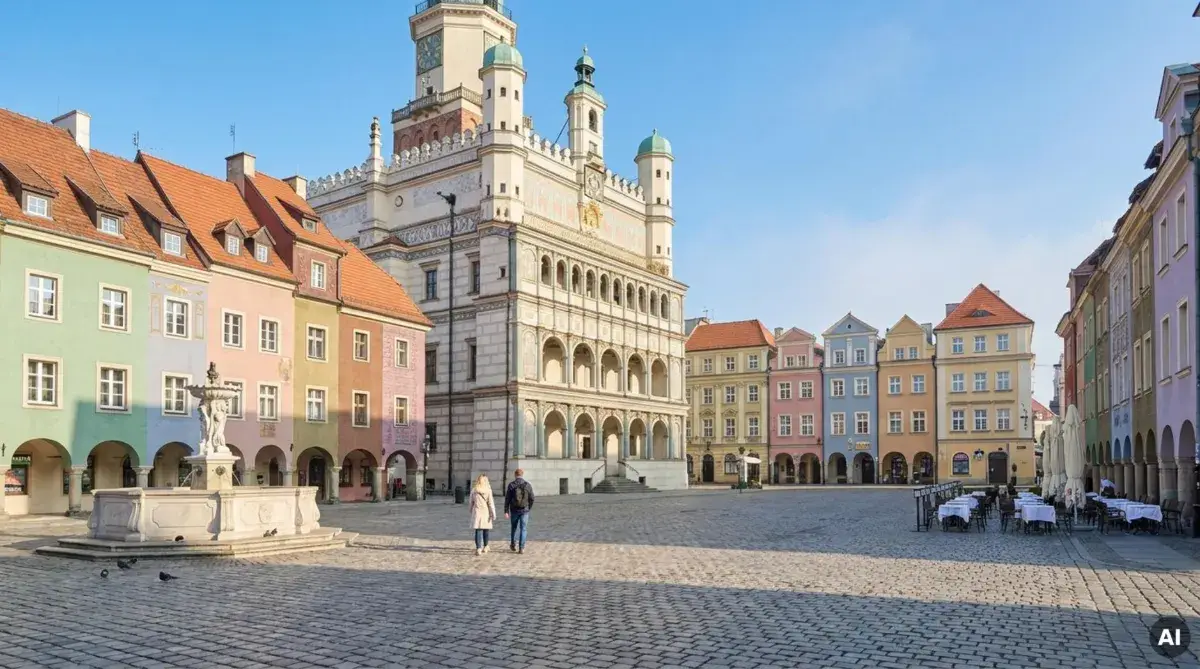
Before hitting the road toward Torun, take time to explore Poznan. The heart of the city is Stary Rynek (the Old Market Square), lined with colorful merchant tenements and anchored by the Renaissance Town Hall, designed by Giovanni Battista di Quadro. At noon every day, crowds gather outside to watch two mechanical billy goats emerge above the clock tower to butt horns twelve times-a local tradition since the 16th century.
Just off the square, the Poznan Croissant Museum (Rogalowe Muzeum) offers a hands-on look at the city's signature pastry: the St. Martin's Croissant (Rogal świętomarciński). Filled with white poppy seeds, vanilla, nuts, and raisins, this protected regional delicacy provides an ideal sweet breakfast before you begin your drive.
Local Food, Parking, and the Best Departure Time
For a hearty start to your day, sample regional Greater Poland specialties centered around potatoes-known locally as pyry. Stop by a bistro or traditional milk bar for pyry z gzikiem, a comforting dish of boiled potatoes served with seasoned cottage cheese, sour cream, and fresh chives.
If you're parking in Poznan overnight, the underground garage beneath Plac Wolności or facilities near Chwaliszewo keep your car secure and within walking distance of the historic quarter. Planning your departure around 8:30 or 9:00 AM on Saturday will help you bypass local commuter traffic and give you maximum daylight for castle tours and lakeside walks. If you're collecting a rental car in Poznan that morning, arrange pickup the evening before to get an early start.
Kórnik and Gniezno: Castles and Poland's Early History
Kórnik Castle and the Kórnik Arboretum
Your first detour sits just 20 minutes southeast of Poznan via the modern S11 expressway. Kórnik Castle is a striking neo-Gothic residence set inside a defensive moat. Redesigned in the 19th century by count Tytus Działyński in the English Tudor style, the castle houses an exceptional private collection of historic weaponry, rare prints, and period furnishings. Visitors slip into oversized felt overshoes to slide across its intricate parquet floors.
Surrounding the castle is the Kórnik Arboretum, one of Central Europe's oldest and most diverse botanical tree collections. Shaded pathways wind past massive century-old oaks, rare magnolias, and lakeside viewpoints. It's an especially scenic stop in spring or autumn, providing an easy walk before you get back into the car.
Gniezno Cathedral and the Museum of the Origins of the Polish State
From Kórnik, head northeast along regional roads toward Gniezno, Poland's first historic capital. The skyline is dominated by the Royal Cathedral of the Assumption on Lech Hill, the coronation site of Poland's first five kings. Inside lies the silver reliquary shrine of Saint Adalbert, alongside the famous 12th-century Romanesque Gniezno Doors, which depict the saint's life across eighteen cast bronze panels.
Nearby, the Museum of the Origins of the Polish State fills in the historical narrative with artifacts, weapons, and interactive exhibits dating to the 10th century. You'll learn how Duke Mieszko I unified regional tribes, accepted Christianity, and built the foundation of the Polish state.
How Long To Spend on the Kórnik-Gniezno Detour
Plan for around two hours to tour Kórnik Castle and stroll through the arboretum. The drive between Kórnik and Gniezno takes approximately 45 minutes on open regional roads. In Gniezno, allow two to three hours to tour the cathedral, view the crypts, and grab lunch near the market square.
Breaking up the drive this way ensures your time on the road feels light and engaging. You'll spend the bulk of your morning immersed in living history while keeping enough time to reach the afternoon archaeological sites further north.
[Rent a car at Poznan Airport]
Biskupin and Wenecja: An Archaeological Stop on the Route
The Archaeological Museum in Biskupin
Continuing north into the Pałuki lake district brings you to Biskupin, home to one of Europe's most significant open-air archaeological reserves. Discovered in the 1930s when lake levels dropped, this fortified settlement dates back to the Lusatian culture of the early Iron Age (around the 8th century BC). Often described as the "Polish Pompeii", the site features life-sized reconstructions of wooden defensive walls, watchtowers, and long communal houses.
Inside the timber dwellings, the scent of seasoned pine and peat fires sets the scene. Demonstrations by resident craftsmen show how early inhabitants wove fabrics, forged bronze, and shaped flint tools, making it an engaging and informative stop for travelers of all ages.
Family Activities, Seasonal Opening Times, and Parking
A few minutes down the road lies the village of Wenecja, home to the Venice Narrow-Gauge Railway Museum and the atmospheric ruins of a 14th-century knight's castle. The open-air railway museum showcases historic steam locomotives, wooden passenger carriages, and rail equipment set against the lake.
Both Biskupin and Wenecja offer spacious parking areas suitable for cars and larger vehicles. While Biskupin is open year-round, daylight hours and live demonstrations taper off in late autumn and winter. Visiting between May and October offers the fullest experience, including the chance to ride the seasonal narrow-gauge steam train that connects Żnin, Wenecja, and Biskupin.
Bydgoszcz and the Northern Route Alternatives
Mill Island and the Brda Riverfront in Bydgoszcz
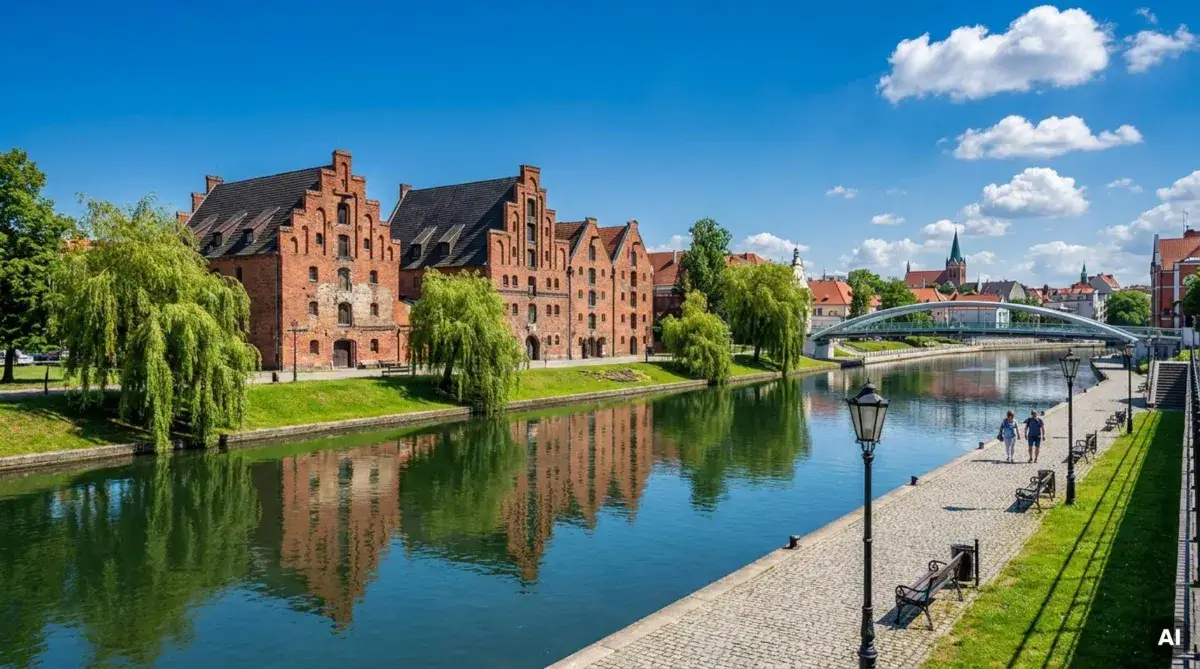
If you'd like to extend your route with a blend of industrial architecture and modern culture, consider an overnight detour through Bydgoszcz. Located at the meeting point of the Brda and Vistula rivers, the city has transformed its industrial waterfront into a vibrant pedestrian zone centered around Mill Island (Wyspa Młyńska).
Restored 19th-century brick timber granaries, riverside walking paths, and waterside cafes surround the tranquil canals. It's a great spot for an afternoon coffee, a scenic walk, and a view of "Man Crossing the River", the well-known balancing sculpture suspended over the Brda.
Świecie Castle and Chełmno's Medieval Heritage
Further north along the lower Vistula valley, you can visit two additional medieval landmarks: Świecie and Chełmno. In Świecie, the brick ruins of a Teutonic Order fortress stand at the confluence of the Wda and Vistula rivers. You can climb its leaning Gothic tower (the highest accessible leaning tower in Poland) for panoramic views over the valley.
Directly across the river sits Chełmno, an exceptionally preserved medieval town that retains its 13th-century street grid and fortified stone walls. Known as the "City of Lovers" because its parish church preserves relics of Saint Valentine, Chełmno features five monumental Gothic churches and a stately Renaissance town hall.
A Two-Day Poznan to Torun Medieval Itinerary
Day One: Poznan, Kórnik, Gniezno, and Biskupin
Start your Saturday with an early coffee and pastry in Poznan before picking up your vehicle. Hit the S11 expressway by 8:30 AM to arrive at Kórnik Castle for its 9:00 AM opening. Spend 90 minutes exploring the interior and arboretum grounds, then navigate northeast to Gniezno for lunch and a visit to the royal cathedral.
By mid-afternoon, continue through the Pałuki countryside to Biskupin to tour the prehistoric fortifications. Finish the day with a relaxed 70-minute drive east via Inowroclaw, arriving in Torun just as evening lights illuminate the city's Gothic riverfront.
Day Two: Bydgoszcz or Świecie Before Torun
If you prefer an extended two-day itinerary with an overnight stay along the way, base yourself in Bydgoszcz on Saturday night. Enjoy Sunday morning brunch along Mill Island and explore the waterfront granaries before setting off.
From Bydgoszcz, you can make the direct 45-minute drive east to Torun along the DK10 and DK80, or take the scenic northern loop through Chełmno and Świecie. Walking Chełmno's defensive ramparts and touring the Teutonic ruins provides an unforgettable prelude to entering Torun's historic gates. A vehicle with unlimited mileage makes it easy to add these detours without worrying about extra charges.
Rainy-Day Museums and Indoor Alternatives
If the weather turns wet or cold, this route offers plenty of engaging indoor alternatives. In Poznan, Porta Posnania (Brama Poznania) delivers an interactive multimedia exhibition covering the early history of Cathedral Island (Ostrów Tumski).
Along the way, Inowroclaw features mineral spa facilities and outdoor salt-brine graduation towers (Tężnie Solankowe) where you can unwind. In Gniezno, the Museum of the Origins of the Polish State offers spacious indoor galleries, while Torun's vast brick basilicas offer warm, sheltered spaces to explore medieval art and architecture.
Torun Old Town: What To See After Arrival
Torun's UNESCO-Listed Medieval Centre
Arriving in Torun feels like stepping straight into the 14th century. Spared from heavy destruction during World War II, Torun's medieval center is an authentic UNESCO World Heritage Site filled with red-brick Gothic residences, town gates, and defensive watchtowers dating back to its Hanseatic trading era.
Park your car at your hotel and explore the town on foot. Walking through the cobbled streets leads past historic sites like the Church of St. James and the Cathedral of St. John the Baptist and St. John the Evangelist, home to the 15th-century "Tuba Dei" bell-one of the largest medieval bells in Central Europe.
The Living Museum of Gingerbread
No trip to Torun is complete without experiencing its world-renowned baking heritage. Torun gingerbread (pierniki toruńskie) has been produced here for over six centuries, recognized for its fragrant spices, regional honey, and hand-carved wooden molds. At the Living Museum of Gingerbread (Żywe Muzeum Piernika), visitors take part in an interactive workshop inside a historic granary.
Costumed guild bakers guide you through sifting spices, kneading aromatic dough, and stamping it into wooden molds. You'll bake a souvenir gingerbread to take home while learning about the city's trade guilds.
Nicolaus Copernicus Monument and Copernicus House
Torun is the birthplace of astronomer Nicolaus Copernicus, born here in 1473. A prominent bronze monument dedicated to him stands on the corner of the Old Town Market Square, bearing the Latin tribute to the scholar who "moved the Earth and stopped the Sun." It remains one of Torun's favorite meeting spots.
Just around the corner, Copernicus House (Dom Mikołaja Kopernika) occupies two preserved Gothic merchant homes believed to be his birthplace. The museum showcases late-medieval domestic life, merchant trade along the Vistula River, and the astronomical tools Copernicus used to formulate his heliocentric model.
Market Square Architecture and Riverside Walks
The Old Market Square (Rynek Staromiejski) is dominated by the monumental Old Town Hall (Ratusz Staromiejski), an outstanding example of civic Gothic brick architecture. Climb the tower's viewing gallery for sweeping views over the rooftops, church spires, and the Vistula River.
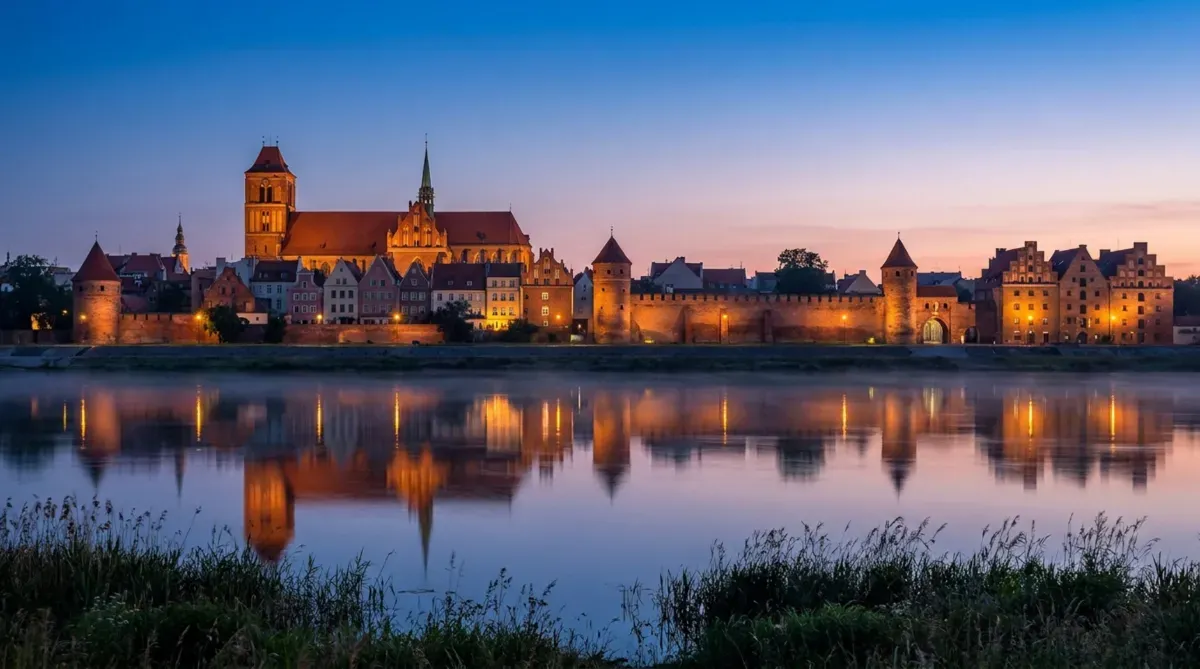
As evening falls, walk through the historic water gates down to the Philadelphia Boulevard (Bulwar Filadelfijski). For the best view of all, walk across the road bridge to the viewpoint at Kępa Bazarowa on the opposite bank. From across the water, the illuminated Gothic skyline reflects over the river, bringing your road trip to a memorable close.