
04.09.2026
Replacement Car From At-Fault Driver's Liability Insurance: How It Works for Businesses
Can your business get a replacement vehicle covered by an at-fault driver's third-party liability insurance? Yes, under standard loss-of-use rules, the responsible insurer must cover reasonable car rental costs so your operations can continue without disruption. As long as you prove liability and show that your company genuinely needs the vehicle for daily work, you can secure an equivalent replacement car through direct billing or claim the expenses back later.
What Is a Replacement Car From the At-Fault Driver’s Liability Insurance?
A replacement vehicle provided under a third-party claim is a temporary rental vehicle funded by the at-fault driver's mandatory motor liability policy. It isn't an optional perk from your own comprehensive coverage; it's a legal right rooted in civil liability law. Because another party damaged your commercial property, their insurer is legally required to cover the direct and foreseeable losses resulting from that accident-including your loss of use.
For any operating business, having a reliable vehicle isn't a luxury-it's essential to maintaining revenue and meeting customer commitments. The insurer must cover reasonable car rental fees for a vehicle that fulfills the exact operational duties of the one damaged, helping you avoid downtime, delayed shipments, or missed client appointments while repairs are underway.
How Third-Party Liability Insurance Covers Loss of Use
A loss-of-use claim compensates for the practical impact when a commercial vehicle is suddenly sidelined. When a delivery van or company car is off the road, your working capacity takes an immediate hit. To resolve this, the at-fault driver’s insurer might arrange a replacement car through their own supplier network, or they'll reimburse the rental charges after you hire a vehicle independently.
Keep in mind that insurers examine commercial claims far more closely than private ones. Claims handlers often scrutinize whether the vehicle was actively generating income, whether your company had unused vehicles sitting idle, and whether your car rental rate reflects standard local pricing. Understanding these checkpoints beforehand helps protect your business from unexpected, out-of-pocket expenses.
What to Do Immediately After a Business Vehicle Accident
The first hour following a collision sets the tone for your entire claim. Fleet coordinators and company drivers need to prioritize safety first, then systematically gather the facts that support the business claim. Missing critical details at the scene can turn a straightforward settlement into an exhausting, drawn-out dispute.
We recommend establishing a standardized accident checklist for all company drivers. When team members collect objective evidence calmly rather than arguing over liability at the roadside, they give your administrative team the documentation needed to secure a replacement vehicle without delay.
What to Do at the Accident Scene
First, check everyone for injuries, steer clear of traffic if it’s safe to do so, and switch on the hazard lights. Once the scene is secure, exchange complete contact details, driver's license numbers, employer information, and insurance policies with all parties involved. Drivers should never admit fault, apologize in a way that suggests liability, or speculate about what happened.
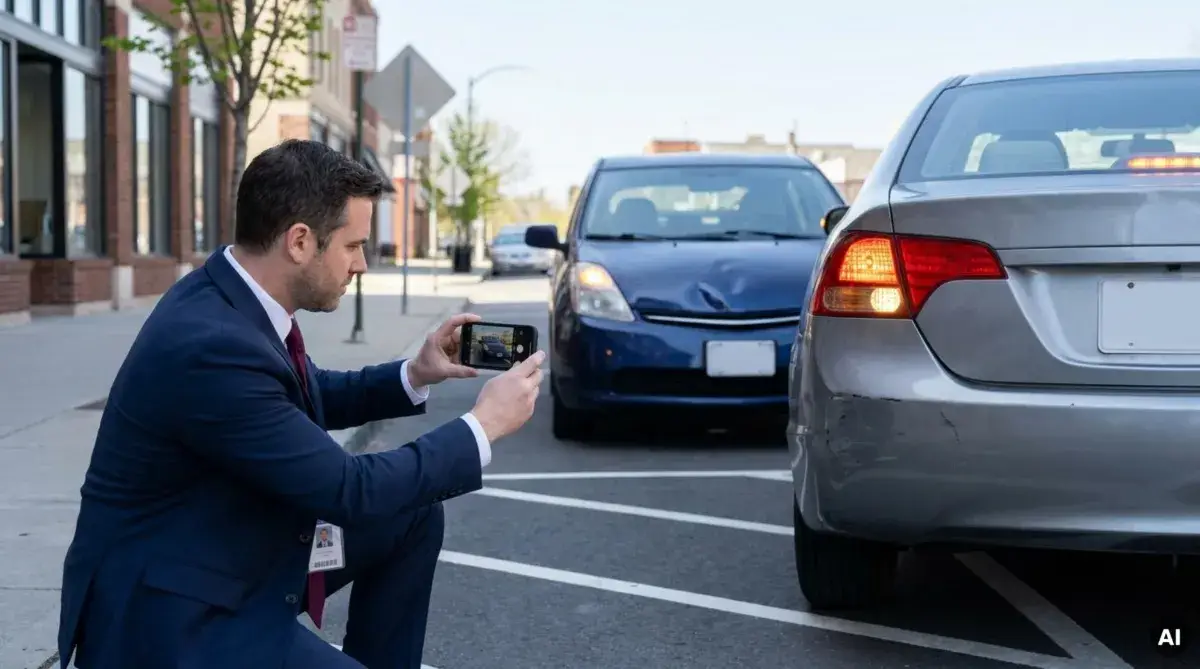
Next, photograph the entire scene thoroughly from multiple angles. Capture vehicle positions, road markings, skid marks, debris, weather conditions, and visible damage across all vehicles. Save dashcam footage immediately. Clear visual records provide indispensable evidence that helps demonstrate the other driver was at fault.
How to Report the Accident to the Police and Insurers
When a business vehicle is involved in a crash, calling the police is almost always the safest course of action. In many jurisdictions, it's legally required if someone is hurt, if structural damage is significant, or if drivers disagree on the sequence of events. An official police report gives insurers an impartial account, speeding up fault determination and authorization for your replacement car.
Notify your own insurer or broker promptly, as well as the at-fault driver’s insurance company. Contacting the third-party insurer early signals that your business requires an immediate mobility solution. Many major insurers have specialized third-party claims teams that can approve direct-billed rentals quickly.
What Evidence Should the Business Collect?
Beyond scene-of-accident photos, compile records showing how the vehicle directly supported your daily operations. Helpful documentation includes driver logs, maintenance records confirming the vehicle was roadworthy, dispatch manifests, project assignments, and logs of customer deliveries or service calls impacted by the accident.
Be sure to collect written statements and contact details from independent witnesses. Store all photos, driver statements, and dispatch logs in a dedicated digital file. Having dated, verifiable records makes it far harder for a claims handler to challenge liability or downplay the financial impact on your operations.
[See how the replacement car works]
How Businesses Qualify for a Replacement Vehicle
A business doesn't automatically receive a replacement vehicle just because an accident happened. You need to prove that losing access to the vehicle disrupts your workflow and that you don't have suitable internal alternatives available to absorb the workload.
Because claims handlers look to minimize payouts on commercial files, preparing your operational evidence in advance keeps your claim on solid ground.
The Accident Must Be Caused by the Other Driver
The primary prerequisite for a rental claim is establishing that the other motorist was liable. If they're 100% at fault, their insurer is responsible for 100% of the reasonable car rental expenses. In jurisdictions with comparative negligence, your recovery matches the fault allocation; for instance, if the other party is deemed 80% responsible, their insurer covers 80% of your hire costs.
Unequivocal proof of liability is vital. If the other insurer delays their liability decision, your business may need to rent a vehicle independently and claim reimbursement later, or process repairs through your own collision coverage while the insurers resolve subrogation behind the scenes.
The Damaged Vehicle Must Be Unavailable for Business Use
The damaged vehicle must genuinely be out of commission. This applies when a vehicle is mechanically unsafe to drive-due to steering faults, broken headlights, or deployed airbags-or when it's actively checked into a repair facility for bodywork.
If the damage is purely cosmetic, like a minor bumper scuff or shallow door ding that doesn't compromise road safety, you can't immediately rent a replacement at the insurer's expense. In those circumstances, your eligibility for a replacement car starts the day the vehicle enters the shop for scheduled repairs.
How Business Purpose Affects the Claim
Insurers evaluate how critical the vehicle is to your core operations. A field technician carrying specialized diagnostic gear, a sales rep covering broad regional territories, or a courier delivering time-sensitive packages can easily demonstrate business necessity. The vehicle directly drives operational revenue.
Your claim might face pushback, however, if records suggest the vehicle routinely sat idle or if your company maintains a surplus of unassigned fleet vehicles. The insurer will argue that you failed to mitigate your losses. To counter this, show that your remaining fleet was fully deployed and that every operational vehicle served an active business purpose.
How the Replacement Car Claim Process Works
Managing a commercial replacement claim requires swift action, organized paperwork, and close attention to detail. Daily rental rates add up quickly, and procedural mistakes can lead to denied charges. Following a structured procedure helps you recover your full, legitimate costs.
Clear communication between your fleet manager, the repair facility, and the insurance handlers ensures your field staff stay mobile without leaving your company with unpaid invoices.
1. Report the Claim to the Perpetrator’s Insurer
Once you've collected accident evidence, report the loss-of-use claim directly to the at-fault driver’s insurer. Provide the police report reference, driver statements, and scene photographs. Request a formal claim number right away. Ask whether they'll provide a vehicle directly through their partner network or if you can arrange your own car rental and submit the invoice for settlement.
If the insurer drags its feet or claims it needs weeks to investigate clear-cut liability, notify them in writing that your business is incurring ongoing operational downtime. State clearly that you'll be securing a temporary vehicle at prevailing commercial rates to fulfill client obligations. Keeping a written trail proves you gave them timely opportunity to arrange mobility first.
2. Confirm the Vehicle’s Repair or Total-Loss Status
Arrange an immediate inspection through an independent automotive assessor or certified repair shop. This assessment determines whether the vehicle can be economically repaired or if it constitutes a total loss. Typically, a commercial vehicle is treated as an economic total loss when repair expenses exceed its pre-accident market value minus salvage value.
The resulting technical appraisal is critical: it outlines required labor hours, parts delivery timelines, bodywork schedules, and paint-curing requirements. If it's a total loss, the report establishes fair market valuation. This documentation substantiates the exact duration you'll require replacement transportation.
3. Request a Replacement Vehicle
If the insurer arranges a direct mobility option, ensure the assigned vehicle aligns with your day-to-day operational requirements. Confirm whether the rental provider bills the insurer directly through an assignment-of-rights agreement, which keeps your cash flow intact by avoiding substantial upfront payments.
If you're sourcing the car rental independently, choose a trusted provider that offers transparent rental terms and well-maintained vehicles. Collect written rate quotes to confirm that the daily rate aligns with standard regional business rates. Avoid inflated credit-hire rates that give the insurer an easy excuse to dispute the final invoice.
4. Submit the Rental Invoice and Supporting Documents
As soon as your company vehicle is repaired or your total-loss settlement clears, return the rental vehicle promptly. Request a detailed, final invoice from the car rental company clearly itemizing the daily rate, applicable taxes, rental dates, and mileage terms.
Send the complete package to the insurer: the rental invoice, proof of payment (if billed directly to you), the repair shop’s completion sheet, and final repair invoices. The timeline on the car rental invoice should align directly with the active repair period documented by the garage.
What Type of Replacement Vehicle Can a Business Receive?
Vehicle classification is one of the most common friction points in commercial claims. By law, your business is entitled to a functional equivalent-a vehicle that performs the same operational tasks as the damaged one. You cannot use an accident to upgrade your fleet to a luxury tier on the other insurer's tab.
The legal benchmark is operational utility, not prestige. The replacement car simply needs to allow your employees to perform their daily duties without hindrance.
Matching the Replacement Car to the Damaged Vehicle
Insurers generally rely on standard vehicle classification codes (such as ACRISS categories) to pair a replacement with your damaged car. If a compact commercial hatchback is damaged, the insurer will cover a comparable compact model. They will decline coverage for an executive SUV unless you can demonstrate a specific operational necessity that a standard car cannot meet.
Practical utility always outweighs the brand badge. If a sales representative needs an estate car to transport presentation equipment and product samples, the replacement must offer comparable cargo capacity. It doesn't need to match an upscale badge, as long as it functions properly. Insurers readily accept functional equivalence but will contest vehicles rented for personal comfort or prestige.
Replacement Vans, Trucks, and Special-Purpose Vehicles
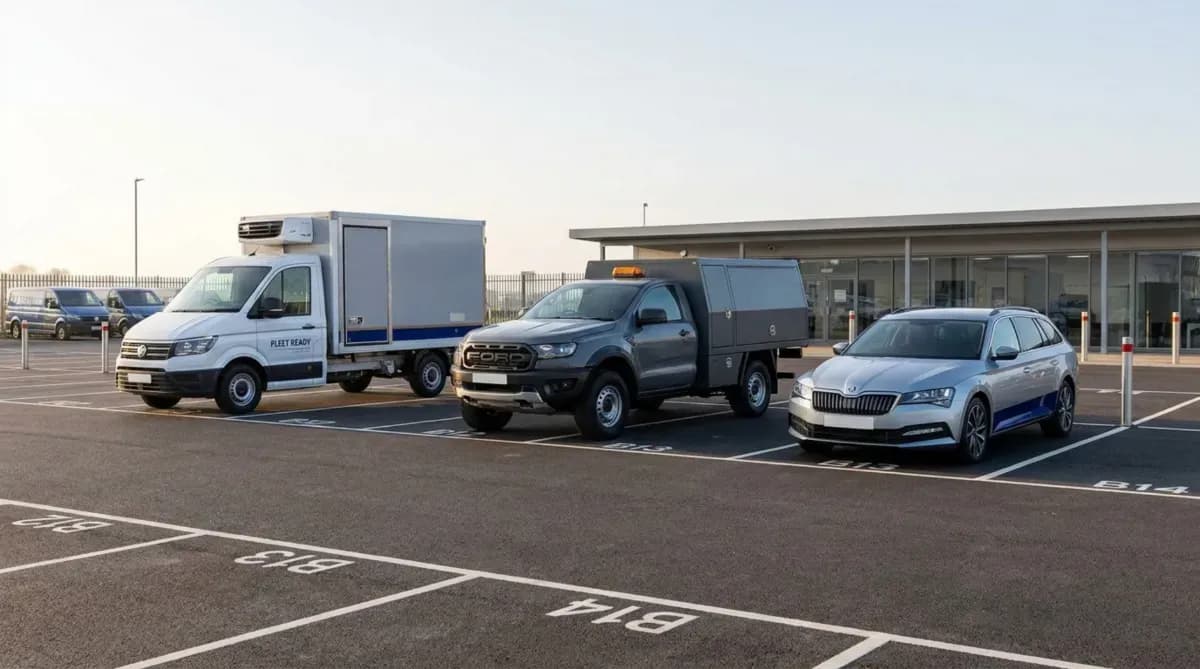
The situation changes when your damaged vehicle features specialized commercial equipment, such as temperature-controlled cargo compartments, heavy-duty hydraulic lifts, passenger mobility conversions, or dual controls for driving instructors. A standard panel van cannot replace a refrigerated delivery van; doing so risks perishable inventory and violates health regulations.
Under these circumstances, your business has every right to claim a specialized replacement vehicle, such as a delivery van, even if the daily hire cost is significantly higher than a standard model. If the insurer cannot supply a specialized vehicle through their partners, confirm this in writing, locate a specialized rental company yourself, and retain documentation justifying the specialized need.
How Long Can a Business Use the Replacement Car?
An insurer will only pay for a reasonable duration. They won't cover a two-month rental period if the certified repair work required only three business days. Every day the rental car remains in your possession must be backed by clear operational and mechanical justification.
Fleet managers need to oversee the repair process actively. Letting a vehicle sit unattended at a repair center without monitoring progress gives the insurer grounds to deny coverage for those idle days.
Repairable Vehicles: the Reasonable Repair Period
For repairable vehicles, the legitimate rental timeframe generally spans three distinct stages:
The initial inspection and formal repair authorization;
The delivery window for sourcing required replacement parts; and
The hands-on repair, paintwork, curing, and final safety inspections.
The insurer must cover the total realistic time required for these stages. If unexpected manufacturer supply bottlenecks delay replacement parts, ensure the repair facility notes these delays in writing with dates and order tracking numbers. Clear documentation proves the extended timeline was entirely beyond your company's control.
Total-Loss Claims: the Period Until Settlement and Vehicle Replacement
Total-loss timelines are handled differently. Generally, the covered rental period runs from the crash date until the insurer issues the formal total-loss payment. From that payment date, you are typically granted an additional acquisition window-usually 10 to 14 business days-to source, acquire, and register a permanent replacement vehicle.
Some insurers try to stop rental coverage the exact day they issue their valuation report. You can challenge this stance: a company cannot realistically purchase and prepare a commercial replacement vehicle before the settlement funds actually clear. Point out that the replacement window begins once the funds arrive in your account.
What Business Costs Can the At-Fault Insurer Cover?
The liable insurer's obligations often extend beyond the base daily rental fee. Third-party liability law covers direct, necessary, and foreseeable expenses incurred as a direct consequence of losing your business transport.
Commercial claims also involve unique tax considerations that don't apply to private drivers. Understanding these distinctions helps you submit accurate figures from day one.
Daily Rental Charges and Mandatory Fees
The primary claim element is the daily hire fee for a reliable vehicle. Recoverable costs also include mandatory collision damage coverage, theft protection, and required licensing fees. Optional extras-like registering an additional driver, installing child safety seats for passenger services, or adding GPS navigation for dispatch staff-are reimbursable if you demonstrate they're necessary for work.
Tax accounting requires careful handling. If your business is registered for VAT and can reclaim input tax, the insurer will pay only the net car rental fee. Your business pays the VAT portion to the rental provider and reclaims it on your regular tax return. Claiming the gross amount when you're entitled to a tax rebate would constitute double recovery.
Lost Profits and Additional Operating Costs
If a suitable replacement vehicle can't be sourced in time-or if specialized equipment isn't immediately available-your business might suffer direct financial losses from cancelled appointments or missed service delivery. You can claim these lost profits, provided they're substantiated with historical financial records, client contracts, and verified dispatch schedules.
Other direct transitional expenses can also be claimed. These include towing charges, secure storage fees, the cost of moving specialist gear between vehicles, and applying temporary signage to match company fleet standards. Be prepared to show that each cost was essential to maintaining operations or meeting safety standards.
Common Reasons Insurers Reject or Reduce Replacement-Car Costs
Insurance claims handlers actively look to contain third-party claim costs. When assessing commercial claims, they often rely on standard objections to pass expenses back to your business.
Recognizing these objections in advance allows your team to maintain the right supporting records, preventing routine reviews from turning into outright claim denials.
The Insurer Says the Rental Car Was Not Necessary
A frequent defense from insurers is claiming your business had sufficient fleet capacity to absorb the work without renting a car. They'll argue you should have simply redistributed jobs across existing vehicles, and they may request telematics records, driver schedules, and dispatch logs to look for idle resources.
To successfully refute this, provide records confirming that your remaining vehicles were fully utilized during the replacement window. Route tracking, active job orders, and client schedules will demonstrate that pulling another vehicle would have resulted in unfulfilled contracts and operational loss.
The Rental Period Is Considered Excessive
Insurers often divide the technician labor hours listed on the initial repair estimate by an eight-hour workday. If an estimate shows 24 hours of labor, the adjuster might argue the rental should only have lasted three days. This calculation ignores weekends, parts delivery times, paint-curing requirements, and hidden structural damage uncovered during teardown.
To support the actual duration of the rental, keep in touch with your repair facility throughout the job. Have the shop record every external delay, including supplier backorders and supplemental damage inspections required by the insurer. A detailed chronological log justifies why every single rental day was necessary.
What to Do If the Insurer Refuses the Replacement Vehicle
If the responsible insurer refuses to authorize a replacement car, offers a substandard vehicle that can't handle your commercial needs, or arbitrarily slashes your rental reimbursement, escalate the matter through formal dispute channels.
Insurers sometimes assume a fleet manager will simply absorb rental costs as an operating expense rather than push back. A firm, fact-based written response shifts the pressure right back onto the insurer.
Request the Insurer’s Decision in Writing
Always demand a formal written explanation for any claim denial or cost reduction. The insurer must state the specific legal or contractual grounds for their decision. An informal comment over the phone carries little legal weight and doesn't represent an actionable final position.
Once you have their written reasoning, compare it against your file. If they allege excessive rental rates or surplus fleet capacity, counter directly with market rate comparisons, telematics reports, dispatch schedules, and site photographs that address each point systematically.
Submit Additional Evidence and a Formal Complaint
Escalate your case to the insurer’s internal complaints department, senior claims management, or legal unit. Submit an organized dossier containing the police report, proof of third-party fault, fleet utilization logs, and the repair facility's timeline documentation.
If the insurer remains unwilling to settle legitimate expenses, consider escalating to an insurance ombudsman, financial supervisory authority, or legal counsel experienced in commercial automotive claims. A formal claim can recover not only the outstanding car rental costs but also statutory interest and associated legal expenses. Your business shouldn't have to carry the financial burden of an accident caused by someone else.

To protect against future disruptions, many companies integrate proactive fleet technology into their standard operations. Telematics, connected dashcams, and centralized management software make it simple to assemble accident reports, impact data, and driver assignments instantly.
Establishing a working relationship with an experienced mobility provider like CarFree also ensures you can quickly secure passenger cars, commercial vans, or specialized vehicles with transparent rental terms when an unexpected accident occurs.
Setting up a direct assignment-of-rights process allows the rental company to handle billing directly with the at-fault insurer, preserving your business cash flow and keeping your team moving forward.