25.09.2026
Short-Term vs Long-Term Car Rental in Poland - Which One Do You Need?
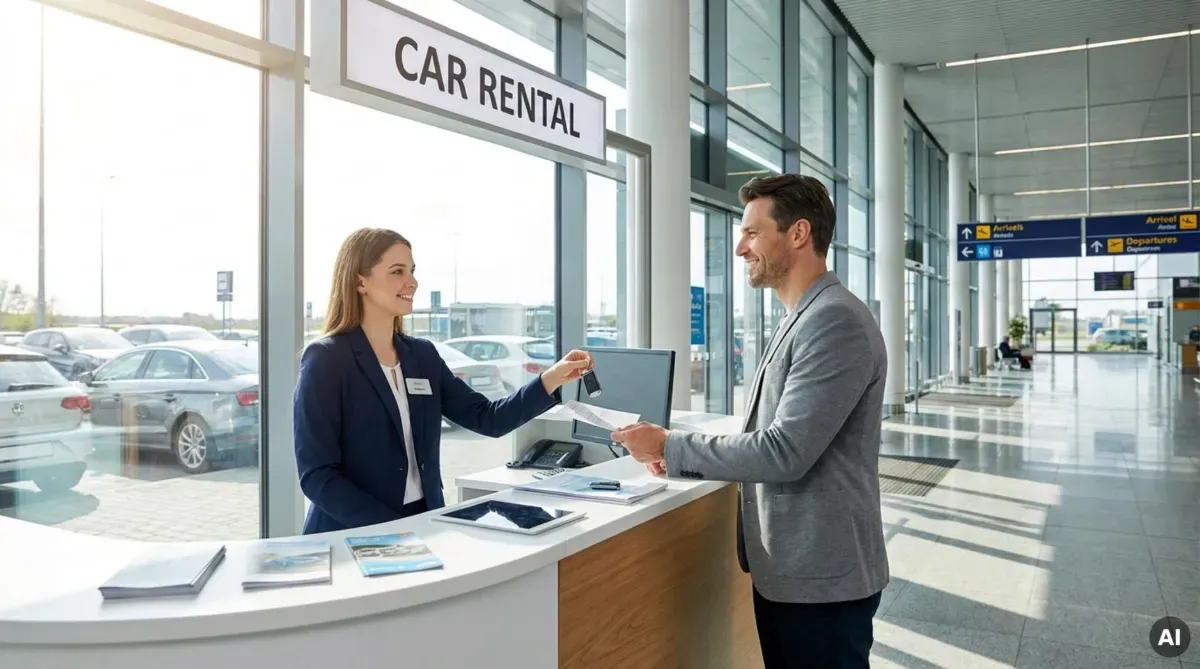
Should you choose a short-term or long-term car rental for your travel in Poland? If your journey lasts between one day and a month, a short-term rental gives you the daily flexibility you need for holidays or business trips.
For stays extending past 30 days, long-term rentals deliver substantially lower monthly rates, fully managed vehicle upkeep, and predictable costs without the financial commitment of a traditional car lease.
What Is Short-Term Car Rental in Poland?
Short-term car rental is a straightforward pay-as-you-go mobility service designed for temporary driving needs. You choose a vehicle class online or at a rental location, sign an agreement, authorize a temporary security deposit, and pick up your keys within minutes. The process focuses on easy booking, quick vehicle handover, and immediate mobility.
Poland offers an established car rental network with broad nationwide availability. Modern rental desks operate at every major transport hub, including Warsaw Chopin, Kraków Balice, and Gdańsk Lech Wałęsa airports. This setup lets you collect a modern, well-maintained vehicle right after landing and head out on your journey without delay.
Short-Term Rental Duration: 1 Day to 30 Days
A standard short-term rental covers any period from a single 24-hour block up to 30 consecutive days. Bookings in this timeframe use daily rates, which adjust based on seasonal demand, vehicle availability, and how far in advance you reserve.
This rental type provides exceptional travel freedom. If your plans change while driving from Kraków's historic market square to the dunes of Słowiński National Park, extending your reservation by a few days is simple. You pay only for the exact rental period you use.
Who Benefits From a Short-Term Car Rental?
Short-term rentals suit holidaymakers, weekend travelers, and business professionals visiting regional offices or conferences. If you're landing in Warsaw for a multi-city tour covering Łódź and Poznań, having your own vehicle removes the constraints of train timetables and lets you return the car right before your return flight.
Local residents also rely on short-term rentals during everyday transitions. If your personal car is in the repair shop or you need a spacious estate car or SUV for a winter ski weekend in Zakopane, a short-term rental bridges the gap without any long-term financial obligation.
What Is Long-Term Car Rental in Poland?
Long-term car rental-often referred to as a vehicle subscription or mid-term fleet rental-replaces daily pricing with a predictable monthly rate. Instead of managing short rental agreements, you drive a dedicated vehicle that feels like your own, while avoiding the depreciation and maintenance liabilities of ownership.
Under this arrangement, the car rental company handles vehicle management tasks. Your fixed monthly payment typically covers vehicle depreciation, mechanical maintenance, insurance, seasonal tire swaps, and 24/7 support. This consolidates regular operating expenses into one clear monthly invoice.
Long-Term Rental Duration: 1 Month To Several Years
Long-term contracts start at 30 days and can extend to 6, 12, 24, or 36 months. Rather than tracking variable daily pricing, rates reflect the full contract duration, selected monthly mileage allowance, and vehicle class.
These agreements provide valuable operational flexibility. Many providers allow you to adjust contract terms, switch to a different vehicle segment, or end the agreement with reasonable notice-avoiding the heavy penalties common to commercial financing contracts.
Who Benefits From Long-Term Rental?
Long-term rentals are well suited for expats relocating to Poland, digital nomads based in Warsaw for several months, and project specialists managing regional infrastructure assignments. It bypasses the complex paperwork and credit checks that can make buying or leasing a vehicle difficult for newcomers.
Small and medium-sized enterprises and expanding tech firms across cities like Wrocław frequently use long-term rentals for staff mobility. Companies can scale their fleet up or down to support seasonal demands or new hires during probationary periods without locking up working capital.
Long-Term Rental Versus Car Leasing
While long-term car rental and leasing appear similar, their financial structures differ significantly. Traditional leasing in Poland is a financing agreement requiring extensive credit reviews, financial statements, and an upfront payment (czynsz inicjalny), combined with a multi-year commitment that's difficult to exit early.
In contrast, long-term rentals avoid adding debt to your balance sheet and feature simple approval requirements. You don't take on depreciation risk or surprise repair bills. Routine maintenance, roadside assistance, and seasonal tire changes are bundled together, preserving your capital for other priorities.
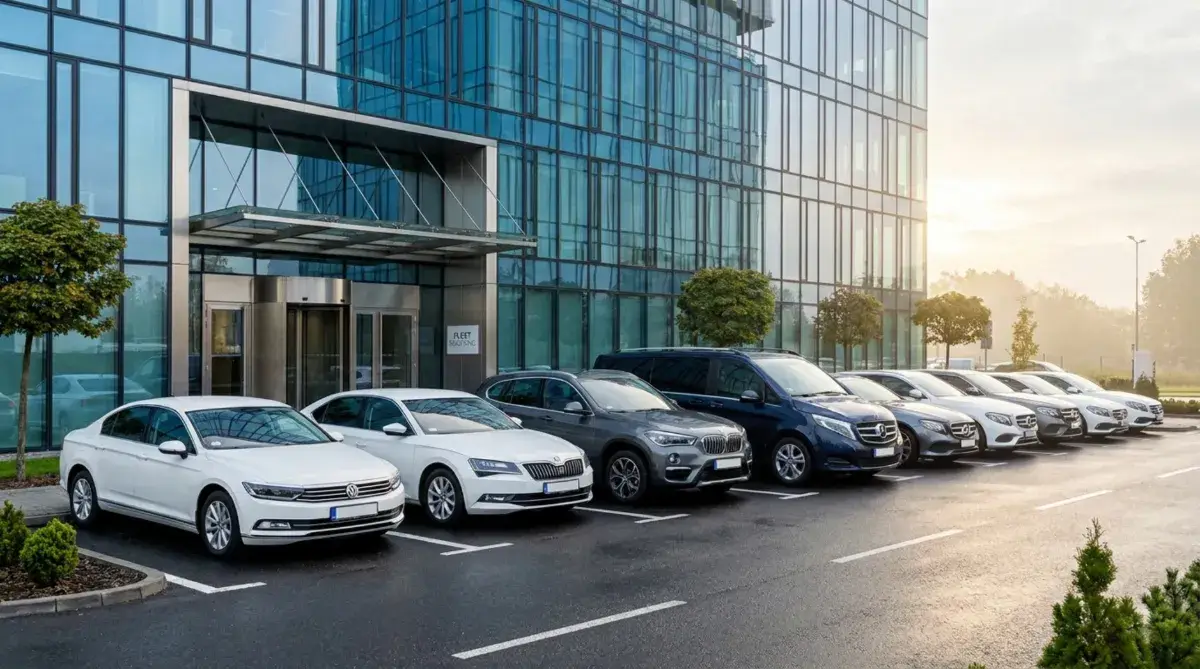
Short-Term vs Long-Term Car Rental: Key Differences
Choosing between short-term and long-term rental comes down to your travel schedule, monthly budget, and preference for flexibility. Both give you access to reliable vehicles, but they serve different driving needs.
The key differences center on pricing structure, mileage conditions, and vehicle selection. Understanding these points helps you avoid unexpected costs and select the right service for your itinerary.
Rental Duration and Booking Flexibility
Short-term rentals excel when you need immediate transportation on short notice. You can reserve a compact car right before arriving at Warsaw Modlin Airport and return it three days later in the city center. While extensions are easy to request, daily rates fluctuate based on seasonal demand.
Long-term rentals require upfront planning regarding term length, monthly mileage, and billing preferences. In return, you secure stable pricing and keep the same vehicle for months without renewing individual contracts.
Daily, Monthly, and Total Rental Costs
Short-term daily rates reflect the administrative turnaround, cleaning, and customer support between short bookings. In Warsaw, an economy vehicle might cost around €16 per day in September, €22 in June, and up to €28 during peak summer months. Maintaining daily rates over six months would lead to excessive costs.
Long-term rentals use an economical pricing structure. Committing to 30 days or longer can lower your effective daily cost by 40% to 60% compared to standard short-term rates. While your total spend across several months is higher because of duration, the cost per day of driving is substantially lower.
Mileage Limits and Driving Distance
Short-term car rentals in Poland often include unlimited mileage or a generous daily allowance on selected bookings. This allows you to drive from the Baltic coast in Gdańsk down to southern Poland without tracking every kilometer on the odometer.
Long-term agreements generally use structured monthly mileage limits, such as 1,500, 2,500, or 4,000 kilometers per month. Driving beyond your contracted limit incurs an extra per-kilometer charge, making it important to estimate your regular commute and road trips before finalizing the agreement.
Vehicle Choice and Availability
With short-term bookings, reservations apply to a vehicle category (such as "Compact Automatic" or "Intermediate SUV") rather than an exact model. You'll receive a well-equipped, road-ready car in that category depending on what's available at the branch.
Long-term rentals offer greater control over vehicle specifications. Because you'll drive the car for an extended period, providers often allow you to select specific engine types, gearboxes, and interior trim options to ensure comfortable travel over the long run.
Maintenance, Insurance, and Replacement Vehicle Coverage
Short-term rentals free you from routine vehicle maintenance. If a mechanical issue arises, the rental company replaces the car at the nearest branch. Insurance packages are charged per day, ranging from basic protection to full-cover options with zero excess.
Long-term rentals incorporate comprehensive maintenance schedules directly into your contract. The rental provider manages regular servicing, warranty repairs, and seasonal tire changes for winter and summer driving. If your vehicle requires workshop maintenance, replacement car coverage ensures your daily travel continues smoothly.
[Explore long-term rental options]
What Does Car Rental Cost in Poland?
Poland remains one of the more accessible European countries for automotive travel, with rental rates and fuel costs often lower than in Western Europe. However, the final price depends on booking conditions, timing, and optional services.
Evaluating the total cost requires looking beyond headline figures. Seasonal timing, collection locations, and optional add-ons all influence your final invoice.
Factors That Affect Short-Term Rental Prices
Seasonality and branch location strongly influence short-term daily rates. Tourist demand peaks during summer across Warsaw, Kraków, and Gdańsk, pushing rates upward. Winter holidays also bring higher demand in mountain destinations around Zakopane, where rates often average €25 per day.
Vehicle specifications also impact pricing. Manual gearboxes remain popular and cost-effective in Poland, while automatic transmissions carry a modest daily premium. Airport pick-ups may include terminal concession surcharges, though booking early helps offset these costs.
Factors That Affect Long-Term Rental Prices
Long-term rental rates are primarily determined by your contract length rather than seasonal tourist demand. A 12-month agreement provides a lower monthly cost than a rolling 30-day arrangement.
The vehicle segment plays an equally important role. Stepping up from an economy hatchback to an executive sedan or a premium SUV increases your monthly fee and associated insurance costs. Your selected monthly mileage limit also directly influences base pricing.
Extra Charges for Mileage, Fuel, Additional Drivers, and Cross-Border Travel
Optional extras can add to your total if they aren't considered during booking. Adding an additional driver for a long drive between Lublin and Poznań involves a small daily or monthly fee. Child safety seats and portable navigation units also carry extra costs, though smartphone navigation apps can serve as a practical alternative.
Cross-border trips also require advance notice. If you plan to travel from Poland into neighboring EU countries like Germany, Czechia, or Slovakia, rental companies require prior authorization to extend insurance protection and roadside assistance abroad.
How To Compare the Total Rental Price Instead of the Daily Rate
To find the true cost of a rental, look past the initial daily headline rate. An advertised low rate can double once you add basic protection, card handling fees, or deposits at the rental desk.
Calculate your full estimated expenditure: base rental rate + full insurance coverage + anticipated fuel + electronic tolls on motorways like the A1, A2, or A4. Average fuel prices in Poland sit around PLN 5.65 per liter (approximately €1.34). Dividing your total projected expense by your planned driving distance gives you an accurate cost-per-kilometer comparison.
What Rental Conditions Should You Check Before Booking?
Reviewing rental conditions before confirming your reservation ensures a stress-free travel experience and prevents misunderstandings during vehicle pick-up or return.
Taking a few minutes to read the rental conditions guarantees transparent rental terms and keeps your journey running smoothly across Poland.
Deposit, Payment Method, and Credit Card Rules
Most car rental providers require a credit card issued in the primary driver's name. A temporary security deposit is held during the rental to cover potential toll charges, missing fuel, or incidental damage. Deposit amounts generally range from PLN 1,000 to over PLN 5,000 (€250 to €1,200+), depending on vehicle class.
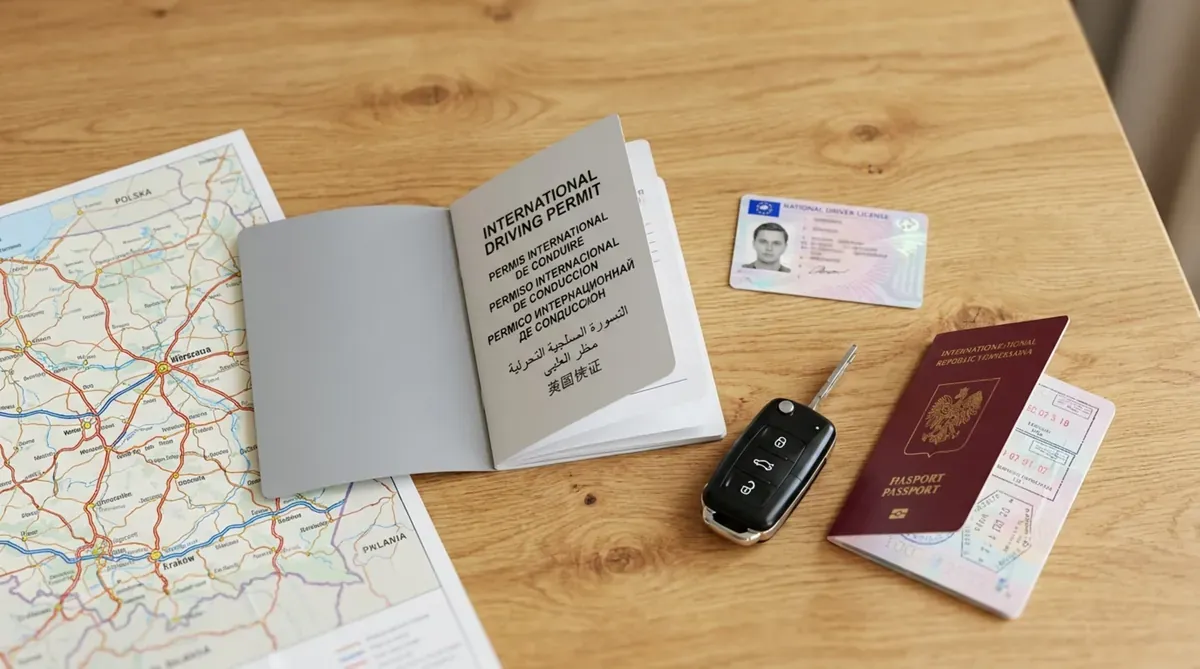
Some providers accept debit cards when paired with comprehensive insurance packages. If your driver's license was issued outside the European Union or uses non-Latin script, make sure to bring an International Driving Permit alongside your original domestic license.
Basic Insurance, Damage Protection, and Excess
All rental vehicles in Poland carry mandatory third-party liability insurance (Ubezpieczenie OC), covering third-party damages. Protection for the rental vehicle itself is provided through Collision Damage Waiver (CDW) and Theft Protection (TP).
These policies usually feature an excess (deductible), representing your maximum financial responsibility if damage occurs. For example, if repairs cost PLN 8,000 and your excess is PLN 3,000, you pay up to PLN 3,000. Selecting full protection reduces this excess to zero, allowing you to travel with confidence.
Unlimited Mileage and Mileage Allowance
Review your booking confirmation to see whether your rental includes unlimited kilometers or a set daily allowance. Poland is Europe's ninth-largest country, and driving from northern coastal cities to southern mountain ranges covers roughly 600 kilometers.
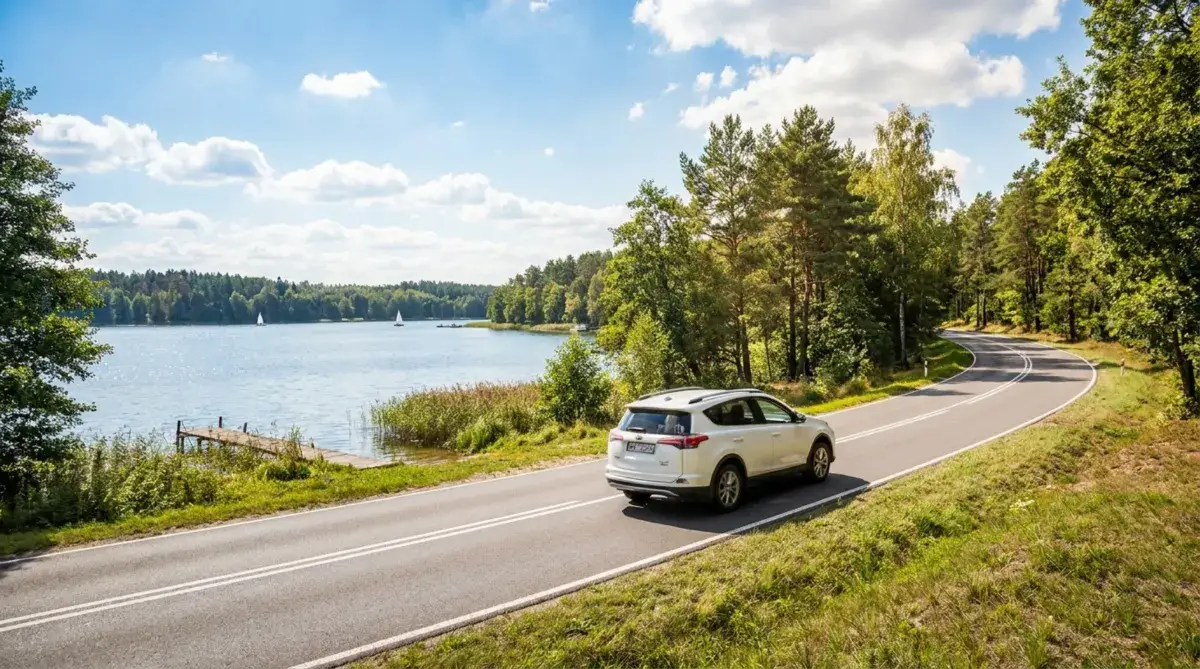
If you're planning scenic detours through the Masurian Lake District or regional cross-country routes, choosing a rental option with unlimited mileage prevents extra per-kilometer fees at return.
Fuel Policy, Vehicle Return, and Late-Return Charges
The standard and most cost-effective arrangement is the "Full-to-Full" fuel policy. You collect your vehicle with a full fuel tank and return it full. Fuel stations are readily available near all major airports and highway exits, making refuelling simple before drop-off.
Avoid "Full-to-Empty" policies, which charge inflated refueling rates for the initial tank without reimbursing unused fuel. Additionally, observe your scheduled return time carefully; returning a vehicle more than an hour late can trigger an additional full day's charge.
Driving a Rental Car Outside Poland
Poland's central location makes it easy to visit neighboring destinations like Berlin, Prague, or Vienna. However, driving across an international border without written authorization violates rental terms and invalidates your insurance coverage.
Notify your rental company during booking if you plan to travel internationally so they can prepare valid cross-border documentation. Note that travel eastward into non-EU nations, including Belarus and Ukraine, is restricted across Polish car rental fleets due to border regulations and insurance limitations.
Which Rental Duration Fits Your Situation?
Matching your rental term to your itinerary helps you maintain reliable mobility without paying for unused services.
Here is how short-term, medium-term, and long-term rentals align with common travel needs in Poland:
Tourists Visiting Poland for a Few Days or Weeks
If you're visiting Poland for a holiday lasting one to three weeks, short-term rental is the practical choice. You can pick up a reliable vehicle at the airport and explore historic cities and countryside landmarks on your own schedule.
Short-term rentals also accommodate one-way itineraries. You can collect a vehicle at Warsaw Chopin Airport, drive south through Kraków, and return the car at Katowice Airport before your flight, saving you a long return drive across the country.
Business Travellers and Project-Based Workers
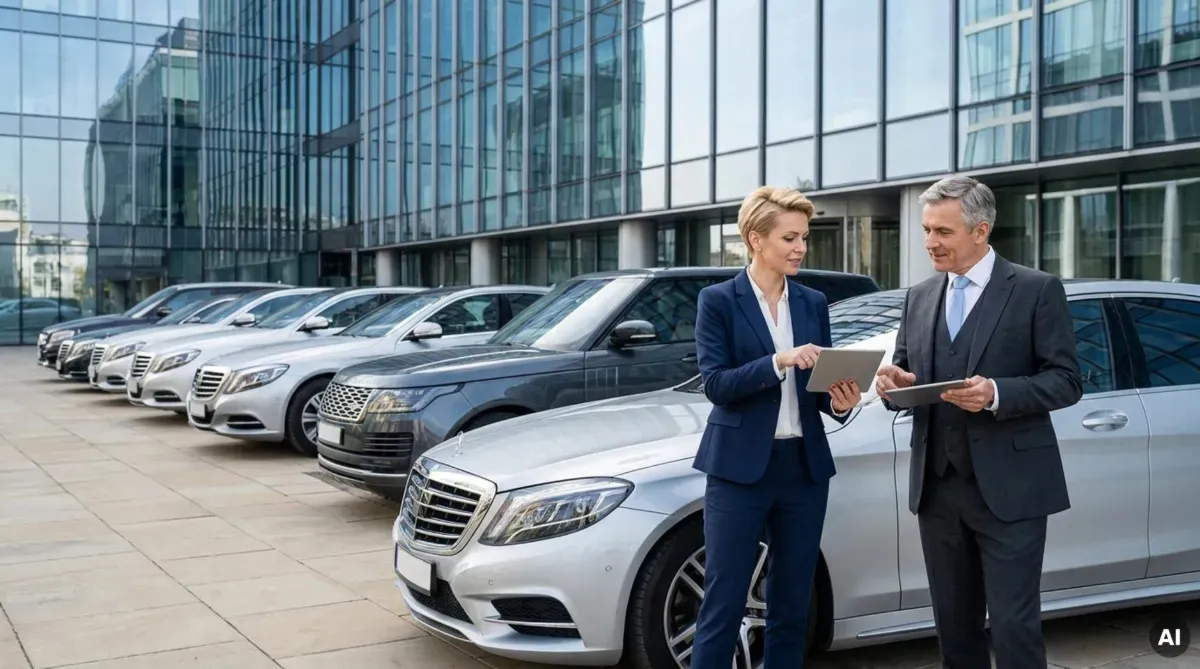
Corporate travelers visiting regional branches, client facilities, or trade exhibitions benefit from rentals lasting a few days to two weeks. A modern sedan or executive vehicle provides a comfortable workspace between meetings with direct company billing.
Specialists assigned to industrial parks in Upper Silesia or logistics centers around Łódź for several weeks often rely on weekly short-term rentals to retain scheduling flexibility without committing company capital to fixed contracts.
Foreign Residents and Extended Stays of 1 to 12 Months
Expats, visiting professionals, and remote workers staying in Poland for a semester or longer find long-term rental and vehicle subscriptions ideal. It removes the risk of buying an older used vehicle that must undergo rigorous annual roadworthiness inspections (badanie techniczne).
Long-term rentals also eliminate the need for a local credit history or a PESEL identification number, which are typically required for standard vehicle financing. All you need is a valid passport, driver's license, and an accepted payment method to secure personal transportation.
Companies Needing Employee or Replacement Vehicles
Companies regularly encounter shifting fleet requirements, whether bringing on team members for trial periods, fulfilling temporary delivery contracts, or hosting overseas staff. Purchasing vehicles for short-term needs creates unnecessary balance sheet risk.
Long-term rentals allow commercial operations to expand or reduce fleet sizes as demand shifts. Rental fees qualify as operating expenses (OpEx), streamlining accounting while ensuring employees drive modern, fully insured vehicles equipped with proper seasonal tires.
Drivers Waiting for a New Car or Repairing Their Own Vehicle
Automotive supply chain delays can mean waiting months for a custom-ordered vehicle from a dealership. In other cases, extensive collision repairs can keep a personal car in the workshop for weeks.
A mid-to-long-term rental delivers a practical mobility solution. Rather than paying expensive rolling daily rates or relying on transit, you can rent a dependable car for two to six months and return it the day your permanent vehicle is ready.
Short-Term or Long-Term Rental: Which One Do You Need?
Deciding between short-term and long-term rental comes down to matching your trip duration against your budget and operational needs. For journeys lasting a few days up to a month, short-term rental provides unmatched convenience, simple online booking, modern cars, and zero obligations once you hand back the keys.
If you need a car for more than 30 days, long-term rental offers significant cost savings. You gain access to lower monthly rates without complex leasing checks, while the rental company takes care of routine maintenance, seasonal tire swaps, and roadside assistance.
Consider Medium-Term Rental for Flexible Stays of 1 to 12 Months
Medium-term rentals and monthly subscriptions bridge the gap between short-term hire and traditional multi-year leases. This option has become widely popular across Poland for drivers who require reliable mobility for several months without entering a long commercial contract.
Medium-term solutions pair reduced monthly pricing with contract flexibility. You can drive an efficient compact car through the autumn and winter months, and easily adjust your vehicle segment as your family or business plans evolve in the spring.
Use a Cost-Per-Day and Total-Commitment Comparison Before Deciding
Before booking, compare your options side by side. Contrast the total cost of a short-term booking-including seasonal price shifts and daily insurance-against the fixed monthly rates of an extended rental plan.
Factor local road requirements into your travel budget. Poland's modern highway network includes electronic toll sections managed through the e-TOLL system or local toll plazas. Remember that Poland enforces strict road safety laws, including a 0.02% blood alcohol limit, automated speed cameras, and mandatory safety gear inside every vehicle, such as a warning triangle and fire extinguisher.
When collecting your car, complete a thorough walkaround inspection. Take date-stamped photos of body panels, wheels, and odometer readings. Starting your journey with clear documentation ensures transparent rental terms and lets you travel with complete confidence.