21.09.2026
What to Do After a Car Accident in Poland as a Foreigner
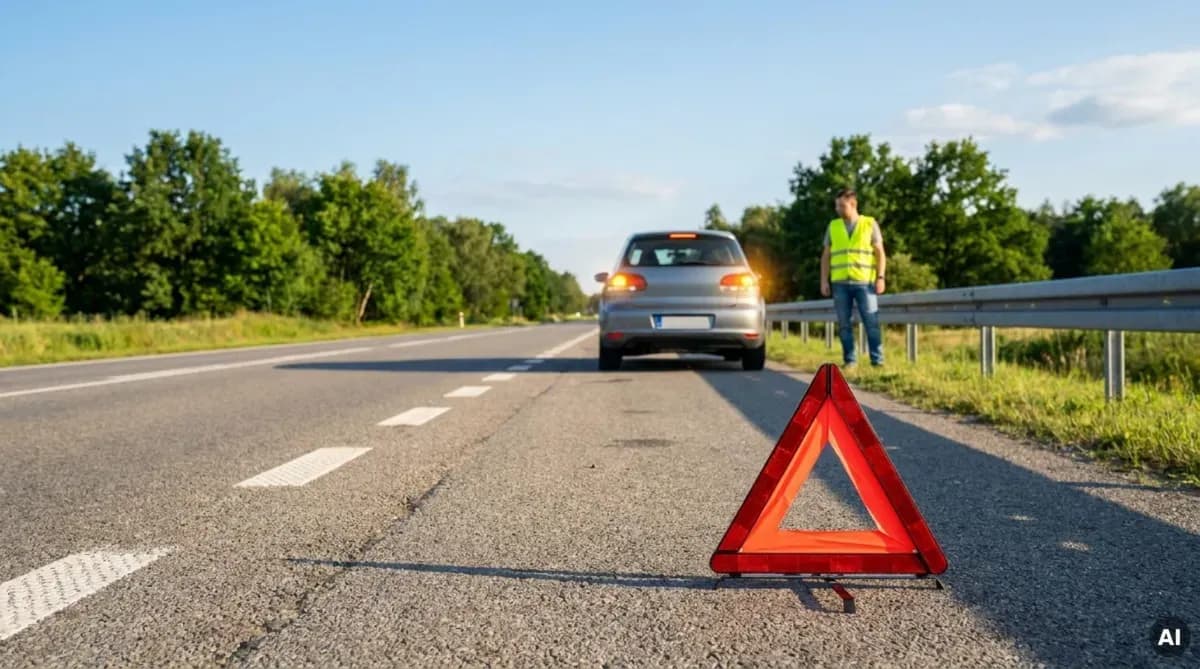
What should you do if you have a car accident in Poland as a foreign driver? Immediately secure the scene using hazard lights and a warning triangle, check for injuries, and call 112 if anyone is hurt or if fault is disputed.
Once everyone's safe, document the event with either a formal police report or a Joint Accident Statement so you can protect your rights and handle insurance claims smoothly.
What to Do Immediately After a Car Accident in Poland
The first few minutes after a collision are critical for your safety and any future insurance claim. While an unexpected accident in another country can feel stressful, following a clear sequence of steps keeps everyone safe and ensures you gather the right evidence from the start.
Under Polish law, leaving an accident scene or failing to secure the area can lead to severe legal penalties. Whether you're dealing with a minor parking scrape or a highway collision, you've got to stop immediately and take appropriate safety precautions.
1. Stop, Stay Calm, and Secure the Scene
Bring the vehicle to a full stop in a safe spot if possible. Turn off the engine, set the handbrake, and switch on your hazard lights (światła awaryjne). Before stepping out, put on a high-visibility reflective vest (kamizelka odblaskowa). Carrying one in the cabin is standard safety practice across Europe, and Polish traffic regulations require pedestrians to wear reflective gear when walking along roads outside built-up areas after dark or during poor visibility.
Next, set up your warning triangle (trójkąt ostrzegawczy) to alert oncoming traffic. Polish regulations specify exact placement distances based on the road type:
Motorways (Autostrady) and expressways (Drogi ekspresowe): Place the triangle 100 meters behind the vehicle.
Outside built-up areas (Poza obszarem zabudowanym): Place it between 30 and 50 meters behind the car.
Inside built-up areas (Obszar zabudowany): Place it directly behind or on top of the vehicle at a height of no more than 1 meter.
If the car's still drivable and the incident involves only minor body damage without any injuries, Polish traffic rules encourage drivers to move vehicles onto the shoulder or a nearby parking space. This prevents secondary collisions and keeps traffic moving. However, if anyone's injured, leave the vehicles exactly where they are unless they pose an immediate threat to life.
2. Check for Injuries and Call 112
Before checking bumper dents or vehicle documents, check yourself, your passengers, and the occupants of the other vehicle. Even lower-speed impacts can trigger whiplash, shock, or internal injuries whose symptoms don't appear right away.
Dial the European emergency number 112 immediately if anyone shows signs of bleeding, unconsciousness, severe pain, or confusion. Polish 112 dispatchers frequently speak English or can connect you directly with an English-speaking operator. Clearly state your location-including highway kilometer posts if you're on a tollway or expressway-the number of people involved, and the nature of any injuries. Provide basic first aid if you're trained, but don't move a severely injured person unless there's an active risk of fire or oncoming traffic.
3. When You Must Call the Polish Police
Polish law draws a clear line between a collision (kolizja), which involves vehicle damage only, and an accident (wypadek), which involves bodily injury, health impairment lasting longer than seven days, or death. If someone is injured or killed, you're legally required to call the police.
You must also contact the police by dialing 112 or the direct police line 997 under these circumstances:
The other driver refuses to cooperate, acts aggressively, or won't present identification.
You suspect the other driver is operating under the influence of alcohol, drugs, or other substances.
The other vehicle lacks valid registration or mandatory third-party liability insurance (OC).
There's a dispute over who caused the crash or how events unfolded.
The collision caused significant damage to public infrastructure (such as crash barriers or road signs) or involved a foreign commercial vehicle. If you're driving a rental vehicle, your rental agreement will typically require a report regardless of severity.
[See how the replacement car works]
Police Report or Joint Accident Statement: Which Procedure Applies?
Foreign drivers often wonder whether they should wait for police officers to arrive or complete the paperwork between themselves. Both options are legally valid in Poland, but the route you choose affects your waiting time at the scene and how your claim is processed.
A police report provides an indisputable official record, but waiting for a patrol car can take considerable time, especially during peak traffic hours or in rural regions. The officer will also issue an on-the-spot fine (mandat karny) and penalty points to whoever caused the collision.
When Drivers Can Complete an Oświadczenie
If the accident involves only minor sheet-metal damage, no one's injured, both cars can move safely, and both parties fully agree on who's at fault, calling the police isn't strictly necessary. You can document the incident using a Joint Accident Statement, known in Poland as an Oświadczenie o zdarzeniu drogowym.
Polish insurance providers accept this document as a valid basis for settling a claim. However, you should only choose this option if the at-fault driver admits liability in writing without hesitation. If there's any ambiguity, conflicting stories, or language confusion, insist on calling the police so you don't face unexpected disputes later on.
What Information to Include in the Accident Statement
You don't need a pre-printed form; an informal statement handwritten on plain paper carries full legal weight if it contains all required details. Keeping a standard bilingual European Accident Statement form in your glove compartment makes this process much simpler. If you write it out, ensure both drivers clearly provide:
Date, time, and exact location: List the street name, intersection, kilometer marker, or GPS coordinates.
Driver details: Full legal names, PESEL numbers (or passport numbers for non-residents), registered addresses, phone numbers, and driver's license numbers.
Vehicle details: Make, model, license plate number, and VIN for each vehicle involved.
Insurance details: The active policy number and the official name of the insurer (Zakład Ubezpieczeń) providing OC coverage.
Detailed description of the incident: A clear summary of how the collision happened, including travel directions, weather, and road conditions.
Unambiguous admission of fault: An explicit statement such as "Sprawcą kolizji jest...", followed by their signature.
Signatures: Both drivers must sign and date the document.
What Evidence and Documents Should a Foreigner Collect?
Insurance companies evaluate claims based on verifiable facts. As an international traveler or expat, gathering clear documentation at the scene protects you from later misunderstandings or altered accounts after you've left the country.
Never rely on verbal assurances or casual handshakes. People often reconsider their fault once they calculate potential repair bills or future insurance rate hikes.
Photographs, Video, and Witness Details
Use your smartphone camera to record the scene thoroughly before moving the vehicles. Capture wide-angle shots showing the final resting positions of the cars, lane markings, surrounding road signs, traffic signals, and any skid marks or fluid spills.
Take close-up photos of the damage on all vehicles from multiple angles, highlighting paint transfer, dents, and damaged wheels. If you have an active dashcam, back up the memory card immediately. Dashcam footage is legal in Poland and routinely accepted by insurance assessors and courts. If bystanders saw the collision, ask for their names, phone numbers, and email addresses.
Driver, Vehicle, and Insurance Information
Examine the other driver's documents yourself rather than taking verbal notes. In Poland, local drivers aren't legally required to carry physical driver's licenses, registration cards (Dowód rejestracyjny), or paper insurance slips, as Polish authorities verify these electronically via the central vehicle database (CEPiK).
If the other driver doesn't have paper documents, ask them to display their digital vehicle profile in the official government app (mObywatel). You can also verify whether any Polish vehicle has active insurance on the Insurance Guarantee Fund website (UFG.pl) by entering its license plate number. Photograph the other car's registration plates, windshield inspection labels, and the driver's ID card or passport.
How Polish Motor Liability Insurance Covers an Accident
Poland enforces a mandatory third-party liability insurance framework known as OC (Odpowiedzialność Cywilna). Every registered vehicle must hold continuous OC coverage. This policy pays for personal injuries and property damage inflicted on third parties.
Rooted in the Polish Civil Code (Kodeks Cywilny), the system aims to return the injured party to the financial position they would've occupied had the incident never occurred.
What OC Third-Party Liability Insurance Pays For
When another driver causes an accident, their OC insurer must cover proven, direct financial damages. For your vehicle, this includes professional repair costs, towing fees (holowanie) from the scene, and secure storage costs while awaiting inspection.
The at-fault policy also extends to related financial impacts. These include a replacement vehicle (samochód zastępczy) while yours is in the shop, damaged personal belongings inside the vehicle (such as laptops, car seats, or luggage), medical care, rehabilitation, travel expenses to medical appointments, and documented lost wages resulting from an inability to work.
How Fault Affects Compensation
Poland operates under a fault-based compensation system. If the other driver bears total fault, their insurer pays 100% of your verified losses. If you caused the collision, your OC covers the other driver's repairs, while damage to your own vehicle is covered only if you carry optional comprehensive coverage, known as AC (Autocasco).
When both drivers share blame, Polish courts and claims adjusters apply contributory negligence (przyczynienie się do szkody). For instance, if you were speeding through an intersection where another car failed to yield right of way, an assessor might determine you bear 20% responsibility, reducing your payout from the other insurer by that proportion.
How to Report the Accident and Start an Insurance Claim
Once you've secured the scene and collected evidence, file your claim (likwidacja szkody). Submitting your claim promptly helps the insurer open your file and arrange an inspection without unnecessary delays.
Polish statutory regulations require insurers to investigate, calculate, and disburse compensation within 30 days of receiving an initial claim notification.
Notify the At-Fault Driver’s Insurer Without Delay
Start your claim with the insurance company carrying the at-fault driver's OC policy. Leading Polish insurance providers offer clear online registration portals, and many provide services in English.
If you have your own active Polish OC policy, check whether your provider participates in Direct Claim Settlement (Bezpośrednia Likwidacja Szkód, or BLS). Under BLS, your insurer handles your vehicle's repair and pays the compensation directly, then settles the balance with the other company behind the scenes. That saves you from having to manage unfamiliar third-party claims departments.
What to Include in Your Claim Notification
To keep the process running smoothly, send a complete documentation package right away. Include:
The completed Oświadczenie or the official police incident reference number along with the precinct's name.
Clear photos of the vehicles, license plates, and all visible damage.
Copies of your driver's license, passport or national ID card, and vehicle registration.
An itemized list of any damaged personal gear inside the car, backed by purchase receipts or replacement valuations.
Your banking details, including international IBAN and SWIFT/BIC codes for payment transfers.
What to Do If the Settlement Offer Is Too Low
Initial insurer settlement payouts are frequently calculated as a cash estimate (metoda kosztorysowa), which may use discount aftermarket parts and lower repair shop labor rates. If this estimate falls short of real-world repair costs, you don't have to accept it.
Instead, choose invoice-based repair (metoda warsztatowa). Have an authorized repair shop generate a formal repair estimate using standard industry software such as Audatex or Eurotax, and submit that quote to the insurer.
If the insurer refuses to cover reasonable garage rates, file an internal complaint or request assistance from the Polish Financial Ombudsman (Rzecznik Finansowy), an independent state agency set up to resolve disputes between consumers and financial institutions.
What PBUK and UFG Do for Foreign Accident Victims
Poland maintains dedicated safety nets for accidents involving uninsured drivers, hit-and-run incidents, or international vehicle policies. The two central organizations handling these cases are PBUK and UFG.
Understanding their roles ensures you know where to turn if an at-fault driver cannot be verified or flees the scene.
The Role of the Polish Motor Insurers’ Bureau
The Polish Motor Insurers' Bureau (Polskie Biuro Ubezpieczycieli Komunikacyjnych, or PBUK) coordinates cross-border insurance processes under the international Green Card system.
If you're hit in Poland by a car registered in another European Economic Area (EEA) country or a participating Green Card state, PBUK identifies that foreign insurer's appointed claims representative in Poland. That means you can process your claim locally in Poland without trying to contact foreign adjusters across borders.
The Role of the Insurance Guarantee Fund
The Insurance Guarantee Fund (Ubezpieczeniowy Fundusz Gwarancyjny, or UFG) manages compensation claims when an at-fault vehicle lacks mandatory OC coverage or when a hit-and-run driver cannot be identified.
If you're struck by an uninsured or unidentified driver, UFG steps in to cover the damages under terms set by Polish law. You can submit your paperwork through any licensed Polish insurance company; that insurer is legally obligated to accept your documentation, arrange the vehicle appraisal, and transfer the completed file to UFG for settlement.
What Changes When the Other Vehicle Is Foreign-Registered?
As a major international transit hub connecting Western and Eastern Europe, Poland's roads carry substantial foreign passenger and freight traffic. Collisions involving foreign-plated vehicles require a couple of extra checks at the scene.
Standard traffic rules still apply, but verifying international insurance certificates is vital.
How the Green Card System Works in Poland
Vehicles registered within the EU, EEA, Switzerland, and the UK don't need a separate paper Green Card (Zielona Karta) to enter Poland, as their domestic license plates serve as proof of valid third-party liability cover. However, motorists from non-EEA states must carry a valid physical Green Card or purchase border insurance (Ubezpieczenie graniczne) at the frontier.
If the other car carries foreign registration, take photos of its Green Card certificate or border insurance paperwork. Make sure the validity dates encompass the collision date and that the issuing bureau's name and vehicle details are clearly visible.
Finding the Foreign Insurer or Polish Claims Representative
You don't have to pursue a claim in the driver's home country. Under European mobility regulations, foreign insurers operating across member states must maintain an authorized claims representative (reprezentant do spraw roszczeń) in Poland.
Visit the PBUK portal (pbuk.pl) and search their database using the foreign insurer's name and country of origin. You'll find their local representative in Poland, submit your documents to them in English or Polish, and settle the claim under Polish liability law.
What to Do After an Accident in a Rental Car
Experiencing an accident while driving a rental car introduces specific rental terms and conditions alongside standard road rules. Following your provider's reporting steps ensures your contractual protections stay intact.
When you rent a car, your rental agreement details exact rules regarding body damage, roadside support, and excess liabilities.
Notify the Police, Rental Company, and Insurer
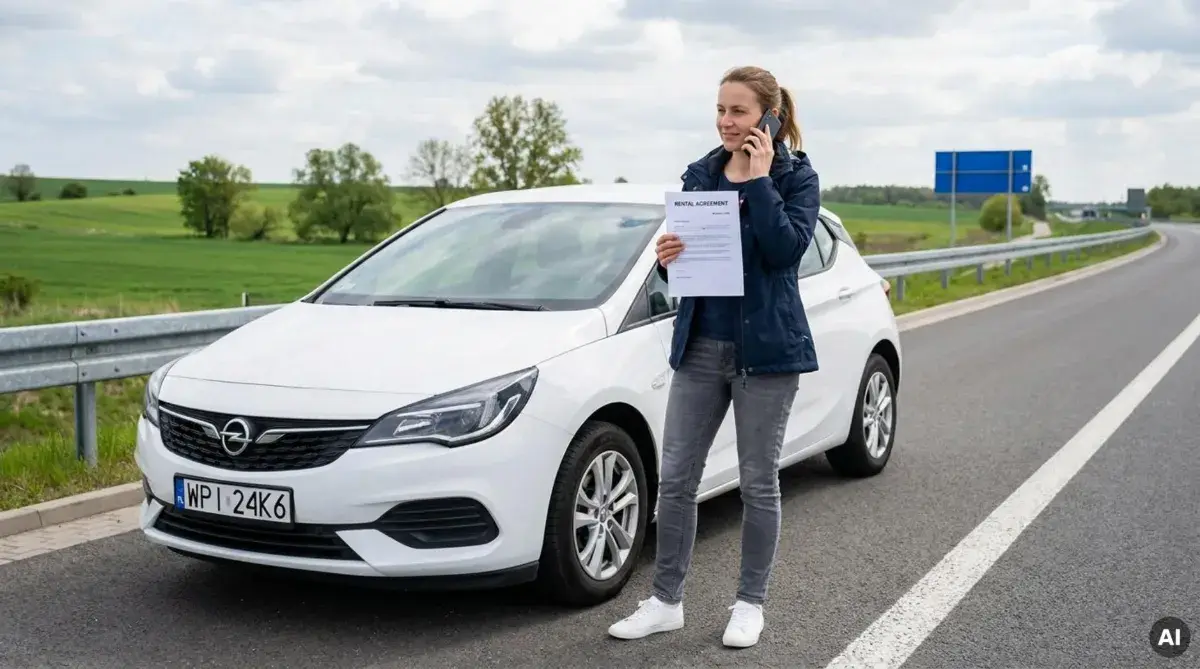
After ensuring personal safety, review your rental agreement. Most car rental companies in Poland require a police report for every accident involving one of their vehicles, regardless of how minor the damage seems or who caused it.
Contact your car rental company's 24/7 support line immediately. Reliable providers offer round-the-clock roadside assistance to guide you through unexpected incidents and arrange towing or a replacement car if the vehicle isn't drivable. Never arrange independent roadside towing or garage repairs without the rental company's explicit approval, as unauthorized work won't be reimbursed.
Check the Rental Agreement and Excess Amount
Review the damage coverages outlined in your rental paperwork. Standard agreements often feature Collision Damage Waiver (CDW) and Theft Protection (TP), which typically come with a deductible or excess (udział własny) ranging from 1,500 PLN to 6,000 PLN depending on the car class. Choosing an optional full insurance package when booking reduces this financial exposure so you can enjoy comfortable travel and travel with confidence.
If the other driver caused the crash and their insurer formally accepts full liability, your rental provider will generally refund any pre-authorized excess charges once third-party recovery completes-similar to how a replacement car claim works for businesses. If you secured separate excess reimbursement protection, keep every piece of paperwork-the police incident confirmation, the rental check-in inspection report, and your repair billing statements-so your independent insurer can reimburse you promptly.
Legal and Practical Issues for Foreigners in Poland
Beyond roadside safety and claim forms, foreign travelers should understand local requirements for driving credentials, residency verification, and dispute resolution.
Knowing your legal rights ensures you navigate claims transparently and avoid common administrative obstacles.
Driving Licence, Passport, Residence, and Vehicle Documents
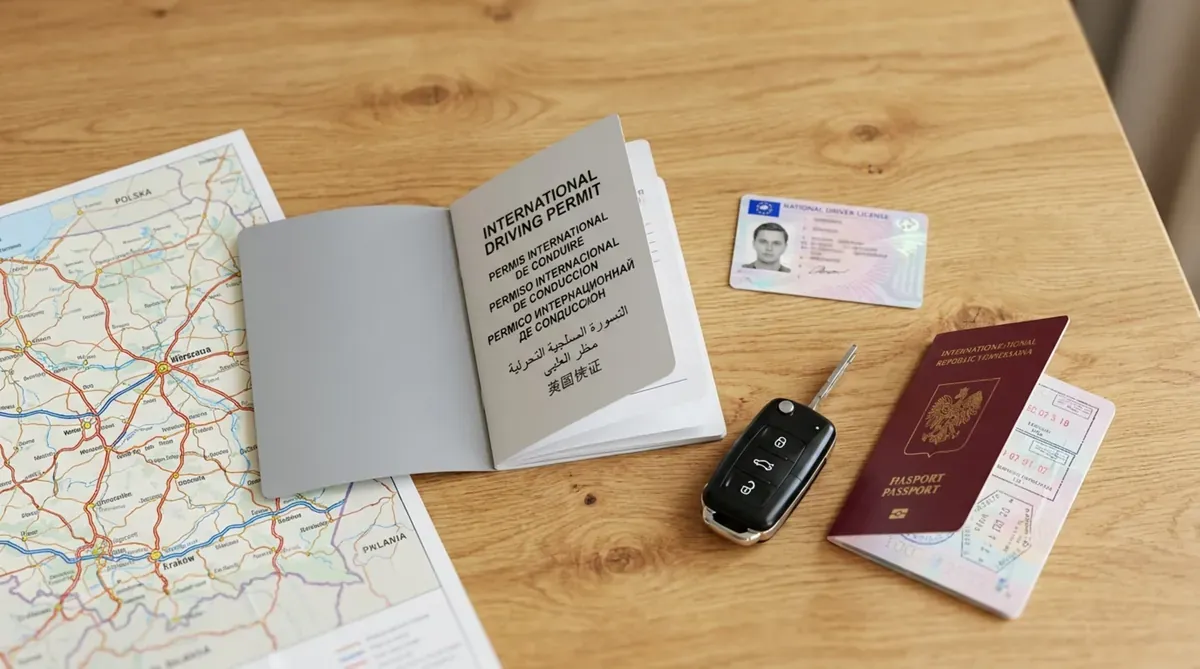
You must be able to verify your identity and legal driving authorization to police officers and insurance adjusters. If you hold a driver's license issued by an EU or EEA member state, it's valid across Poland without requiring an international permit or local exchange.
Motorists holding licenses issued by countries outside the Vienna Convention on Road Traffic should carry an International Driving Permit (IDP) alongside their national license. Always keep your passport, national identity card, or valid residence card (Karta Pobytu) accessible. If you're driving your personal foreign-registered vehicle, carry the original vehicle registration certificate and verifiable proof of third-party liability insurance.
When to Contact a Polish Lawyer or Claims Representative
Most straightforward vehicle damage claims move through standard insurance channels without formal legal representation. However, if an accident involves significant bodily injuries, extended medical treatment, complex questions of shared liability, or substantial financial claims, working with a Polish legal counsel (adwokat or radca prawny) can protect your interests.
Polish law provides strong consumer protections. Under the Polish Civil Code, you generally have three years from the date you discovered both the damage and the responsible party to file a civil claim for property damages. If the collision constitutes a criminal offense involving severe injury or death, the statute of limitations extends up to twenty years. Furthermore, if an insurer delays your payout or denies liability without merit, you can turn to the Financial Ombudsman (Rzecznik Finansowy) for an objective, state-backed review of your case before considering formal court litigation.