
24.09.2026
Which Car for Polish Mountains: SUV, 4x4, or Winter Tires?
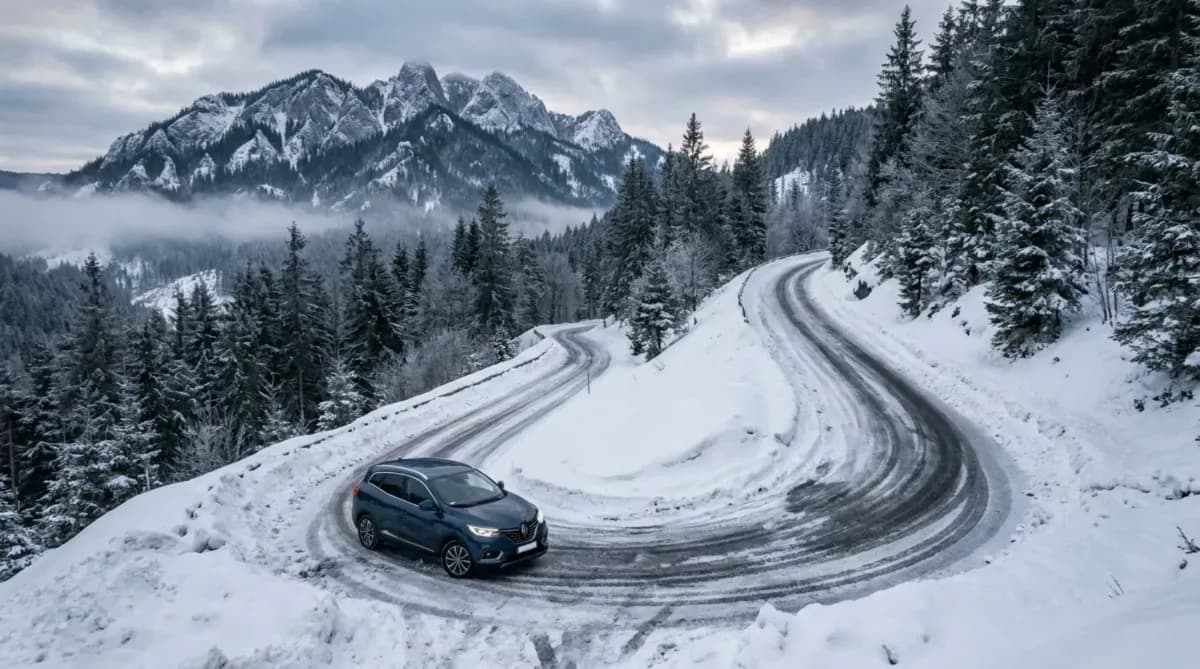
Which vehicle setup provides the safest handling for driving in the Polish mountains during winter? While an All-Wheel Drive (AWD) SUV or dedicated 4x4 improves climbing performance on steep gradients, certified winter tires remain the most critical component for braking and steering safely on snow and ice. For most alpine routes, combining an AWD or 4WD system with dedicated winter tires offers the optimal balance of traction, control, and comfort.
What Makes Driving in the Polish Mountains Unique?
The Polish mountain regions-from the rugged Tatras and Karkonosze to the remote Bieszczady range-present demanding driving conditions throughout the winter months. Road surfaces vary significantly, transitioning rapidly from well-maintained national highways to narrow, winding municipal roads and unpaved access tracks leading to ski resorts and mountain lodges. Substantial elevation changes, sharp switchbacks, and sustained sub-zero temperatures create volatile driving environments where a dry, salted road can turn into hard-packed snow or treacherous black ice in just a few kilometers.
Key Challenges: Snow, Ice, and Steep Terrain
The primary hazards encountered in mountain driving include heavy snowfall, hidden ice, and steep gradients. Heavy snow can obscure lane markings, reduce visibility, and create deep drifts that pose a challenge for lower-clearance vehicles. Black ice presents an even more severe hazard because it's virtually invisible, forming rapidly on shaded mountain passes, bridges, and overpasses where surface temperatures drop fastest.
Steep climbs require continuous, uninterrupted traction, while long downhill descents demand controlled engine braking to prevent brake overheating and skidding. Winter mountain weather also strains vehicle components: freezing temperatures reduce battery output, lower tire pressures, and thicken fluids. Traveling with a reliable, well-maintained vehicle properly equipped for sub-zero conditions is essential to travel with confidence.
Comparing SUVs, 4x4s, and Regular Cars with Winter Tires
What Is an SUV and How Does It Perform in Mountain Winters?
Sport Utility Vehicles (SUVs) combine practical passenger room and cargo capacity with elevated ground clearance and advanced traction systems. Most modern SUVs feature All-Wheel Drive (AWD), which automatically distributes engine power to the wheels with the most grip. This elevated ground clearance prevents the underbody from high-centering in moderate snowdrifts, while the higher seating position improves forward visibility during heavy precipitation.
Popular examples include the Subaru Outback, equipped with standard Symmetrical AWD and 8.7 inches of ground clearance, as well as the Honda CR-V (8.2 inches) and Toyota RAV4 Hybrid (8.1 inches with Dynamic Torque Vectoring AWD). When paired with stability control and modern anti-lock braking systems, these vehicles provide comfortable travel across typical winter road conditions.
How Does a 4x4 System Improve Mountain Safety?
A traditional Four-Wheel Drive (4x4 or 4WD) system is engineered for more demanding off-pavement conditions than standard AWD. While AWD operates automatically in the background, true 4WD systems often allow the driver to manually lock the front and rear axles together. This ensures equal power delivery to both axles, minimizing wheel spin on deep unplowed snow, steep forest tracks, and heavily rutted terrain.
Many 4WD platforms include selectable transfer case modes, such as 4-Hi for packed snow at regular speeds and 4-Lo for maximum torque at low speeds when navigating severe terrain or deep drifts. Vehicles like the Jeep Grand Cherokee (featuring the Quadra-Trac II system) and the Chevrolet Tahoe offer the mechanical capability needed for remote mountain routes where snowplows rarely operate.
What About Standard Cars Equipped Only with Winter Tires?
A standard Front-Wheel Drive (FWD) or Rear-Wheel Drive (RWD) car equipped with dedicated winter tires performs remarkably well in cold conditions. When it comes to braking and cornering on snow and ice, a 2WD vehicle fitted with winter tires consistently outperforms an AWD or 4WD vehicle fitted with all-season tires. Winter tires utilize specialized silica-rich rubber compounds that stay pliable in freezing weather, paired with intricate tread sipes that grip snow surfaces.
However, 2WD vehicles face mechanical limitations when accelerating up steep, icy slopes or driving through unplowed snow. While FWD vehicles benefit from the engine weight positioned over the drive wheels, RWD vehicles are more prone to oversteer and loss of traction on uphill climbs. While quality winter tires are non-negotiable for safety, pairing them with an advanced drive system provides the best overall capability.
Which Option Is the Best for Steep, Icy Roads?
For navigating steep, icy mountain roads, the optimal solution is an AWD or 4WD vehicle fitted with dedicated winter tires. The winter tires provide the necessary frictional grip for steering and deceleration, while the AWD or 4WD system distributes engine torque effectively to maintain forward momentum without wheel spin.
AWD is ideal for paved mountain passes because it responds instantly to changing surface conditions without driver intervention. For drivers traveling into remote areas with unplowed snow, a 4WD vehicle with low-range capability offers greater mechanical control. A 2WD car with winter tires remains capable for cleared valley routes, but it lacks the climbing security of an all-wheel platform on severe inclines. When booking a rental vehicle for a winter mountain trip, confirm the drivetrain and tire specification before you set off.
What Drive Systems Offer: AWD vs. 4WD Explained
How Does AWD Work in Snowy Conditions?
All-Wheel Drive operates continuously and automatically to distribute engine torque among all four wheels. Many modern AWD systems function primarily in front-wheel drive under normal driving conditions to optimize fuel efficiency. When electronic sensors detect wheel slip, the system routes torque to the rear wheels within milliseconds, maintaining vehicle stability before the driver even notices traction loss.
AWD systems fall into two categories: on-demand systems that engage the secondary axle only during traction loss, and full-time systems (such as Subaru's Symmetrical AWD or Audi's quattro) that constantly distribute power across both axles. AWD requires no manual input, making it an accessible and practical choice for daily winter driving and long-distance family travel.
Is 4WD Necessary in Poland’s Mountain Regions?
Whether you need a dedicated 4WD system depends on your specific travel plans. If your itinerary involves established national roads, regional routes, and popular ski resorts around Zakopane, Wisła, or Krynica-Zdrój, an AWD vehicle with quality winter tires provides ample capability. Many visitors pick up their rental car in Kraków before heading south toward the Tatras.
Dedicated 4WD becomes essential if you plan to navigate unmaintained mountain passes, access remote cabins in the Bieszczady mountains, or drive through deep, unplowed powder. The mechanical locking differentials and low-range gearing of a true 4x4 prevent the vehicle from getting bogged down where standard road clearance and AWD systems reach their limits.
Which Performs Better: AWD or 4WD in Polish Winters?
Each system serves a distinct operational purpose:
AWD delivers the best everyday performance for mixed winter conditions, commuting, and highway driving. It adapts seamlessly to variable surfaces-such as transitioning from wet asphalt to slush-while maintaining balanced fuel economy. Dedicated 4WD excels in extreme conditions involving deep snow, steep off-road tracks, or heavy towing. For the vast majority of drivers traveling on maintained Polish mountain roads, a modern AWD platform paired with winter tires offers the ideal blend of safety, efficiency, and ease of use.
Are Winter Tires Enough for Safe Mountain Travel?
How Winter Tires Improve Traction on Snow and Ice
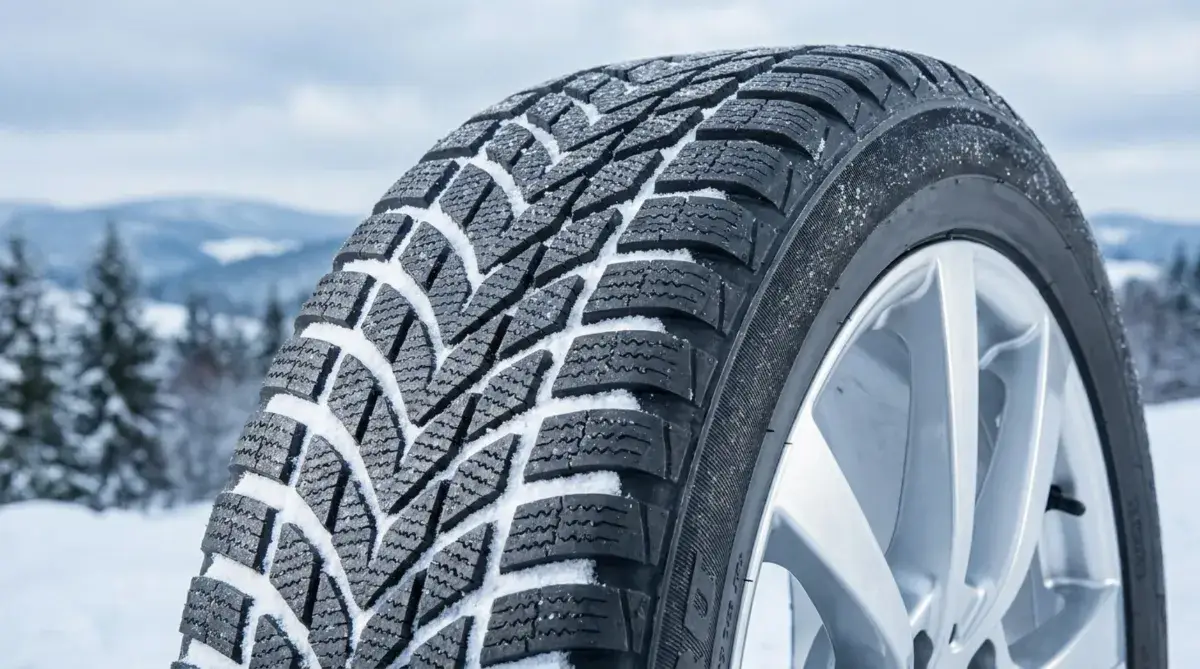
Winter tires are the most critical safety feature for cold-weather driving. They rely on two fundamental engineering components: advanced rubber compounds and specialized tread architecture. Standard tire compounds harden when temperatures drop below 7°C (45°F), significantly reducing grip. Winter tires use specialized rubber compounds that remain flexible in sub-zero temperatures, allowing the tire to conform to road surface imperfections.
Furthermore, winter tread patterns feature deeper circumferential grooves to evacuate slush and thousands of micro-grooves (sipes) that create biting edges. These sipes trap snow within the tread, utilizing snow-on-snow friction to generate superior traction on packed surfaces and icy roads.
Do Winter Tires Replace the Need for AWD or 4WD?
No, winter tires and multi-wheel drive systems serve complementary functions. Winter tires provide the baseline grip necessary for steering response and braking distance. AWD and 4WD systems only manage how engine power is applied to accelerate the vehicle. If the tires cannot grip the road surface, having power delivered to all four wheels will not prevent sliding during braking or cornering.
A 2WD vehicle on winter tires will stop in a significantly shorter distance on ice than an AWD vehicle on all-season tires. Maximizing safety requires combining both: dedicated winter tires to maintain lateral grip and braking control, alongside AWD or 4WD to ensure reliable uphill propulsion.
Legal Requirements for Winter Tires in Poland
While winter tires are not currently mandated by nationwide statutory law in Poland, driving on seasonal tires appropriate for prevailing weather conditions is standard practice and strongly advised by road safety authorities. Insurance policies may also evaluate tire suitability when assessing claims involving winter collisions.
Additionally, specific mountain sections marked with traffic sign C-18 legally require the use of snow chains on drive wheels during heavy snow conditions. When traveling through high-elevation mountain routes, carrying a properly fitted set of snow chains in your trunk is an essential precaution.
Essential Features for Mountain Driving Safety
Ground Clearance and Approach Angles
Ground clearance-the distance between the lowest point of the vehicle chassis and the road surface-is crucial when navigating unplowed roads and heavy snowdrifts. A minimum clearance of 8 inches (20 cm) helps prevent the vehicle's underbody from scraping against packed snow or hidden debris.
Modern vehicles such as the Subaru Outback (8.7 inches), Ford Bronco Sport (up to 8.8 inches), Acura RDX (8.2 inches), and Toyota RAV4 (8.1 inches) provide adequate height for winter conditions. Favorable approach and departure angles also prevent bumper damage when driving over steep transitions, snowbanks, and uneven driveways.
Traction and Stability Control Systems
Modern vehicles rely on an integrated suite of active safety technologies to maintain vehicle control in adverse conditions:
Traction Control (TC): Regulates engine torque and applies braking force to spinning wheels during acceleration to restore grip on slick surfaces.
Electronic Stability Control (ESC): Monitors steering inputs and yaw rates, automatically applying individual brakes to counteract understeer or oversteer skids.
Anti-lock Braking System (ABS): Prevents wheel lockup during hard deceleration, allowing the driver to maintain full steering control on slippery surfaces.
Hill Descent Control (HDC): Automatically manages braking on steep downhill slopes to maintain a controlled, steady pace without driver pedal input.
Forward Collision Warning and Automatic Emergency Braking (AEB): Detects decelerating traffic or obstacles ahead, applying emergency braking if an imminent hazard is identified.
Cold-weather comfort features also contribute directly to driver focus and safety. Heated side mirrors, windshield defrosters, heated seats, and adaptive LED headlights ensure clear visibility and reduced driver fatigue during long winter journeys.
Top Vehicle Recommendations for Polish Mountain Roads
Best SUVs for Polish Mountains
For drivers seeking a dependable mix of traction, ride comfort, and safety tech, modern AWD SUVs are well suited for mountain travel:
The Subaru Outback stands out with standard Symmetrical AWD, 8.7 inches of ground clearance, and an advanced X-Mode system designed for snow and mud. The Toyota RAV4 Hybrid AWD offers dependable traction via its dedicated electric rear-axle motor alongside excellent efficiency. Other dependable choices include the Honda CR-V AWD, the Acura RDX with Super Handling AWD (SH-AWD), and the Ford Bronco Sport, which features selectable terrain modes for slippery conditions.
Most Reliable 4x4 Models for Winter Weather
For traveling through heavy snow, unplowed rural tracks, or demanding alpine terrain, dedicated 4x4 platforms provide superior mechanical resilience:
The Jeep Grand Cherokee (including the 4xe plug-in hybrid) offers true multi-terrain capability through its Quadra-Trac II 4WD system with a dual-range transfer case and adjustable ride height. The full-size Chevrolet Tahoe 4WD delivers significant road presence, high ground clearance, and robust mechanical locking systems. Similarly, the Ford Explorer 4WD with its Terrain Management System provides reliable performance for larger groups traveling with winter sports gear.
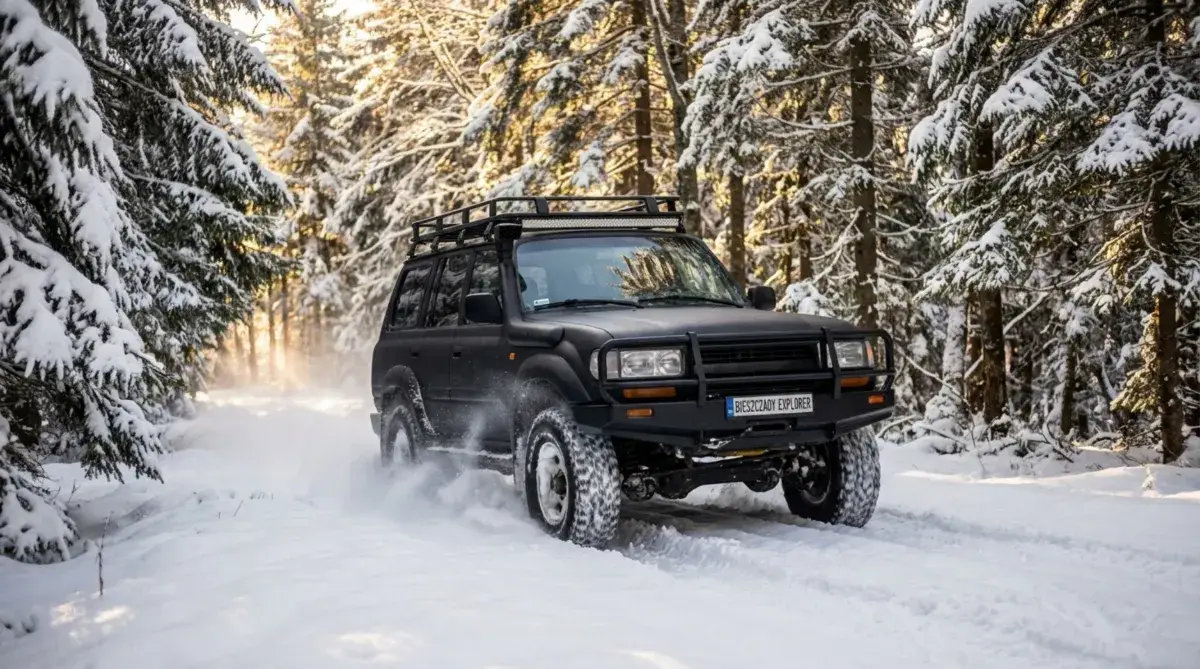
Passenger Cars with Surprising Winter Capability
You don't necessarily need a large SUV to travel comfortably through the mountains. Several modern sedans and wagons deliver exceptional winter stability when equipped with AWD and winter tires:
The BMW 3 Series xDrive and Audi A5 quattro combine balanced chassis dynamics with rapid all-wheel torque distribution. For practical versatility, the Volvo V60 Cross Country wagon offers standard AWD paired with an elevated 7.8-inch ground clearance. Mainstream alternatives like the Toyota Camry AWD, Mazda 3 AWD, and Nissan Altima AWD also offer dependable cold-weather handling and modern safety suites at accessible operating costs.
Common Questions about Mountain Cars in Poland
Should You Use Chains with AWD or 4WD?
Yes. While AWD and 4WD assist with vehicle momentum, they cannot generate traction on sheer mountain ice or through severe snowdrifts. In extreme weather, tire chains provide mechanical grip that standard rubber treads cannot match. Furthermore, on designated mountain routes marked with sign C-18, snow chains are mandatory regardless of whether your vehicle is equipped with AWD or 4WD.
How Bad Is 2WD in the Snow?
A Two-Wheel Drive vehicle's performance depends heavily on tire selection and weight distribution. A Front-Wheel Drive car fitted with premium winter tires can safely handle plowed, moderate mountain routes when driven smoothly. Conversely, Rear-Wheel Drive cars struggle significantly on uphill climbs and slick switchbacks due to oversteer risks. Driving any 2WD car on summer or worn all-season tires in the mountains is dangerous and should be avoided.
Is AWD Worth the Extra Cost for Winter Use?
For frequent winter travel through mountain regions, AWD is a worthwhile investment. The system eliminates wheel spin when starting on inclines, stabilizes the car when crossing snow ruts, and reduces driving stress in adverse conditions. The minor increase in fuel consumption is offset by the substantial gain in stability and peace of mind.
Do You Always Need an SUV for Polish Mountains?
No. While an SUV provides helpful ground clearance, an AWD sedan or station wagon fitted with certified winter tires is entirely capable of handling plowed mountain roads. Your choice should depend on passenger capacity, luggage requirements, and whether your accommodations require driving over unpaved, deep-snow paths.
Choosing the Right Car for Your Needs: Final Considerations
How to Match Vehicle Choice with Driving Habits and Budget
Selecting the right vehicle depends on your planned routes, travel frequency, and space requirements. For standard highway travel to major resort towns with regular snow removal, an AWD passenger car or compact crossover with winter tires is completely sufficient. For off-grid cabins, unplowed trails, or severe weather conditions, a dedicated 4x4 or high-clearance SUV remains the most capable option.
Whatever platform you choose, ensure dedicated winter tires are part of your setup. Reviewing a short-term rental provider's winter equipment policy in advance helps avoid surprises at pickup.
The Role of Preparation and Maintenance for Winter Safety
Modern vehicle safety systems assist the driver, but they cannot overcome the laws of physics. Safe winter driving requires regular maintenance and defensive driving practices:
Before heading into the mountains, ensure your vehicle is fully inspected: check battery health, test anti-freeze levels, verify tire tread depths, and refill the washer reservoir with winter-grade fluid rated for -20°C. Keep your fuel tank at least half full to prevent condensation and provide emergency heating if you encounter delays. Maintain safe following distances (6 to 8 seconds behind preceding vehicles), brake smoothly in a straight line, and carry an emergency kit with warm blankets, a flashlight, booster cables, and a small snow shovel. Combining a properly maintained vehicle from a provider with nationwide coverage with sound driving judgment ensures a smooth journey across Poland's winter landscape.