24.08.2026
Blood Alcohol Limit in Poland - What Every Driver Must Know
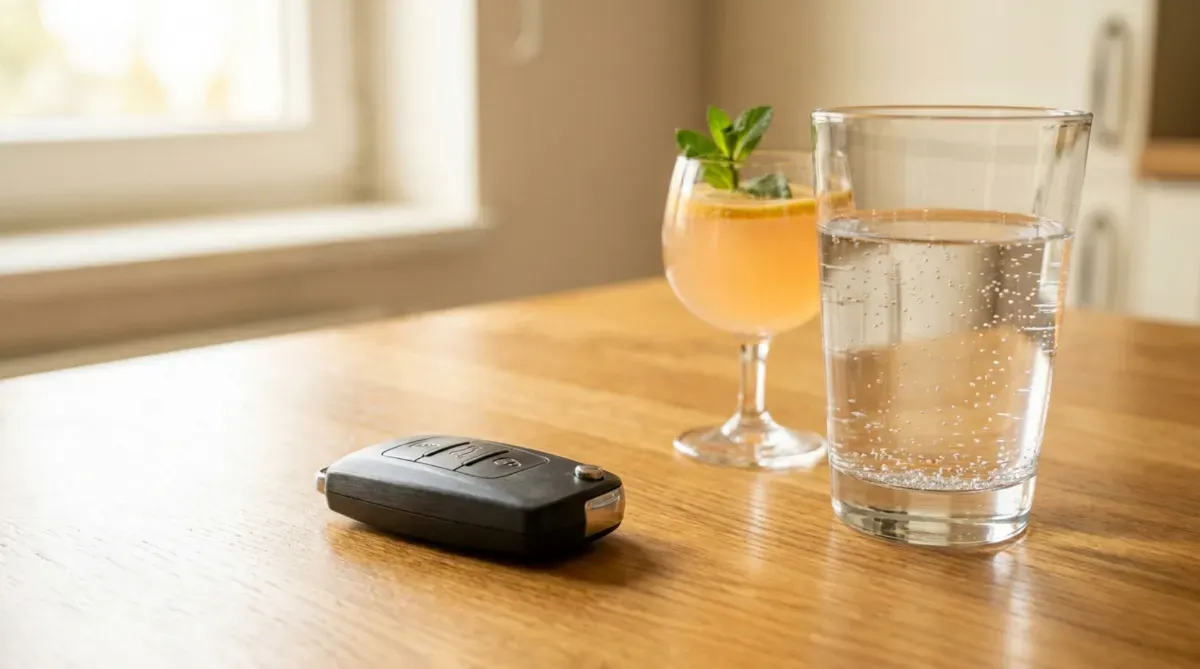
What is the legal blood alcohol limit for driving in Poland? The legal blood alcohol limit in Poland is 0.2 per mille (0.2‰, or 0.10 mg/dm³ in exhaled breath), making it one of the strictest drink-driving standards in the European Union. Driving above this threshold is illegal and carries severe penalties, including heavy fines, immediate license suspension, vehicle confiscation, and potential imprisonment.
What Is the Blood Alcohol Limit in Poland?
Poland enforces one of the strictest road safety frameworks in Europe. While some neighboring countries permit a blood alcohol concentration (BAC) of 0.5‰ or higher, Polish law treats driving and drinking as incompatible activities. The standard applies universally to reduce preventable collisions and keep roads safe for everyone.
The rules apply across all road types at any time of day, regardless of your driving experience. Polish police conduct regular, unannounced roadside screenings. When you're behind the wheel, treat the 0.2‰ threshold as an absolute legal boundary rather than a guideline.
The 0.2‰ Legal Limit for Drivers
Poland's legal limit is 0.2‰, which corresponds to 0.2 grams of alcohol per liter of blood. In practice, this functions almost like a zero-tolerance policy. A single small beer, half a glass of wine, or even a dessert flavored with spirits can easily put you over the legal threshold.
If you're accustomed to higher limits in Western Europe or North America, this policy requires extra care. It doesn't matter how alert you feel or whether your driving seems unaffected; Polish enforcement relies entirely on the objective reading of certified testing equipment.
How Blood Alcohol Concentration Is Measured
Polish authorities measure alcohol impairment through breath alcohol concentration (BrAC) and blood alcohol concentration (BAC). During routine traffic stops, officers use certified electronic breathalyzers that report alcohol in exhaled air in milligrams per cubic decimeter (mg/dm³, equivalent to mg/l).
Polish law applies a direct 1:2 ratio between breath and blood measurements: 0.10 mg/dm³ in exhaled breath is legally equivalent to 0.2‰ in blood. When a blood test is necessary-such as after an accident, for medical reasons, or when a breath test is contested-specialists analyze a venous blood sample in a laboratory to establish the exact level.
Why No Amount of Alcohol Is Safe Before Driving
Alcohol impairs coordination, depth perception, and reaction times long before you notice physical signs of intoxication. Even tiny amounts can narrow your peripheral vision and compromise your ability to judge vehicle speeds accurately.
Everyone metabolizes alcohol differently based on body weight, hydration, food intake, and fatigue. Trying to calculate whether you're safely under 0.2‰ is never worth the risk. To ensure a smooth journey and travel with confidence, the best rule is simple: if you plan to drive, don't drink at all.
What Do Poland's Alcohol Thresholds Mean?
Polish law divides alcohol-related driving offenses into two distinct legal categories based on test readings. Crossing from the first category into the second elevates the matter from a petty offense to a formal criminal charge under the Polish Penal Code.
While lower readings lead to substantial administrative fines and bans, higher readings carry the risk of criminal prosecution, a permanent record, and custodial sentences.
0.2‰ or Below: Permitted Alcohol Level
A reading at or below 0.2‰ BAC (up to 0.10 mg/dm³ BrAC) is within the legal limit. At this level, you're considered legally sober, and no fines or penalty points apply.
However, 0.2‰ is an upper ceiling, not a target. If your body is still absorbing alcohol, a reading that registers 0.09 mg/dm³ during an initial check could easily climb past the legal limit on a retest 15 minutes later.
More Than 0.2‰ to 0.5‰: Driving After Alcohol Use
A reading above 0.2‰ up to 0.5‰ BAC (over 0.10 mg/dm³ to 0.25 mg/dm³ BrAC) is legally classified as stan po użyciu alkoholu ("a state after the use of alcohol").
This is an aggravated petty offense (wykroczenie) under Article 87 § 1 of the Polish Code of Petty Offenses. Penalties include heavy fines, a mandatory driving ban ranging from six months to three years, and 15 penalty points on your driving record in Poland.
More Than 0.5‰: Driving While Intoxicated
Readings exceeding 0.5‰ BAC (over 0.25 mg/dm³ BrAC) fall under stan nietrzeźwości ("a state of intoxication"). At this point, the offense becomes a criminal act governed by Article 178a § 1 of the Polish Penal Code.
Drivers facing this charge can be arrested, summoned before a district court, and sentenced to up to three years in prison. The court also imposes a mandatory financial penalty of at least 5,000 PLN paid to the Victim Assistance Fund and a driving ban lasting from three to 15 years-or even a lifetime ban for severe offenses.
Why Personal Factors Cannot Predict a Legal BAC
Online calculators and generic charts can't reliably predict your blood alcohol level. The human body breaks down ethanol using metabolic enzymes whose efficiency varies widely between individuals.
Stress, sleep quality, medication, gender, and stomach contents all influence how quickly alcohol enters and leaves your bloodstream. Two people who consume the exact same drink can register substantially different breathalyzer readings. With Poland's strict 0.2‰ limit, relying on guesswork puts your freedom to travel at risk.
Who Must Follow Poland's Drink-Driving Rules?
Poland's alcohol limits apply across all public roads, internal thoroughfares, and designated traffic zones nationwide. The regulations apply uniformly regardless of your vehicle type, country of registration, or nationality.
There are no exceptions for tourists, corporate travelers, or international visitors. Anyone operating a vehicle within Polish borders must comply with the standard from the moment they start the engine.
Car, Motorcycle, and Commercial Vehicle Drivers
The 0.2‰ limit applies to passenger cars, motorcycles, mopeds, vans, heavy goods vehicles, and public buses. Unlike countries that set different thresholds for novice and professional drivers, Poland enforces the exact same 0.2‰ limit for all license holders.
For commercial drivers, an offense carries severe professional consequences. In addition to criminal liabilities and driving bans, drivers risk losing specialized operating licenses and their employment.
Visitors Driving With an International Licence
Foreign tourists and business visitors driving with a national license or an International Driving Permit are fully subject to Polish law. Claiming unfamiliarity with local regulations won't protect you in court.
If you're stopped with alcohol levels above the limit, officers can confiscate your physical license on the spot. Polish authorities will notify your home licensing authority, and your driving privileges within Poland will be suspended immediately.
Drivers of Rental Cars and Foreign-Registered Vehicles
Driving a rental vehicle or a car with foreign plates doesn't grant any immunity. In fact, transparent rental terms specifically prohibit driving under the influence. If you're involved in an incident while impaired, all standard collision damage waivers and optional insurance coverage are immediately voided.
In that scenario, you become personally liable for the full cost of vehicle repairs or total vehicle replacement, towing fees, administrative charges, and third-party damages. At CarFree, we want your journey to remain comfortable and stress-free, which is why we always remind our customers to keep alcohol and driving entirely separate.
How Can Drivers Avoid Drink-Driving Problems in Poland?
The easiest way to protect yourself is to arrange your transport before heading out. Alcohol quickly alters decision-making, so relying on real-time judgment after having a drink is rarely effective.
Having a clear transportation plan ensures you can relax and enjoy your time in Poland while keeping your journey safe and lawful.
Choose a Sober Driver Before Drinking
If you're traveling as a group, designate a driver before your event begins. In Poland, the designated driver should abstain from alcohol completely throughout the outing.
You can rotate this role among travel companions on different days. If everyone in your group plans to drink, leave your car parked safely at your hotel or accommodation before heading out.
Use a Taxi, Ride Service, or Public Transport
Polish cities have clean, dependable, and affordable transit networks. Urban hubs like Warsaw, Kraków, Wrocław, Gdańsk, and Poznań offer extensive tram and bus connections, with regular night routes running after midnight.
Ride-hailing apps like Uber, Bolt, and FreeNow operate widely alongside local taxi services. The cost of a ride is negligible compared to steep court fines, legal fees, or the loss of your driving privileges.
Do Not Rely on Coffee, Food, Sleep, or a Personal Breathalyzer
Cold showers, strong coffee, greasy breakfasts, and fresh air don't speed up alcohol metabolism. The body processes alcohol at an average rate of roughly 0.10‰ to 0.15‰ per hour, depending on the individual.
Sleep alone doesn't guarantee sobriety. Many drivers are stopped at morning roadside checks between 6:00 AM and 10:00 AM, surprised to find alcohol lingering in their system from the night before. Inexpensive personal breathalyzers can also lose calibration, giving a false sense of security.
Check Your Alcohol Level Before Driving Only as an Extra Precaution
If you aren't certain whether alcohol from the evening before has cleared your system, don't guess. Many Polish police stations (komisariat policji) provide free, self-service breathalyzers in their reception lobbies for public use.
Use these stations as an informational safeguard rather than a license to push legal limits. If there's any uncertainty about your fitness to drive, delay your departure or hand the keys to a companion.
How Does a Breathalyzer Test Work in Poland?
Roadside alcohol screenings in Poland follow standardized protocols. They're primarily conducted by the Polish National Police (Policja), with support from the Border Guard (Straż Graniczna) and the Road Transport Inspection (GITD). Clear procedures ensure all collected evidence is legally admissible.
Patrols use both rapid-screening detectors and evidential breathalyzers to check motorists quickly and efficiently.
When Police Can Request an Alcohol Test
Polish traffic law empowers officers to stop vehicles and administer breath tests without requiring reasonable suspicion of a traffic violation or erratic driving. Routine stops are fully authorized under national statutes.
Police regularly organize coordinated nationwide campaigns known as Trzeźwy poranek ("Sober Morning"). During these operations, checkpoints screen hundreds of drivers along busy corridors within short time windows.
Breath Alcohol Readings and Blood Alcohol Readings
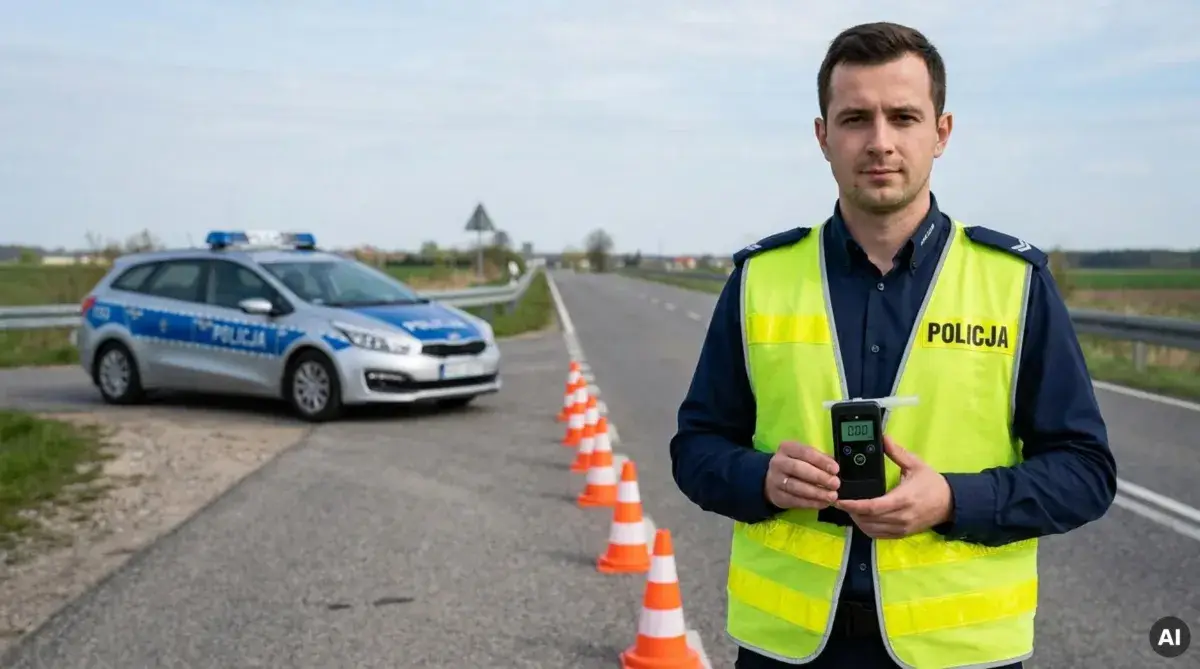
Officers typically begin with non-contact screening tools (such as AlcoBlow) that detect alcohol vapors in exhaled air, signaling a pass or fail. If the screener indicates alcohol, you'll be directed to blow into an evidential breathalyzer fitted with a fresh, single-use mouthpiece.
This certified instrument measures exact alcohol concentration in mg/dm³. Under Polish regulations, 0.10 mg/dm³ BrAC corresponds directly to 0.2‰ BAC.
When a Second Breath Test or Blood Test May Be Used
When an evidential device records an initial positive reading, officers conduct a second test approximately 15 minutes later. This interval confirms whether your BAC is rising or falling and rules out mouth alcohol from mouthwash or medications.
A clinical blood test (badanie krwi) is administered if a driver cannot provide a breath sample for documented medical reasons, refuses the breathalyzer, or challenges the device's accuracy. Medical personnel draw the sample in a controlled clinic or hospital setting to maintain chain-of-custody standards.
What Drivers Should Do Before Taking a Test
If you're signaled for a roadside check, remain calm. Shift into park or neutral, turn off the engine, lower your window, and keep your hands visible on the steering wheel. Follow the officer's instructions courteously.
If you've recently used throat sprays, cough drops, mouthwash, or cigarettes within the last 15 minutes, inform the officer before testing. They'll typically wait a few minutes so residual mouth substances don't distort the initial reading.
What Should You Do If Stopped for Suspected Drink-Driving?
Being pulled over can be intimidating, especially if an initial test registers over the legal limit. Everything you do and say during a stop becomes part of the official police record, which prosecutors and judges may review later.
Maintaining a calm, polite demeanor and protecting your legal rights will help you manage the situation effectively.
Pull Over Safely and Follow Lawful Instructions
When signaled by police lights or a hand-held stop paddle (lizak), signal and pull over safely on the right-hand shoulder or in a designated parking bay away from active traffic.
Remain seated inside your vehicle unless directed to step out. Exiting your car unprompted can be interpreted as erratic behavior and may escalate tension during the stop.
Provide Identification and Vehicle Documents
Present your credentials when asked. While domestic Polish drivers often have their records checked digitally, international motorists must present physical documentation.
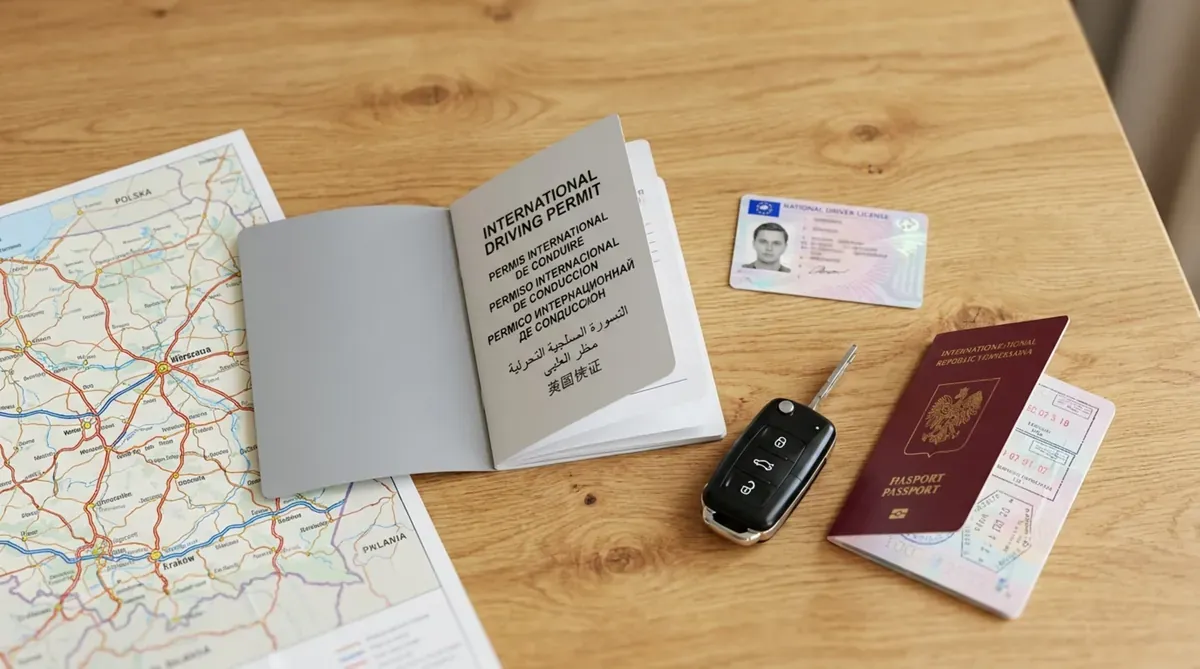
Keep your passport or national ID card, valid driving license, International Driving Permit (if required), vehicle registration papers, and third-party insurance certificate (such as an EU insurance card or Green Card) readily accessible. If you're driving a rental car, your rental agreement should also be kept in the vehicle at all times.
Avoid Arguing, Admitting Fault, or Signing Documents You Do Not Understand
Arguing, negotiating, or offering excuses-such as saying you only had one drink hours ago-won't help. Officers record your statements in an official incident memo (notatka służbowa), which can be used against you in legal proceedings.
If you aren't fluent in Polish, never sign official citations or reports you don't understand. Politely state that you require an interpreter before signing any formal documents.
Record the Test Details and Request Legal Assistance
Pay close attention to how the screening is conducted. Note the time of each test, whether the mouthpiece was unpacked in your presence, and the exact figures on the screen.
If your reading exceeds 0.25 mg/dm³ (the criminal threshold), state clearly that you want to speak with an attorney (adwokat or radca prawny). Having legal representation early helps protect your procedural rights during initial hearings.
[Check required rental documents]
Can You Refuse a Breathalyzer Test in Poland?
Some drivers mistakenly believe that refusing a breathalyzer test prevents authorities from gathering evidence. Under Polish law, refusing a roadside breath test doesn't stop the investigation.
While you can decline the breathalyzer, police have clear legal authority to secure evidence through mandatory medical procedures.
What Happens After a Driver Refuses
If you refuse a breath test, officers won't release you with a standard ticket. Refusal creates immediate suspicion of impairment, prompting officers to detain you for further testing.
Your vehicle will be secured-either handed over to a sober passenger who holds a valid license or towed to a municipal impound lot at your expense. You'll then be transported to a medical facility for an evaluation.
When Blood Testing May Follow a Refusal
Article 129i of the Polish Road Traffic Law allows police to require a blood draw if a driver refuses a breath test or if physical conditions prevent an accurate breath sample.
Medical staff collect three separate blood samples spaced 30 to 60 minutes apart. Forensic specialists analyze these samples to establish your precise blood alcohol curve and determine whether BAC was increasing or decreasing while you were driving.
Can Refusal Lead to Licence Suspension or Criminal Proceedings?
Refusing the roadside test doesn't protect your driving privileges. Police can confiscate your physical license while awaiting laboratory results, meaning you won't be able to drive during the testing period.
If lab tests show a BAC above 0.2‰, you'll face standard drink-driving charges. Refusing the initial roadside check can also weaken arguments for judicial leniency. Furthermore, physically resisting a mandatory blood draw can lead to separate criminal charges for obstructing an officer.
What Rights Do Foreign Drivers Have After a Police Stop?
All drivers in Poland, including foreign tourists and business visitors, are protected by procedural rights under Polish and European Union law. Understanding these rights helps you navigate traffic stops confidently.
Polish legal statutes ensure that individuals aren't subjected to binding criminal procedures in a language they can't comprehend.
Requesting an Interpreter
Under the Polish Code of Criminal Procedure, anyone who doesn't speak or read Polish has the right to free assistance from a certified court interpreter (tłumacz przysięgły) during questioning, formal arrest procedures, and court hearings.
If officers seek to question you or issue charges, clearly state: "I don't speak Polish; I request an interpreter." Official questioning must be paused until an authorized interpreter is provided in person or via telephone/video link.
Reviewing Test Records and Police Documents
You have the right to verify that the testing equipment was used properly. Evidential breathalyzers must possess an up-to-date calibration certificate (świadectwo wzorcowania) issued by an authorized metrology body.
You or your legal representative are entitled to inspect the written breath-test protocol, towing records, and the incident report explaining the lawful basis for your stop.
Contacting a Lawyer or Consular Service
If you're taken into custody, you have the right to contact a qualified Polish defense attorney. You may reach out directly or request that the police notify one on your behalf. Once you ask for legal counsel, formal questioning shouldn't proceed until you've consulted with your attorney.
Under the Vienna Convention on Consular Relations, you can also ask authorities to notify your home country's embassy or consulate. Consular representatives can't provide legal representation or pay your fines, but they can verify your welfare, connect you with English-speaking lawyers, and contact family members if needed.
How Poland Handles an International Driving Licence After an Offense
If you're cited for an alcohol offense while holding an international license, police will issue an official paper receipt (pokwitowanie). This document confirms the seizure of your physical license and indicates that your driving privileges in Poland are suspended.
Polish courts don't have the authority to revoke a foreign-issued license permanently, but they can impose a binding ban on driving within Poland and report the violation to your home licensing body. Operating a vehicle in Poland while under a court-ordered ban is a criminal offense under Article 244 of the Penal Code, punishable by up to five years in prison.
What Are the Penalties for Drink-Driving in Poland?
Penalties for driving under the influence in Poland escalate significantly depending on your recorded alcohol level. Consequences include administrative suspensions, steep financial penalties, vehicle loss, and imprisonment.
Because Polish law mandates minimum statutory penalties, judges have limited discretion to soften sentences for alcohol-related violations.
Fines and Court Proceedings for Lower-Level Violations
Driving with a BAC between 0.21‰ and 0.5‰ is classified as a petty offense, but the financial repercussions are substantial. District courts routinely issue fines starting at 2,500 PLN, reaching up to 30,000 PLN depending on income and circumstances.
Many petty offenses are handled through expedited summary proceedings (postępowanie nakazowe), where a judge reviews the evidence and issues a penalty order without a public hearing. Drivers retain the right to contest the order if they wish to dispute the facts.
Driving Bans and Licence Consequences
For violations between 0.2‰ and 0.5‰, courts must impose a driving ban lasting from six months to three years, along with 15 penalty points. Reaching 24 points (or 20 points for drivers in their first year) results in the loss of driving privileges.
For criminal offenses exceeding 0.5‰, the mandatory driving ban lasts at least three years and can extend up to 15 years. If a ban exceeds 12 months, you're required to retake and pass both the theoretical and practical state driving examinations before your license can be restored.
Criminal Penalties for Driving While Intoxicated
Exceeding 0.5‰ BAC triggers criminal prosecution under Article 178a § 1 of the Penal Code. A conviction is permanently recorded in Poland's National Criminal Register (Krajowy Rejestr Karny), which can affect professional licenses, employment opportunities, and travel visas.
Courts can impose prison sentences of up to three years. In addition, the law requires a mandatory contribution of at least 5,000 PLN to the Justice Fund (Fundusz Sprawiedliwości), dedicated to victim assistance.
Aggravating Factors Such as Repeat Offenses and Accidents
Penalties rise sharply for repeat offenders who have a prior DUI conviction on record. In these cases, the mandatory contribution to the Justice Fund doubles to 10,000 PLN, and prison terms can reach five years.
Repeat offenders frequently face lifetime driving bans. Furthermore, evading a police checkpoint or attempting to flee while impaired is an independent felony under Article 178b of the Penal Code, carrying up to five years of imprisonment.
Additional Consequences for Causing Injury or Death
If an impaired driver causes an accident resulting in serious injury or death, the legal consequences are severe. Articles 177 and 178 of the Penal Code dramatically heighten statutory sentences when alcohol is involved.
Causing severe injury or loss of life while driving impaired carries mandatory prison terms that can extend up to 16 or 20 years in aggravated cases, accompanied by an irreversible lifetime driving ban.
What Recent Changes Affect Polish Drink-Driving Law?
Poland's Parliament (Sejm) continually updates road safety legislation to deter impaired driving. Legislative reforms have consistently focused on closing procedural loopholes, increasing minimum fines, and expanding police authority.
It's important to stay informed on current statutes, as recent measures introduce severe property penalties alongside criminal sanctions.
Changes to Penalties, Vehicle Confiscation, and Driving Bans
A major development in Polish traffic law is the introduction of mandatory vehicle confiscation (przepadek pojazdu). Under these provisions, any driver stopped with a BAC of 1.5‰ or higher faces automatic vehicle seizure, even if no collision or property damage occurred.
Confiscation is also mandatory if an impaired driver causes an accident with a BAC over 1.0‰ (or over 0.5‰ under specific aggravating conditions). If the vehicle isn't owned by the driver-such as a leased car or a rental vehicle-the court will order the offender to pay a financial penalty equivalent to the vehicle's assessed market value instead.
How To Verify the Latest Polish Regulations
Because traffic regulations evolve, always rely on authoritative official sources rather than outdated travel forums. The Polish government portal, gov.pl, offers verified guidance in both Polish and English.
You can also review official amendments to the Penal Code (Kodeks karny) and Road Traffic Act (Prawo o ruchu drogowym) directly via the Internet System of Legal Acts (ISAP), maintained by the Polish Sejm.
Why Legal Advice Matters After a Positive Test or Refusal
Given the severity of statutory penalties, consulting a qualified defense attorney is crucial following a positive reading or test refusal. A lawyer can verify the breathalyzer's calibration records and evaluate whether officers observed proper procedural timing.
Counsel can also review blood sampling protocols, verify chain-of-custody documentation, and examine eligibility for conditional discontinuance of proceedings (warunkowe umorzenie postępowania) for first-time offenders with marginal readings. In certain cases, an attorney can petition the court to permit an alcohol ignition interlock device (alkoblokada), helping you regain driving privileges sooner.
How Does Poland Compare With Other EU Countries?
The European Union doesn't have a single, unified blood alcohol threshold across all member states. Each nation establishes its own traffic laws, creating significant differences between borders. Because internal Schengen Area borders have no routine passport stops, you can easily cross into another jurisdiction without realizing the rules have changed.
Reviewing Poland's rules alongside other European countries illustrates how strict Polish standards really are.
Poland's 0.2‰ Limit Compared With Common EU Limits
Major Western European destinations like France, Germany, Italy, and Spain set their standard threshold at 0.5‰ BAC. The United Kingdom (outside Scotland) permits up to 0.8‰, representing one of the highest limits in Europe.
Poland's 0.2‰ threshold aligns it with stricter nations like Norway, Sweden, and Estonia. Meanwhile, the Czech Republic, Slovakia, Hungary, and Romania enforce absolute 0.0‰ zero-tolerance standards. If you're driving into Poland from Germany, the legal alcohol limit drops significantly the moment you cross the border.
Country | Standard Drivers | Novice Drivers | Professional Drivers |
Poland | 0.2‰ | 0.2‰ | 0.2‰ |
Germany | 0.5‰ | 0.0‰ | 0.0‰ |
Czech Republic | 0.0‰ | 0.0‰ | 0.0‰ |
Slovakia | 0.0‰ | 0.0‰ | 0.0‰ |
France | 0.5‰ | 0.2‰ | 0.5‰ (0.2‰ bus) |
United Kingdom (excl. Scotland) | 0.8‰ | 0.8‰ | 0.8‰ |
Lower Limits for Novice and Professional Drivers in Europe
Many European jurisdictions use graduated limits, permitting 0.5‰ for experienced motorists while holding novice and commercial drivers to 0.0‰ or 0.2‰. This staggered approach aims to provide extra safeguards for newer drivers.
Poland doesn't use graduated categories because its 0.2‰ baseline is already close to zero. Every motorist on Polish roads is held to the exact same high standard of personal responsibility.
Why Visitors Should Check Local Rules Before Crossing Borders
Border-free travel throughout the Schengen Area makes international road trips simple and convenient. However, driving across an open border means local driving laws apply the moment you enter. Traveling from Berlin to western Poland takes only a couple of hours, but your permissible blood alcohol allowance drops immediately once you cross the border.
Other driving rules change as well. Poland mandates daytime running lights or dipped headlights 24 hours a day, all year round. Vehicles must also carry an approved fire extinguisher and warning triangle. In addition, Polish highways feature automated average speed checks (odcinkowy pomiar prędkości). Checking local road regulations before you embark ensures a safe, smooth journey across Poland — and choosing a reliable car rental service with nationwide coverage, such as pickup at Warsaw, Kraków, or Gdańsk, makes it easier to focus on the trip itself.