01.09.2026
Business Travel to Poland: A Complete Car Rental Guide
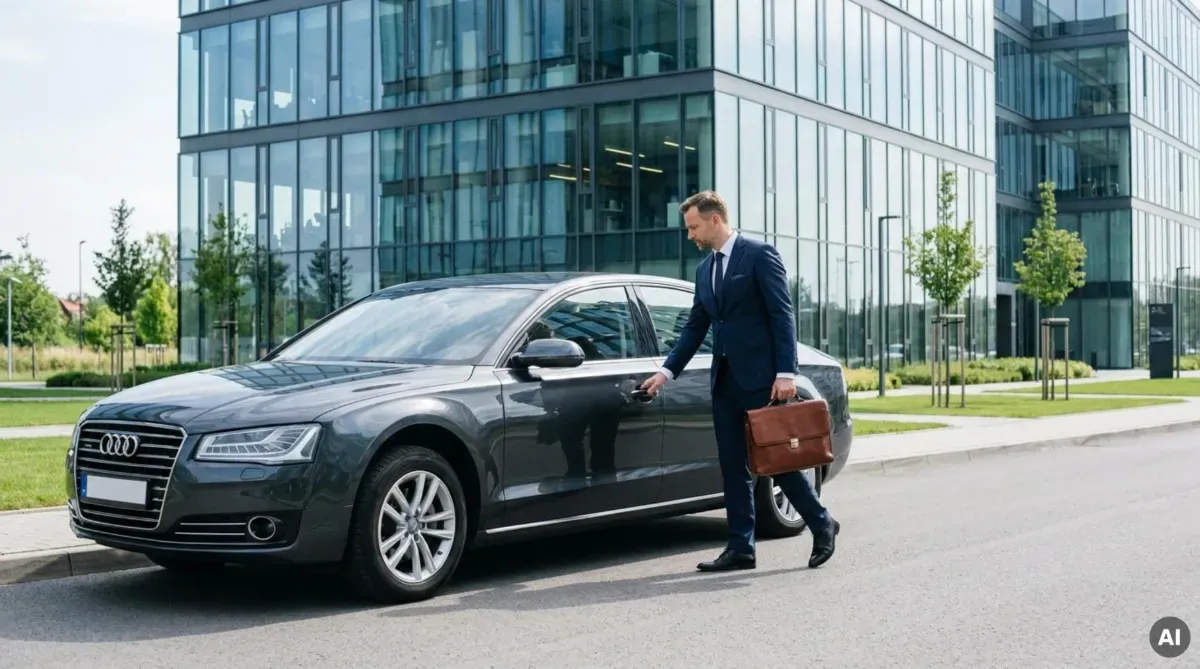
How can visiting professionals manage tight schedules and travel efficiently between commercial hubs across Poland? Renting a car provides direct access to corporate sites outside standard rail corridors, giving you complete control over your working itinerary.
With an upgraded national motorway network and flexible mobility solutions at major airports, driving lets you travel with confidence between client meetings and production facilities.
Why Rent a Car for Business Travel in Poland?
Poland's the ninth-largest country in Europe, spanning from Baltic trade ports in the north to southern industrial clusters. For visiting executives and consultants, rigid public transit timetables can lead to lost working hours. A rental car gives you the freedom to travel on your own schedule instead of timing critical negotiations around fixed departures.
The country's commercial centers are geographically dispersed. Multinational corporate offices, supply hubs, and shared-services operations often sit in suburban business parks, outer industrial zones, and Special Economic Zones (SEZs). Arriving quickly while maintaining a polished professional presence makes a reliable vehicle an indispensable business asset.
Save Time Between Airports, Offices, and Client Meetings
Time's a critical resource during any business trip. Walking straight from your flight to a waiting car eliminates delays associated with local transit transfers or booking multiple ride-hail services through unfamiliar commercial districts. Collecting your vehicle immediately after landing allows you to transfer smoothly between airport terminals, city boardrooms, and manufacturing facilities.
This autonomy is invaluable when presentations run longer than anticipated. Rather than watching the clock to catch a train, you maintain complete command of your calendar. Driving also simplifies multi-stop days. You can visit a client's downtown headquarters in the morning and drive to a partner's facility in an adjacent district without losing momentum between appointments.
Compare Rental Cars With Taxis, Trains, and Carsharing
Poland's intercity rail network, managed by PKP Intercity, connects core central stations like Warszawa Centralna, Kraków Główny, and Poznań Główny. Even so, rail services only solve part of the journey. Once you arrive at a central terminus, you'll still need onward transit to reach peripheral offices. Booking multiple individual rides adds substantial administrative friction and scatters your corporate expense records.
While urban carsharing platforms operate in major Polish metropolises, they present clear operational limits for commercial users. Vehicles aren't always available nearby, advance reservations are rarely guaranteed, and geo-fenced operating zones prohibit regional travel into surrounding sub-markets. A pre-booked car rental delivers a confirmed reservation, transparent rental terms, modern and well-maintained vehicles, and a professional setting for hosting traveling colleagues.
Which Polish Cities and Business Regions Are Best Served by Car?
While rail connects central downtown districts in Warsaw, Kraków, and Gdańsk, driving is much more effective for reaching regional business parks. This includes automotive and aerospace corridors in Upper Silesia (Katowice, Gliwice, and Tychy), pharmaceutical complexes around Łódź, and technology hubs throughout Lower Silesia near Wrocław.
Western and central Poland feature direct access to modernized motorways like the A1, A2, and A4, which link regional manufacturing hubs with international corridors. Traveling to outer industrial parks via municipal transport can consume half a working day, whereas a car rental shortens that trip to a comfortable travel time of an hour or two.
Warsaw, Chopin Airport, and Modlin Airport
Warsaw serves as Poland's core administrative and commercial center. Warsaw Chopin Airport (WAW), situated roughly 10 kilometers southwest of downtown, manages over 40% of the country's passenger volume with global connections. Airport car rental desks connect directly to the capital's ring road, letting you merge onto express routes immediately after leaving the terminal.
Warsaw Modlin Airport (WMI) sits approximately 40 kilometers north of the city, serving primary regional routes. While flights into Modlin can be cost-effective for corporate teams, public transit to central Warsaw requires multiple transfers. Picking up a car directly at Modlin provides a direct route into northern and central business hubs without bus connection delays.
Which Rental Car Fits a Business Trip?
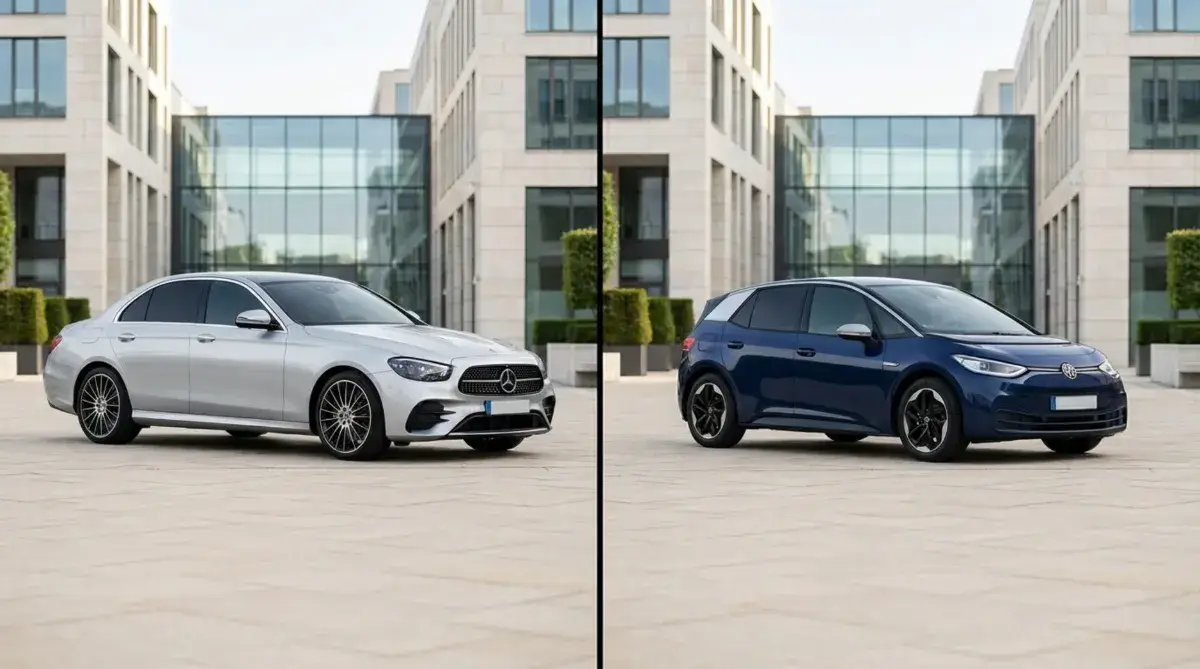
Choosing the appropriate vehicle class directly affects your efficiency and focus on the road. For long-distance driving across major motorways connecting Warsaw, Poznań, and Wrocław, mid-size and executive sedans in the C and D segments provide enhanced sound dampening, stable handling, and modern cruise control systems that keep motorway travel fatigue low.
If you're hosting international clients, premium cars and spacious SUVs offer executive refinement across major travel hubs. In contrast, larger vehicles can present challenges within historic city centers or compact underground hotel garages. If your schedule centers primarily on high-density urban areas, a nimble compact model is often the smarter route.
Compact Cars for City Meetings and Easy Parking
For itineraries concentrated within metropolitan centers like Warsaw, Kraków, or Poznań, B- and C-segment vehicles-such as the Volkswagen Golf, Toyota Yaris, or Skoda Octavia-offer sensible, agile mobility. They provide low fuel consumption, smooth maneuvering, and comfortable interiors for daily business travel.
Compact cars simplify navigating tight heritage avenues, hotel parking facilities, and busy municipal garages. A smaller profile cuts the time spent searching for open spaces in central parking zones, helping you arrive at every engagement promptly.
Which Rental Terms Matter Most for Corporate Travel?
Commercial renters should pay close attention to contractual stipulations that holiday travelers might overlook. Mileage policies represent a primary consideration. Certain standard rental agreements impose limits of 200 to 300 kilometers per day, assessing extra charges for excess mileage. We always recommend confirming unlimited mileage options if your itinerary covers multiple economic zones.
Refueling policies also demand review. The most practical framework for business travel is a "Full-to-Full" agreement, where you receive the car with a full tank and return it full. Steer clear of "Full-to-Empty" policies, which include marked-up fuel charges and don't compensate you for unused fuel. Additionally, verify out-of-hours key box procedures, flight delay monitoring policies, and 24/7 roadside assistance coverage throughout Poland.
Corporate Accounts and Negotiated Rental Rates
Organizations dispatching teams to Poland on an ongoing basis can optimize travel logistics through established corporate business rental programs. Working with a dedicated provider like CarFree-with over a decade of industry expertise and nationwide availability-ensures a smooth journey supported by dedicated corporate assistance.
A business mobility agreement establishes locked-in daily rates, streamlines authorized driver additions, facilitates consolidated direct billing to corporate cards, and accelerates counter processing. Selecting full-coverage damage reduction options eliminates deductibles, protecting your operating budgets against unforeseen expenses or administrative complications.
How to Book a Business Rental Car in Poland
Securing a car in Poland is straightforward, though advance reservations yield superior vehicle selection and pricing. Early bookings are critical ahead of major commercial events in peak autumn and spring periods. Reserving early is equally vital if you require an automatic transmission, as automatic models experience steady commercial demand across Polish fleets.
Direct supplier portals and trusted booking channels allow you to evaluate terms, inclusions, and support structures clearly. Always prioritize established providers with proven customer service reputations and extensive local fleet support over low-cost intermediaries lacking airport infrastructure or rapid replacement capabilities.
Choose the Pickup Location, Rental Period, and Vehicle Class
Coordinate your pickup timing directly with your flight arrival. Entering your exact flight number ensures on-site teams can track arrival adjustments and protect your vehicle reservation during unexpected flight delays. Selecting an airport terminal collection point also saves you the cost and delay of off-site transfers.
Match your vehicle category to your team size, equipment load, and corporate presentation needs. If you're moving marketing collateral or executive passengers, assess cargo capacities before completing your booking. Polish rental fleets standardize categories using ACRISS vehicle classification codes, so choose a group meeting your core space, engine, and comfort criteria.
Arrange One-Way Rental Between Polish Cities
Multi-city operations are standard for audits, project rollouts, and client visits. You might land at Warsaw Chopin Airport, tour facilities across central Poland, and depart via Kraków John Paul II Airport (KRK) or Gdańsk Lech Wałęsa Airport (GDN). Leading car rental providers across Poland accommodate cross-city returns through comprehensive branch networks.
While one-way drop fees apply, they're often more economical than driving back to your originating depot when accounting for fuel costs, toll expenditures, and lost working hours. Verify drop-off logistics ahead of time to confirm whether the return location operates in-terminal or via a short shuttle loop.
What Documents and Payment Methods Are Required?
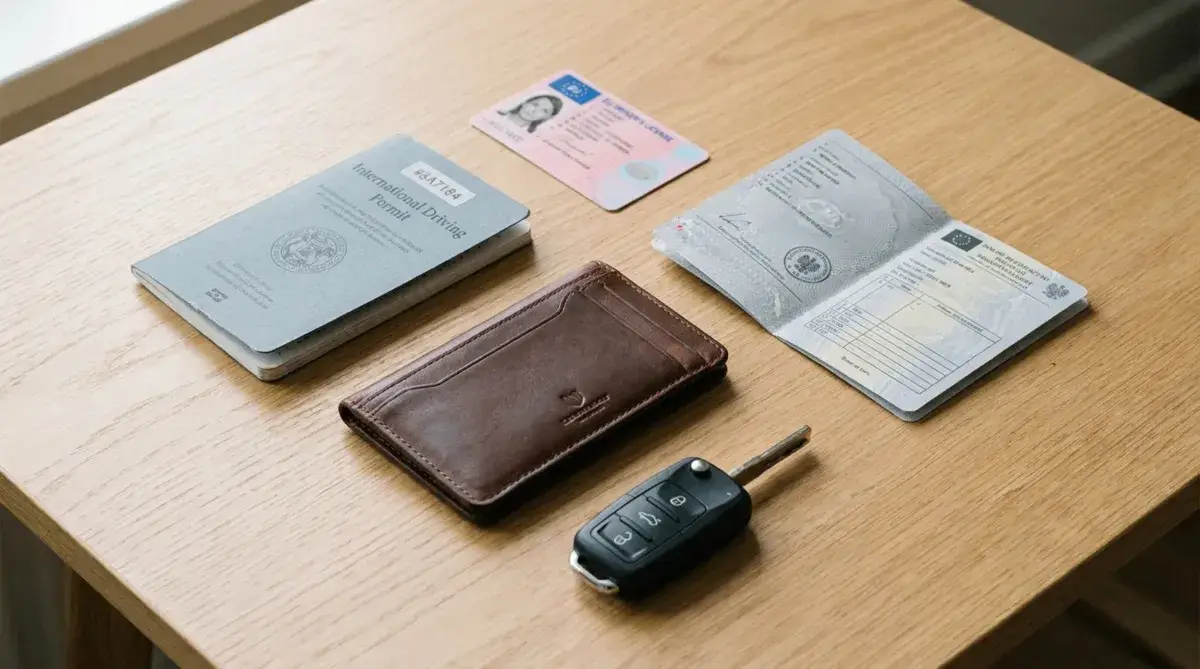
To pick up a rental vehicle in Poland, you'll need to present several original physical documents. Primary drivers must hold a valid, physical driver's license held for a minimum of one to two years, depending on the vehicle class and fleet policy. Polish rental locations don't accept purely digital driver verification apps for non-domestic licenses.
You must also show a valid passport or national ID card alongside your booking confirmation. Under Polish law, every operational motor vehicle must contain its official registration card (dowód rejestracyjny) and third-party insurance certificate. Your rental provider supplies these directly inside the vehicle's glovebox.
Valid Driving Licence and International Driving Permit
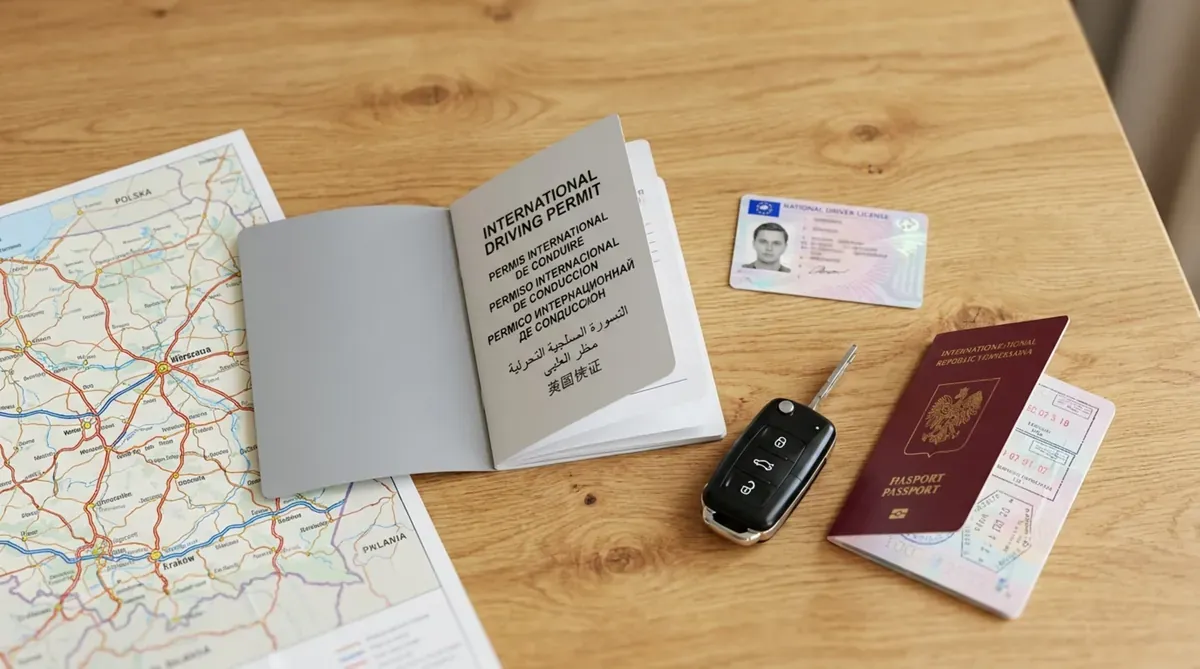
Travelers holding licenses issued by European Union or EEA member states can drive across Poland without secondary paperwork, provided their license remains valid. Business visitors from non-EU countries-including the United States, Canada, the United Kingdom, Australia, and various Asian jurisdictions-must carry an International Driving Permit (IDP) alongside their domestic driving license.
While some counter staff may review a Latin-script home license without requesting an IDP, driving without one violates local traffic regulations. During routine police checks, driving without an authorized IDP can invalidate insurance protections and result in substantial financial penalties.
Company Details, VAT Invoice, and Business Billing
Enterprises require an official Polish VAT invoice (Faktura VAT) to properly document travel expenses, ensure tax compliance, or initiate corporate input tax deductions. A generic point-of-sale till receipt won't suffice for corporate tax reporting.
During the reservation stage-or at the collection counter before final documentation signing-provide your enterprise's legal trading name, registered corporate address, and tax registration number (such as a Polish NIP or EU VAT identification code). Your mobility partner will generate an official invoice detailing the standard 23% Polish VAT charge, simplifying your corporate accounting workflows.
What Does a Business Car Rental Cost in Poland?
Business mobility rates in Poland generally remain competitive compared to Western European markets such as Germany, France, or the UK. While seasonal shifts occur during holiday peaks, business hubs avoid extreme seasonal rate volatility.
A modern compact vehicle in commercial centers like Warsaw, Katowice, or Gdańsk typically ranges from €16 to €28 per day during off-peak and standard periods. Fuel is billed in liters (1 liter equals approximately 0.26 US gallons), with regional Polish fuel prices generally trending lower than neighboring Central European economies.
Daily, Weekly, Monthly, and Long-Term Rental Rates
Rental cost structures scale efficiently as project timeframes expand:
Short-Term Daily Rentals (1-4 days): Ideal for executive presentations, sudden client visits, or brief technical assessments where immediate flexibility is required. See our short-term rental options.
Weekly Rentals (5-14 days): Deliver lower baseline daily rates, providing balanced options for extended project deliveries, training programs, or multi-facility visits.
Medium-Term and Long-Term Subscriptions (30+ days): Provide significant economic advantages for extended technical deployments. Choosing a multi-month corporate subscription delivers immediate fleet access without long-term commercial balance sheet liabilities, complete with ongoing maintenance and vehicle support. For deployments exceeding a year, our long-term rental program offers an alternative to vehicle leasing.
How to Compare the Full Rental Cost Before Booking
Relying solely on baseline daily headline pricing can skew travel budgets. An initial quote that appears lower may incur additional fees once terminal charges, equipment, and protection packages are included.
Review the following items within your reservation breakdown before finalizing your booking:
Airport and rail terminal concession fees.
Cross-border transit authorization charges where regional travel is planned.
After-hours vehicle release or check-in surcharges.
Mileage parameters, confirming whether unrestricted mileage is included.
Additional driver registrations, enabling colleagues to share long motorway driving stretches safely.
Which Insurance and Protection Options Should Business Travellers Choose?
Securing comprehensive vehicle protection safeguards corporate assets and ensures peace of mind throughout your business travel. Polish road safety laws establish clear legal liabilities, and operating without sufficient protection exposes your organization to direct repair and administrative expenses.
While select corporate credit cards offer collision protection, they frequently exclude certain vehicle categories or require you to decline standard counter policies entirely to activate benefits. To keep corporate logistics straightforward, most organizations opt for comprehensive zero-excess protection directly from the rental provider.
Third-Party Liability and Collision Damage Waiver
Polish rental agreements legally require basic Third-Party Liability coverage, locally referred to as OC (odpowiedzialność cywilna). This policy indemnifies against third-party bodily injury and property damage, but doesn't cover repair liabilities for the rental vehicle itself.
Baseline estimates often incorporate standard Collision Damage Waiver (CDW) and Theft Protection (TP), though these baseline options retain sizable deductibles ranging from €500 to over €2,000 depending on the vehicle class. Opting for full insurance or zero-excess packages waives this liability, frequently covering common road damage like glass chips, minor panel marks, and tire abrasions.
Rental Car Deposit: Amount, Payment, and Release
Upon vehicle collection, the rental provider places a temporary credit authorization hold against the primary driver's credit card. This deposit covers potential incidentals, missing fuel returns, municipal citations, or un-waived repair deductibles. For compact to mid-size models with standard terms, authorizations generally run between PLN 1,000 and PLN 4,000 (€250 to €900), rising higher for premium classes.
Confirm that your corporate credit card carries sufficient credit headroom above planned travel expenses. This authorization is a pending hold rather than an executed charge. Once the vehicle's returned in good order with the agreed fuel level, the hold's released immediately by the provider, settling via your banking network within 3 to 14 business days.
[Explore long-term rental options]
What Polish Driving Rules Should Business Visitors Know?
Driving conditions across Poland have improved markedly following rigorous infrastructure development and strict law enforcement. Traffic moves on the right side of the road. Seatbelt use is mandatory for all passengers, and low-beam headlights or daytime running lamps must remain illuminated at all times, day and night, all year round.
Operating a mobile phone while driving is strictly illegal unless using an integrated hands-free system. Poland enforces strict zero-tolerance drink-driving limits, with a maximum legal blood alcohol concentration of just 0.02%. Exceeding 0.05% constitutes a serious criminal offense punishable by immediate license loss and prison sentences up to two years. Never drive after attending a corporate dinner where alcohol was served.
Speed Limits in Built-Up Areas, Rural Roads, and Motorways
Speed regulations are monitored across Poland through automated CANARD yellow enforcement cameras alongside sectional average-speed measuring corridors. Monetary penalties are severe, and fleet operators apply administrative processing fees (often PLN 100 to PLN 200) for processing police inquiries tied to camera infractions.
Unless posted signs indicate alternative limits, default road limits include:
Road Environment | Speed Limit (km/h) | Speed Limit (mph equivalent) |
Designated Residential Zones (Strefa Zamieszkania) | 20 km/h | 12 mph |
Urban / Built-up Areas (Day & Night) | 50 km/h | 31 mph |
Single-Carriageway Rural Roads | 90 km/h | 56 mph |
Single-Carriageway Expressways & Dual Rural Roads | 100 km/h | 62 mph |
Dual-Carriageway Expressways (S-roads) | 120 km/h | 74 mph |
Motorways (Autostrady, marked A) | 140 km/h | 87 mph |
Parking Zones, Paid Parking, and City-Centre Restrictions
Metropolitan parking throughout Warsaw, Kraków, Poznań, Wrocław, and Gdańsk is managed via designated Paid Parking Zones (Strefa Płatnego Parkowania). Payments can be handled at street meters (parkomaty) using cards and coins, or via regional transit apps like moBiLET, SkyCash, or Flowbird. When utilizing a physical parking meter, input your vehicle's exact license plate number and place any paper slip visibly on the dashboard.
Failure to register payment leads to quick municipal fines from the city patrol (Straż Miejska). Parking violations in designated loading berths or along tram routes frequently lead to mechanical wheel clamping. Booking business hotels offering secure private garages (parking strzeżony) protects corporate laptops, display gear, and your rental car overnight.
Can You Drive a Polish Rental Car Across Borders?
Poland's central location provides a natural hub for regional corporate travel into Germany, the Czech Republic, or Slovakia. However, you must obtain written permission from your rental provider before taking any vehicle across an international border.
While border checks are rare within the Schengen zone, modern fleet management systems monitor cross-border movement. Crossing a boundary without prior authorization breaks your rental terms, invalidates insurance coverage, and can cause the vehicle to be immobilized remotely.
Written Permission, Insurance, and Additional Charges
If your itinerary involves business engagements in Berlin, Prague, Ostrava, or Košice, declare these destinations during booking. Your provider will issue a cross-border authorization certificate and extend regional liability and breakdown protection. Cross-border processing fees typically range between €30 and €90 per trip.
While transit into adjacent EU countries is routinely authorized, taking Polish rental vehicles into non-EU eastern territories-including Ukraine, Belarus, or the Kaliningrad corridor-is strictly prohibited across the rental sector due to active regulatory, insurance, and operational constraints. Traveling executives must remain at a safe distance from these designated border zones.
What Should You Check at Pickup and During the Rental?
When you're running between flights and client presentations, it's tempting to leave the rental desk quickly. However, taking a few minutes to inspect your vehicle safeguards your company against charges for pre-existing scratches, alloy scuffs, or glass blemishes caused by past drivers.
Maintain general vigilance during your travel. While Poland experiences low rates of violent crime compared to many Western European destinations, opportunistic vehicle break-ins do happen in busy commercial centers. Always keep laptops, sample products, and luggage out of view in the trunk, and leave the car in well-lit, monitored lots.
Inspect the Bodywork, Tyres, Glass, and Interior
Spend five minutes conducting a thorough review alongside the rental representative before signing the handover inspection report:
Exterior Body Panels: Check for paint scratches, bumper scuffs, and stone chips. Confirm every mark is recorded accurately on the digital dispatch log.
Wheels and Tyres: Inspect wheel rims for curb contact and confirm uniform tread depth and healthy sidewalls.
Glass and Lighting: Examine the windshield for subtle chips, and verify that headlights, indicators, and brake lamps work correctly.
Fluid and Dash Metrics: Start the engine to ensure the fuel level shows completely full, and verify no service warnings or engine alerts remain lit.
Timestamped Photographic Evidence: Capture clear, timestamped photos or a continuous walk-around video detailing the body panels, wheels, and instrument cluster. This documentation provides indisputable proof should an invoice query emerge later.
How Can You Make Airport Pickup and Vehicle Return Efficient?
Strategic logistics planning makes airport arrivals and departures effortless. Polish airports generally use one of three vehicle delivery setups: customer service counters directly inside arrivals, a consolidated multi-level Car Rental Center beside parking structures, or off-site branch locations serviced via shuttle vans.
Choosing an on-airport provider with terminal facilities avoids delays from waiting for transfer shuttles in adverse weather. When planning your departure, map your terminal return route the evening before. Large airport complexes feature complex motorway interchanges and dedicated transit lanes, where missing an off-ramp can cost valuable travel time in peak traffic.
Collecting a Car at Warsaw Chopin Airport or Modlin Airport
At Warsaw Chopin Airport, vehicle desks are conveniently placed on the arrivals level of Terminal A. Once you've retrieved your luggage, you'll reach the counter area within minutes. Fleet parking operates directly across the terminal roadway in Multi-Storey Car Park P1 (Levels 0 and 1), allowing you to walk to your vehicle in roughly ten minutes.
Warsaw Modlin Airport features a compact layout. Service desks are located inside the main arrival corridor, with rental lots stationed directly opposite the terminal entrance. If you're arriving on a late flight, ensure your booking details note your arrival schedule to arrange seamless key handovers.
Returning the Vehicle at an Airport, Office, or Different City
Allow ample time to check in your vehicle before flight departures, returning it clean and fueled according to your contract terms. Modern refueling facilities run by brands like Orlen, Shell, BP, and Circle K sit adjacent to all primary Polish airport access highways. Keep your final fuel receipt, as station attendants occasionally request proof of a refuel within 10 kilometers of the airport.
Complete a joint return inspection whenever feasible. Have the on-site agent sign the check-in form to verify fuel levels, mileage, and clean vehicle condition, and request a digital copy of the finalized zero-balance return statement. If returning outside operational hours, park in the company's designated return bays, photograph the odometer and fuel readings, and place the keys into the official secure drop-box.
Motorway tolls across Poland's modern A1, A2, and A4 highways utilize a mix of traditional barrier gates and electronic solutions like e-TOLL or automatic camera plate scanning via Autopay. Ask the counter representative whether your car includes an onboard toll transponder or fleet account coverage. If not, pay using standard corporate cards at the barrier stations and file the printed receipts alongside your travel expense filings.