
10.09.2026
Child Seat and Booster Options With CarFree - What's Available?
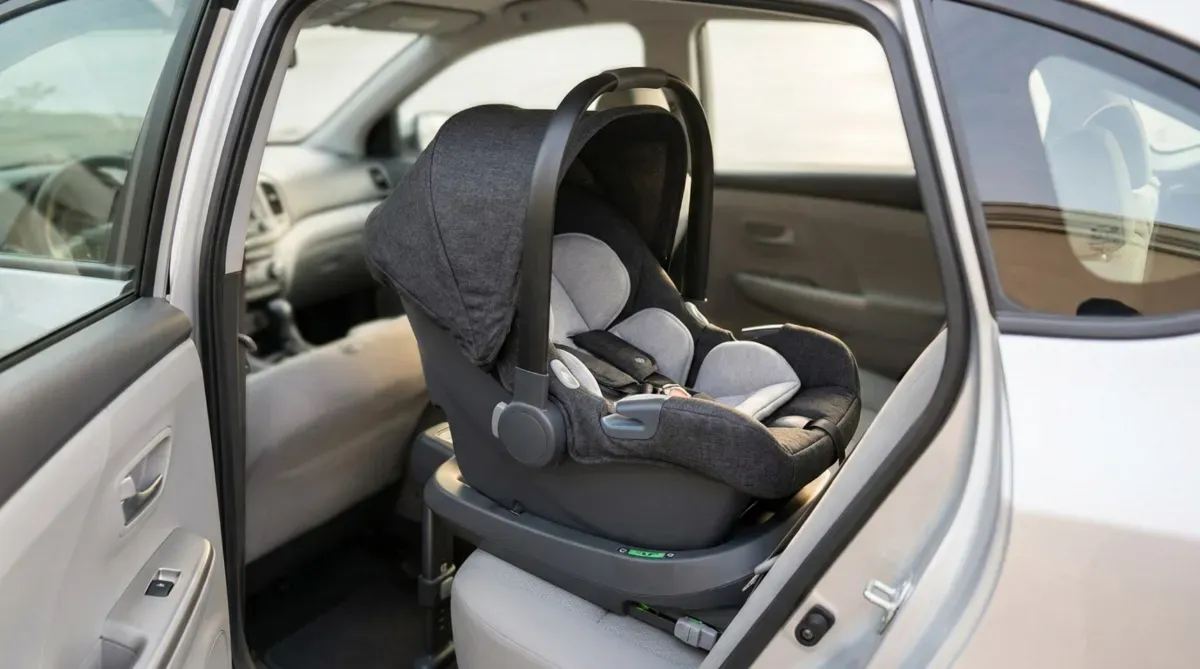
What child seat and booster options are available when you rent with CarFree? We provide certified rear-facing infant carriers, convertible seats, harness-to-booster combinations, and backless boosters tailored to your child's exact developmental stage.
Each restraint meets rigorous European and international safety standards, helping your family travel with confidence across our modern fleet.
What Child Seat and Booster Options Are Available With CarFree?
CarFree's child restraint lineup covers every stage of early childhood development. Because children vary significantly in height and build, we work with reputable safety manufacturers to supply equipment engineered for specific physical dimensions rather than relying on generic models. Every seat in our fleet complies with current regional and international safety regulations to support comfortable travel.
When you reserve a reliable vehicle through our easy booking system, child restraints are categorized by age and size. This makes it simple to pair a compact city hatchback, an electric crossover, or a spacious passenger van with the exact restraint setup your child uses at home.
Infant Car Seats for Rear-Facing Newborns
CarFree infant seats are engineered exclusively for rear-facing travel, accommodating newborns and small infants weighing from 4 up to 30 or 35 pounds (approximately 1.8 to 16 kg). They feature deep structural shells, energy-absorbing EPS foam, and ergonomic newborn inserts designed to support delicate neck muscles and keep airways open during transit.
Most CarFree infant carriers include an ergonomic carry handle and can be secured using either an ISOFIX base or the vehicle's three-point seat belt. This flexibility lets you transition smoothly between your rental car, public transport, or a compatible stroller base during your trip.
Convertible Car Seats for Babies and Toddlers
Convertible seats accommodate growing children who have outgrown their infant carriers but still require the protection of an integrated five-point harness. CarFree provides convertible models that function in both rear-facing and forward-facing configurations. Many allow rear-facing use for children up to 40 pounds or more, which safety authorities widely recommend as the safest way for toddlers to ride.
Once your child exceeds the rear-facing height or weight threshold, the seat turns forward-facing while retaining the five-point harness. Multiple shoulder slot heights and adjustable headrests ensure older toddlers remain properly secured without transitioning to an adult belt prematurely.
Combination Seats With a Five-Point Harness and Booster Mode
Combination seats-often called harness-to-booster systems-bridge the developmental gap between toddlerhood and independent booster use. We provide these versatile units for forward-facing preschoolers and early primary-school children who still benefit from a full harness during long journeys.
When a child reaches the upper weight limit of the five-point harness, typically around 65 pounds (30 kg), the internal straps stow neatly inside the frame. The restraint then functions as a high-back booster that routes the vehicle's adult lap and shoulder belts across the child's strongest skeletal points.
High-Back Booster Seats for Older Children
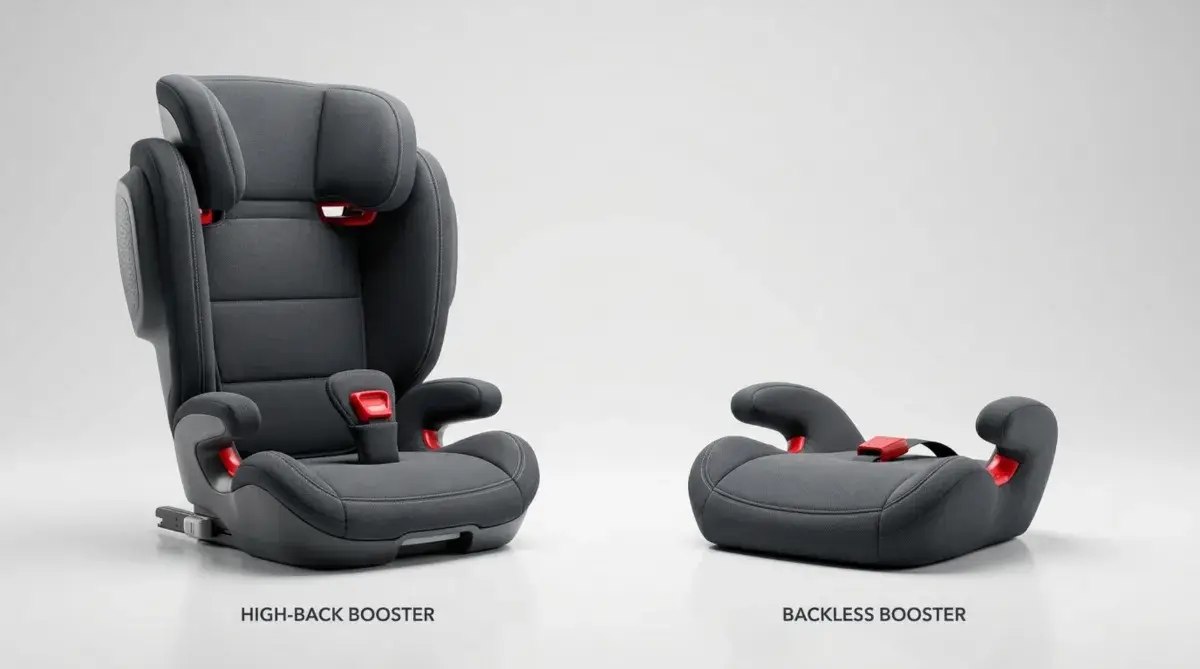
Children who have outgrown an internal harness but remain under the legal height requirement for adult seat belts need a high-back booster. CarFree high-back models feature deep side wings, energy-absorbing head supports, and integrated belt guides that position the vehicle’s diagonal belt squarely across the clavicle rather than the neck.
The contoured headrest prevents the child's head from rolling forward during sleep, maintaining an optimal posture relative to the vehicle's side-curtain airbags throughout long highway drives.
Backless Booster Seats for Children Who Meet the Requirements
Older school-age children who meet statutory height requirements and can sit upright reliably can use CarFree backless boosters. These lightweight cushions lift the child's hips so that the vehicle lap belt rests firmly across the upper thighs rather than cutting into vulnerable abdominal tissue.
Backless boosters represent our most portable child restraint option. They take up minimal cabin space, leaving ample room for luggage and other passengers while keeping your travel fully compliant with road safety regulations.
Which CarFree Child Seat Fits Your Child's Age and Size?
Selecting the appropriate restraint requires evaluating your child's height, weight, physical maturity, and seated behavior rather than relying strictly on age. We organize our fleet options around established biomechanical thresholds because two children of the identical age can have dramatically different physical builds.
A restraint may be legally permitted for a broad age group, but it won't offer adequate protection if a passenger falls outside the manufacturer's physical parameters. We recommend taking current seated height and weight measurements before finalizing your reservation to ensure an effortless pickup experience.
Why Age, Height, and Weight Limits Matter More Than Age Alone
Every child seat undergoes crash testing against strict physical thresholds. A child’s skeletal structure, particularly the pelvic bones, remains cartilaginous and soft during early childhood. An adult lap belt cannot seat safely across an immature pelvis without a booster, regardless of whether a child feels ready for a standard seat belt.
Harness geometry is equally critical: straps must rest at or below the shoulders when rear-facing, and at or above the shoulders when forward-facing. Relying solely on chronological age can lead to premature transitions, placing a child in a seat that cannot distribute crash forces effectively.
When Can a Child Move to the Next Seat Type?
Road safety professionals advise keeping your child in their current restraint until they reach the maximum height or weight limit specified by the manufacturer. Moving from a rear-facing setup to forward-facing, or from a five-point harness to a booster, reduces overall crash protection and should never be done ahead of time.
Before moving from a booster to the standard vehicle seat belt, a child must pass the five-step fit test: the back must rest flat against the seatback, knees must bend naturally at the seat edge without slouching, the lap belt must lie low across the upper thighs, the shoulder belt must cross the center of the chest, and the child must remain in this position for the entire drive.
What Should Parents Ask CarFree Before Booking?
Speaking with our team before your rental begins helps ensure a smooth departure. We maintain strict safety and sanitization standards nationwide, but specific seat models can vary based on fleet location, seasonal demand, and vehicle size.
When booking your rental vehicle, addressing a few practical details in advance guarantees the assigned equipment matches your child's physical needs and your travel plans.
Which Seat Types and Brands Are Currently Available?
Equipment inventories vary slightly between city branches and airport rental desks. We encourage you to ask our team about the exact brands and models currently in stock. This allows you to review user manuals online, verify stroller compatibility, and understand the installation mechanism before arrival.
Knowing whether a seat features a no-rethread harness or standard rear threading can also save you valuable time during installation. If your child has specific sensory or posture requirements, our team can help you select the most compatible option available.
What Child Height and Weight Ranges Does Each Seat Support?
Because safety ratings and size thresholds vary between seat designs, confirm the lower and upper limits of the unit allocated to your reservation. This verification is essential if your child sits near the transition boundary between two seat categories.
If you prefer extended rear-facing travel, let our team know so we can allocate a convertible seat rated for rear-facing use up to 40 or 50 pounds (18 to 22 kg). This simple check ensures you won't encounter an unexpected forward-facing requirement at vehicle collection.
How Do CarFree Child Seat and Booster Options Work?
At CarFree, child restraints are integrated directly into our digital booking process. You can add them to your reservation alongside other mobility essentials, such as an additional driver option or comprehensive coverage, with transparent rental terms and no hidden fees.
Understanding how seats are prepared, assigned, and collected ensures a smooth start to your journey, giving you confidence that clean, certified equipment is ready when you arrive.
Seat Availability When Booking a Carfree Vehicle
When entering your travel dates online, our system displays available child seats alongside other vehicle accessories. The platform cross-references branch inventory in real time, preventing you from reserving equipment that isn't physically present at your chosen location.
If you require multiple seats-such as two infant carriers or a combination of toddler seats and boosters-our booking engine verifies whether your chosen vehicle class has the cabin dimensions and anchor configurations needed for your setup.
Rental Duration, Fees, and Reservation Requirements
We provide straightforward pricing for child restraint rentals, offering daily rates as well as cost-effective pricing structures for extended trips. Backless booster cushions are priced lower than convertible or infant systems, reflecting their simplified handling and lower replacement costs.
Because each child seat undergoes thorough safety inspection and sanitization between bookings, we ask that you reserve your equipment at least 24 hours prior to vehicle pickup. Advance reservations ensure our branch staff can prepare, inspect, and stage the restraints before your arrival.
Vehicle Pickup, Delivery, and Child Seat Placement
If you select our car delivery service to an airport terminal, hotel, or private address, your child seat will arrive inside the car. Restraints are typically placed in the cargo area or across the rear seat in protective packaging, leaving final installation to the parent or guardian in accordance with standard safety regulations.
When picking up at a CarFree branch, our staff will hand you the sanitized seat or place it ready in your unlocked vehicle. Each unit is delivered in a sealed protective cover accompanied by an installation reference card.
What To Do If the Preferred Child Seat Is Unavailable
On rare occasions, logistical disruptions or equipment retirements can cause temporary shortages. If your requested restraint model is unavailable, our customer support team will contact you promptly to arrange a practical alternative.
Solutions include substituting a multi-stage convertible seat equipped with infant inserts, upgrading your booking to a vehicle class with broader anchor compatibility, or transferring the required model from a nearby CarFree depot.
Can You Bring Your Own Child Seat When Using CarFree?
You're always welcome to install your own certified child restraint or booster seat in any CarFree vehicle. Many parents prefer using familiar gear, particularly when their journey includes flights or train connections before car pickup.
There are no administrative fees or restrictions for using your personal equipment. Bringing your own seat ensures your child travels in familiar comfort while lowering your overall rental total.
Reasons To Bring a Familiar Seat
Using a familiar car seat can make travel significantly calmer for younger children. Familiar padding, harness positioning, and headrests help children relax and fall asleep more easily on unfamiliar roads, reducing travel fatigue for the whole family.
Bringing your personal seat also removes any uncertainty regarding cleaning products or past handling. Parents who know their seat inside and out can usually install it quickly and securely, avoiding the learning curve of an unfamiliar model in a busy parking area.
How To Check Whether Your Seat Fits the CarFree Vehicle
Before packing your car seat, review the cabin specifications of your assigned CarFree rental model. Compact passenger cars and some crossover vehicles feature firm side bolsters or tighter rear legroom, which can make bulky rear-facing convertibles difficult to level without encroaching on front passenger space.
If you need to install three restraints across the second row, check the vehicle's rear hip width and anchor spacing. Midsize SUVs, station wagons, and passenger vans readily accommodate wide setups, whereas smaller sedans generally require compact seats measuring 17 inches (43 cm) wide or less.
What Safety Features Should You Check in a CarFree Child Seat?
Even though CarFree enforces thorough maintenance and safety checks between every rental period, we advise parents to inspect all safety equipment prior to departure. Taking five minutes to verify critical components gives you total confidence on the road.
Becoming familiar with basic restraint inspection points ensures your child remains fully protected throughout your trip.
Current Safety Certification and Manufacturer Labeling
Every legal restraint features permanent manufacturer labels certifying compliance with relevant transport safety standards. In European fleets, look for the UN ECE R44/04 or UN R129 (i-Size) approval stamp, while US models display Federal Motor Vehicle Safety Standard 213 (FMVSS 213) compliance marks.
Inspect the labels on the seat shell to confirm they're legible. They must indicate the model identity, manufacturing date, approved height and weight envelopes, and clear routing paths for both lower anchors and adult seat belts.
Harness Adjustment, Buckle Condition, and Padding
Test the operation of the five-point harness before placing your child in the seat. The metal tongues should click cleanly into the central buckle assembly, and the red release button should operate smoothly without sticking from residue or dirt.
Examine the full length of the harness webbing for frays, kinks, or fabric wear. Chest clips should latch firmly and slide smoothly along the straps, settling naturally at armpit level when adjusted on your child.
Seat Expiration Dates, Recalls, and Damage Checks
Child safety seats have a definite service lifespan, typically six to ten years from their production date. Structural polymers degrade over time due to temperature fluctuations and UV exposure. Check the molded manufacturing clock or printed serial sticker on the underside of the shell to confirm the seat remains within its valid service window.
Inspect the internal EPS or EPP energy-absorbing foam beneath the fabric cover. The foam should be intact, securely bonded, and free of cracks, deep compressions, or fractures that would compromise crash performance.
How Do You Install a CarFree Child Seat Correctly?
The protective capability of any restraint depends entirely on proper installation. CarFree customer service personnel cannot install or adjust child seats for you due to safety and liability policies, meaning parents and guardians must complete the installation personally.
Following foundational fitting guidelines ensures the equipment performs precisely as engineered in the event of sudden braking or an impact.
Lower Anchors, LATCH Attachments, and Vehicle Seat Belts
Modern CarFree vehicles feature ISOFIX / LATCH anchor bars located in the bight between the rear seat cushion and the backrest. In most configurations, you should secure the child seat using either the lower rigid anchors or the vehicle’s three-point seat belt-never both simultaneously, unless explicitly permitted by both seat and vehicle user guides.
Lower anchor systems have strict structural weight limits, typically capping at a combined weight of 65 pounds (around 30 kg) for child and seat together. Once your child exceeds this limit, transition to securing the seat with the adult vehicle seat belt, making sure to pull the belt fully out to engage the automatic locking retractor (ALR).
How To Position a Rear-Facing Infant Seat
When installing rear-facing seats, always verify the recline angle. Most carriers and convertible seats incorporate a built-in bubble level or color-coded dial on the shell to confirm correct orientation relative to vehicle rake.
Young infants require a deeper recline angle (generally between 30 and 45 degrees) to prevent their heads from tipping forward and constricting their airways. Older toddlers with developed neck control can sit more upright, which also preserves legroom for the front-seat passenger.
How To Achieve a Secure Installation With Minimal Movement
Apply firm downward and rearward pressure onto the seat base using your hand or knee while taking up slack in the lower anchor straps or locked adult belt. For forward-facing harness seats, always connect and tension the top tether strap to the designated anchor behind the rear headrest to reduce forward head movement.
Once fastened, conduct the standard "inch test": grasp the restraint firmly near the belt path and attempt to shake it side-to-side and front-to-back. The seat should not shift more than one inch (2.5 cm) in any direction at that mounting point. Minor flex at the top of a high-back shell is normal, but the base must remain firmly anchored.