23.09.2026
Diesel vs. Petrol Rental Cars in Poland: Which Is Cheaper?
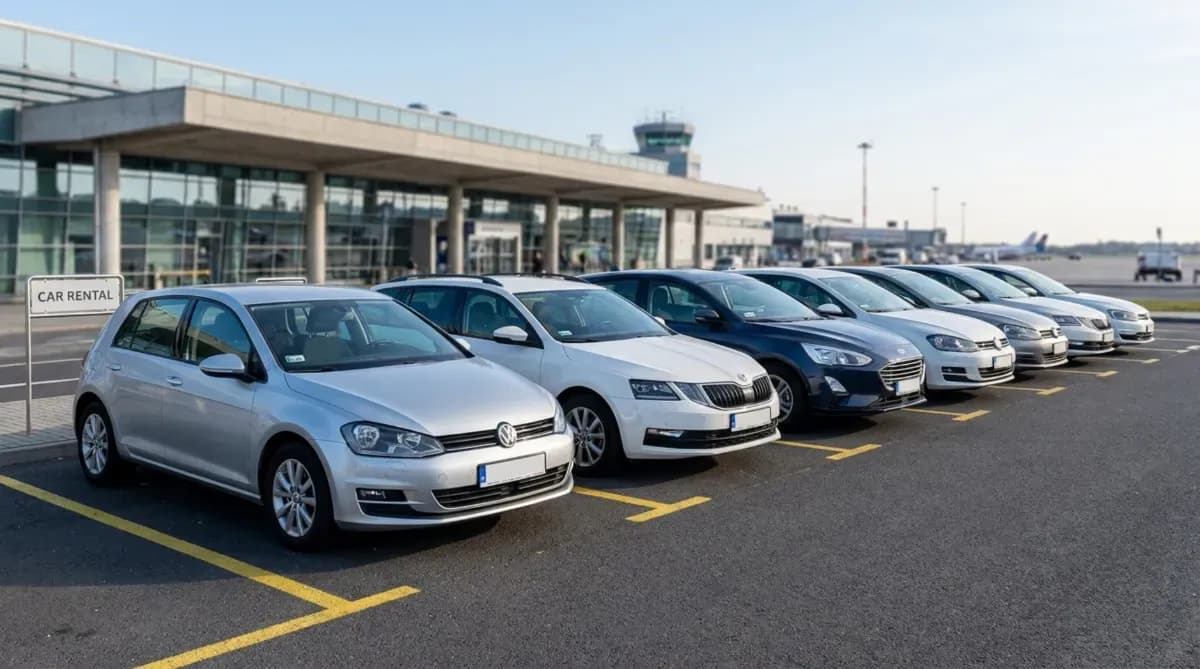
Is a diesel or petrol rental car cheaper for traveling in Poland? For most drivers, a petrol car is the more economical choice because lower base daily rental rates easily outweigh diesel's fuel savings, especially with local pump prices for PB95 and diesel differing by only a few groszy.
A diesel vehicle only becomes cost-effective on high-mileage road trips exceeding 1,200 to 1,500 kilometers where superior motorway efficiency offsets the higher upfront hire costs.
How Do Diesel and Petrol Rental Cars Differ in Poland?
Understanding how both engine types perform across Poland's varied road network clarifies why their overall costs diverge. As Europe's ninth-largest country, Poland spans over 500 kilometers from the Baltic coastline to the southern Tatra Mountains. High-speed expressways link metropolitan hubs, while historic city centers and regional routes present distinctly different driving environments.
Polish rental fleets primarily consist of modern hatchbacks, compact crossovers, and estate cars. Manufacturers have progressively replaced small diesel units with efficient mild hybrids and turbocharged petrol engines.
Today, diesel remains standard primarily in intermediate estates and larger SUVs engineered for long-distance motorway travel.
Fuel Economy and Average Consumption per 100 KM
Thermal efficiency remains diesel's core advantage. A typical compact or intermediate diesel vehicle, such as a Škoda Octavia 2.0 TDI or Volkswagen Golf TDI, averages between 4.2 and 5.2 liters per 100 km at steady motorway speeds. In dense urban traffic, consumption rises to roughly 5.5 to 6.2 liters per 100 km. These figures allow a modern diesel to achieve 800 to 1,000 kilometers on a single tank.
Modern petrol engines have narrowed this performance gap significantly. Equipped with direct-injection turbochargers (such as 1.0 or 1.5 TSI/TCe units), a petrol rental uses approximately 5.8 to 6.8 liters per 100 km on Polish expressways, and between 7.0 and 8.2 liters per 100 km in city driving. While petrol consumption runs 20% to 30% higher under identical conditions, Poland's competitive pump prices keep the nominal monetary difference manageable.
Driving Performance in Cities, Motorways, and Rural Areas
Engine characteristics directly influence your journey across different regions. Diesel engines deliver robust low-end torque, making them ideal for sustained cruising on major corridors like the A1, A2, and A4. When ascending elevation shifts in Podhale or navigating rolling topography near Zakopane, a diesel vehicle pulls effortlessly even when fully loaded with passengers and luggage.
Conversely, petrol engines are better suited to urban environments like Warsaw, Kraków, and Wrocław. They reach optimal operating temperatures quickly, run quieter at idle, and deliver responsive stop-and-go acceleration across city rings and cobblestone streets. Petrol engines also eliminate concerns regarding diesel particulate filter (DPF) regeneration cycles, which can be disrupted by repeated short trips in urban traffic.
What Is the Total Cost of Renting a Diesel or Petrol Car?
Determining true rental expenses requires evaluating more than the initial headline quote. You need to calculate the fixed rental period cost alongside running expenses, which depend on fluctuating fuel prices and total route mileage.
Fleet operators establish rates based on vehicle acquisition costs, depreciation models, and market demand. Because diesel variants carry a higher baseline value, they command premium rental fees that require substantial mileage to offset.
Daily Rental Rates for Diesel and Petrol Models
Across Poland, compact petrol models like the Toyota Yaris, Hyundai i20, and Volkswagen Polo serve as economical entry points. In low to mid seasons, daily rates for small petrol models typically sit between €16 and €22 (PLN 70 to PLN 95), rising to €25 to €35 per day during the peak summer months of July and August.
Because diesel engines are concentrated in compact-estate and intermediate tiers, securing a diesel vehicle requires booking a larger category or adding an explicit fuel-type guarantee. These daily rates range from €32 to €50 (PLN 140 to PLN 215) or higher. This creates an immediate daily price disparity of €10 to €20 (PLN 45 to PLN 90) that you must recover purely through pump savings.
Fuel Cost for 100 KM, 500 KM, and 1,000 KM
Evaluating standard driving intervals highlights the exact monetary difference at the pump. Based on a benchmark price of PLN 5.80 per liter for both Unleaded 95 (PB95) and standard diesel (Olej Napędowy), assuming average consumption of 6.5 L/100 km for petrol and 4.8 L/100 km for diesel:
100 km: Petrol costs approximately PLN 37.70 (€8.75); diesel costs PLN 27.84 (€6.45). Net diesel saving: PLN 9.86 (€2.30).
500 km: Petrol costs approximately PLN 188.50 (€43.75); diesel costs PLN 139.20 (€32.30). Net diesel saving: PLN 49.30 (€11.45).
1,000 km: Petrol costs approximately PLN 377.00 (€87.50); diesel costs PLN 278.40 (€64.60). Net diesel saving: PLN 98.60 (€22.90).
While saving roughly PLN 100 per 1,000 kilometers is tangible, that advantage disappears entirely if the diesel vehicle carries a rental premium of PLN 45 to PLN 70 per day over a multi-day booking.
The Break-Even Mileage Between Diesel and Petrol Rentals
The break-even threshold represents the exact distance required for cumulative fuel savings to cover the diesel rate premium. If a diesel vehicle incurs an additional PLN 50 (€11.60) per day and saves roughly PLN 0.10 per kilometer driven, your calculation is:
PLN 50 daily rate premium ÷ PLN 0.10 fuel saving per km = 500 km per day.
On a five-day rental with a total surcharge of PLN 250, you must drive at least 2,500 kilometers-equivalent to a round trip from Gdańsk to Zakopane and back-simply to reach financial parity. If your itinerary covers less distance, the petrol car remains the more affordable solution.
How Rental Duration Affects the Cheaper Choice
Extended rental periods amplify fixed rate discrepancies unless daily mileage remains exceptionally high. Consider a two-week leisure itinerary covering 1,200 kilometers total (averaging under 90 km per day). A modest diesel premium of €12 per day adds €168 (approximately PLN 720) in fixed hire fees, against fuel savings of only PLN 120 (€28), resulting in an unnecessary net expense of nearly PLN 600.
In contrast, an intensive 48-hour commercial trip covering 1,400 kilometers between Katowice, Poznań, and Warsaw changes the equation. A two-day diesel surcharge of €25 is offset by roughly €32 in fuel savings, tilting the financial balance slightly toward diesel.
How Should You Calculate the Final Diesel Versus Petrol Rental Cost?
To avoid unexpected expenses and travel with confidence, calculate costs based on your specific itinerary, anticipated passenger load, and route characteristics rather than generalized assumptions.
Reviewing all variable expenses upfront ensures your selection aligns with transparent rental terms and accurate operational costs.
A Simple Rental-Cost Comparison Formula
Apply this formula to evaluate individual vehicles:
Total Cost = (Daily Hire Rate × Number of Days) + [(Total Estimated km ÷ 100) × Fuel Consumption (L/100km) × Price per Liter] + Mandatory Fees
Run the calculation for a comparable petrol and diesel model within your chosen class, keeping all currency inputs unified in either PLN or EUR.
Example Calculation Using Distance, Consumption, and Fuel Price
Assume a 7-day circular tour originating at Warsaw Chopin Airport, connecting Kraków, Wrocław, and Poznań over 1,200 kilometers, with fuel prices pegged at PLN 5.85 for PB95 and PLN 5.90 for diesel.
Option A (Petrol Compact):
Daily rate: PLN 110 × 7 days = PLN 770
Fuel consumption: 6.4 L/100 km
Total fuel used: (1,200 ÷ 100) × 6.4 = 76.8 liters
Fuel cost: 76.8 liters × PLN 5.85 = PLN 449.28
Total Trip Cost: PLN 1,219.28
Option B (Diesel Compact/Estate):
Daily rate: PLN 155 × 7 days = PLN 1,085
Fuel consumption: 4.9 L/100 km
Total fuel used: (1,200 ÷ 100) × 4.9 = 58.8 liters
Fuel cost: 58.8 liters × PLN 5.90 = PLN 346.92
Total Trip Cost: PLN 1,431.92
For this standard travel pattern, the petrol vehicle delivers net savings of PLN 212.64, confirming that lower fuel consumption does not automatically translate into lower total travel expenses.
When Is a Diesel Rental Car Cheaper in Poland?
While petrol serves standard holiday itineraries best, specific travel profiles make diesel the more practical, cost-effective route. These scenarios depend on high cumulative mileage paired with narrow rental rate margins.
When you anticipate extensive driving, diesel provides range convenience and efficiency benefits.
Long Motorway Journeys and High-Mileage Road Trips
Extensive circuits connecting Poland's perimeter regions leverage diesel's strengths. An itinerary routing from Warsaw eastward to Białowieża, south through Lublin into the Bieszczady mountains, west to Kraków, and north to the Pomeranian coast readily spans 2,500 to 3,500 kilometers.
Poland's expressways (S-network) and motorways (A-network) permit cruising speeds of 120 km/h and 140 km/h respectively. High aerodynamic drag at these speeds increases petrol consumption considerably, whereas tall gearing allows diesel engines to cruise comfortably at low RPMs. In these settings, consumption gaps often widen to 2.5 or 3.0 liters per 100 km, expanding fuel savings over long distances.
When Lower Fuel Consumption Offsets a Higher Rental Price
Rate parity occasionally occurs during shoulder seasons or regional fleet rebalancing. Rental providers operating out of hubs like Katowice Airport or Gdańsk Lech Wałęsa may price intermediate diesel estates competitively to balance fleet utilization.
If seasonal pricing or category upgrades compress the diesel surcharge to under PLN 15 to PLN 20 (€3 to €4) per day, a moderate itinerary exceeding 150 to 200 kilometers daily will make diesel the more economical vehicle.
When Is a Petrol Rental Car Cheaper in Poland?
For most routine itineraries, petrol models provide the lowest total cost. Typical driving patterns across Polish metropolitan regions and regional tourist hubs favor smaller petrol drivetrains.
Direct pricing structures and manageable fuel use keep petrol models exceptionally competitive for shorter distances.
Short Rentals With Limited Mileage
Weekend city breaks and short-term rentals rarely accumulate sufficient mileage to justify diesel premiums. Collecting a car at Kraków Airport for local transit, a visit to the Wieliczka Salt Mine, and a day trip to the surrounding valleys generates only 200 to 300 kilometers total.
Across this distance, the operational difference at the fuel pump is less than PLN 30 (€7). Paying any category upgrade fee for a diesel engine produces an immediate net loss.
City Driving in Warsaw, Kraków, Gdańsk, and Wrocław
Urban transit in major Polish cities involves routine congestion during morning and evening commuting hours. Navigating Warsaw's central arteries or Wrocław's ring systems requires frequent idling and persistent low-gear driving.
Neither powertrain operates at peak efficiency in heavy stop-and-go traffic. Because aggregate daily urban distances rarely exceed 30 to 40 kilometers, fuel consumption remains minimal in absolute terms. The lower baseline daily rate of a petrol car easily dictates the final economics of the trip.
What Should You Check Before Booking a Diesel or Petrol Rental?
Ensuring a smooth journey requires reviewing your rental agreement thoroughly. Unanticipated policy conditions or unexpected ancillary fees can quickly erase planned fuel savings.
Always verify operating terms, documentation, and vehicle classifications prior to confirming your reservation.
Fuel Policy and the Required Fuel Type
Ensure your agreement specifies a full-to-full fuel policy. This standard allows you to take delivery with a full tank and return it full, paying strictly for the fuel you consume at standard station rates. Avoid full-to-empty arrangements, which incorporate mandatory administrative refueling fees and provide no credit for unused fuel.
Pay close attention at Polish filling stations. Diesel pumps are clearly designated with the black ON emblem (Olej Napędowy), while standard unleaded fuels carry PB 95 or PB 98 markings. Misfueling causes extensive mechanical damage, invalidates standard insurance coverage, and creates significant repair liabilities. Always verify the manufacturer label inside the fuel filler flap upon vehicle handover.
Included Mileage and Extra-Kilometre Charges
Look for flexible rental options that feature clear mileage allowances. While standard rentals often feature unlimited distance, restrictive policies may cap daily driving between 150 km and 250 km. If your strategy relies on high mileage to make diesel viable, verify that your terms include unlimited kilometers.
Exceeding restrictive distance caps triggers penalty charges per excess kilometer (typically PLN 0.40 to PLN 1.20 per km), rapidly inflating your travel budget.
Deposit, Excess, and Credit Card Requirements
Car rental providers require a pre-authorization hold on the primary driver's credit card to cover the insurance excess, incidentals, and potential toll fees. Security deposits generally range between PLN 1,500 and PLN 5,000 (€350 to €1,150) based on car class.
Because diesel engines are primarily allocated to intermediate, estate, or premium categories rather than compact segments, they often demand higher deposit holds and carry greater insurance excess values. Ensure your payment card maintains sufficient available credit to accommodate the pre-authorization without disrupting your travel budget.
Pickup and Return Times, Locations, and After-Hours Fees
Poland's 14 commercial airports-including Warsaw Chopin, Kraków-Balice, Gdańsk, and Katowice-operate with varying counter schedules. Collecting or returning a vehicle outside core service hours (typically between 22:00 and 06:00) frequently attracts an after-hours service charge between PLN 100 and PLN 200.
Prioritize rental providers offering 24/7 support and nationwide availability to coordinate collections smoothly. Coordinate your scheduled flight arrivals with branch opening windows to avoid delays or late-pickup penalties.
Do Polish Tolls and Driving Rules Change the Cheaper Option?
Fuel represents only one operational variable when traversing Poland. Motorway tolls, administrative networks, and municipal regulations also influence overall route expenditure.
Familiarizing yourself with toll policies before departure prevents unforeseen road charges.
Motorway Tolls and Electronic Payment Systems
Poland operates a mixed toll infrastructure across key sections of the A1 (Rusocin to Nowa Wieś), A2 (Konin to Świecko), and A4 (Kraków to Katowice). Certain private concessions maintain standard manual barrier plazas accepting card and cash payments in PLN, EUR, or USD, while state-managed sections utilize electronic tolling frameworks like e-TOLL or compatible automated mobile payment platforms.
Polish motorway tolls are calculated strictly by vehicle classification and axle count, not engine type. Standard passenger vehicles under 3.5 tonnes pay identical rates whether powered by petrol or diesel. While tolls do not shift the comparative balance between powertrains, they should be incorporated into your total route planning.
How Can You Reduce Fuel and Rental Costs in Poland?
Strategic route planning and careful booking habits help optimize travel costs across any vehicle category. Sound booking decisions provide immediate savings before you even start the engine.
Implementing a few practical steps ensures your trip across Poland remains cost-effective and stress-free.
Compare the Total Price Instead of the Daily Rate
Never evaluate a rental solely by its base headline figure. Calculate the aggregate package: daily base hire, comprehensive insurance coverage, secondary driver provisions, seasonal equipment, and estimated fuel use.
Prioritize providers that offer transparent rental terms with no hidden fees. A rock-bottom headline rate often conceals expensive mandatory add-ons at the counter.
Book Early and Compare Airport and City Pickup Locations
Reserving your vehicle weeks in advance secures lower baseline pricing, particularly ahead of summer demand peaks from June through August. Walk-up reservations at transport hubs consistently face premium rack rates.
Weigh convenience against location surcharges when selecting pickup points. While airport hubs offer wide availability and broad fleet selections, downtown collection points can occasionally bypass airport concession fees. Factor in local transit costs between terminals and city branches to evaluate real savings.
Choose a Smaller Car for Lower Fuel Consumption
Unless navigating winter terrain in the high Tatras or traveling with extensive luggage, reserve the most compact vehicle suitable for your travel party. Compact hatchbacks provide optimal fuel economy in dense traffic and lower base daily rates.
Smaller vehicles also simplify urban navigation and parking in historic town layouts like Toruń, Poznań, or Lublin, where parking bays and narrow side streets favor agile dimensions.
Diesel or Petrol Rental Car in Poland: The Practical Verdict
Neither engine type is universally more cost-effective across Poland. For short stays, regional city touring, and leisure holidays under 1,000 kilometers, petrol rental cars provide the lower overall expense. Their daily hire rates are lower, and standard pump prices remain closely aligned. Diesel claims the financial edge only on high-speed, long-distance itineraries that log sufficient kilometers to overcome base vehicle surcharges.
Municipal access rules also warrant consideration. Polish urban centers are adopting Clean Transport Zones (Strefy Czystego Transportu - SCT). Warsaw's active SCT and upcoming zones in cities like Kraków impose stricter compliance tiers on older diesel drivetrains. Modern rental fleets utilize Euro 6-compliant engines that meet all current access standards, but checking local zone updates ensures comfortable travel without municipal restrictions.
Seasonal weather impacts performance as well. During sub-zero winter spells between December and February, Polish fuel stations dispense winter-grade diesel formulated to prevent fuel waxing. However, starting modern petrol engines in mountain valleys like Zakopane remains seamless during deep freezes. For drivers prioritizing fuel economy without a diesel price premium, modern hybrid models within our modern fleet offer an ideal balance, delivering city efficiency close to diesel levels with zero fuel surcharges.