12.10.2026
Driving in Poland vs UK - Key Differences for British Tourists
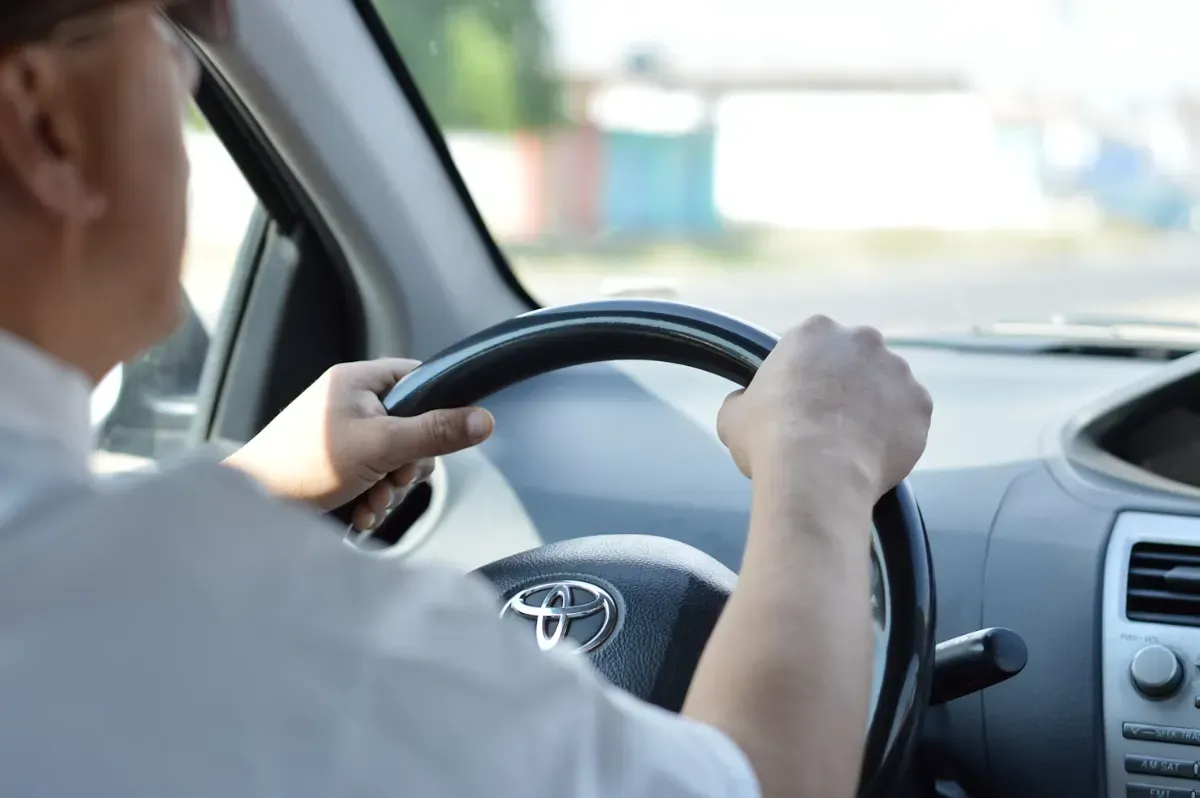
What are the key differences British tourists face when driving in Poland compared to the UK? Driving in Poland requires adapting to right-hand traffic, navigating higher motorway limits of up to 140 km/h, adhering to a strict 0.2 g/l drink-drive limit, and keeping dipped headlights on around the clock.
Preparing for these legal and practical rules ensures a smooth journey so you can travel with confidence across the country.
What Are the Main Differences Between Driving in Poland and the UK?
Driving on the Right in Poland Versus the Left in the UK
The most immediate change you'll notice is the side of the road. While UK drivers belong to the minority that drives on the left, Poland drives on the right. This adjustment shifts your spatial reference points. In Poland, you'll change gears with your right hand, check the rear-view mirror above your right shoulder, and watch oncoming traffic pass on your left.
This switch demands conscious focus, particularly when pulling out of petrol stations, supermarket car parks, or rural side roads where there's no traffic to follow. When turning left onto an empty two-lane road, muscle memory can easily pull you toward the left lane. Staying alert during your first few days is vital, especially early in the morning or after a long flight.
Key Differences in Signs, Road Markings and Driving Habits
Polish road signs follow the Vienna Convention on Road Signs and Signals, so standard shapes and colors will look familiar. However, you'll spot several regional variations. Direction signs regularly feature the word droga ("road" or "way"), and speed cameras are housed in prominent bright yellow roadside boxes. Solid single and double white lines carry strict legal weight, and local driving habits can feel more assertive than what British drivers are used to at home.
Local motorists often maintain high speeds on rural roads and expect slower traffic to keep right on dual carriageways. A vehicle behind you may flash its headlights to request lane clearance. Polish motorways also legally mandate an emergency corridor, known as korytarz życia ("corridor of life").
When traffic grinds to a halt on multi-lane routes, drivers in the far-left lane must pull tightly against the central barrier, while all other lanes steer right to leave an open path for emergency vehicles.
What Driving Documents and Vehicle Requirements Apply in Poland?
UK Driving Licence, Passport and Vehicle Documents
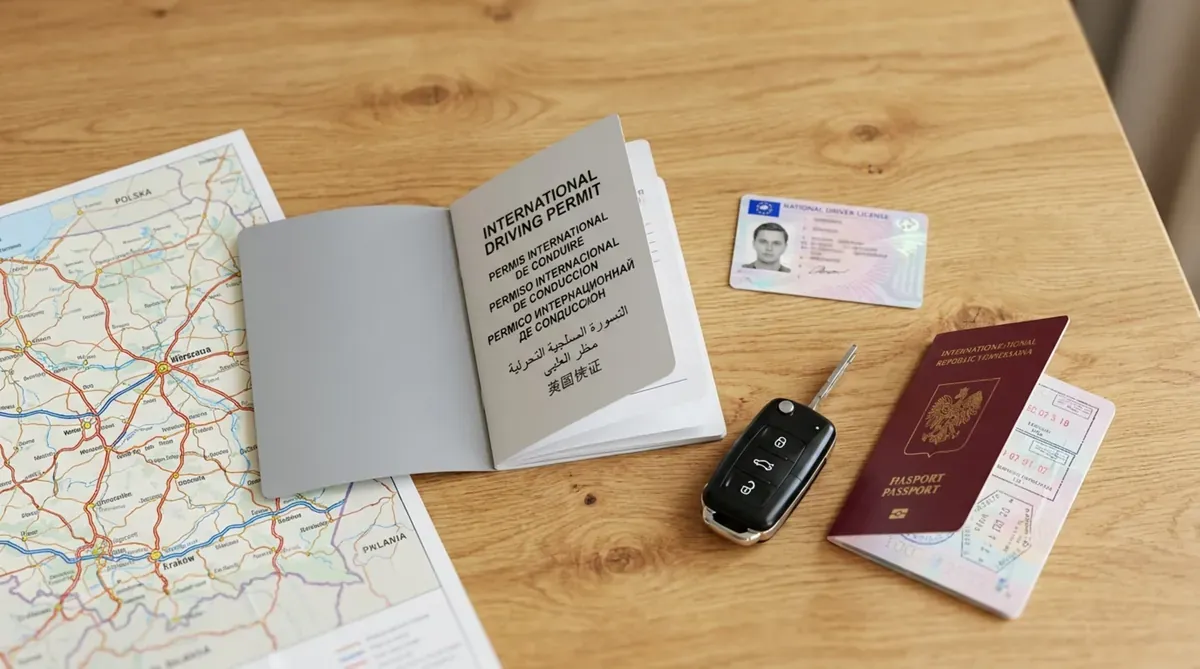
You can drive in Poland for up to six months using a standard UK photocard licence issued in Great Britain or Northern Ireland. Polish traffic police (Policja) conduct regular roadside checks and demand original physical documents; digital scans, photos, or paper photocopies aren't accepted under Polish law.
Always carry your physical photocard licence, passport, valid motor insurance certificate, and the vehicle registration document (V5C). When you hire a car, your rental agreement and vehicle handover form replace the V5C. Failing to produce these physical documents during a check can result in immediate on-the-spot fines, and officers can impound the car until valid paperwork is presented.
When Do British Drivers Need an International Driving Permit?
Most British travelers holding a current photocard licence don't need an International Driving Permit (IDP) for Poland. Exceptions apply if you still hold an older paper UK licence without a photograph, in which case you must carry a 1968 IDP. Licences issued in Gibraltar, Guernsey, Jersey, or the Isle of Man may also require this permit.
While Polish authorities don't require an IDP from standard photocard holders, individual rental agreements can vary. Always check your booking details beforehand to confirm specific documentation rules before you travel.
Car Insurance, the Green Card and Rental-Car Permissions
British drivers taking a UK-registered vehicle to Poland no longer need a paper Green Card. Standard UK motor insurance policies provide the compulsory minimum third-party cover across EU countries. You should still carry your physical policy schedule as proof of active cover.
If you're using a car rental, review the geographic travel permissions. Many Polish rental agreements strictly prohibit driving east across non-EU borders into Ukraine or Belarus. Crossing without explicit written approval voids insurance cover, breaches the contract, and exposes you to severe recovery fees and legal liability.
Mandatory Equipment for Cars in Poland
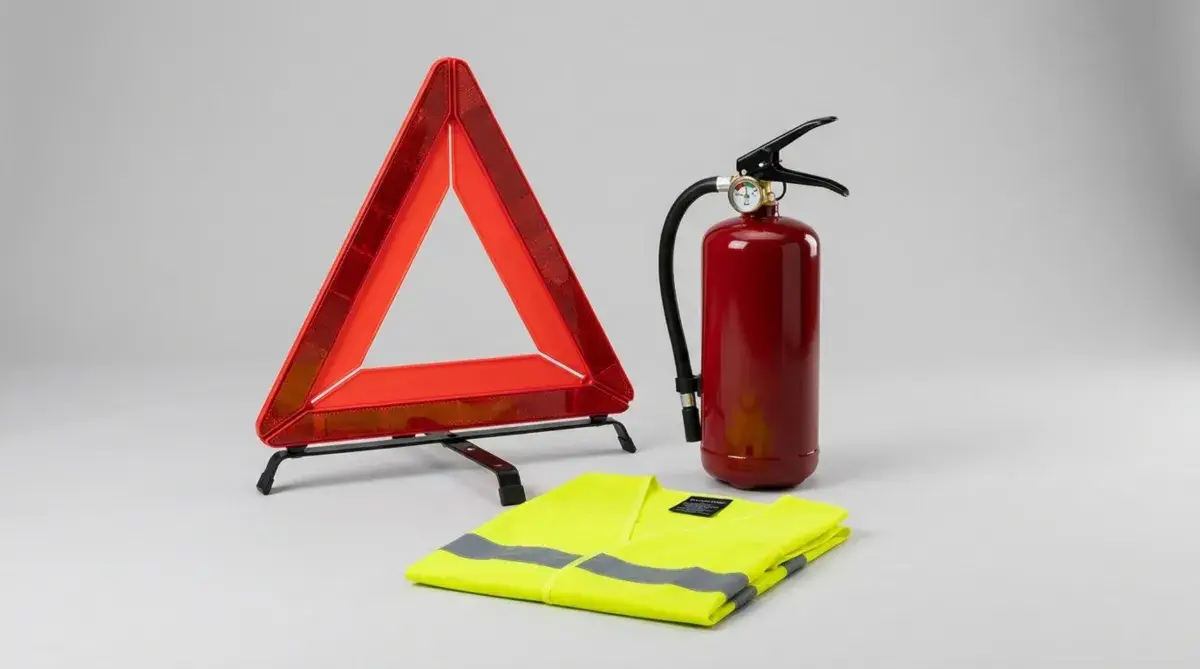
Polish road regulations mandate specific safety gear inside every vehicle, regardless of where it's registered. Every car must carry an approved warning triangle and an accessible, fully charged fire extinguisher. Modern and well-maintained vehicles supplied by Polish rental services already carry this required gear, but if you're bringing a car from Britain, you'll need to purchase an automotive extinguisher before arrival.
UK-registered cars also need headlight beam deflector stickers to avoid dazzling oncoming traffic at night, as British headlamps dip toward the left curb. Additionally, your vehicle must display an official "UK" identifier on the rear. The older "GB" sticker is no longer legally valid, and number plates showing the Union Flag without the "UK" lettering require a separate oval sticker.
[Check which documents you need to rent a car in Poland]
What Should You Check Before Driving from the UK to Poland?
Plan the Route, Border Crossing and Rest Stops
Driving from the UK to Poland covers 900 to 1,400 miles, depending on whether your destination is Poznań, Warsaw, or Kraków. Standard routes cross via the Channel Tunnel or ferry to northern France, running through Belgium, the Netherlands, and Germany before entering Poland via the A2 at Frankfurt an der Oder or the A4 at Görlitz.
Because Germany and Poland belong to the Schengen Area, you won't encounter regular border control posts, though customs and police still run random spot checks. Plan your rest stops ahead of time. Polish motorways feature dedicated rest areas called MOP (Miejsce Obsługi Pasażerów). Note that basic rest stops offer only restroom facilities, so plan fuel and food stops at commercial service plazas along your route.
Check Rental-Car Terms, Insurance Excess and Breakdown Cover
If you fly in and collect a car at hubs like Warsaw Chopin or Kraków-Balice, review the terms closely. Rental companies generally require drivers to have held a full licence for at least one to two years, and young-driver fees may apply to those under 25. Check the security deposit requirements and your excess exposure under the collision damage waiver.
Ensure your booking includes reliable roadside assistance for punctures, breakdowns, and towing. Poland is a large country, and reaching rural destinations can take time if support isn't properly coordinated. Transparent rental terms and access to reliable 24/7 support ensure that any unexpected mechanical issues are managed quickly without interrupting your travel plans.
Learn the Most Common Polish Traffic Signs Before Departure
Familiarizing yourself with key signs makes complex junctions much easier to navigate. The primary sign to know is a yellow diamond with a white border (sign D-1), which indicates a priority road. You hold right-of-way over side roads until you see the D-2 sign-the same yellow diamond crossed by a black diagonal bar-indicating the priority road has ended.
Built-up area boundaries are also marked differently. Rather than posting numerical limits at every village boundary, Poland uses a white rectangular sign displaying a black cityscape (sign D-42). Passing this sign immediately drops the speed limit to 50 km/h, even if visible buildings haven't started. The restriction ends only when you pass the D-43 sign, which shows the same cityscape crossed by a red diagonal line.
Practise Right-Hand Driving in a Quiet Area First
Navigating busy airport rings or rush-hour city traffic right after landing can be overwhelming if you haven't driven on the right before. Take a few minutes to sit in the vehicle, adjust your mirrors, and familiarize yourself with the wiper and gear controls.
Start your drive along quieter airport perimeter roads, business parks, or bypasses before merging onto busy routes. This helps you get used to your lane positioning. British drivers often position themselves too close to the right-hand curb; checking your mirrors periodically helps you keep the car centered.
How Do Polish Traffic Rules Differ from UK Rules?
Priority-To-The-Right Rules at Polish Junctions
A fundamental difference on Polish roads is the priority-to-the-right rule (reguła prawej ręki). While UK junctions rely heavily on road markings, give-way signs, or roundabouts, many residential and rural intersections in Poland feature no signs at all.
At any junction lacking traffic lights, priority signs, or road markings, you must yield to vehicles approaching from your right. This rule applies even if you're traveling along what appears to be a wider, main road and the incoming vehicle is emerging from a smaller side street. Overlooking this rule is a frequent cause of collisions involving overseas drivers.
Roundabouts, Lane Discipline and Giving Way
Unlike UK roundabouts that circulate clockwise, Polish roundabouts circulate anticlockwise. By law, the blue circular roundabout sign (C-12) used alone would assign priority to traffic entering the circle under the priority-to-the-right rule.
In practice, nearly every Polish roundabout pairs sign C-12 with an inverted triangular Give Way sign (A-7). This creates a familiar setup: you yield to traffic already circulating. Drivers don't typically signal left while remaining on the roundabout; simply indicate right as you approach and pass your intended exit.
Pedestrian Crossings and Cyclist Priority
Poland enforces strict pedestrian safety laws. Drivers must yield not only to pedestrians already on a zebra crossing, but also to anyone clearly approaching the curb with the intention to cross. Failing to stop carries steep fines.
Urban centers also feature extensive cycle networks that often run parallel to main routes across side turns. Always check your right-hand blind spot before making a turn: cyclists traveling straight along a designated cycle path maintain legal right-of-way over turning vehicles.
Using Headlights During the Day in Poland
While the UK requires headlights mainly at night or during adverse weather, Poland requires headlights or daytime running lights (DRLs) 24 hours a day on all public roads. Factory-fitted DRLs are acceptable in clear daylight. If your car lacks an automated system, remember to switch on dipped headlights manually every time you set off to avoid roadside penalties.
Seat Belts, Child Seats and Mobile-Phone Restrictions
Seat belts are mandatory for all occupants in both front and rear seats. Poland regulates child safety by height rather than age: any child under 150 cm tall must travel in an approved child seat or booster appropriate for their weight.
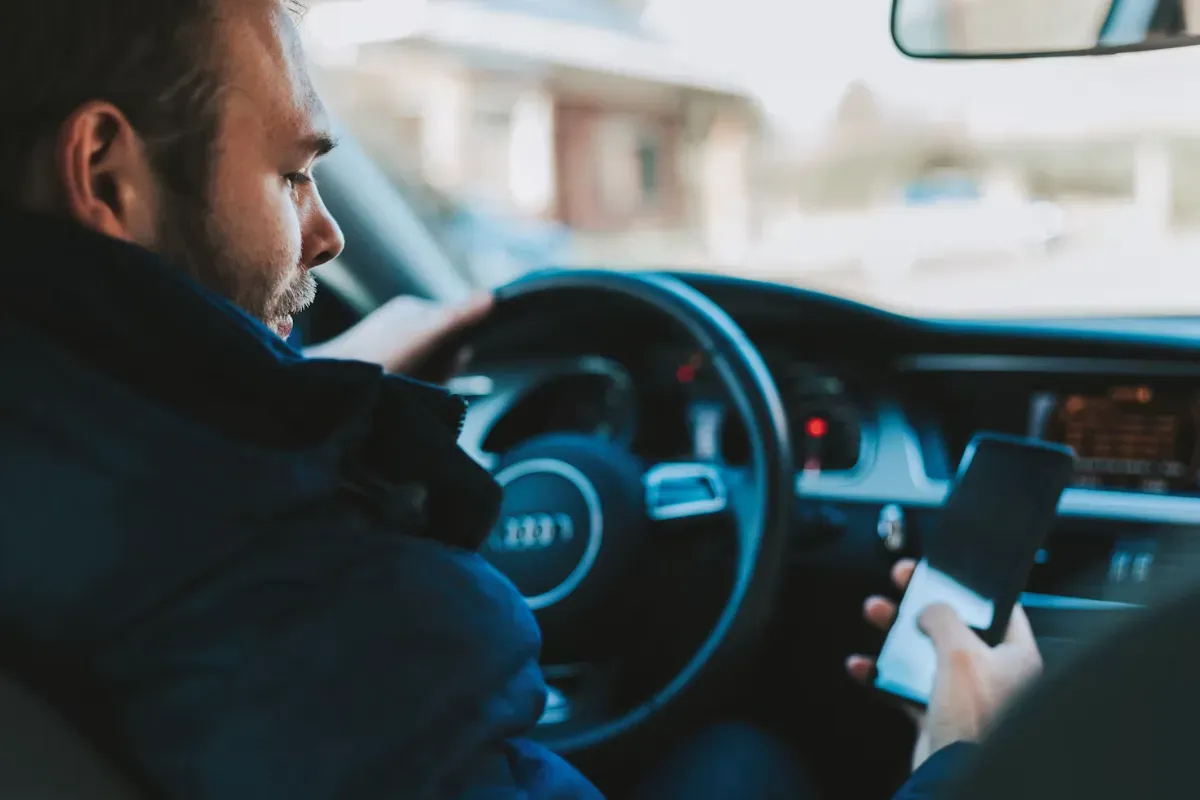
Mobile phone rules mirror UK regulations. You cannot hold or operate a phone while the vehicle is in motion or waiting at red lights. Hands-free systems paired via Bluetooth are permitted, and traffic police routinely monitor intersections for handheld device use.
What Are the Speed Limits in Poland Compared with the UK?
Polish Speed Limits: 50, 90, 100, 120 and 140 KM/H
Poland sets clear national limits based on road infrastructure, featuring some of Europe's highest motorway limits:
Built-up urban areas: 50 km/h (~31 mph) at all times.
Single-carriageway rural roads: 90 km/h (~56 mph).
Dual-carriageway rural roads and single-carriageway expressways: 100 km/h (~62 mph).
Dual-carriageway expressways (marked with an "S", such as S3 or S10): 120 km/h (~75 mph).
Motorways (marked with an "A", such as A1, A2, or A4): 140 km/h (~87 mph).
The 140 km/h motorway limit allows for swift travel between cities, but it creates large speed differentials between cars and heavy goods vehicles (capped at 80 km/h). Always double-check your mirrors before pulling into the overtaking lane.
UK Speed Limits: 30, 60 and 70 MPH
The UK uses miles per hour with default limits of 30 mph in built-up areas, 60 mph on single carriageways, and 70 mph on dual carriageways and motorways. The UK motorway limit converts to roughly 113 km/h.
Traffic on Polish motorways travels nearly 30 km/h (17 mph) faster than on British motorways. If you change lanes without carefully checking rear closure rates, fast-approaching traffic may have to brake hard.
Converting Kilometres per Hour to Miles per Hour
When driving a UK car with a standard mph display, keep these reference conversions in mind:
Polish Limit (km/h) | UK Equivalent (mph) | Typical Road Context |
50 km/h | ~31 mph | Towns, cities, and built-up villages |
90 km/h | ~56 mph | Standard rural, single-carriageway roads |
100 km/h | ~62 mph | Single-carriageway expressways and rural dual carriageways |
120 km/h | ~75 mph | Multi-lane expressways (S-roads) |
140 km/h | ~87 mph | Motorways (Autostrady, A-roads) |
A quick mental conversion is to multiply the speed by six and drop the last digit: 50 × 6 = 300 (~30 mph), or 90 × 6 = 540 (~54 mph). In modern rental vehicles, you can easily toggle the digital speedometer to metric via the dashboard settings, giving you one less thing to calculate.
Speed Cameras, Fines and Average-Speed Enforcement
Poland enforces speed limits via fixed cameras, mobile patrols, unmarked vehicles, and sectional average-speed checks (odcinkowy pomiar prędkości). Fixed locations are preceded by blue radar warning signs, with the cameras mounted inside yellow roadside boxes.
Non-resident foreign drivers aren't billed by mail; fines must be settled on the spot with the stopping officer. Polish patrol cars carry mobile payment terminals to process debit and credit cards immediately. Refusing or failing to pay can lead to vehicle impoundment until court proceedings take place.
What Are Polish Roads and Traffic Like for British Tourists?
Motorways, Expressways and Rural Roads
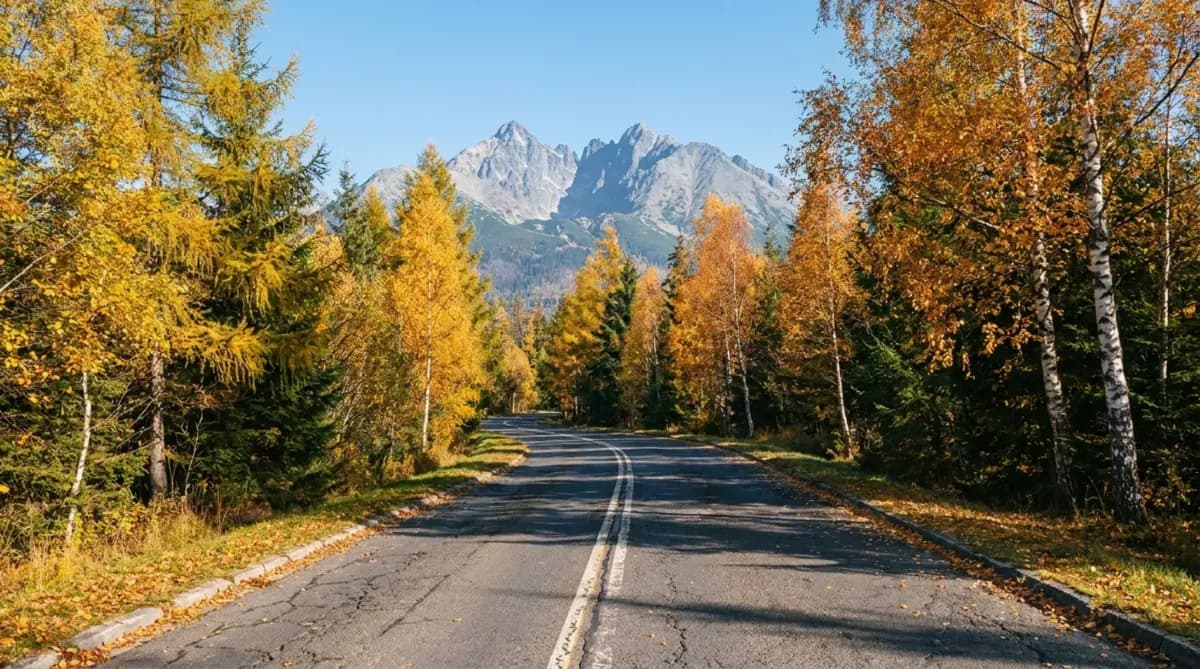
You'll encounter two distinct road profiles in Poland. Primary arteries like the A1 (north-south), A2 (east-west), and expressways such as the S3 and S10 rank among the newest transit corridors in Europe, offering smooth surfaces, wide lanes, and clear junctions.
Secondary and rural roads can be a different story. Regional routes connecting smaller villages are often narrow, unlit, and lack paved shoulders or painted center lines. European Commission transport data notes that motorways accounted for only 3% of Polish road fatalities in 2024, whereas rural routes accounted for roughly 60%. Take extra care on country roads, watching for blind summits, abrupt curves, and changing road surfaces.
Road Surfaces, Construction Zones and Winter Conditions
While primary routes are well maintained, rural surfaces may have frost heaves, patchwork asphalt, and deep tire ruts (koleiny) carved by heavy transit freight. These ruts hold pooling water during downpours, increasing aquaplaning risks.
Polish weather patterns also bring severe winter conditions between November and March, including freezing slush and black ice. While winter tires aren't legally mandated nationwide for passenger cars, driving on summer tires in sub-zero conditions is hazardous and may be classed as negligence by insurers after an incident. Choosing a car equipped for seasonal conditions helps ensure safe, comfortable travel.
Heavy Vehicles, Overtaking and Fast-Moving Local Traffic
Poland serves as a major trade conduit across Europe, resulting in heavy lorry traffic. On single-lane rural roads, slower agricultural transport and commercial vehicles can cause tailbacks, sometimes prompting impatient drivers to attempt aggressive overtakes.
You may see oncoming cars cross into your lane while overtaking, expecting you to steer onto the paved shoulder (pobocze). Maintain a safe following distance, stay calm, and don't feel pressured into making unsafe maneuvers yourself. Only pass when you have a clear, uninterrupted view of the road ahead.
Tolls, Fuel Stations and Motorway Payment Options
Poland doesn't use a universal motorway vignette system for passenger cars. Instead, tolls depend on the specific stretch of road and who manages it. State-operated sections-such as the A2 between Konin and Stryków or the A4 between Wrocław and Sośnica-are toll-free for light passenger vehicles up to 3.5 tonnes.
Concession-operated sections charge tolls, including the A1 between Gdańsk and Toruń, the A2 between Świecko and Konin, and the A4 between Katowice and Kraków. You can pay via traditional toll booths accepting cards and cash, or through automated digital apps like Autopay. The national satellite system, e-TOLL, applies to commercial transport and vehicles over 3.5 tonnes, so standard passenger cars don't require an onboard transponder.
How Should British Tourists Handle Parking and Navigation in Poland?
Paid Parking Zones and Parking Signs
City centers and historical districts designate paid parking zones (Strefa Płatnego Parkowania) marked by D-44 signs. Automated camera cars and wardens monitor these zones actively. Operating hours generally run Monday through Friday from 8:00 AM to 6:00 PM or 8:00 PM, though tourist areas may extend payment windows through weekends.
Parking meters (parkomaty) take contactless cards, coins, and mobile apps like mobiParking, moBILET, or SkyCash. Most machines require you to key in your vehicle's registration number before printing a receipt. Display the printed ticket face-up on the dashboard where it's clearly visible through the windscreen.
Where Parking Is Restricted or Prohibited
Polish parking regulations feature strict buffer zones. You cannot stop or park within 10 meters of an intersection, pedestrian crossing, or designated cycle path, nor within 15 meters of a bus or tram stop.
Pavement parking is legally permitted under specific conditions: the car's gross weight must stay under 2.5 tonnes, you must leave at least 1.5 meters of clear walkway for pedestrians, and the vehicle shouldn't obstruct traffic flow. To avoid confusion, park in marked bays or use secure multi-story facilities, identified by signs for Parking Strzeżony.
Using GPS When Polish Place Names Are Unfamiliar
Entering Polish destinations into satellite navigation requires attention to detail. Polish uses specific diacritic characters: ą, ć, ę, ł, ń, ó, ś, ź, ż. Omitting an accent mark or misspelling a town can route your GPS to an entirely different village hundreds of kilometers away.
Cross-reference destinations using Poland's standard five-digit postal codes (e.g., 00-001 for central Warsaw, 31-042 for Kraków). Because automated English voice prompts can mispronounce Polish street names, keep an eye on your visual dashboard map rather than relying solely on audio turn instructions.
Choosing a Navigation App With Current Road and Traffic Data
Google Maps and Apple Maps provide reliable nationwide coverage, but specialized apps offer added real-time value. Waze is widely used across Poland for community-driven reports on hazards, construction, and delays.
The local app Yanosik is also popular among Polish drivers, providing real-time crowdsourced alerts on speed cameras, police checks, stopped vehicles, and road debris. If you're traveling through mountain routes or eastern rural districts where mobile signals can dip, download offline maps to maintain continuous guidance.
[Land in Kraków and pick up your car straight at the airport]
What Are the Alcohol and Safety Rules for Driving in Poland?
Poland's 0.2 G/L Blood-Alcohol Limit
Poland enforces one of Europe's lowest allowable alcohol thresholds. The maximum legal limit is 0.2 grams of alcohol per litre of blood (0.2‰ or 0.02% BAC). For visitors, this should be treated as a zero-tolerance rule.
Testing between 0.2‰ and 0.5‰ is classified as driving "after the use of alcohol" (stan po użyciu alkoholu), carrying immediate driving bans, hefty fines, and potential custody. Readings exceeding 0.5‰ constitute the criminal offense of driving while intoxicated (stan nietrzeźwości), leading to mandatory licence disqualification, substantial payments to victim funds, and prison sentences. Polish law also allows authorities to confiscate the vehicle of heavily intoxicated motorists.
How Poland's Limit Compares With England, Wales, Northern Ireland and Scotland
The contrast with UK regulations is stark. England, Wales, and Northern Ireland allow up to 0.8 g/l (80 mg per 100 ml)-the highest limit in Europe-while Scotland enforces 0.5 g/l (50 mg per 100 ml).
While an adult in England might legally drink a pint of beer or glass of wine with food and remain under 0.8 g/l, that same drink will push you over Poland's 0.2 g/l threshold. Assuming that a single drink is acceptable can lead to serious legal consequences and disrupt your entire trip.
Why Visitors Should Avoid Driving After Any Alcohol
Because the legal threshold is so low, even minor amounts of residual alcohol the morning after an evening out can put you over the limit. Polish police frequently conduct large-scale morning screening sweeps known as Trzeźwy poranek ("Sober Morning"), stopping every vehicle at motorway exits and key intersections.
If you plan on drinking in the evening, use taxis, rideshares, or public transit. Don't drive the following day until you're completely sure your system has processed all alcohol.
Emergency Number 112 and What To Do After a Collision
If you're involved in an accident or breakdown, prioritize safety immediately. Turn on hazard lights, pull on a high-visibility vest before stepping out of the car, and position the warning triangle behind the vehicle (100 meters back on motorways; 30 to 50 meters back on rural roads).
In any emergency, dial 112 for the unified European emergency dispatch, which connects you to operators with English-language support. Direct Polish emergency services include:
999: Ambulance (Pogotowie Ratunkowe)
998: Fire Brigade (Straż Pożarna)
997: Police (Policja)
If an incident involves injuries or a dispute over fault, leave the vehicles in place, contact the police, and await the formal collision report (notatka policyjna). For minor property damage where responsibility is clear, both drivers can complete a standard European Accident Statement without waiting for a patrol.
What Mistakes Do British Drivers Commonly Make in Poland?
Entering the Wrong Side of the Road After Turning
Data from insurance provider Zego indicates that 38% of British motorists admit to driving on the wrong side of the road when traveling overseas. Regional numbers reflect similar patterns across the UK, with 49% of Welsh motorists, 44% from Eastern England, and 42% from Northern England reporting the same error abroad.
In Poland, this mistake rarely happens on busy multi-lane motorways; it typically happens on quiet rural lanes or when pulling out of empty service station forecourts. Without a car ahead to follow, instinct can guide you into the left-hand lane. Remind yourself at every junction: keep right, make wide left turns, and take right turns tight to the curb.
Confusing Kilometres per Hour With Miles per Hour
Reading Polish speed signs through an imperial mindset leads to dangerous speeding. Seeing a "90" sign on a rural single carriageway indicates 90 km/h (56 mph), not 90 mph. Driving at 90 mph on that road is both illegal and unsafe.
Similarly, misinterpreting a "50" urban sign as 50 mph means traveling at 80 km/h in a pedestrian-dense 31 mph area. Ensure your rental car's instruments and navigation displays are set to metric to prevent accidental speeding.
Missing Unfamiliar Signs, Trams and Pedestrian Crossings
City driving brings its own set of rules, particularly around municipal tram networks in Warsaw, Kraków, Poznań, Wrocław, and Gdańsk. Trams share lanes with cars and generally hold priority, including when turning across active traffic lanes.
You cannot pass a stationary tram discharging passengers directly onto the street without an island; you must stop behind the rear carriage until all doors close and passengers reach the pavement. Also, be mindful of zebra crossings near intersections, where parked vehicles can obscure waiting pedestrians and cyclists.
Underestimating Distance, Darkness and Changing Road Conditions
Covering more than 312,000 square kilometers, Poland is significantly larger than the UK. Distances between regional centers can take longer than expected, and driver fatigue can set in quickly once you exit well-lit motorways.
Rural roads often run through dense forest corridors without street lighting, significantly increasing collision risks with wildlife such as red deer and wild boar (dziki) between dusk and dawn. You may also encounter unlit agricultural equipment or pedestrians along unpaved edges. When driving through rural Poland or regional mountain passes, plan to travel during daylight hours, reduce your speed near wooded areas, and allow plenty of time to reach your destination.