
30.09.2026
Fleet Management for International Companies in Poland - CarFree Corporate Solutions
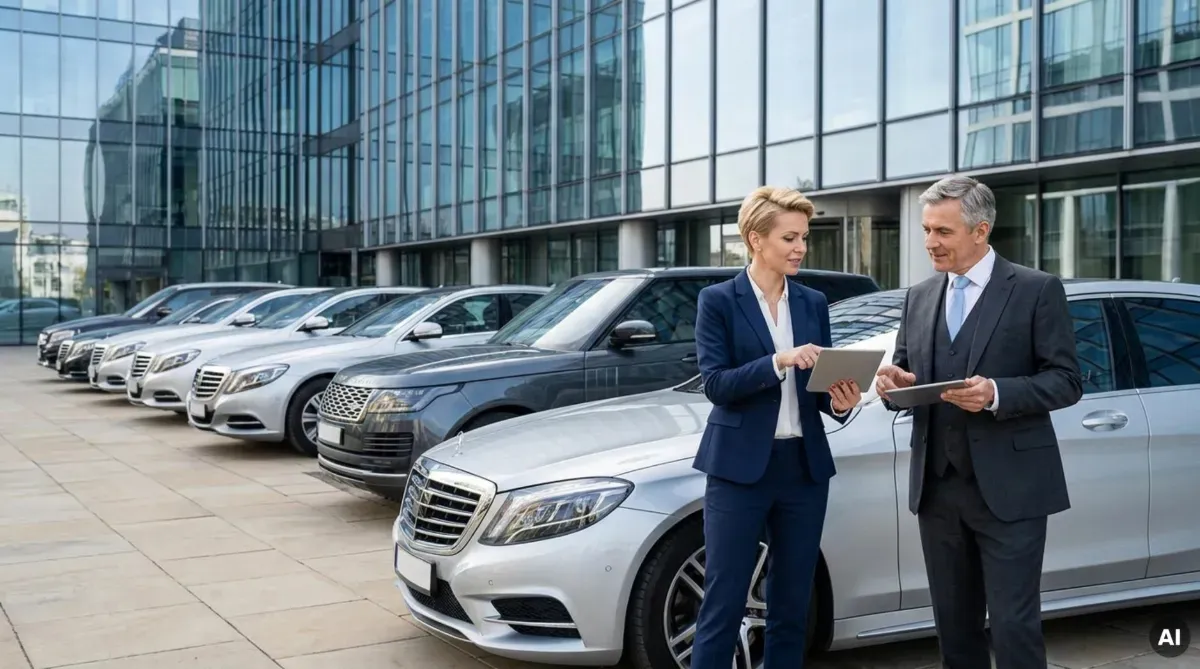
How can international organizations manage a corporate fleet in Poland while controlling operational costs and adhering to local statutory rules? Partnering with an experienced mobility provider centralizes vehicle sourcing, servicing, Polish tax compliance, and driver care into a single managed framework.
At CarFree, we offer flexible mobility solutions and nationwide availability to help your business travel with confidence and operate smoothly across borders.
What Fleet Management Includes for International Businesses
For an international company, corporate fleet management oversees the entire lifecycle of commercial and passenger vehicles. It begins with selecting the right acquisition structure, whether you need short-term car rental for interim teams, medium-term options for defined projects, or long-term rental agreements. The process integrates vehicle allocation, telematics, route planning, and fuel or energy management, treating your vehicles as an integrated mobility system rather than isolated physical assets.
Managing a fleet also consolidates intricate administrative responsibilities. This includes managing foreign exchange exposure, cross-border VAT reconciliation, Polish Corporate Income Tax (CIT) filings, and split-use tax declarations for employees using cars for both work and personal travel. Local employment standards and driver safety guidelines are equally critical.
A professional fleet partner handles day-to-day coordination with regional repair facilities, seasonal tire storage networks, and insurers. This leaves your regional directors with clear operational data and more time to focus on strategic core operations.
Why Poland Is a Strategic Location for Company Fleets
Poland serves as an essential commercial and manufacturing hub within Central and Eastern Europe. Situated along primary European transit corridors running East to West and North to South, it provides an ideal operating base for multinational headquarters, regional shared-service centers, industrial facilities, and tech enterprises.
A centralized fleet in Poland enables commercial teams to commute efficiently between major commercial centers such as Warsaw, Kraków, Wrocław, and Poznań, while supporting logistics operations reaching into Germany, the Czech Republic, and the Baltic States.
The country continues to expand its network of motorways, expressways, and electric vehicle charging infrastructure, facilitating reliable long-distance transit. Modern field teams often need to navigate urban centers one day and access special economic zones (SEZs) or manufacturing hubs the next. Maintaining an adaptable, centralized fleet gives your personnel the freedom to travel reliably to clients, regional offices, and operational sites across the country.
How CarFree Corporate Solutions Supports Local and International Operations
CarFree Corporate Solutions bridges local Polish regulations with the operational benchmarks expected by multinational enterprises. Rather than locking foreign finance leadership into rigid, multi-year contracts, we offer flexible mobility solutions tailored to actual operational requirements. Our services span temporary rentals for short-term projects to fully managed long-term contracts. This structure allows you to scale your fleet up or down as market conditions, client contracts, or staffing levels change.
We support our corporate clients with bilingual account managers fluent in English and Polish who understand international corporate reporting and Polish transport law. Your organization benefits from consolidated billing, structured service-level agreements (SLAs), and 24/7 support across Poland. Whether you need a premium vehicle for an executive in Warsaw or commercial vans for technical staff in Upper Silesia, every vehicle is managed through a single, dependable process.
[Explore long-term rental options]
What Is Fleet Management and How Does It Work in Poland?
Fleet management in Poland is the strategic administration of commercial vehicles to maintain high vehicle availability, control operational expenditure, and maintain full statutory compliance.
The practice aligns standard corporate mobility policies with domestic statutory frameworks, such as Value Added Tax (VAT) deduction limits, the Central Register of Vehicles and Drivers (CEPIK), and mandatory motor third-party liability insurance (OC). This approach turns complex administrative obligations into an organized, transparent operational service.
Daily fleet management requires coordinating scheduled maintenance, driver support, legal documentation, and financial reporting. Under a professional management framework, every step follows standardized procedures from initial vehicle delivery to final de-fleeting. International decision-makers gain comprehensive visibility into fleet utilization and expenditure without having to oversee day-to-day administrative details on the ground.
Vehicle Acquisition and Flexible Fleet Models
Traditionally, enterprises operating in Poland acquired vehicles through direct capital purchases or inflexible finance leases. Today's corporate environment increasingly favors flexible rental options, including medium- and long-term business car rental.
These models allow your company to secure reliable, modern vehicles without assuming asset resale risks, enduring lengthy bank underwriting, or carrying depreciating assets on the balance sheet.
Flexible fleet sourcing also allows you to align vehicle types with shifting operational requirements. If your organization undertakes a six-month software rollout in Gdańsk, you can deploy modern compact cars or crossovers for that precise timeline, returning or exchanging them once the assignment concludes. This approach prevents capital from being tied up in surplus assets and avoids the steep penalties typical of early lease terminations.
Vehicle Allocation for Employees and Business Travel
Assigning company cars requires clear operational parameters based on job requirements, seniority, and travel frequency. A structured allocation strategy defines which personnel receive dedicated company vehicles, who utilizes shared pool cars, and how temporary business trips are scheduled. Selecting the right vehicle segment-from functional models for field engineers to higher-tier saloons for senior management-maintains equity and cost discipline across departments.
CarFree facilitates vehicle distribution across Poland's primary commercial hubs. Personnel arriving on regional flights can pick up a prepared, reliable vehicle at airport locations or have it delivered directly to their office site. This curbs downtime, limits the expense of ad-hoc taxi bookings, and ensures traveling staff receive fully compliant, road-ready vehicles.
Maintenance, Repairs, and Replacement Vehicles
Vehicle uptime directly influences business performance. Under an outsourced fleet model, routine technical inspections, seasonal tire changes, scheduled maintenance, and unforeseen repairs are executed through a vetted nationwide service network. Work is carried out promptly using approved parts under pre-negotiated corporate rates, protecting your budget from unpredictable repair costs.
Business operations shouldn't pause when a vehicle requires workshop service. If a car is sidelined for scheduled servicing, mechanical repairs, or bodywork, CarFree provides a replacement car of comparable category. Your employees stay mobile, client commitments are honored, and operational schedules remain on track.
Fuel, Charging, and Mobility Cost Control
Fuel and electricity account for a substantial percentage of total fleet operating costs. Modern fleet programs supply drivers with dedicated corporate fuel and charging cards accepted across major domestic fuel networks-such as Orlen, Shell, BP, and Circle K-alongside public EV charging infrastructure. These payment systems eliminate cash disbursements, paper receipts, and tedious expense claims by consolidating all transactions into a single monthly VAT invoice.
Centralized transaction data also aids in identifying operational anomalies, such as irregular consumption spikes, unauthorized weekend refueling, or transaction mismatches. Card spending parameters, automated transaction controls, and routine auditing allow corporate controllers to curb waste and simplify period-end financial reconciliation.
Driver Management, Safety, and Support
Drivers are central to any effective fleet program. Fleet administration verifies that every authorized driver holds a valid driving license, understands domestic road regulations, and adheres to internal safety policies. In Poland, where winter driving conditions can deteriorate quickly, proactive safety briefings and reliable maintenance reduce road incident risks.
Driver support must remain accessible around the clock. Our dedicated 24/7 support line provides real-time guidance if an employee experiences a tire puncture on an expressway, an urban collision, or an urgent mechanical issue. Step-by-step assistance keeps personnel safe, calm, and able to resolve roadside challenges quickly.
Vehicle Tracking, Telematics, and Reporting
Telematics technology transforms everyday vehicle activity into actionable business intelligence. Integrated GPS and on-board diagnostic units monitor route efficiency, mileage accumulation, engine health, and driving behaviors like abrupt braking, rapid acceleration, or excessive idling. Managers can utilize this operational data to refine routing schedules and encourage safe, economical driving habits.
For international corporate oversight, telematics serves as an indispensable tool for statutory tax compliance. Under Polish tax law, organizations must verify whether a car is dedicated strictly to business use (qualifying for a 100% VAT deduction) or used for mixed business and personal travel (permitting a 50% VAT recovery). Automated digital mileage logging compiles accurate travel records with minimal driver intervention, mitigating administrative errors during tax audits.
Vehicle Return, Resale, and Fleet Renewal
Concluding a vehicle agreement can often introduce friction, especially regarding end-of-contract condition assessments and secondary-market asset disposal. Managed fleet structures eliminate this uncertainty through transparent appraisal criteria aligned with recognized fair-wear-and-tear standards.
When the rental period concludes, vehicles are simply returned to the provider. Your business doesn't need to absorb vehicle depreciation, negotiate local trade-ins, or manage sales channels. You can smoothly transition your team into newer, more fuel-efficient, or low-emission models, preserving a polished brand image while keeping vehicle operating costs predictable.
Which CarFree Corporate Solutions Fit Different Business Needs?
International organizations operate with diverse timelines, financial parameters, and logistical targets. A rigid, one-size-fits-all framework rarely serves a multinational company effectively. CarFree Corporate Solutions provides versatile arrangements that adapt to your evolving requirements, whether you're launching a regional branch, fielding short-term consultants, or relocating corporate leadership.
Short-, medium-, and long-term rental options can be coordinated under a unified corporate master agreement. This structure allows you to prioritize vehicle availability, budget predictability, and professional administration over the administrative complexities of asset ownership.
Long-Term Rental for Predictable Fleet Costs
For international corporations establishing long-term operations in Poland, long-term car rental delivers the operational stability of a traditional lease without balance-sheet liabilities or resale exposure. Clients select new, well-maintained vehicles matching their exact operational criteria for durations typically ranging from 12 to 36 months or longer. A fixed monthly fee covers maintenance, tire management, comprehensive insurance (OC/AC/NNW), and road taxes.
This structure gives financial controllers clear budgetary visibility. CarFree absorbs variations in parts inflation, insurance adjustments, and residual value depreciation. Your organization secures a modern fleet while preserving capital reserves and credit capacity for primary commercial investments.
Short-Term Rental for Projects and Temporary Assignments
Many cross-border projects involve fixed operational horizons, such as engineering installations, plant modernizations, temporary financial audits, or corporate restructuring. Multi-year leasing commitments are impractical for temporary initiatives, whereas retail daily rentals generate unpredictable expenses and excessive paperwork.
CarFree’s short- and medium-term rentals offer a practical middle ground. Vehicles can be deployed within 24 hours across primary Polish cities, supported by full commercial insurance and routine technical care. Once the project concludes, vehicles are returned with no early termination penalties, ensuring operational expenses correlate directly with project milestones.
Replacement Vehicles That Protect Business Continuity
Unplanned vehicle downtime threatens project delivery, disrupts client engagements, and compromises team efficiency. Standard commercial leasing and retail insurance arrangements often limit courtesy cars to narrow circumstances, such as post-collision repairs, while excluding mechanical breakdowns.
With CarFree Corporate Solutions, replacement vehicle coverage is built directly into our operational model. Should an assigned vehicle require scheduled servicing, unscheduled mechanical repairs, or accident rectification, a replacement vehicle of equivalent or superior class is deployed promptly. Your teams remain mobile and your commercial commitments proceed without disruption.
Executive and Employee Mobility Solutions
Attracting and retaining senior talent in competitive international sectors requires premium, reliable mobility packages. Our executive options feature premium saloons and executive SUVs fitted with modern safety suites, refined interiors, and intuitive connectivity. These vehicles serve visiting corporate officers, country managers, and executive clients, arriving fully detailed and ready for comfortable travel.
For regional sales representatives, technical personnel, and field supervisors, we offer economical hatchbacks, estates, and practical crossovers. These modern vehicles serve as an attractive employee benefit while respecting internal corporate vehicle class tiers and emissions caps.
Electric and Low-Emission Vehicles for Sustainability Goals
The Corporate Sustainability Reporting Directive (CSRD) and corporate environmental mandates are fundamentally altering corporate mobility planning across Europe. Transitioning toward lower-emission transport has become a core business objective. CarFree supports this transition by supplying battery-electric vehicles (BEVs), plug-in hybrid options (PHEVs), and efficient full hybrids.
We also evaluate the viability of local charging infrastructure based on your routes in Poland. By pairing electric vehicles with integrated charging network cards, your fleet managers can track electricity consumption and verify carbon metrics, translating ESG commitments into verifiable data.
What Are the Benefits of CarFree Fleet Management for International Companies?
Entering an unfamiliar national market introduces operational, financial, and legal complexities for procurement, HR, and administrative personnel. Teaming up with an established Polish mobility provider streamlines these local responsibilities into a structured service. Your teams can begin operating quickly with reliable vehicles that satisfy local road regulations, maintain proper insurance, and align with corporate spending policies.
CarFree turns corporate transportation from an administrative distraction into an efficient operational asset. Our fleet specialists manage daily technical and procedural tasks, allowing your executive leadership to focus on business expansion, client acquisition, and operational execution.
Reduce Total Fleet and Administrative Costs
Managing a foreign fleet internally often generates unexpected costs. In-house staff must negotiate with individual garages, process numerous regional invoices, oversee claim settlements, and manage seasonal tire logistics. These diffuse tasks drive up your actual total cost of mobility far beyond initial monthly vehicle allocations.
CarFree lowers these operational expenses by utilizing established vendor networks, economies of scale, and unified billing. Rather than auditing disconnected invoices for maintenance, road assistance, toll fees, and seasonal changes, you receive transparent rental terms and consolidated billing. This simplifies accounting workflows and keeps fleet spending tightly managed.
Improve Vehicle Availability and Employee Productivity
When transportation fails, business momentum stalls. Account executives risk missing critical presentations, field engineers face costly delays reaching client facilities, and visiting executives waste hours resolving vehicle rental hurdles. These avoidable interruptions can undermine business revenue and compromise professional credibility.
CarFree protects productivity through streamlined reservations, rapid dispatch, and extensive nationwide availability across Poland's business regions. Vehicles are delivered clean, thoroughly inspected, and ready for work. Scheduled servicing is organized around your operational calendars to preserve uptime throughout the working week.
Increase Driver Safety and Policy Compliance
Multinational companies hold an essential duty of care toward their workforce across every operating market. Navigating Polish expressways, urban traffic flows, and changing winter road conditions requires reliable, safe transport. CarFree provides a modern fleet equipped with modern driver-assistance systems, high safety ratings, and seasonally appropriate tires.
We also help you consistently enforce your internal corporate car policies. Clear parameters define eligible secondary drivers, private-use boundaries, alcohol limits, and cross-border travel authorizations. Structured vehicle documentation mitigates corporate legal liability, curtails unauthorized use, and encourages safe driving practices across your organization.
Simplify Budgeting With Transparent Monthly Costs
Fluctuating exchange rates, varying maintenance costs, and volatile interest rates can make international fleet forecasting challenging. An unforeseen workshop invoice or disputed end-of-term repair charge can easily derail quarterly financial projections. Finance teams need stable, predictable costs.
CarFree bundles vehicle depreciation, comprehensive insurance, routine servicing, seasonal tire management, 24/7 roadside assistance, and account administration into a regular monthly fee with no hidden fees. This simplifies financial planning, shields local operations from unexpected expenses, and supports dependable long-term budgeting.
Scale the Fleet as Teams and Projects Grow
Commercial growth doesn't always conform to rigid financial calendars. You might secure a major client requiring five new field representatives in Katowice next week, or complete an IT deployment in Poznań that frees up several vehicles. Conventional leasing agreements frequently assess punitive charges for early vehicle returns.
Our adaptable fleet architecture lets you introduce additional vehicles, reduce fleet volume, or adjust vehicle categories without administrative friction. You can expand capacity during business hiring phases and return vehicles when specific project phases finish. Your organization pays only for the vehicles you actually need, preserving working capital for commercial growth.
Support Sustainability With Measured Vehicle Emissions
Enterprise stakeholders, regulators, and boards demand transparent, verifiable environmental reporting. International subsidiaries cannot meet modern reporting standards using rough estimates.
CarFree’s low-emission and electric vehicles, paired with telematics reporting, deliver tangible data on energy consumption and operational emissions. This data enables sustainability leaders to measure Scope 1 emissions accurately, implement structured decarbonization steps, and present auditable ESG data to corporate boards and statutory auditors.
How Can International Companies Manage a Polish Fleet More Efficiently?
Operating an efficient corporate fleet in Poland requires harmonizing international corporate policies with practical local realities. Problems often arise when a multinational enterprise attempts to mirror domestic policies without adjusting for Polish regulatory frameworks, tax statutes, and infrastructure geography. This disconnect can lead to administrative bottlenecks, tax exposures, and employee frustration.
Optimal fleet performance emerges when you integrate global policies, Polish tax regulations, coordinated supplier management, and clean data sharing. Working closely with an experienced local fleet partner makes foreign mobility straightforward and dependable.
Standardize Car Policies Across Countries
Multinational companies achieve greater efficiency when their global vehicle policy remains consistent across international divisions. Standardized rules ensure equitable treatment, simplify international staff transfers, and establish coherent vehicle classifications across subsidiaries. Global guidelines typically specify vehicle categories by seniority, mandatory active-safety features, and baseline emissions limits.
However, global frameworks must leave room for local adaptation. While head office might dictate vehicle grade, maximum CO2 limits, and personal-use entitlements, the Polish branch must align these principles with local vehicle availability, domestic service networks, and regional road conditions. This balanced approach protects corporate standards without burdening local teams.
Adapt Fleet Rules To Polish Tax and Road Regulations
Poland enforces distinct statutory rules governing corporate vehicle operations. Proper compliance secures substantial tax efficiencies, whereas misunderstandings can lead to costly penalties. Understanding the tax distinctions between mixed-use and business-only vehicles under Polish VAT and Corporate Income Tax (CIT) guidelines is critical:
Mixed-Use Vehicles (Business & Private): Organizations can generally deduct 50% of input VAT on vehicle rentals, fuel, servicing, and general operating costs. CIT deductibility for operational expenses is subject to statutory caps linked to the vehicle's capital valuation.
Strictly Business Vehicles: Companies may qualify for a 100% VAT deduction and higher CIT expense deductibility. This status requires formal submission of the VAT-26 declaration to the Polish Tax Office, supported by rigorous, verifiable mileage records.
Benefit-in-Kind (PIT) for Drivers: Personal use of a corporate car triggers a fixed monthly taxable benefit for the driver, calculated on vehicle engine displacement or electric powertrain type.
CarFree structures vehicle agreements, administrative documentation, and accounting records to comply with these statutory frameworks, ensuring your business claims eligible tax allowances while remaining prepared for regulatory audits.
Coordinate Local Suppliers Through One Corporate Partner
Interacting with disparate repair shops, tire centers, insurance brokers, and emergency road services fragments communication and drains administrative resources. Following an on-road incident, drivers are often passed between repair workshops, claims adjusters, and leasing firms while each party deflects responsibility.
CarFree Corporate Solutions centralizes all services under a single responsible provider. A unified contract, dedicated account management, and one central contact number cover your vehicles nationwide. Operational issues are handled swiftly under clear SLAs, leaving your procurement team with only one vendor relationship to oversee.
Manage Multilingual Communication and Employee Needs
International businesses frequently employ a diverse workforce comprising Polish personnel, expatriate managers, and international procurement leaders who all rely on the same fleet infrastructure. Language barriers can trigger misunderstandings, especially regarding insurance claim procedures or vehicle return protocols.
CarFree offers complete bilingual communication in English and Polish. Commercial contracts, driver handbooks, 24/7 emergency dispatch, and corporate support are handled smoothly in both languages. Expatriate executives can review invoicing and policy guidelines with ease, while local staff receive immediate, clear guidance in their native language during roadside emergencies.
Connect Polish Fleet Data With International Reporting
Effective global fleet strategies rely on precise, standardized data. When regional maintenance costs, fuel expenditures, and mileage figures are kept in isolated local spreadsheets, corporate purchasing and mobility teams cannot maintain an accurate global view.
Professional fleet solutions connect local Polish operational metrics directly with international ERP and fleet management software. Regional operational expenditure, mileage trends, and emissions figures can be exported into clear analytical dashboards. Global fleet managers gain complete visibility into total European expenditure and asset utilization.
Fleet Management Software and Reporting for Corporate Mobility
Modern fleet administration requires actionable digital oversight. When teams are dispersed across different cities, manual records and static spreadsheets fail to deliver the speed, security, and detail required by international organizations. Integrated fleet platforms gather live telematics from vehicles and provide managers with timely operational insights.
These centralized platforms link finance, operations, human resources, and field staff through a unified interface. Real-time metrics replace guesswork, empowering corporate leadership to make sound, timely decisions regarding operational budgets, contract adjustments, driver safety measures, and fleet lifecycle planning.
Centralize Contracts, Vehicle Records, and Driver Data
A unified digital database consolidates all operational records for your corporate vehicles. Vehicle registrations, mandatory technical inspection schedules, corporate rental contracts, insurance paperwork, and driver license verifications are kept securely within one system.
This organized structure minimizes compliance risks. Automated notifications alert fleet supervisors to upcoming technical inspections, scheduled maintenance, or expiring driver credentials. Routine record management that once required digging through paper archives can now be executed in moments.
Monitor Mileage, Utilization, Maintenance, and Costs
Maintaining financial control over your fleet requires continuous insight into vehicle utilization. Centralized platforms track accumulated mileage against agreed contract parameters, notifying administrators well before vehicles incur additional mileage fees. Low-mileage vehicles can be reallocated to teams with heavier travel schedules, balancing asset wear across the company.
The system also maintains a full digital service history, tracking parts replacements and routine expenses for every asset. Unusual fuel consumption, recurring mechanical faults, or overdue service intervals are highlighted automatically. Managers can resolve emerging mechanical issues proactively before they turn into major repair bills.
Create Reports for Finance, HR, Procurement, and Mobility Teams
Different internal departments evaluate fleet data from distinct perspectives. Financial controllers require monthly cost breakdowns, VAT reconciliation summaries, and budget variance analyses. HR leaders monitor driver safety records, employee benefit allocations, and company car policy compliance. Procurement teams examine vendor performance and SLA adherence, while sustainability managers track emissions outputs.
CarFree’s administrative reporting tools generate tailored summaries for each department on automated schedules. Decision-makers receive concise, relevant reports aligned with their specific KPIs rather than unorganized data tables. This streamlines internal approvals and makes quarterly corporate reviews straightforward.
Use Data To Improve Vehicle Selection and Replacement Cycles
Selecting corporate vehicles purely on personal preference or habit can introduce unexpected operating costs. Analyzing historical telematics and maintenance data reveals which makes, models, and drivetrains deliver the best performance under real-world Polish operating conditions.
Corporate procurement can use empirical metrics covering workshop downtime, real-world fuel economy, driver ergonomics, and overall operating costs to refine preferred vehicle lists. Underperforming models with higher maintenance costs can be phased out, while dependable, economical vehicles can be prioritized during subsequent fleet renewals.
Protect Personal and Business Data Across International Operations
GPS tracking and driver monitoring require careful data stewardship. Under the European Union's General Data Protection Regulation (GDPR) and Polish privacy legislation, organizations must handle driver and vehicle information transparently and securely.
Corporate fleet platforms separate operational commercial telematics from private travel data. Configurable privacy modes allow employees to disable geographic tracking during approved personal journeys. All data is protected through role-based access permissions, robust encryption protocols, and secure data storage, safeguarding both corporate movements and individual employee privacy.
What Should Companies Check Before Choosing a Fleet Partner in Poland?
Selecting the right corporate fleet partner has a lasting impact on your operating budget, staff productivity, and driver safety. Poland's mobility sector includes bank-backed leasing companies, local short-term car rental agencies, and specialized fleet administrators. International enterprises need a provider that pairs robust domestic logistics with the sophisticated service standards required by global clients.
Before committing to an agreement, procurement and operational directors should evaluate prospective partners across key commercial, operational, and contractual benchmarks. Clarifying these factors early prevents service friction and administrative disputes later on.
Evaluation Criterion | Key Risk of Poor Partner Selection | The CarFree Corporate Standard |
Geographic Coverage | Limited service outside Warsaw and drivers left without help in regional areas. | Vehicle delivery, service locations, and airport support across Poland. |
Contract Flexibility | High early-return charges when business plans change. | Flexible short-, medium-, and long-term rental agreements without lock-in charges. |
Multilingual Account Management | Communication mistakes, processing errors, and slow responses. | English- and Polish-speaking account teams with emergency dispatch available 24/7. |
Replacement Availability | Lost work time when vehicles are in maintenance or repair. | Fast delivery of a replacement vehicle in the same or a higher class. |
Tax & Billing Integration | Incorrect VAT claims and tax documents that do not meet Polish requirements. | Combined monthly VAT invoices prepared for the Polish tax system. |
Coverage Across Polish Cities and Business Locations
Multinational companies rarely restrict their operations to Warsaw. Industrial centers, manufacturing plants, and regional offices are active across Katowice, Kraków, Wrocław, Poznań, Łódź, Gdańsk, and numerous special economic zones. A partner operating solely out of the capital cannot deliver the responsive field support your distributed teams require.
Verify whether a prospective partner maintains active vehicle hubs, distribution points, and authorized repair partners nationwide. Rapid dispatch to regional airports, swift vehicle exchanges, and on-site corporate deliveries help your regional personnel avoid expensive travel downtime.
Experience With International Corporate Customers
Managing an international corporate fleet requires a different approach than handling consumer rentals. A qualified corporate provider must understand international procurement protocols, group corporate governance, consolidated cross-border insurance standards, and multi-tiered managerial sign-offs.
Assess your provider’s track record with corporate clients. Do they currently support multinational organizations? Are their legal agreements, technical guides, and ongoing support services fully accessible in English? A partner with seasoned corporate experience speeds up onboarding and applies your global travel guidelines accurately from day one.
Vehicle Availability, Delivery Times, and Replacement Capacity
Corporate mobility requirements can arise on short notice. A new business opportunity, an emergency client deployment, or an unexpected mechanical failure may demand a vehicle within hours. Providers with lean inventory or slow logistics can quickly create operational gridlock.
Examine potential providers regarding their fleet volume, average dispatch times, and dedicated reserve buffer. A reliable provider maintains available vehicles across multiple categories and guarantees rapid fulfillment times, ensuring your staff receive clean, road-ready vehicles whenever and wherever they need them.
Maintenance Network and Roadside Assistance
A vehicle sidelined by mechanical trouble is an operational expense rather than a productive asset. Review the reach and technical capability of the provider’s affiliated service network across Poland. Relying on isolated workshops or uncoordinated independent garages leads to inconsistent repair turnarounds and varying service quality.
Roadside support demands thorough scrutiny. Confirm that emergency support operates 24/7, year-round, with professional recovery capabilities and strict SLA response times. When a driver encounters an issue on a dark expressway during winter, they need immediate, qualified assistance rather than an automated answering system.
Contract Flexibility, Pricing, and Service-Level Terms
Business priorities change, and your corporate vehicle agreements must accommodate those shifts. Review contractual terms covering early vehicle turn-ins, rental term extensions, mileage adjustments, and international travel permissions. Rigid agreements can leave your organization paying for idle vehicles or facing steep penalties when a project finishes ahead of schedule.
Insist on transparent rental terms that bundle all contracted operational services without hidden administrative fees, return surcharges, or arbitrary condition claims. Clear SLAs should define vehicle fulfillment standards, replacement car turnarounds, and support response times, holding your provider accountable to high operational standards.
Integration With Global Procurement and Expense Processes
Solid administrative execution is just as critical as vehicle reliability. Your fleet provider should simplify accounting and administrative workloads, not complicate them. They must accommodate supplier registration protocols, standardized purchase order workflows, and secure digital data exchanges.
Examine invoice structures, monthly billing schedules, and compatibility with corporate ERP systems like SAP, Coupa, or Concur. Consolidated monthly invoicing with transparent cost-center breakdowns makes internal reconciliation, expense approvals, and regional audits much simpler.
How to Start Fleet Management With CarFree Corporate Solutions
Transitioning to an outsourced fleet service or building a new fleet in Poland doesn't have to interrupt your day-to-day operations. CarFree Corporate Solutions uses a structured, phased onboarding model. We evaluate your operational requirements, establish agreed service parameters, and supply vehicles without unnecessary paperwork. A dedicated corporate account manager oversees the process from initial review to regular performance reviews.
This structured onboarding avoids unnecessary delays while aligning local operations with corporate financial goals. A five-step process guides your organization toward a reliable, compliant Polish fleet safely and efficiently.
Assess the Current Fleet, Drivers, and Mobility Requirements
Our collaboration starts with a comprehensive operational review. CarFree’s corporate specialists consult with your regional leadership, procurement managers, and HR team to understand how your business uses vehicles. If you already maintain cars in Poland, we review existing lease terms, vehicle conditions, maintenance trends, and current running costs.
If your organization is entering Poland for the first time, our assessment focuses on defining core mobility needs. We outline expected team size, monthly mileage estimates, operating geography, urban versus regional travel ratios, and requirements for specialized or executive vehicles. This initial stage grounds all strategic recommendations in your real-world commercial requirements.
Define Vehicle Classes, Mileage Limits, and Company Policies
Once your operational requirements are established, we help formulate your corporate car policy. CarFree works alongside your team to match vehicle categories to specific job roles, establish fuel and electricity targets, set annual mileage allowances, and select required onboard equipment.
We also draft the Polish company car policy during this phase. This document clarifies authorized driver criteria, tax logging requirements for mixed-use vehicles, seasonal tire replacement schedules, and mandatory collision reporting procedures. Establishing clear guidelines from the start reinforces driver safety, expense management, and statutory tax compliance.
Compare Rental, Leasing, and Mixed Fleet Options
CarFree provides access to an array of vehicle supply frameworks. Our mobility consultants compare long-term rentals, medium-term options, short-term project rentals, and hybrid models alongside traditional financial leasing.
This side-by-side analysis illustrates the financial impact of each model on cash flow, balance-sheet exposure, and total operational cost. Your procurement and finance managers can then select the ideal balance between long-term cost stability and short-term flexibility to support current business goals.
Set Service, Reporting, and Communication Responsibilities
Successful fleet management relies on transparent operational workflows. Prior to vehicle delivery, CarFree defines operational procedures, escalation paths, and communication protocols. Your bilingual account manager serves as the direct primary contact for corporate and operational questions.
We also configure your reporting cadences and emergency driver workflows. Monthly or quarterly reporting schedules are finalized, administrative portal access is established for your team, and drivers are provided with onboarding information detailing 24/7 emergency support and service scheduling procedures.
Launch the Polish Fleet and Review Performance Regularly
With onboarding complete, your vehicles are dispatched to chosen corporate facilities across Poland or prepared for collection at major regional transport hubs. Every vehicle undergoes a thorough technical inspection and professional valeting, arriving with complete documentation and required safety kits for immediate business deployment.
Following fleet launch, CarFree conducts scheduled operational reviews with your management team. We evaluate telematics data, fuel and energy expenses, vehicle uptime, and mileage usage against contract terms. These reviews help spot cost-saving opportunities, reallocate mileage limits across the fleet, and adjust your Polish fleet as your enterprise grows.
Request a Fleet Management Proposal for Your Company in Poland
Maintaining an adaptable, cost-controlled, and compliant fleet is a practical way to support business expansion across Poland and Central Europe. Whether your team needs three project vehicles in Wrocław, wants to replace an aging fleet in Warsaw, or plans to build a lower-emission sales network across the country, CarFree Corporate Solutions provides the local expertise, vehicle availability, and fleet administration your business requires.
Our corporate mobility team can evaluate your cross-border requirements and build a corporate fleet program tailored to your operating plans and budget. Connect with our enterprise team today to build a simpler, more controlled corporate mobility program.
Share Your Locations, Fleet Size, Vehicle Types, and Contract Needs
Designing an effective corporate mobility program starts with clear baseline details. To help our corporate team prepare an initial proposal, share an overview of your planned operations, including:
Primary Polish operating hubs, such as Warsaw, Kraków, Poznań, Wrocław, or regional industrial centers.
Projected fleet volume and preferred vehicle classes, including compact passenger cars, commercial vans, executive saloons, or BEVs.
Anticipated rental durations, including short project rentals, 12 to 36 month long-term rentals, or flexible temporary pools.
Estimated monthly or annual mileage expectations per vehicle.
Specific operational needs, such as cross-border European travel permits or unified EV charging cards.
Your plans don't have to be completely finalized. CarFree can help you evaluate available options and provide preliminary estimates to support your internal planning.
Receive a CarFree Corporate Solutions Plan
Following our initial consultation, CarFree delivers a detailed Corporate Mobility Proposal. This document outlines monthly rates, SLA commitments, vehicle delivery timelines, and reporting frameworks with transparent rental terms and no hidden fees.
Your executive team gains an actionable framework designed to keep transport costs predictable, protect driver safety in Poland, and support your ongoing business goals. Contact CarFree Corporate Solutions to build a dependable, modern fleet for your business.