02.09.2026
Moving to Poland as an Expat: Your First 30 Days With a Car
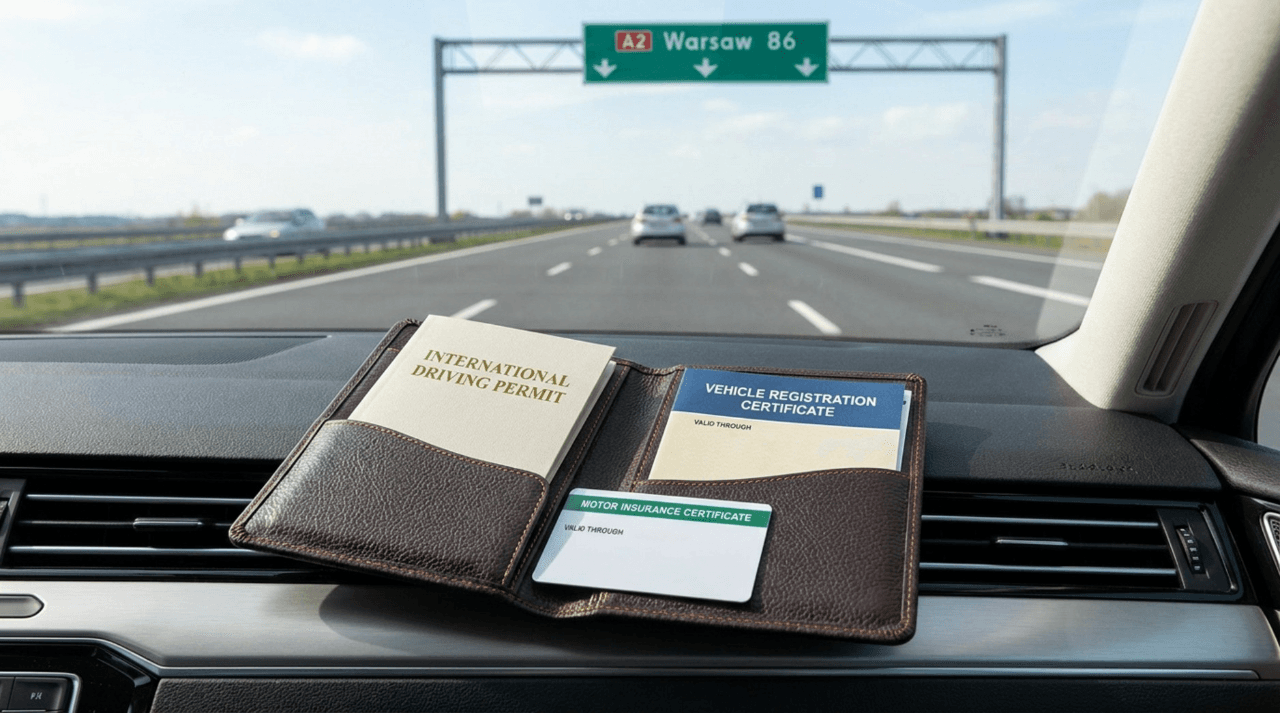
What should expats prioritize during their first 30 days with a car in Poland? You need to verify the validity of your driving licence and insurance, schedule mandatory technical inspections, and master local traffic regulations such as 24/7 headlight use and zero-tolerance alcohol limits.
Handling these administrative and technical requirements right away ensures stress-free travel and lets you explore your new home with confidence.
What Should Expats Expect During Their First 30 Days in Poland With a Car?
Arriving in Poland with your own vehicle offers exceptional freedom to travel, but it also creates an immediate checklist. During your first month, you can often drive using your foreign documentation while preparing to comply with domestic legal requirements. You'll likely need to visit municipal administrative offices (urzędy) and authorized vehicle inspection stations (Stacje Kontroli Pojazdów) while adapting to local traffic that flows smoothly but moves quickly.
Road conditions have improved substantially over the past two decades, offering high-standard motorways and modern bypasses. However, city driving requires quick acclimation. Frequent lane changes, active tram networks, and strict pedestrian priority rules require your focus from day one to ensure a smooth journey. If your own car is still in transit or awaiting registration, a medium-term rental can bridge the gap and keep you mobile from the moment you land.
A 30-Day Timeline for Settling In, Driving, and Completing Formalities
Structuring your month into clear weekly stages makes the transition straightforward. In week one, focus on your immediate driving environment. Confirm your car carries the legally mandated safety gear, verify that your current auto insurance remains valid across Polish territory, and learn the rules of local municipal parking zones to prevent unexpected fines.
During weeks two and three, address administrative tasks. If you're importing the car permanently, hire a certified sworn translator for your foreign vehicle papers, book a technical inspection, and calculate any customs duties or excise taxes that apply. In week four, submit your full registration packet to the local communication department (Wydział Komunikacji) and secure an ongoing local insurance policy.
What Changes for EU, EEA, UK, and Non-EU Citizens?
Your country of origin directly dictates the administrative requirements you'll encounter. Citizens of the European Union (EU) and European Economic Area (EEA) benefit from the most streamlined transition. Their national driving licences remain valid until the expiration date listed, and EU free movement regulations eliminate import duties on vehicles brought from another member state.
Drivers from non-EU nations, including the UK post-Brexit, face additional procedural steps. Licences issued outside the EU remain valid for up to six months (180 days) after establishing official residence in Poland. Once that period ends, you must exchange your document for a Polish driving licence, which may require passing a state theory exam depending on reciprocal bilateral agreements.
Furthermore, bringing a non-EU vehicle involves customs clearance, 23% VAT, and excise duty, unless you qualify for an official relocation exemption for personal property (mienie przesiedleńcze).
Which Documents Should You Carry Before Driving in Poland?
Poland has digitized many everyday administrative services. Polish citizens and drivers with domestic registrations aren't required to carry their physical registration certificate or driving licence, as police access this data directly through the central CEPiK database. However, as an expat driving with foreign documents or a foreign-plated car, this exemption doesn't apply to you. You must carry physical, original paperwork whenever you're behind the wheel.
Failing to present original documentation during a roadside check (kontrola drogowa) leads to fines and administrative delays. Officers from the Polish Police (Policja) and Municipal Guards (Straż Miejska) expect quick presentation of these records. Keeping them organized together in your glove compartment ensures stress-free travel during any check.
Driving Licence Requirements for Foreign Nationals
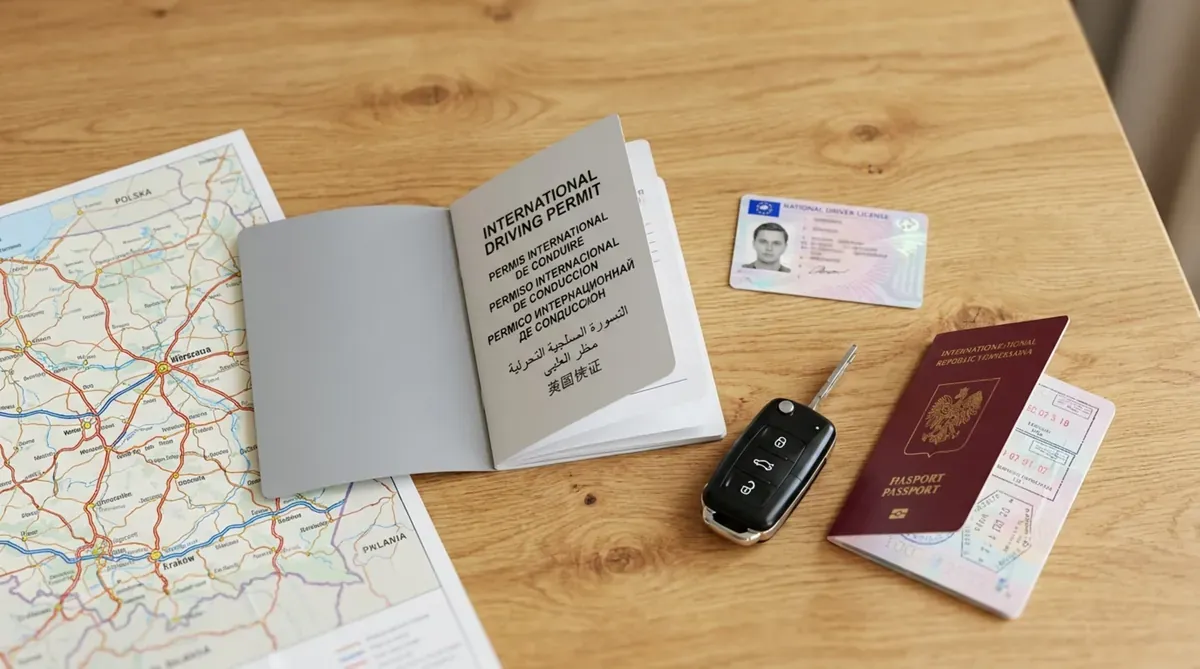
You must carry a valid physical driving licence covering your vehicle's category. Licences from EU/EEA member states are recognized automatically. If your licence was issued by a non-EU nation that ratified the Geneva or Vienna Conventions on Road Traffic, it's valid alongside your passport. Carrying an International Driving Permit (IDP) is also highly practical, as it prevents translation disputes during standard roadside checks.
If your home country hasn't ratified these international conventions, you must carry an IDP or an official sworn Polish translation of your domestic licence. Polish law enforcement won't accept digital scans, photocopies, or foreign mobile driver's licence apps.
Vehicle Registration Certificate, Ownership Documents, and Proof of Insurance
For vehicles registered outside Poland, keep the original foreign registration certificate in the car; it functions as the direct counterpart to the Polish dowód rejestracyjny. If the car is leased, rented, registered to a family member, or company-owned, you should also carry formal written authorization or the active lease agreement. This document should be issued in Polish or English, or accompanied by an official translation.
You must also maintain uninterrupted proof of third-party liability insurance. Vehicles registered in the EU are covered under the standard domestic policy documents. Drivers entering from countries outside the EEA must carry an original Green Card (Międzynarodowa Karta Ubezpieczenia Samochodowego) or purchase short-term border insurance (ubezpieczenie graniczne) directly at the frontier.
Can You Use Your Foreign Car in Poland After Moving?
Driving your own car into Poland helps you settle in quickly, but you must observe statutory residency regulations. Polish transport law distinguishes temporary visitors from foreign nationals who establish a center of vital interests or permanent residence (miejsce stałego pobytu). Once your residence is established, statutory deadlines for domestic registration take effect.
Operating a foreign-registered car past legal limits can trigger heavy penalties from tax authorities and the Border Guard, even if your road tax and insurance are fully paid back home. Understanding these regulatory thresholds protects you from unnecessary legal exposure. While your paperwork is being sorted, keeping a rental vehicle on hand avoids any gap in your day-to-day mobility.
Temporary Use of an EU-Registered Vehicle
Under EU directives, you're permitted to drive a vehicle registered in another EU member state for up to six months within any 12-month window without re-registering it or paying local vehicle taxes, provided Poland isn't your permanent tax residence. This rule provides practical flexibility for fixed-term professional assignments, seasonal projects, or study programs.
However, once you register a residential address (meldunek), obtain a PESEL identification number, and enter long-term employment, Polish authorities consider your economic and personal base established in Poland. At that point, you're generally required to register the vehicle locally within 30 days, ending its temporary foreign status.
Rules for Importing a Car From Outside the EU
Bringing a car from outside the EU-such as the UK, United States, or Canada-requires formal customs clearance. At the external EU border or your destination customs terminal, you'll generally be assessed customs duty (typically 10% for passenger cars), standard VAT at 23%, and Polish excise tax (akcyza), which varies based on engine displacement.
You can avoid these charges if you qualify for the transfer-of-residence relief (mienie przesiedleńcze). To qualify, you must show documented ownership and use of the vehicle in your previous country of residence for at least six months prior to moving. Additionally, you must commit not to sell, rent, or transfer the vehicle in Poland for at least 12 months following customs clearance.
How Do You Register a Car in Poland?
Completing vehicle registration in Poland (rejestracja pojazdu) involves sequential administrative steps to verify that your car satisfies technical, environmental, and tax criteria. Gathering your paperwork beforehand helps you complete the process efficiently during your municipal appointment.
While the process requires multiple forms, the procedural path is predictable. Scheduling an online appointment and organizing your paperwork in advance will help you finish your application in a single visit.
Which Urząd Should Handle Vehicle Registration?
Vehicle registration falls under the jurisdiction of the municipal administrative office corresponding to your registered address. In large cities, submit your documents to the Communication Department (Wydział Komunikacji) within City Hall (Urząd Miasta, or the appropriate Urząd Dzielnicy in Warsaw). In smaller municipalities and rural districts, you'll visit the County Office (Starostwo Powiatowe).
You'll need proof of registered address (meldunek) or an active residential lease, alongside your PESEL identity document. Most offices operate strictly via online booking systems; arriving without a reserved ticket can result in long wait times or turning back empty-handed.
Translation, Inspection, and Registration Fee Requirements
Before booking your visit to the Wydział Komunikacji, finish these essential preliminary requirements:
Sworn Translations (Tłumaczenie przysięgłe): Foreign registration certificates, sales contracts, or purchase invoices must be translated by a certified sworn translator registered with the Polish Ministry of Justice. Even when EU documents use harmonized administrative codes, local clerks frequently require official certified translations of accompanying purchase contracts.
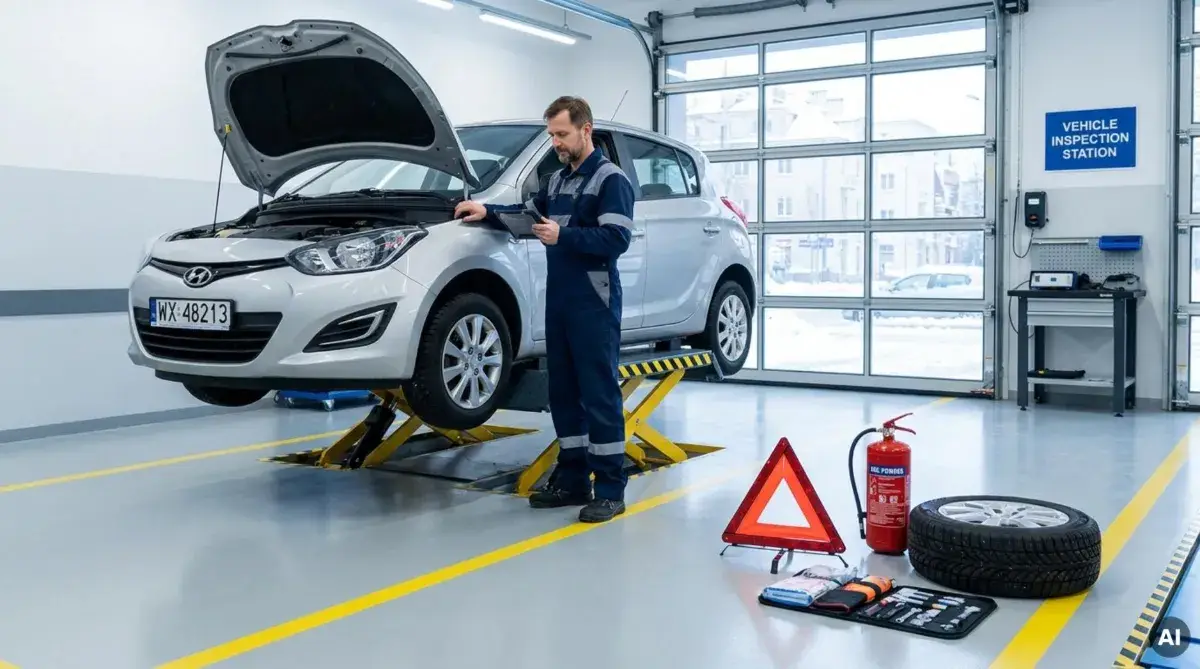
First Technical Inspection (Pierwsze badanie techniczne): Take your vehicle to an authorized Vehicle Inspection Station (Stacja Kontroli Pojazdów). A certified inspector will confirm roadworthiness, measure emissions, and check lighting systems.
Excise Tax Confirmation (Akcyza): For vehicles imported from other EU countries, submit the AKC-U/S declaration electronically via the Ministry of Finance's PUESC tax portal. You must pay this excise tax within 30 days of vehicle arrival and obtain the official digital certificate of payment.
The standard administrative fee for registering an imported passenger car is approximately 160 PLN. This fee covers standard Polish number plates, control stickers, and a temporary 30-day permit. Personalized plates are available for an extra charge of around 1,000 PLN.
What Car Insurance Do Expats Need in Poland?
Poland maintains strict vehicle insurance requirements enforced by direct monitoring systems. Driving without continuous insurance is illegal, and automated systems track cover across all registered vehicles. Every car must have uninterrupted policy cover, whether it's parked in a garage, kept on the street, or driven daily.
While Poland's competitive insurance market offers varied policies, understanding the difference between mandatory requirements and supplemental protections ensures full legal compliance and keeps your investment secure.
Mandatory Third-Party Liability Insurance (OC)
Every vehicle registered or permanently used on Polish roads must carry third-party liability insurance, known locally as Ubezpieczenie Odpowiedzialności Cywilnej (OC). This policy covers personal injury, medical costs, and property damage caused to third parties in an accident where you're at fault.
The Polish Insurance Guarantee Fund (Ubezpieczeniowy Fundusz Gwarancyjny - UFG) identifies policy lapses electronically without requiring roadside stops. Allowing an OC policy to lapse for just one to three days brings heavy monetary fines; lapses over 14 days carry penalties exceeding 8,000 to 9,000 PLN. Make securing an active OC policy your top priority.
Optional Comprehensive Cover (AC), Theft Cover, and Roadside Assistance
Because OC covers third-party losses rather than your own vehicle, many drivers supplement it with Autocasco (AC). This voluntary comprehensive policy protects against collision damage, vandalism, weather-related events (such as hail), and theft. For modern, financed, or premium vehicles, maintaining AC is strongly recommended and is typically mandatory under leasing agreements.
Insurers also provide useful add-ons that simplify everyday ownership:
Assistance: Provides 24/7 support for towing, puncture repairs, battery jump-starts, and replacement vehicles both domestically and across Europe.
NNW (Następstwa Nieszczęśliwych Wypadków): Personal accident insurance that pays fixed compensation to the driver and passengers in the event of injury.
Szyby & Opony: Dedicated glass and tyre coverage that lets you repair routine road damage without affecting your accumulated no-claims bonus.
Which Polish Road Rules Should New Drivers Learn First?
While Polish traffic regulations align with general EU standards, specific statutory nuances catch newcomers off guard. Traffic policing is thorough, and revised traffic codes have introduced strict fines for speeding, overtaking violations, and failing to respect pedestrian crossings.
Review standard priority rules and statutory speed limits before setting off. This ensures safe motoring and protects you from fines issued by stationary speed cameras and unmarked patrol vehicles equipped with video tracking systems.
Speed Limits in Built-up Areas, Outside Towns, and on Motorways
Unless directional road signs specify otherwise, statutory speed limits across Poland are:
Built-up areas (Obszar zabudowany): 50 km/h at all times, indicated by a white rectangular sign displaying a black city skyline silhouette.
Residential zones (Strefa zamieszkania): 20 km/h, with pedestrians holding legal priority across the entire road surface.
Rural single-carriageway roads: 90 km/h.
Rural dual-carriageway roads and single-lane expressways: 100 km/h.
Dual-carriageway expressways (marked with an "S" prefix): 120 km/h.
Motorways (marked with an "A" prefix): 140 km/h.
Penalties for excessive speeding are severe. Exceeding the speed limit by more than 50 km/h inside a built-up area results in the immediate three-month administrative suspension of your driving licence, alongside significant monetary fines.
Right-Of-Way Rules, Pedestrian Crossings, and Tram Priority
Uncontrolled intersections without priority signage follow the standard "priority to the right" rule (reguła prawej ręki). Roads with legal priority are marked by a yellow diamond with a white border; in their absence, you must yield to traffic approaching from your right. This rule applies equally inside car parks and residential areas.
Pedestrian safety is heavily enforced. Drivers must yield not only to pedestrians already on zebra crossings, but also to anyone clearly approaching the curb with intent to cross. Overtaking or passing another vehicle immediately ahead of or on a pedestrian crossing is treated as a major violation resulting in substantial fines and penalty points.
In major metropolitan centers like Warsaw, Kraków, Wrocław, and Poznań, pay close attention to trams. Trams hold right-of-way over standard motor vehicles in almost all situations-including when navigating multi-lane roundabouts-unless traffic lights specifically indicate otherwise.
[Explore long-term rental options]
How Can You Make Driving in Poland Easier During the First Month?
Adapting to a new road environment takes a little time, but modern mobile navigation tools and an understanding of Polish address conventions keep daily travel smooth. Configuring your smartphone for live route updates and automated parking payments helps you travel with confidence from day one.
Digital apps prevent parking fines and streamline errands across busy city centers. Learn how local parking zones work and get familiar with street abbreviations before driving into congested areas.
Choosing Navigation Apps, Traffic Alerts, and Polish Address Formats
Google Maps and Apple Maps provide reliable everyday navigation across Poland. For real-time hazard warnings, many local drivers rely on Yanosik. This community-driven platform delivers live alerts on speed enforcement, road hazards, traffic collisions, and sudden lane closures.
Understanding address formatting helps you enter destinations accurately. Polish street addresses place the category of road before the proper name:
ul. (ulica - standard street)
al. (aleja - avenue)
pl. (plac - public square)
os. (osiedle - residential neighborhood or housing estate)
Note that personal names change their grammatical endings when used in street titles. For instance, a street dedicated to Jan Paweł II appears on signs as ulica Jana Pawła II. If your navigation system struggles to find a match, input the base nominative name or use the official six-digit postal code (e.g., 00-001) for precise targeting.
Finding Parking in Warsaw, Kraków, WrocłAw, and Other Major Cities
Urban centers in Poland operate Paid Unattended Parking Zones, known as Strefa Płatnego Parkowania Niestrzeżonego (SPPN). Municipal enforcement vehicles equipped with roof-mounted digital cameras constantly scan license plates, issuing automated penalty notices to unregistered cars.
Skip coin-operated street meters by installing parking apps such as moBILET, SkyCash, or mPay. These applications let you start, extend, and stop parking sessions directly from your mobile device so you only pay for actual time used. Certain municipalities may ask you to display a small logo sticker or handwritten note (e.g., "mPay") inside the windshield to confirm you use mobile billing. This applies whether you're settling into Warsaw, Kraków, or Wrocław.
What Should You Check on a Car After Moving to Poland?
Before heading out on regional road trips, make sure your car complies fully with Polish technical standards. Central Europe's climate brings broad temperature swings, and mandatory vehicle standards may differ from those in your home country. This is especially true for vehicles brought over from North America or the UK.
Conduct these mechanical and regulatory checks during your first two weeks. They'll ensure you pass the initial roadworthiness test and keep you safe throughout changing seasonal conditions.
Booking the Required Roadworthiness Inspection
The annual mandatory safety test is the Badanie Techniczne, performed at any certified vehicle inspection facility (Stacja Kontroli Pojazdów, or SKP). Vehicles over five years old must pass this inspection every twelve months. Licensed technicians test braking performance, shock absorbers, suspension play, chassis integrity, and exhaust emissions.
Inspectors also inspect your lighting hardware. If your car originated in the UK, headlights must be adjusted or replaced to dip to the right for right-hand traffic. Vehicles imported from North America must be modified to include amber rear turn signals (replacing red signals) and a functioning red rear fog light.
Checking Tyres, Brakes, Fluids, Lights, and the Battery
Poland experiences harsh winter conditions. While winter tyres aren't legally mandated, driving on summer compounds during sub-zero temperatures is unsafe. From November through April, when snow, slush, and black ice are common, install approved winter or four-season tyres carrying the 3PMSF (Three-Peak Mountain Snowflake) symbol to ensure reliable grip.
Ensure your engine coolant provides adequate frost protection. Switch your windshield washer reservoir to winter fluid (płyn zimowy) rated to at least -20°C, and test your battery before cold weather sets in. By law, your car must always carry an approved fire extinguisher (gaśnica ABC) and a reflective warning triangle (trójkąt ostrzegawczy). Carrying high-visibility vests (kamizelka odblaskowa) and a complete first-aid kit (apteczka) is also sound practice for safe motoring.
What Should You Do After a Breakdown or Traffic Accident?
Experiencing an accident or mechanical failure in a new country can feel stressful, but following clear local procedures protects your safety and ensures legal compliance. Knowing who to call and how to document the scene makes managing incidents much easier.
Polish law differentiates between minor property damage collisions (kolizja) and serious traffic accidents involving personal injuries (wypadek). Your obligations depend on which type of incident occurs.
Polish Emergency Numbers: 112, 997, and Roadside Assistance
In any emergency, call 112, the integrated European emergency line. Dispatchers can coordinate the police, medical teams, and the fire brigade. English-speaking operators are available, but remember to state your location and the situation clearly and calmly.
Poland's direct national emergency numbers include:
997: Police (Policja)
998: State Fire Service (Straż Pożarna)
999: Emergency Medical Service (Pogotowie Ratunkowe)
9637: Highway Roadside Assistance on national motorways (GDDKiA)
When To Call the Police and When To Complete a Joint Accident Statement
Call 112 immediately if anyone is injured, if you suspect another driver is impaired by alcohol or drugs, or if a party attempts to flee the scene. Don't move the vehicles until emergency responders instruct you to do so. Switch on your hazard lights, deploy your warning triangle at the mandatory distance behind the car, and put on a reflective vest.
If the incident is a minor collision with property damage only and both parties agree on fault, you don't need to call the police. In fact, doing so is often counterproductive, as attending officers are legally required to issue a hefty fine and penalty points to the at-fault driver. Instead, drivers complete a Joint Accident Statement (Wspólne Oświadczenie o Zdarzeniu Drogowym). Take clear photos of vehicle positions, damage, and registration plates. Record the other party's personal details, driving licence number, and full OC insurance policy number so you can file your claim smoothly.
How Much Does It Cost to Own and Drive a Car in Poland?
Operating a car in Poland is relatively affordable compared to Western European baselines, but ongoing costs for fuel, municipal parking, and routine servicing still require planning. Preparing a realistic monthly budget helps you manage these expenses without surprises.
Registration fees, annual inspections, insurance cover, and fuel all contribute to your total cost of ownership. The breakdown below outlines typical car expenses in Poland:
Registration, Inspection, Insurance, Fuel, and Parking Costs
Expense Category | Estimated Cost (PLN) | Frequency |
Standard Vehicle Registration | ~160 PLN | One-time administrative fee |
First Technical Inspection (SKP) | ~99 - 160 PLN | Annual requirement |
Mandatory Third-Party Insurance (OC) | 500 - 1,800 PLN | Annual premium; depends on driving history |
Comprehensive Insurance (AC + Assistance) | 1,500 - 4,500+ PLN | Annual premium; depends on car value |
Fuel (Petrol 95 / Diesel) | 6.20 - 7.10 PLN / litre | Ongoing operating cost |
Resident City Parking Permit | 30 - 100 PLN | Annual local fee; depends on the city |
Seasonal Tyre Swap & Balancing | 120 - 250 PLN | Twice a year; spring and autumn |
Toll highways-including segments of the A1, A2, and A4-add to the cost of intercity trips. Automated toll applications like Autopay and the state-run e-TOLL system read your number plates automatically, letting you pay without stopping at toll booths.
What Should Your First 30-Day Car Checklist Include?
Incorporating automotive tasks into your broader relocation checklist keeps paperwork on track. Dividing actions across your first four weeks ensures you meet statutory deadlines while getting settled.
Handle essential road safety and navigation requirements as soon as you arrive. Save formal administrative filings and municipal appointments for the second half of your month.
Days 1-7: Secure Housing, Insurance, Documents, and Local Navigation
During week one, prioritize driving legality and fine prevention:
Check Onboard Safety Equipment: Ensure an approved fire extinguisher and warning triangle are securely stowed and readily accessible.
Review Insurance Validity: Confirm your foreign policy or Green Card covers driving in Poland without restricted mileage limits or calendar constraints.
Install Mobile Apps: Download Yanosik for road alerts, along with an established parking platform such as SkyCash, moBILET, or mPay with an active payment method.
Inspect Vehicle Lighting: Remember that dipped headlights or daytime running lights (DRLs) are legally mandatory 24 hours a day, all year round.
If you haven't yet imported or registered your own vehicle, a short-term rental is a practical way to stay mobile while you complete the rest of this checklist.
Days 22-30: Confirm Insurance, Collect Documents, and Plan Regular Maintenance
In the final week, finalize paperwork and set up ongoing vehicle care:
Finalize Polish Registration: Return to the Wydział Komunikacji to exchange your temporary 30-day permit (pozwolenie czasowe) for your permanent registration card (dowód rejestracyjny).
Activate Local Insurance: Re-assign your Polish OC policy to your newly issued permanent registration plates and verify your insurer has updated the central UFG database.
Establish a Trusted Workshop Relationship: Find a reputable local service center for regular check-ups, and book seasonal tyre changes well before peak autumn or spring rush periods.
Apply for Resident Parking: Submit your proof of registered residence (meldunek) and registration card to city hall to secure discounted municipal parking privileges.
Once you've navigated your first 30 days, driving in Poland becomes second nature. Keeping your documents current, preparing for seasonal changes, and respecting local traffic patterns will help you enjoy comfortable travel and reliable mobility across the country.