03.09.2026
Polish Corporate Culture and Driving: What Business Travelers Should Know
How do business travelers balance professional etiquette and road rules in Poland? Success comes from pairing structured corporate communication-grounded in hierarchy, punctuality, and genuine trust-with strict compliance on Polish roads, where round-the-clock headlight rules and zero-tolerance alcohol limits are strictly enforced.
Understanding both environments ensures you negotiate effectively and travel with confidence across the country.
How Polish Business Culture Shapes Professional Relationships
Building Trust Before Discussing Business
Polish professionals place great value on honesty and long-term cooperation. While contracts and balance sheets finalize a deal, personal rapport usually comes first. High-pressure sales tactics won't work well here; pushing for a quick signature before establishing a genuine relationship often raises doubts.
Trust develops through direct, face-to-face meetings, shared meals, and open dialogue. Once you establish mutual respect, Polish partners are loyal, collaborative, and committed to shared goals.
Hierarchy, Authority, and Decision-Making
Many Polish organizations maintain a defined hierarchy. Although team members brainstorm freely, key decisions rest with senior managers or executive boards. Middle managers often evaluate proposals and prepare recommendations rather than finalizing commitments on the spot.
Before presenting your project, identify who holds final signing authority. Bypassing executives or pressing staff to decide outside their remit damages professional standing. Respect company rank and allow your counterparts enough time to consult their senior decision-makers.
Punctuality, Scheduling, and Business Hours
Punctuality isn't optional-it's a fundamental sign of respect. Arriving late suggests poor organization and disrespect for your host's calendar. If unexpected road delays occur, notify your contacts immediately to keep communication open. Standard office hours run Monday to Friday from 8:00 or 9:00 AM to 4:00 or 5:00 PM.
Book meetings several weeks in advance and reconfirm two or three business days prior. Avoid scheduling late Friday meetings, as professionals protect their weekends for personal time.
Work Ethic, Expertise, and Professional Respect
Poland features an educated, technically skilled workforce. Local professionals respect deep industry knowledge, practical solutions, and sound logic. Generic presentations without clear data usually meet polite skepticism and rigorous questions.
Earn trust by arriving prepared with exact figures, transparent timelines, and relevant compliance insights. Polish teams value honest evaluations of potential hurdles, and demonstrating familiarity with their market establishes credibility immediately.
Generational, Regional, and Company-Size Differences
Corporate customs vary by region and industry. Warsaw moves at a fast, international pace dominated by multinationals and finance hubs. Kraków and Wrocław thrive on tech ecosystems, research centers, and startups. Industrial hubs like Silesia, Poznań, and Łódź retain a pragmatic, manufacturing-driven focus. Generational differences matter, too. Younger professionals and startup teams often prefer flat structures and direct messaging, while directors at legacy firms, state enterprises, or family-owned factories expect formal titles, protocol, and traditional communication.
Communication and Meeting Etiquette in Poland
Formal Greetings, Titles, and Introductions
Initial meetings require formal decorum. Offer a firm handshake, maintain direct eye contact, and use polite greetings with both male and female colleagues. Address partners as Pan (Mr.) or Pani (Ms./Mrs.) followed by their surname or professional title, such as Panie Dyrektorze (Director) or Pani Prezes (President). Switching to first names is a distinct milestone; wait for your host or senior partner to suggest it.
Business cards remain customary at first introductions. Present yours neatly and handle incoming cards with care-keep them on the table during discussions rather than slipping them straight into your pocket.
Direct Communication, Diplomacy, and Protecting Dignity
Polish communication balances candid clarity with professional tact. Counterparts often express concerns or disagreements directly rather than wrapping them in vague language. This straightforward feedback reflects serious engagement, not hostility. However, directness should never compromise someone's dignity. Publicly criticizing or embarrassing a partner damages working relationships quickly. Address sensitive matters privately, focusing objectively on business solutions rather than personal critique.
Small Talk, History, Religion, and Sensitive Subjects
Brief small talk usually opens a meeting, helping participants settle before reviewing agendas and financials. Reliable topics include your impressions of the host city, regional architecture, local cuisine, and sports like football or volleyball. Steer clear of contentious topics.
Polish history is complex and deeply felt; unsolicited commentary on World War II, the communist era, or border shifts can cause offense. Domestic politics and religious matters are private topics best avoided unless introduced directly by your host.
Meeting Agendas, Negotiation Styles, and Follow-up
Meetings typically follow a structured agenda distributed in advance. While discussions may evolve around valuable insights, conversations stay grounded in defined goals. Polish negotiators are analytical and detail-oriented, examining terms closely for legal and commercial clarity.
Send a concise follow-up within 24 hours outlining agreed tasks, milestones, and responsible parties. While verbal agreements reflect goodwill, formalized contracts reviewed by legal counsel are essential for mutual protection.
Dress, Gifts, Meals, and Social Customs for Business Travelers
Business Dress Codes in Polish Companies
Professional attire leans conservative and polished. In banking, corporate offices, and consulting firms, men typically wear dark suits, tailored jackets, and classic ties, while women wear tailored business suits, professional dresses, or trousers with blouses. Tech companies, creative studios, and manufacturing facilities often welcome smart-casual clothing.
When in doubt, err on the side of formal attire. Clean footwear, neat grooming, and understated accessories reinforce a dependable, professional impression.
When and How To Exchange Business Gifts
Gift-giving isn't customary during initial meetings; offering one prematurely can feel awkward or appear transactional. Small tokens are more fitting after closing an agreement, during holidays, or when visiting a regional production facility. Consider high-quality items from your home country, such as regional gourmet treats or premium stationery.
Avoid lavish presents that might raise compliance questions. When gifting flowers for a social invitation, choose an odd number of blooms and avoid yellow chrysanthemums, which are associated with funerals.
Dining Etiquette, Toasts, and Paying the Bill
A shared meal offers an ideal setting to build professional trust. Table etiquette aligns with continental European customs: hold your knife in the right hand and fork in the left throughout the meal. Wait for your host to say Smacznego ("enjoy your meal") before beginning, and keep your hands visible above the table rather than in your lap.
The party extending the invitation pays the bill; debating the check publicly is improper. For toasts, maintain eye contact, raise your glass, and join in with Na zdrowie ("to health"). While business lunches are standard, evening dinners offer the space needed to cultivate deeper relationships.
Holidays, Name Days, and Scheduling Around Traditions
Always check the Polish calendar before scheduling trips. Business slows significantly during Easter, Christmas, All Saints' Day (November 1), and Majówka-the extended national holiday bridging Labor Day (May 1) and Constitution Day (May 3).
Many Poles also celebrate Imieniny (Name Days), which correspond to saint feast days and often hold more personal significance than birthdays. You don't need to track every date, but wishing a partner well when they mention their Name Day shows thoughtful cultural awareness.
Driving in Poland for Business Meetings
Driving on the Right and Choosing Between a Car, Taxi, and Train
Vehicles drive on the right side of the road across Poland. For travel strictly between city centers like Warsaw, Kraków, and Gdańsk, express trains provide a punctual transit option where you can catch up on work.
However, when visiting logistics parks, production plants, and special economic zones beyond metropolitan cores, a car rental provides the freedom to travel on your own schedule. For short city trips, licensed taxis and rideshare options help you bypass downtown parking challenges.
Urban Traffic in Warsaw, Kraków, Wrocław, and Other Business Centers
Peak traffic runs from 7:30 to 9:30 AM and 4:00 to 6:30 PM across major business hubs. Routes across Warsaw's Vistula bridges, Kraków's ring roads, and Wrocław's central arteries can back up quickly, turning a ten-minute drive into a 40-minute journey.
Look out for dedicated bus lanes marked BUS; driving in them outside designated off-peak hours leads to automatic fines via cameras or police patrols. Watch for trams, too-they often hold right-of-way at junctions, requiring extra vigilance from visiting drivers.
Motorways, Expressways, Tolls, and Parking
Poland's expressway infrastructure has modernized rapidly. Dual-carriageway expressways use "S" prefixes (Drogi Ekspresowe), while motorways carry "A" designations (Autostrady), offering well-maintained surfaces and modern service areas with fuel and Wi-Fi. Toll collection varies: some highway sections use physical toll booths accepting cards and cash, while state-managed sections rely on electronic systems like e-TOLL or digital tickets.
In central districts, paid parking zones (Strefa Płatnego Parkowania) operate during business hours. Purchase a ticket at the meter or pay through mobile apps like moBiLET or SkyCash, displaying physical tickets on your dashboard when required.
Road Signs, Lane Discipline, and Pedestrian Crossings
Polish road signage uses standardized European symbols-blue backgrounds indicate motorways, while green boards signpost national roads. Maintain strict lane discipline by driving on the right and using the left lane purely for overtaking; lingering in the passing lane disrupts traffic flow and risks police fines. Pedestrian safety rules are strictly enforced.
Drivers must yield to pedestrians waiting to enter or crossing a designated zebra crossing. Overtaking another vehicle that has stopped for a pedestrian carries heavy fines and severe penalty points.
Navigation Apps, Traffic Updates, and Offline Maps
Digital navigation tools help you manage road construction and route detours smoothly. Apps like Google Maps and Waze provide reliable real-time routing, speed warnings, and toll data. Many Polish drivers also rely on Yanosik for crowdsourced hazard warnings and speed camera alerts.
If your schedule takes you into rural areas or newly developed industrial parks, download offline maps in advance to avoid interruptions in areas with lower mobile signal.
Polish Driving Rules and Legal Requirements
Common Speed Limits: 50 KM/H in Built-up Areas and up to 140 KM/H on Motorways
Speed compliance is tracked via fixed cameras, unmarked patrol vehicles, and sectional average-speed checks (Odcinkowy Pomiar Prędkości). Standard speed limits include:
50 km/h in built-up areas (24 hours a day).
90 km/h on single-carriageway roads outside built-up zones.
100 km/h on dual-carriageways outside built-up zones and single-carriageway expressways.
120 km/h on dual-carriageway expressways marked with an “S”.
140 km/h on motorways marked with an “A”.
Exceeding the speed limit by more than 50 km/h in a built-up area results in an immediate three-month license suspension alongside steep fines. Follow the signs closely, especially when passing through smaller towns on national routes.
Headlights, Seat Belts, Child Seats, and Mobile-Phone Rules
Polish traffic law mandates dipped headlights or daytime running lights 24 hours a day, all year round, regardless of weather conditions. Make switching lights on a habit whenever you start your engine. Everyone in the vehicle must wear a seat belt, front and rear. Children below 150 cm must travel in certified safety seats suited to their height and weight.
Operating a handheld mobile phone while driving is illegal, even when stationary at traffic signals; always rely on a hands-free setup.
Alcohol Limits and Why Zero Alcohol Is the Safest Policy
Poland enforces strict drink-driving limits. The legal threshold is 0.2 per mille (0.2‰ or 0.02% BAC). Readings between 0.2‰ and 0.5‰ represent an offense punishable by heavy financial penalties, vehicle impoundment, and driving bans. Exceeding 0.5‰ constitutes a criminal offense that carries potential imprisonment.
Even a single beer at lunch can push you past the legal limit. International visitors should practice a strict zero-alcohol rule behind the wheel: if you plan to drink during evening business entertainment, leave the car parked and use a taxi or rideshare service instead.
Driving Documents, Rental-Car Contracts, and Insurance
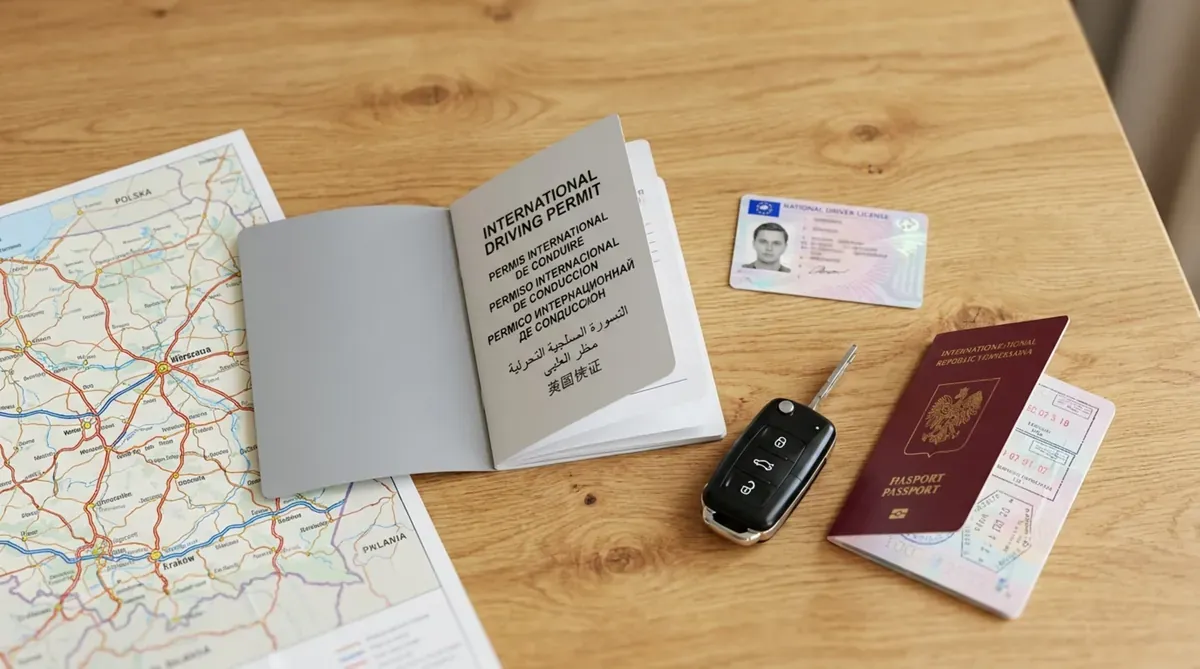
Always carry your national driver's license (along with an International Driving Permit if your license was issued outside the EU/EEA), passport or national ID, vehicle registration documents, and valid proof of third-party liability insurance (OC). When driving a rental vehicle, keep the contract documenting you as an authorized driver in the glove compartment.
Passenger vehicles must carry an operational fire extinguisher and a reflective warning triangle. You must also have a high-visibility reflective vest accessible inside the cabin-not locked in the trunk-so you can put it on before stepping out on an expressway shoulder.
Winter Conditions, Visibility, and Seasonal Road Risks
Polish winters frequently bring freezing slush, black ice, and heavy snow, particularly in southern and eastern regions. While national law doesn't legally mandate winter tires, reputable car rental providers equip their modern fleet with winter or all-season tires between November and April. Check your vehicle's tires before driving away from the rental desk.
Because winter daylight fades by 3:30 PM, keep your windshield washer reservoir filled with winter-grade fluid and reduce speeds significantly when temperatures hover near freezing.
How to Drive Safely Between Polish Business Meetings
Planning Realistic Travel Time for Traffic and Roadworks
Poland's highway expansion means regular construction, bypass updates, and resurfacing projects. What looks like an easy trip on a map can stall near metropolitan ring roads or industrial hubs. Add 30 to 45 minutes of buffer time to every journey between cities. This cushion lowers stress and helps you reach meetings prepared and collected.
Avoiding Common Risks on Rural Roads and in City Centers
Secondary and rural highways present distinct driving conditions. Forest roads often encounter crossings by wild boar and deer at dawn and dusk-heed signs that say Uwaga: dzikie zwierzęta ("Warning: wild animals"). In urban centers, watch for bicycle lanes, electric scooter riders, and slick tram rails in wet conditions. Tight underground garages in modern commercial buildings can challenge larger vehicles, making vehicle parking sensors especially helpful.
Managing Fatigue After Flights, Meetings, and Long Motorway Journeys
Long flights, dense negotiation schedules, and monotonous stretches on motorways like the A1 or A2 can trigger fatigue and highway hypnosis. Take advantage of modern highway rest stops, known as MOP (Miejsce Obsługi Podróżnych), which offer clean amenities, fuel, coffee, and dining options. Plan a brief stop every two hours to stretch, rehydrate, and regain sharp focus.
What To Do After a Collision or Vehicle Breakdown
If your vehicle breaks down on an expressway, activate hazard lights and maneuver onto the emergency shoulder if possible. Put on your reflective vest before exiting the car, position the warning triangle at least 100 meters behind the vehicle, and wait safely behind the metal barrier. In minor collisions without injuries, drivers can complete a standard joint collision declaration (Oświadczenie sprawcy kolizji). However, most rental terms require an official police report, so contact your rental provider's 24/7 support line immediately for guidance.
Emergency Number 112 and Roadside Assistance
The universal emergency number in Poland is 112, connecting callers to emergency dispatchers with Polish and English language support. Use it for accidents involving injuries or major road hazards. For mechanical issues or vehicle inquiries, turn to the 24/7 assistance number provided with your rental agreement, or national roadside support via the Polish Automobile Club (PZM). Major toll motorways also feature orange emergency call boxes along the shoulder.
Combining Polish Business Etiquette With Professional Driving Etiquette
Arriving Punctually Without Driving Aggressively
Reaching an appointment on time should never compromise road safety. Tailgating, aggressive lane shifts, or running amber lights risk dangerous accidents and traffic citations. Moreover, walking into a client's lobby agitated or flustered damages your executive presence. Plan to arrive at your client's facility 15 minutes ahead of schedule.
Spend those minutes reviewing talking points, adjusting your jacket, and composing your thoughts so you walk into the meeting calm and focused.
Using the Journey To Strengthen Business Relationships
Offering colleagues or prospective partners a ride between business sites creates a relaxed space for authentic dialogue outside the boardroom. Maintain a clean, comfortable, and clutter-free interior. Check that passengers are comfortable with the cabin temperature, keep audio subtle, and drive smoothly. A smooth journey helps you build professional rapport and establish long-term trust.
Choosing a Driver When Alcohol May Be Served at Dinner
Evening hospitality often features wine, craft beers, or traditional spirits. If there's any chance you'll join a toast, plan your return transit beforehand. Book a rideshare, arrange a taxi through your hotel, or designate a driver. Polish counterparts respect colleagues who refrain from driving after drinks; they appreciate adherence to safety and strict local regulations.
Respecting Clients, Pedestrians, Cyclists, and Local Residents
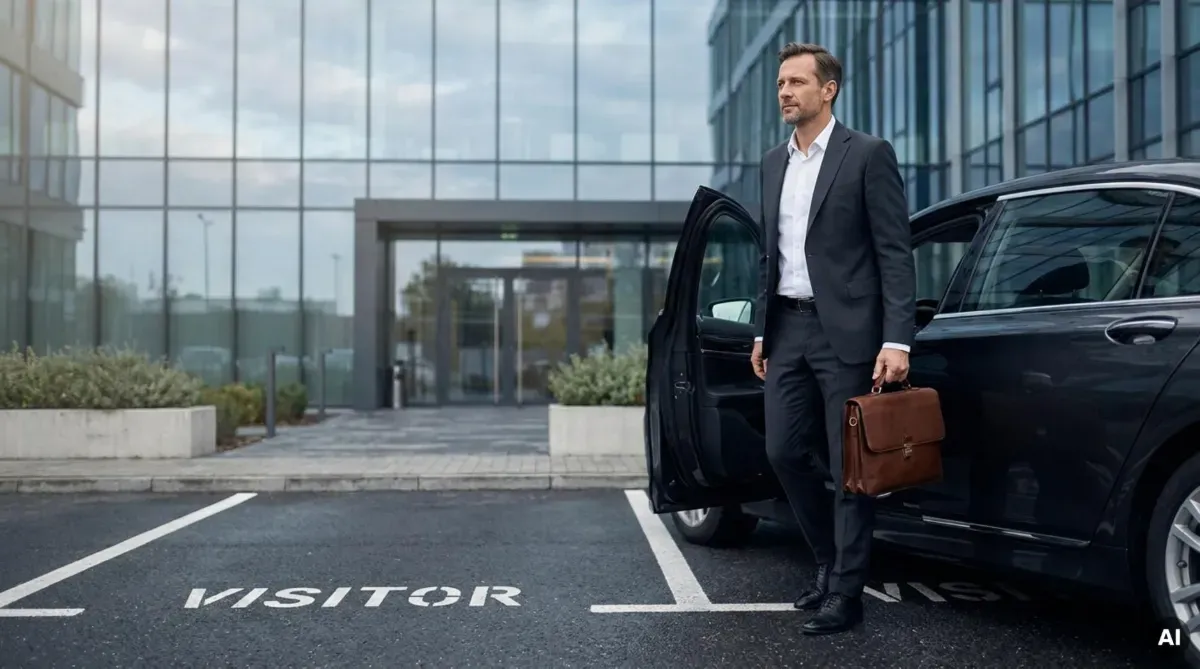
Your driving behavior reflects directly on your organization. Park exclusively in marked visitor spaces at corporate parks, avoiding pedestrian paths or delivery zones. Don't idle your engine in residential courtyards or commercial plazas where local environmental codes prohibit unnecessary emissions. Give cyclists room, let public transit buses rejoin traffic safely, and always yield to pedestrians at zebra crossings. Courteous road behavior demonstrates respect for the communities you do business in.
Handling Delays, Missed Exits, and Schedule Changes Professionally
Road closures, sudden weather changes, or missed highway junctions can challenge even the most careful schedules. If a delay is inevitable, handle it directly and transparently. Pull over safely or use a hands-free setup to contact your host.
State your location, offer a concise explanation, apologize for the inconvenience, and provide an updated estimated arrival time. Proactive updates protect your professional reputation and show consideration for your counterparts' time.
Common Mistakes International Business Travelers Should Avoid
Relying on Stereotypes About Polish Culture
Outdated perceptions of Poland can quickly undermine a commercial venture. Modern Poland is a dynamic European economy defined by advanced digital infrastructure, thriving commercial hubs, and forward-thinking enterprises. Don't conflate Polish culture with broader regional stereotypes; Poles take pride in their Central European heritage, Latin cultural roots, and global business connections. Demonstrating awareness of modern Poland's market realities makes an immediate, positive impression.
Using First Names or Informal Language Too Quickly
Professionals from informal business cultures often default to first names prematurely. Using an informal tone in early emails or conversations can feel overly familiar or careless to Polish executives. Address contacts using Pan or Pani with their surname or title until they explicitly propose moving to first names (e.g., "Please, call me Tomasz"). Allow your counterpart to set the pace of formality.
Discussing Politics, History, or Religion Without Cultural Sensitivity
Strong opinions on sensitive topics like domestic politics, wartime history, or church-state relations can derail conversations. Perspectives vary widely across demographics and regions. If these subjects arise during dinner, listen respectfully rather than voicing strong personal opinions. Acknowledge historical complexities with care and focus conversations on constructive shared topics.
Assuming Every City, Company, or Generation Follows the Same Customs
Business styles aren't uniform across the country. A fintech startup in central Warsaw functions with agility and informal communication, whereas a family-owned manufacturing plant in Podkarpacie or a logistics operator in Gdynia may prefer traditional protocol. Adapt your communication style, meeting pace, and presentation formats to your audience. Whether delivering digital pitch decks or printed, technical documentation, flexibility ensures smooth collaboration.
A Practical Pre-Trip Checklist for Business Travel in Poland
Documents, Currency, Phone Access, and Navigation
Verify your passport is valid for at least six months beyond your trip. Pack your national driver's license alongside an International Driving Permit if traveling from outside the EU/EEA. Keep digital and physical copies of rental reservations, travel insurance policies, and local corporate contacts handy.
Poland's currency is the Polish Złoty (PLN), though modern card payments, Apple Pay, Google Pay, and the domestic BLIK mobile system are ubiquitous across hotels, restaurants, and parking terminals. Carrying 100 to 200 PLN in cash remains helpful for small purchases or regional parking machines.
Meeting Confirmations, Addresses, and Local Contact Details
Reconfirm meeting times, dates, and addresses in writing before departure. Polish addresses often feature diacritical letters (ą, ć, ę, ł, ń, ó, ś, ź, ż); enter these accurately into your GPS to avoid routing mistakes.
Record direct phone numbers for meeting hosts and reception desks, rather than relying solely on central switchboards. If you're visiting large industrial parks or office campuses, check visitor access rules and parking procedures ahead of time.
Rental-Car Inspection, Fuel Policy, and Parking Arrangements
When collecting a reliable vehicle at transport hubs like Warsaw Chopin Airport or Kraków Balice Airport, inspect the car inside and out. Note any existing wheel scuffs or paint chips with the rental agent to ensure transparent rental terms from the start. Verify your fuel requirements: unleaded petrol is marked PB 95 or PB 98, while diesel is labeled ON (Olej Napędowy).
Misfueling damages engines and incurs avoidable repair charges. Additionally, confirm hotel parking options in advance, as heritage city-center hotels often offer limited garage spaces requiring reservations. If your trip spans several business centers, a medium-term rental can be more economical than repeated short bookings.
Weather, Road Conditions, Public Holidays, and Backup Plans
Review regional weather forecasts, especially between October and April when fog, ice, and sudden snow flurries can impact travel times. Keep warm apparel, an ice scraper, and non-freezing washer fluid in the vehicle.
Cross-check your itinerary against national public holidays to avoid arriving when corporate offices are closed. Have a backup plan in place-such as alternative road routes or intercity rail schedules-in case severe weather or highway construction interrupts your route.
Cultural Preparation for a Confident First Meeting
Take time to review the correct pronunciation of your partners' names and familiarize yourself with their professional titles. Starting an introduction with proper titles like Pani Prezes or Panie Dyrektorze establishes a polite, capable tone immediately. Bring well-prepared agendas, executive briefs, and quality business cards.
Approaching your meetings with cultural diligence and reliable logistical planning paves the way for comfortable travel and strong, collaborative partnerships.
For organizations establishing a presence in Central Europe, Poland offers strategic logistics, strong commercial infrastructure, and direct access across the European Union. By pairing respectful business etiquette with safe, lawful road travel, international travelers can navigate every meeting smoothly and build lasting partnerships across the country.