22.09.2026
Renting a Car at Polish Airports - What to Expect
What should you expect when renting a car at a Polish airport? Collecting a vehicle at Poland's international terminals is straightforward and efficient, offering modern fleets, flexible pickup options, and direct access to the national motorway network.
With clear terminal signage, accessible collection points, and competitive rates, you can pick up your keys and start your journey with minimal delay.
Poland remains one of the most accessible self-drive destinations in Europe. Because airport providers cater extensively to both business travelers and holidaymakers, fleets primarily feature modern and well-maintained vehicles that are under two years old.
Collection procedures vary slightly depending on how the provider operates: some maintain counters inside the terminal, while others offer dedicated shuttle transfers or personal vehicle delivery. Understanding these logistics beforehand ensures transparent rental terms and a stress-free travel experience right after landing.
Airport Rental Desks, Shuttle Offices, and Meet-And-Greet Pickups
Most Polish airport car rentals operate under one of three pickup models. The most traditional format is the in-terminal rental desk. At major hubs such as Warsaw Chopin, Kraków, and Gdańsk, rental desks sit directly in or beside the arrivals hall. Once you finalize your rental agreement at the counter, you'll take a short walk to an adjacent parking facility-often marked garages P1 or P2-to collect your keys and inspect the vehicle.
Other providers operate from off-site depots supported by dedicated shuttle transfers. In this setup, a company shuttle collects passengers from a designated curb outside arrivals and drives three to seven minutes to a nearby rental facility. These locations often have shorter terminal queues and lower operating overhead, which can translate into more competitive pricing.
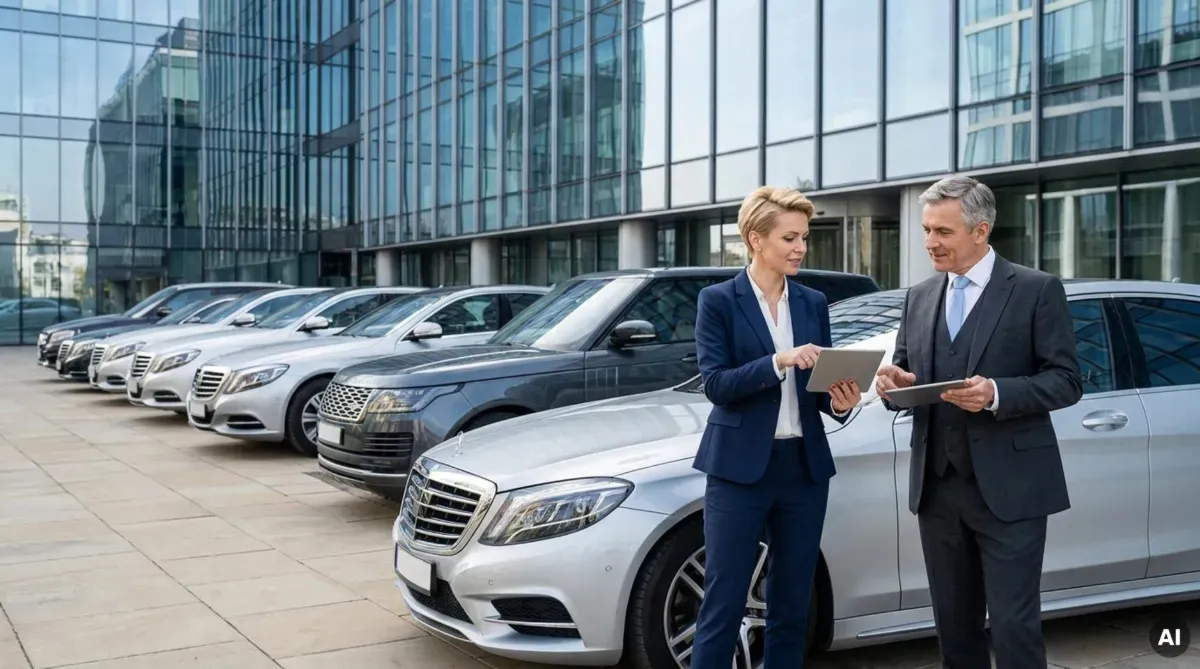
The third model is a meet-and-greet or car delivery service. A company representative tracks your incoming flight, waits in the arrivals hall with a name board, and escorts you directly to the car in the short-term parking zone. You'll complete the vehicle inspection on a mobile tablet right beside the car, skip the counter lines entirely, and get on the road immediately.
Why Airport Rentals Improve Access To Polish Cities and Road-Trip Destinations
Picking up a car directly at the airport gives you total freedom to travel across Poland without transit delays. As Europe's ninth-largest country, Poland stretches over 500 kilometers from the Baltic coastline to the southern Tatra Mountains. Most international terminals sit directly adjacent to modern bypasses and expressways, letting you bypass congested city centers and merge quickly onto major arteries like the A1, A2, and A4 motorways.
A reliable vehicle also unlocks regional destinations where public transit is limited or infrequent. Sights such as the ancient forests of Białowieża National Park, the medieval fortress trail along the Trail of the Eagle's Nests, and the folk art hub of Zalipie are difficult to reach via regional trains. With a car rental, you don't need to juggle strict timetables or haul luggage between bus transfers-you can travel with confidence at your own pace.
What Changes When Collecting a Car Outside Standard Opening Hours
Flight schedules often mean landing late at night or before dawn. Airport rental desks generally operate between 07:00 and 23:00, so arriving outside these standard hours usually involves an after-hours collection fee. This charge typically ranges between PLN 80 and PLN 200 (€20 to €45) to cover dedicated staffing.
Always provide your flight number during booking. If your flight is delayed, the rental staff can track your arrival and hold your reserved vehicle. For returns outside business hours, providers offer secure key-drop boxes located near the rental counters or within the designated parking area. You'll simply park in the assigned bay, lock up, and deposit the keys into the secure box.
Which Polish Airports Offer Car Rental Services?
Extensive infrastructure modernizations have transformed Poland's transit network over the last two decades. The country now features 14 international airports running scheduled passenger flights, all supported by nationwide availability of car rental services.
Because these facilities span the northern, western, central, and southern regions, one-way itineraries are simple to arrange. You can collect a vehicle upon landing, tour historical hubs and countryside routes, and return the car at an airport in a completely different region.
Warsaw Chopin Airport and Warsaw Modlin Airport
Warsaw operates two passenger airports. Warsaw Chopin Airport (WAW) serves as Poland's primary international gateway, managing over 40% of the nation's air traffic. Located just 10 kilometers southwest of the capital's center, it handles long-haul routes alongside extensive European traffic. Counters sit conveniently on the arrivals level, with vehicle fleets parked in connected, multistory garages.
Warsaw Modlin Airport (WMI) sits approximately 40 kilometers north of the city, serving primary budget carriers. The terminal hosts dedicated rental desks, while several providers operate out of depots along the DK7 dual carriageway via short shuttle transfers.
Kraków Airport, Katowice Airport, and Wrocław Airport
Southern Poland features three major air hubs in close proximity. Kraków John Paul II International Airport (KRK) in Balice is the country's second-busiest facility, providing convenient access to Kraków's historic core, the Wieliczka Salt Mine, and the mountain resorts of Zakopane. The service counters are inside the passenger terminal, with vehicles parked across a covered footbridge in the multistory facility.
Roughly an hour west via the A4 motorway lies Katowice Airport (KTW) in Pyrzowice, a major hub for seasonal flights and a gateway to Upper Silesia. Further west, Wrocław Airport (WRO) features a streamlined single-terminal design where you can move smoothly from the luggage carousel to rental pickup, offering fast links toward Lower Silesia, Dresden, and Prague.
Gdańsk Airport and the Tricity Area
Gdańsk Lech Wałęsa Airport (GDN) connects visitors directly to Poland's northern coast and the Tricity metropolitan area (Gdańsk, Sopot, and Gdynia). Rental desks are grouped centrally within the modern terminal hall.
Securing a car rental here makes exploring the Baltic coast effortless. You can drive out to the moving sand dunes in Słowiński National Park, explore the brick fortress of Malbork Castle, or tour the scenic towns along the Hel Peninsula without relying on crowded seasonal trains.
Poznań, Łódź, Szczecin, Bydgoszcz, and Other Regional Airports
Poland's regional airports also provide dependable rental coverage with typically shorter wait times. Poznań-Ławica Airport (POZ) provides straightforward pickups and immediate connections across Greater Poland. Szczecin-Goleniów Airport (SZZ) anchors the northwest, serving travelers heading toward the West Pomeranian coast and the German border.
Other regional facilities include Łódź Władysław Reymont Airport (LCJ) in central Poland, Bydgoszcz Ignacy Jan Paderewski Airport (BZG) in Kuyavia, Rzeszów-Jasionka Airport (RZE) in the southeast, and Lublin Airport (LUZ) in eastern Poland. While regional fleets may be smaller than those in Warsaw or Kraków, professional operators provide permanent service desks or pre-arranged meet-and-greet delivery for scheduled flights.
Is Renting a Car at a Polish Airport Worth It?
Whether renting at the airport makes sense depends on your itinerary. Poland maintains an extensive high-speed rail network linking central metropolitan stations, but your travel party size, route diversity, and need for schedule independence will determine whether a rental car provides the best value.
Travelers planning multi-region itineraries, countryside excursions, or family trips will find an airport rental provides unmatched flexibility. Conversely, visitors planning a quick city break centered solely within a single metropolitan center may prefer public transit.
When Airport Car Hire Is Better Than Trains, Buses, or Taxis
A rental car is the practical choice for scenic road trips, rural getaways, and group travel. Public transit connections can be sparse when traveling through the Masurian Lake District, the Bieszczady mountains, or smaller historic towns. Reaching trailheads or rural sights often requires multiple rail connections and local buses, whereas a car takes you directly door-to-door.
Rental cars also deliver clear savings for families and groups. The combined cost of individual train tickets, regional bus fares, and multiple taxi rides with heavy luggage often exceeds the cost of a weekly car rental. A private vehicle gives you the freedom to adjust your daily route, stop at roadside attractions, and travel comfortably together.
When Public Transport Is More Practical Than an Airport Rental
For a brief city stay focused strictly on downtown Warsaw or Kraków, a rental car isn't strictly necessary. Historical central districts are pedestrian-friendly, compact, and covered by frequent tram, bus, and metro connections. Furthermore, city centers often enforce clean-transport regulations and restricted vehicle access.
Urban parking is strictly regulated in Poland. Paid street-parking zones operate through standard business hours, and central hotel parking fees can be steep. Major hubs like Warsaw Chopin and Kraków Airport offer fast direct rail lines into central rail stations taking under 25 minutes, making rail transit more convenient if you aren't leaving the downtown core.
How To Book an Airport Rental Car in Poland
Reserving your vehicle in advance provides access to clear conditions, confirmed rates, and your preferred car class. Rather than focusing solely on base rates, look closely at the total price, pickup logistics, insurance conditions, and cancellation flexibility.
Booking through a reputable car rental service ensures transparent rental terms, letting you review mileage limits, fuel policies, and customer service ratings before confirming your reservation.
Compare Rental Companies, Vehicle Classes, and Total Prices
Always evaluate total package value over headline figures. Major Polish airports host both multinational brands and established domestic providers. Reputable domestic operators frequently supply modern, well-equipped vehicles at competitive rates, alongside professional customer service standards.
Review customer feedback focusing on deposit handling and condition sign-offs. Transparent operations, clear damage reporting protocols, and dependable support ensure a smooth journey from pickup through return.
Choose the Pickup and Return Locations and Times
When selecting your collection time, leave an adequate buffer for airport procedures. Plan for at least 45 to 60 minutes after your scheduled flight touchdown to clear border control, collect checked baggage, and walk to the collection area. Setting your booking time too close to landing risks pickup complications if minor flight delays occur.
Confirm whether a round-trip or one-way rental fits your travel route. While returning the vehicle to your initial airport is standard, domestic one-way rentals are common throughout Poland. For example, picking up a car at Gdańsk Airport and returning it at Warsaw Chopin allows you to design an efficient cross-country itinerary for a standard domestic one-way fee.
Add Your Flight Number To Protect the Reservation Against Delays
Including your arrival flight number in your booking details lets the rental team monitor your inbound status in real time. If your flight is diverted or delayed on the tarmac, staff will see that you're en route and keep your vehicle reserved.
Without flight tracking details, operators may register a late arrival as an unfulfilled booking shortly after the designated pickup window passes. Providing your flight information protects your reservation and keeps collection logistics seamless.
Check Whether the Quoted Price Includes Unlimited Mileage and Airport Fees
Review mileage policies and location surcharges carefully before finalizing your booking. Many airport rentals in Poland include unlimited mileage, giving you the flexibility to drive long distances without additional charges. However, some rates carry daily caps-such as 150 to 200 kilometers per day-with per-kilometer surcharges applied thereafter.
Ensure that your total booking balance includes the mandatory 23% Polish VAT and airport concession fees. Transparent providers list these fees clearly within the final price calculation so you aren't met with surprise fees at the service desk.
Should You Book an Airport Rental Car in Advance?
Booking ahead is always recommended. Securing your reservation weeks or months early ensures better vehicle availability and lower rates, particularly during peak summer months (May through September) and the winter ski season in the south.
Walk-up counter rates are consistently higher, and specialized categories-such as automatic transmissions, spacious station wagons, and passenger vans-frequently sell out during holiday periods. Booking early with flexible modification or cancellation terms provides pricing security while keeping your travel plans adaptable.
What Documents and Payment Methods Do You Need?
Arriving at the pickup counter with your documentation organized ensures an efficient handover. Polish rental providers adhere to strict verification standards, so having the correct credentials ready is essential for releasing the vehicle.
Rental staff must verify your identity, driving eligibility, and payment guarantee prior to issuing the vehicle keys.
Driving Licence, Passport, and Rental Confirmation
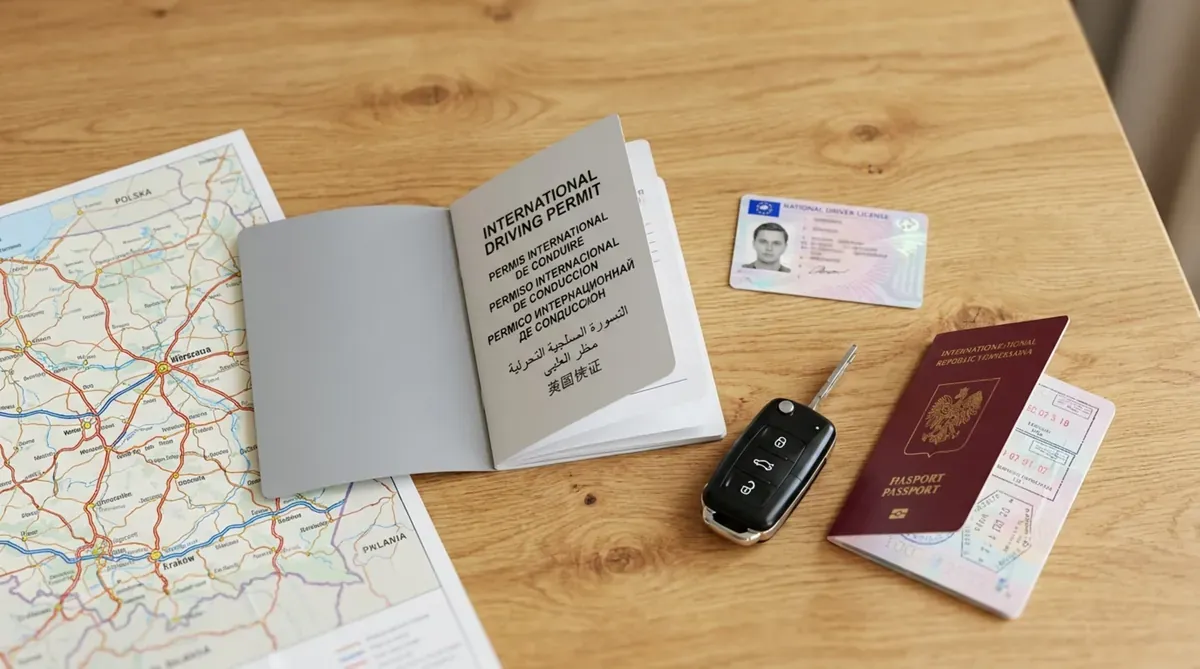
The primary driver must present three original items at the desk: a valid national driving license, an official passport or national ID card, and your digital or printed booking voucher. Digital copies, smartphone images, and temporary paper licenses aren't accepted.
Poland recognizes driving licenses issued by EU and EFTA member states (including Switzerland, Norway, Iceland, and Liechtenstein) for visits under 185 days. The primary driver must have held their valid license for a minimum period, which is typically at least one full year.
When an International Driving Permit Is Required
Drivers holding licenses issued outside the EU-including travelers from the United States, Canada, the UK, Australia, and New Zealand-are legally required to present an International Driving Permit (IDP) alongside their domestic license. The IDP serves as an official translation of your driving credentials.
While some counter staff may review standard English-language licenses without issue, an IDP remains a formal legal requirement. If requested during pickup or a routine roadside police check, failing to present one can result in the company withholding the car without a refund. Securing an IDP through your local automobile association prior to departure ensures full compliance.
Credit Card Deposits, Guarantee Holds, and Debit Card Restrictions
Airport car rentals generally require a physical credit card issued in the primary driver's exact legal name. The card must feature an active chip and PIN, with an available credit line sufficient to cover the required security deposit.
Deposit holds typically range from PLN 2,200 to PLN 6,500 (€500 to €1,500), scaled to the vehicle segment and selected protection package. This hold isn't a settled payment; it's a pre-authorization that guarantees coverage for fuel shortages, road tolls, or vehicle damage. While most traditional counters decline debit cards, prepaid cards, or cash for security deposits, some modern services accept debit cards when paired with comprehensive coverage options.
Additional Driver and Young Driver Requirements
Standard rental agreements cover only the designated primary driver. Allowing an unregistered person to drive the vehicle invalidates standard protection policies and leaves you fully liable for any potential damage. Additional drivers must be present at the desk to show their original license and passport, with fees running around PLN 15 to PLN 40 per day.
Age restrictions also apply. While the legal driving age in Poland is 18, rental operators generally require drivers to be at least 21 years old. Premium vehicle segments and larger SUVs may require drivers to be 25 or older. Drivers aged 21 to 24 may incur a standard young-driver surcharge, and specific conditions may apply to drivers over the age of 70.
How Much Does It Cost To Rent a Car at a Polish Airport?
Poland offers some of the most competitive rental vehicle pricing in Europe. Because daily rates are priced in Polish Złoty (PLN), domestic operating efficiencies keep overall rental costs noticeably lower than in Western Europe.
Your overall investment will depend on seasonal demand, lead time, vehicle class, and any selected equipment or coverage options.
Daily Rental Rates by Vehicle Category
Standard seasonal daily prices generally fall within these typical brackets:
Economy / Compact Hatchbacks (such as the Toyota Yaris, Renault Clio, or Škoda Fabia): PLN 65 to PLN 130 (€15 to €30) per day. Off-peak promotional rates can occasionally drop lower during quiet winter periods.
Intermediate / Family Cars (such as the Škoda Octavia, VW Golf, or Hyundai i30): PLN 110 to PLN 195 (€25 to €45) per day, offering comfortable seating and ample luggage space.
SUVs / Crossovers (such as the Kia Sportage, Nissan Qashqai, or Hyundai Tucson): PLN 150 to PLN 280 (€35 to €65) per day, providing high ground clearance for rural and winter driving.
Premium Vehicles and 7-9 Passenger Vans (such as executive sedans or passenger minibuses): PLN 260 to PLN 520+ (€60 to €120+) per day for long-distance group comfort.
How Season, Booking Time, and Rental Length Affect the Price
Seasonal demand drives rate fluctuations across Poland. Peak summer travel extends from late May through September, when tourism along the Baltic coast and Masurian lakes peaks. Daily rates in coastal and major airport hubs average around €25 to €35 during summer, tapering to €15 to €20 in spring and autumn.
A second demand peak occurs from late December through February around southern airports like Kraków and Katowice, driven by travelers heading to the ski resorts of the Tatras. Rental duration also directly affects daily costs: weekly rentals feature significantly lower daily rates than short one- or two-day hires, and medium-term or monthly bookings offer the best per-day efficiency.
Airport Surcharges, Taxes, and One-Way Rental Fees
Operating an airport facility involves airport concession fees, yet competitive local fleets ensure final customer pricing remains attractive compared to downtown depots when factoring in taxi transfers. All standard consumer quotes include Poland's 23% VAT.
Domestic one-way rentals-such as collecting a car at Gdańsk Airport and returning it at Warsaw Chopin-are widely accommodated. Operators apply a relocation fee running between PLN 150 and PLN 400 (€35 to €95) to return the vehicle to its primary operational zone.
Security Deposits, Fuel Charges, and Optional Equipment Costs
Alongside basic rental rates, your total expenses can include optional accessories and security holds. Typical daily add-on options include:
Child Safety Seats: PLN 20 to PLN 40 per day, frequently capped at a maximum fee per rental period.
GPS Navigation Units: PLN 15 to PLN 30 per day, though many drivers connect their smartphones via Apple CarPlay or Android Auto.
Winter Equipment (ski racks or snow chains): PLN 20 to PLN 35 per day during mountain winter excursions.
Fuel policies also dictate final costs. Standard rentals operate on a "Full-to-Full" basis: you collect the car with a full tank and return it full. If you return the vehicle short on fuel, the operator will charge for missing fuel at an elevated rate plus an administrative refueling surcharge of PLN 50 to PLN 100. Local pump prices generally range from PLN 5.65 to PLN 6.50 (€1.30 to €1.50) per liter, making it far more economical to refill at a station near the airport before returning the car.
Which Rental Car Should You Choose for Poland?
Select your vehicle based on your itinerary, passenger count, luggage volume, and travel season. Poland's road network spans smooth modern motorways, narrow historical urban corridors, and winding mountain passes.
Choosing the right vehicle category guarantees comfortable travel and simple parking wherever your trip takes you.
Compact City Cars for Warsaw, Kraków, and Other Urban Areas
If your plans center around touring major cities connected via the expressway network, an agile hatchback like a Škoda Fabia, Toyota Yaris, or Volkswagen Polo is an ideal fit. Older city centers feature narrow medieval streets, tight parking bays, and multi-level underground parking facilities with tight turns.
Compact cars offer economical fuel consumption, straightforward maneuvering, and access to compact parking spaces. For solo travelers or couples carrying two medium suitcases, an economy or compact model delivers an optimal balance of highway stability and urban agility.
SUVs and Larger Cars for Family Trips and Rural Roads
If your plans take you into the southern highlands, the Bieszczady range, or regional lakes, an SUV or crossover-such as a Kia Sportage or Hyundai Tucson-provides added comfort. While national expressways are in excellent condition, secondary rural routes can have rough patches and narrow unpaved shoulders where higher ground clearance is helpful.
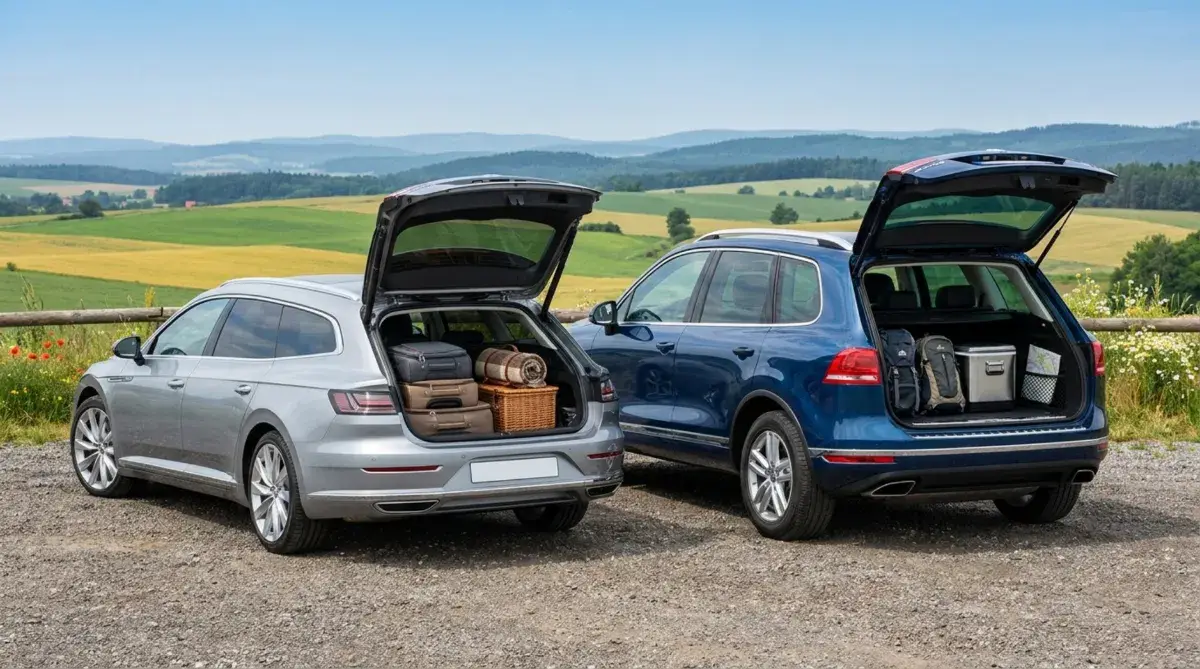
For four or five passengers traveling with full luggage, an estate car (commonly designated as "Combi" or "Variant" in Poland) provides ideal practicality. Models such as the Škoda Octavia Combi deliver expansive cargo space for bulky luggage, child strollers, and sports gear while maintaining passenger-car fuel economy and driving dynamics.
Manual or Automatic Transmission
Manual transmissions remain the traditional standard across Poland and continental Europe, making up a significant portion of rental fleets at economical price points. If you're fully comfortable handling a clutch and gear lever, choosing a manual vehicle can reduce your daily rental costs.
Modern automatic vehicles are readily available across all major airport hubs, though they generally carry a 20% to 40% price premium over manual counterparts. Because automatic fleets are smaller in entry-level categories, they book out quickly during peak travel periods. If an automatic transmission is essential for your comfort, reserve your car well ahead of your travel dates.
Petrol, Diesel, Hybrid, and Electric Rental Cars
Most vehicles in Polish fleets run on unleaded petrol, marked as Pb 95 or E10 at the pump. Diesel fuel is clearly designated as ON (Olej Napędowy). Petrol and self-charging hybrid vehicles excel in mixed city driving and regional touring, whereas diesel models offer long-range efficiency on extended motorway journeys.
Modern self-charging hybrid models are widespread in Polish fleets, delivering quiet performance and strong fuel economy in urban areas. Electric vehicles (EVs) are also expanding throughout major transportation hubs. Dedicated rapid-charging networks like GreenWay and Orlen Charge are positioned along all primary motorways, though trips through remote rural districts or mountain passes still require advance charging route planning.
Which Insurance and Protection Options Should You Consider?
Understanding car rental insurance helps you choose the right balance of financial protection and daily value. Polish rentals include basic statutory third-party cover, but standard baseline terms still leave you financially responsible for repair costs up to the excess limit.
Knowing the distinctions between standard cover, excess reduction packages, and third-party policies helps you make an informed choice.
Third-Party Liability, Collision Damage Waiver, and Theft Protection
All road vehicles in Poland carry mandatory Third-Party Liability (TPL) insurance, covering personal injury and property damage caused to third parties. Baseline airport rental rates also typically package Collision Damage Waiver (CDW) and Theft Protection (TP).
CDW is not a total liability waiver; it establishes a financial ceiling-the deductible or excess-for your maximum out-of-pocket exposure if the vehicle is damaged. In Poland, standard excess amounts typically range between €800 and €1,800 depending on vehicle class. If repair expenses total €400, you pay €400; if damage costs exceed your cap, your responsibility is capped at the agreed excess amount.
Excess, Deposit Reduction, and Premium Protection Packages
Car rental providers offer comprehensive protection options-often termed Super CDW (SCDW) or Zero Excess-that reduce your financial liability to zero. These plans typically extend coverage to vulnerable items excluded from basic CDW, such as tires, windshields, side mirrors, and undercarriage components, while substantially reducing your credit card deposit.
Direct full protection packages from the rental provider offer maximum convenience because any incident is handled directly on-site without claims forms. Alternative independent excess reimbursement policies purchased through travel insurers are also common; under these policies, the rental company charges your card for repair costs up to the excess limit, and you submit the paperwork to your independent insurer for reimbursement.
Does Travel Insurance or Third-Party Rental Cover Meet the Company's Conditions?
Many travelers rely on credit card rental coverage or annual travel insurance policies. Polish rental desks, however, do not maintain direct billing agreements with foreign insurance providers or credit card reward programs.
If you rely on an external policy, the rental counter will process your booking under standard excess rules. You'll need sufficient credit available on your card for the full security deposit hold (typically €1,000 or more). If damage occurs, the provider charges your card directly, and you claim reimbursement from your personal insurer. You can decline counter-offered excess reductions as long as your card accommodates the standard deposit pre-authorization.
What To Do After an Accident, Theft, or Vehicle Breakdown
If you experience a mechanical breakdown, battery issue, or puncture, safely maneuver the vehicle onto the shoulder or a designated turnout. Put on a high-visibility reflective vest, position your warning triangle 100 meters behind the car on motorways (or 30 to 50 meters on standard rural roads), and call the 24/7 support line listed on your rental contract.
In the event of a collision involving another vehicle, any personal injury, or vehicle theft, call the integrated European emergency line at 112 immediately. Rental agreements strictly require an official police report (Notatka Policyjna) to validate your insurance coverage. Never sign informal settlements with third parties. Photograph all vehicles, record registration details, and notify the rental company's support team within 24 hours.
How Can You Avoid Common Airport Rental Problems?
While renting a car at Polish airports is typically smooth and transparent, misunderstandings can arise from overlooked contract conditions or hurried vehicle handovers.
Maintaining careful records from collection to drop-off protects your security deposit and guarantees a smooth return process.
Read Mileage, Fuel, Cancellation, and Damage Terms Before Payment
Before confirming your booking, review the rental conditions. Check the fuel policy: a "Full-to-Full" structure is the most transparent arrangement, ensuring you only pay for the fuel you actually consume. Avoid "Full-to-Empty" policies that charge upfront for fuel at premium rates without providing refunds for unused fuel remaining in the tank.
Review the modification and cancellation terms. Clear booking policies allow free cancellations up to 48 hours before collection, giving you valuable flexibility if your flight schedule or itinerary shifts unexpectedly.
Check for Hidden Fees and Misleading Low Headline Prices
Be cautious of headline daily rates that seem unusually low. Deeply discounted promotions often balance low prices with expensive add-ons, compulsory tire-and-glass packages, aggressive cleaning fees for normal road dust, or restrictive card requirements designed to force on-site insurance purchases.
Review the final breakdown to ensure airport charges, local taxes, and appropriate mileage terms are fully accounted for. Transparent providers with strong customer feedback maintain straightforward pricing policies without unexpected desk charges.
Match the Driver Name, Cardholder, Flight Details, and Booking Documents
A frequent reason for collection issues is a mismatch between the primary booking name and the name embossed on the physical credit card. Polish operators require the primary driver, booking name, and payment cardholder to be the identical individual.
Family members, spouses, or business associates cannot present their card to pay the deposit for a booking made in your name unless they are registered as the primary driver. Ensure your driver's license, passport, reservation voucher, and payment card match your legal name identically.
Keep the Rental Agreement, Inspection Report, Receipts, and Return Photos
Preserving documentation protects against post-rental billing discrepancies. When returning your car, walk through the vehicle with the attendant and obtain a signed or digital return receipt confirming fuel status and vehicle condition.
Retain your initial agreement, the final fuel receipt showing you refilled near the airport, and toll receipts. Keep these records along with date-stamped photos of the car for two to three billing cycles until your deposit pre-authorization hold is completely released by your card issuer.
What Happens During Airport Pickup?
The collection routine at the airport follows a logical path: locate the counter, complete document verification, inspect the car, and familiarize yourself with vehicle controls.
Take your time during each stage. A methodical collection process ensures confidence throughout your journey.
Finding the Rental Desk or Off-Site Collection Point
Following baggage collection, follow signs displaying the car rental icon or the Polish phrase Wypożyczalnia samochodów. At Warsaw Chopin, counters are positioned along the primary arrivals concourse. At Kraków Airport, desks are situated on the mezzanine level directly connected to the passenger terminal.
If you've booked with a shuttle-based operator, proceed to the shuttle collection zone outside the main terminal curb. For direct meet-and-greet services, your representative will wait in the general arrivals meeting area holding a sign with your name to escort you to your vehicle.
Checking the Agreement, Mileage, Fuel Level, and Vehicle Category
Present your passport, original driver's license, IDP (if required), and credit card to the counter agent. The rental agreement details your assigned model, registration plate, starting mileage, recorded fuel level, and deposit hold. Review these terms carefully before signing.
Verify that no unwanted optional products have been added to the invoice. Ensure the fuel gauge confirms a full tank (8/8), and compare the recorded mileage on the agreement with the actual odometer once you reach the vehicle.
Inspecting the Car and Recording Existing Damage With Photos
Always inspect the car thoroughly before driving away. Walk around the exterior, inspecting bumpers, alloy wheels, door edges, window glass, and roof surfaces. Check the interior upholstery for any preexisting stains or wear.
Cross-reference any visible marks with the vehicle condition report. If you spot a scratch, chip, or ding not noted on the paperwork, have the attendant record it before you leave the bay. Take well-lit, high-resolution photos and a continuous slow video around the vehicle exterior, including close-ups of the wheels, tires, windshield, and dashboard displaying mileage and fuel levels.
Understanding the Keys, Mandatory Equipment, and Roadside Assistance Process
Before pulling out of the parking facility, adjust your seat, mirrors, and climate settings. Locate the hazard lights, test reverse gear, and pair your phone for GPS navigation. Polish law mandates specific emergency gear in all vehicles: confirm the trunk contains a reflective warning triangle, a certified fire extinguisher (gaśnica), and high-visibility safety vests.
Ensure the vehicle registration card and proof of insurance are present in the glove compartment or securely affixed to the key fob, as these documents must be presented during any roadside police check. Note the emergency assistance contact details on your agreement, check the fuel flap for the correct fuel label, and merge onto the airport exit roads.
What Are the Driving Conditions After Leaving a Polish Airport?
Driving throughout Poland is generally comfortable and predictable, with roadway standards comparable to Western Europe. Major ongoing investments have delivered a world-class expressway network with well-lit interchanges, high-quality surfaces, and modern roadside rest areas. Safe travel simply requires adhering to local traffic regulations and speed monitoring zones.
Familiarizing yourself with primary road rules before departing the airport terminal ensures a smooth transition onto the motorway network.
Driving on the Right and Understanding Polish Road Signs
Traffic drives on the right side of the road, overtaking on the left. Signage follows international European standards using color-coded backgrounds. Motorway routes are marked with blue signage prefixed by "A" (such as A1, A2, or A4), while expressways feature red rectangular markers prefixed by "S" (such as S3, S7, or S8).
Pay close attention to the conditional green arrow (zielona strzałka) at signaled intersections. A small illuminated green arrow beside a red light permits a right turn, but only after coming to a complete stop at the stop line to yield to pedestrians and crossing traffic. Automated intersection cameras actively penalize drivers who fail to come to a complete halt before turning.
Speed Limits, Traffic Fines, and Urban Driving Restrictions
Speed regulations are strictly enforced across Poland using fixed speed cameras (fotoradary), sectional average-speed zones, and unmarked highway patrol vehicles. Standard national speed limits are:
Motorways (Autostrady): 140 km/h (87 mph).
Dual-Carriageway Expressways: 120 km/h (75 mph).
Single-Carriageway Expressways: 100 km/h (62 mph).
Open Rural Roads: 90 km/h (56 mph).
Built-up Urban Areas: 50 km/h (31 mph) at all times.
Residential Zones (Strefa zamieszkania): 20 km/h (12 mph), with total pedestrian right-of-way across the street.
Speeding penalties carry significant fines. When a rental vehicle is flagged by an automated camera, the rental provider identifies the driver to authorities and charges an administrative processing fee to your card. Poland also enforces a strict blood alcohol concentration (BAC) limit of 0.02%, representing a near-zero tolerance policy. Operating a vehicle above 0.05% BAC is a severe criminal offense leading to immediate license confiscation, court proceedings, and substantial penalties.
Motorway Tolls and Payment Options for Rental Cars
Selected motorway corridors in Poland carry tolls. These include segments of the northern A1 (AmberOne), the A2 between Konin and Nowy Tomyśl, and the private concessionaire section of the A4 connecting Katowice and Kraków. Most toll roads operate standard barrier plazas where you collect a ticket upon entry and settle the toll at exit booths.
Toll booths accept major credit cards and cash. While card payments are processed smoothly, cash payment in foreign currency (EUR, USD) returns change in Polish Złoty. State-managed motorways that previously required specialized mobile e-TOLL apps are currently free of charge for passenger vehicles under 3.5 tonnes. Rental vehicles rarely feature automatic transponders, so use standard manual card/cash lanes unless instructed otherwise by your provider.
Fuel Stations, Parking, Winter Conditions, and Rural Roads
Large service stations (such as Orlen, Shell, BP, and Circle K) operate 24/7 along all primary motorways and near airport perimeters, offering clean amenities, traveler stores, and hot food. Fueling is self-service: fill your tank, note your pump number, and pay inside or directly at pump terminals using a card.
In municipal centers, look for paid parking zones (Strefa Płatnego Parkowania) operating through ticket dispensers (parkometry). Purchase your ticket for the intended duration and display it clearly on the dashboard. When driving through rural or forested corridors, stay alert for wildlife crossing roads, particularly at dusk and dawn.
Winter conditions (November through March) call for increased awareness. Snow and ice are frequent across southern regions and elevated foothill passes. Reputable rental fleets equip winter-rated tires during the cold season. If you're heading directly into the southern mountains, consider adding snow chains to your rental reservation.
Can You Cross Borders or Return the Car to Another Location?
Bordering seven European nations, Poland serves as an exceptional starting point for broader Central European road trips. International border crossings are straightforward, provided you obtain authorized permission and review cross-border conditions in advance.
Confirming your travel plans with your rental company ensures continuous insurance validity and full breakdown support across your entire route.
Permission and Fees for Driving a Rental Car Across European Borders
Most Polish rental providers allow cross-border travel into adjacent EU and Schengen countries, including Germany, the Czech Republic, Slovakia, Austria, and Lithuania. However, international travel is never automatic: you must declare your intended travel countries during reservation or counter check-in to receive formal written authorization.
Providers generally charge a standard cross-border fee between PLN 180 and PLN 400 (€40 to €90). This covers the cross-border registration documentation, international insurance validity, and cross-border roadside assistance. Traveling abroad without formal authorization invalidates collision and theft waivers, leaving the driver fully liable for any incident.
Travel restrictions apply to non-EU eastern borders. Rental vehicles registered in Poland are strictly prohibited from entering Ukraine, Belarus, or the Russian Federation. Rental fleets utilize onboard telematics that alert operations teams if a car approaches restricted border zones, which can result in vehicle immobilization and substantial contractual fines.
One-Way Rentals Between Polish Airports and Cities
Domestic one-way rentals provide great travel flexibility if you want to explore Poland from north to south. You can pick up a vehicle at Gdańsk Airport, explore Toruń, Poznań, and Wrocław, and complete your journey with a convenient drop-off at Kraków Airport before flying home.
Because providers can reposition cars within their own national network, domestic one-way fees are very reasonable. International one-way drop-offs (such as collecting in Poland and dropping off in Germany or Austria) carry steep repatriation surcharges to transport the vehicle back to its home country, making a domestic return far more cost-effective. A short-term rental with flexible pickup and drop-off points suits this kind of itinerary well.
Returning the Vehicle at Night or Outside Office Hours
If you have an early morning flight, you might need to return your car before the service counter opens. Follow airport signage toward rental returns (Zwrot samochodów) and park within your provider's designated bay. Turn off the engine, ensure the lights are switched off, and check the cabin, trunk, and glove compartment to ensure no personal items are left behind.
Document the parked car by taking clear photos from all angles-capturing all four sides, alloy wheels, windshield, and a lit dashboard shot confirming the odometer reading and full fuel gauge. Lock the car and place the keys into your provider's secure key drop box, situated at the parking office or adjacent to the terminal rental counter.
Fuel Refill, Final Inspection, and the Release of the Deposit
To avoid refueling charges, top off the tank at a station within five kilometers of the terminal just prior to return, keeping the fuel receipt to prove the time and location. During operational desk hours, complete a physical walkaround with the return agent to verify fuel status, confirm vehicle condition, and receive a signed return confirmation.
Once the car is checked in, the company closes the contract and releases your security deposit hold. While the operator typically initiates the release within 24 to 72 hours, banking institutions can take several business days to update your available credit line. Following these straightforward guidelines ensures a reliable, transparent, and comfortable travel experience from start to finish.