22.09.2026
7-Seater Car Rental in Poland - for Families and Groups
How do you plan reliable transportation for a family or group holiday in Poland? Choosing a 7-seater car rental lets your entire party travel together comfortably, reduces overall fuel and toll expenses compared to hiring multiple cars, and provides ample luggage room for exploring the country's modern road network.
7-Seater Car Rental in Poland - For Families and Groups
What Makes a 7-Seater Car Suitable for Family and Group Trips?
Travelling with five or more people in a standard five-seat car gets uncomfortable quickly. Legroom disappears, bags spill over into the footwells, and personal space feels cramped before you even leave the airport. A 7-seater provides everyone with a dedicated seat, generous legroom, convenient charging ports for devices, and great views of the Polish countryside for comfortable travel.
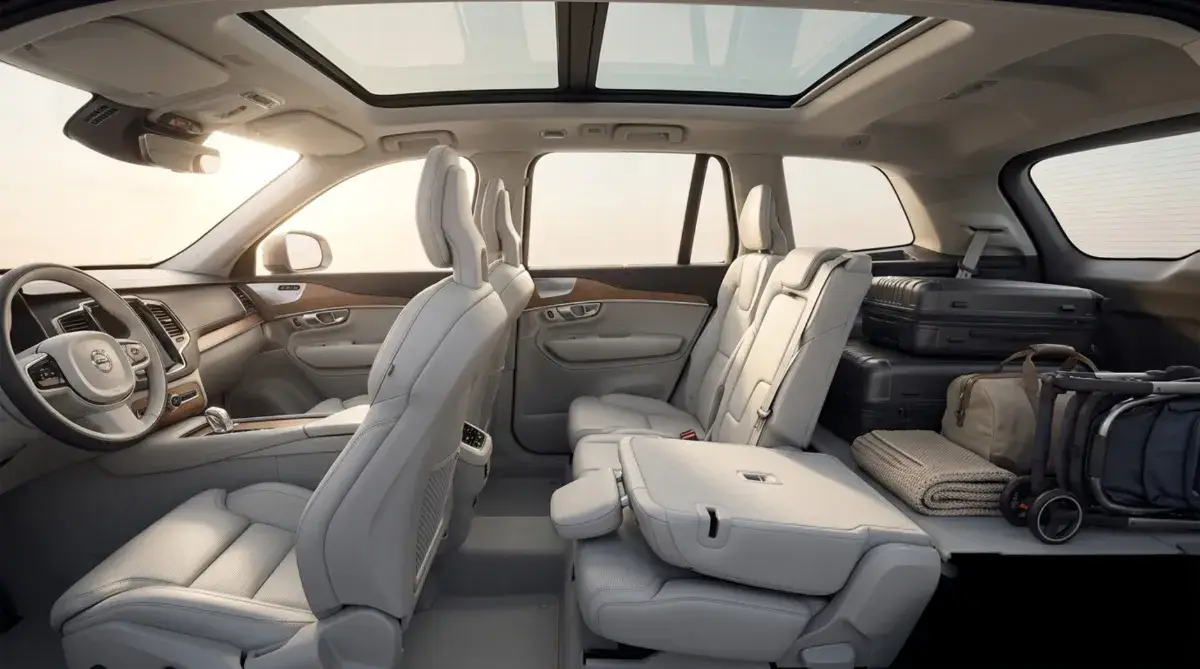
Modern 7-seaters also offer practical, adaptable interiors. Sliding rows, reclining backrests, and split-folding rear seats let you adjust the cabin layout as your journey unfolds. You can easily slide the middle row forward to accommodate a pram or fold a rear seat to load outdoor gear and local souvenirs. Your vehicle easily adapts to your itinerary, giving you the freedom to travel without compromising on what you bring.
Share One Vehicle, Improve Comfort, and Reduce Travel Costs
Booking a single 7-seater is generally far more cost-effective than renting two smaller cars. Managing two vehicles doubles your motorway tolls, parking fees, fuel consumption, and rental security deposits. Keeping everyone in one spacious vehicle lowers these routine costs, leaving more of your travel budget for dining, sightseeing, and experiences.
A shared vehicle also makes your road trip much more collaborative and relaxed. You won't need to coordinate meeting points at motorway exits, wait around at service plazas, or juggle multiple navigation routes. Everyone shares the same music, conversations, and scenic milestones throughout the drive.
What Are the Main Challenges of Driving a Large Rental Car?
If you're accustomed to driving a compact hatchback, handling a 7-seater in Poland requires a brief adjustment period. These vehicles feature longer wheelbases, wider turning radiuses, and larger blind spots. Driving through historic districts with narrow cobblestone streets, such as those in Toruń, Kraków, or Lublin, calls for patient driving and steady reliance on parking sensors and reversing cameras.
Vehicle height is another factor to keep in mind. Multi-storey and underground car parks beneath shopping centres and train stations in Poland often set clearance limits between 1.9 and 2.1 metres. Most MPVs and mid-size 7-seater SUVs clear these heights without issue, but taller passenger vans require checking overhead clearances before entering low-ceiling facilities.
Which 7-Seater Rental Cars Are Available in Poland?
Family MPVs with Flexible Seating
Multi-Purpose Vehicles (MPVs) remain an excellent choice for passenger comfort and modular cabin layouts. Polish car rental fleets frequently feature models like the Volkswagen Sharan, SEAT Alhambra, and Renault Grand Scénic. These models are designed specifically for family journeys, often incorporating sliding rear doors that make boarding effortless and protect against door dings in tight parking spaces. Many models also include three independent ISOFIX anchors across the second row.
MPVs are especially practical for families travelling with infants and young children. Because middle-row seats often adjust and slide individually, you can easily secure two bulky child seats alongside an adult passenger. A low boot sill also makes loading heavy strollers and luggage substantially easier on your back.
7-Seater SUVs for Comfort and Higher Ground Clearance
If your plans involve trips into national parks, rural landscapes, or highland regions, a 7-seater SUV provides a commanding driving position and elevated ground clearance. Popular fleet choices in Poland include vehicles such as the Škoda Kodiaq, Kia Sorento, Hyundai Santa Fe, and Volvo XC90. The raised seating gives drivers clear visibility across traffic and the road ahead.
The extra ground clearance proves especially helpful across uneven cobblestones, rural tracks around the Masurian Lake District, or unpaved lanes near mountain lodges. Many modern SUVs also feature all-wheel drive or automated traction management, offering added stability and peace of mind during heavy summer rain or sudden winter snowfall.
Passenger Vans for Families with More Luggage
When seven adults travel together, luggage space in a standard MPV or compact 7-seater SUV can become tight once the third row is deployed. Dedicated passenger vans, such as the Mercedes-Benz V-Class, Volkswagen Multivan, or Ford Tourneo Custom, provide a complete mobility solution.
These vans offer seven or eight full-sized adult seats with generous head and legroom throughout. Even with every seat occupied, you retain a massive rear cargo area capable of holding six to eight large suitcases alongside smaller carry-ons and sports equipment. If your group prioritises luggage capacity, a passenger van prevents any packing compromises.
Where Can You Drive a 7-Seater Rental Car in Poland?
Warsaw, Kraków, Wrocław, and Gdańsk City Breaks
Poland's premier cities blend vibrant historic centres, cultural landmarks, and thriving dining scenes. Well-maintained motorways such as the A1, A2, and A4 connect these urban hubs efficiently. You can comfortably enjoy breakfast in Warsaw, stop for lunch in Wrocław's market square, and reach Kraków in time for an evening stroll around Wawel Castle.
While navigating dense historic centres requires extra attention, Polish cities provide well-organised Park & Ride facilities and secure public parking outside pedestrian cores. A spacious rental car allows your group to travel smoothly between cities, stay in comfortable suburban accommodation, and use local transit to explore pedestrian-only quarters.
Family Routes to Zakopane and the Tatra Mountains
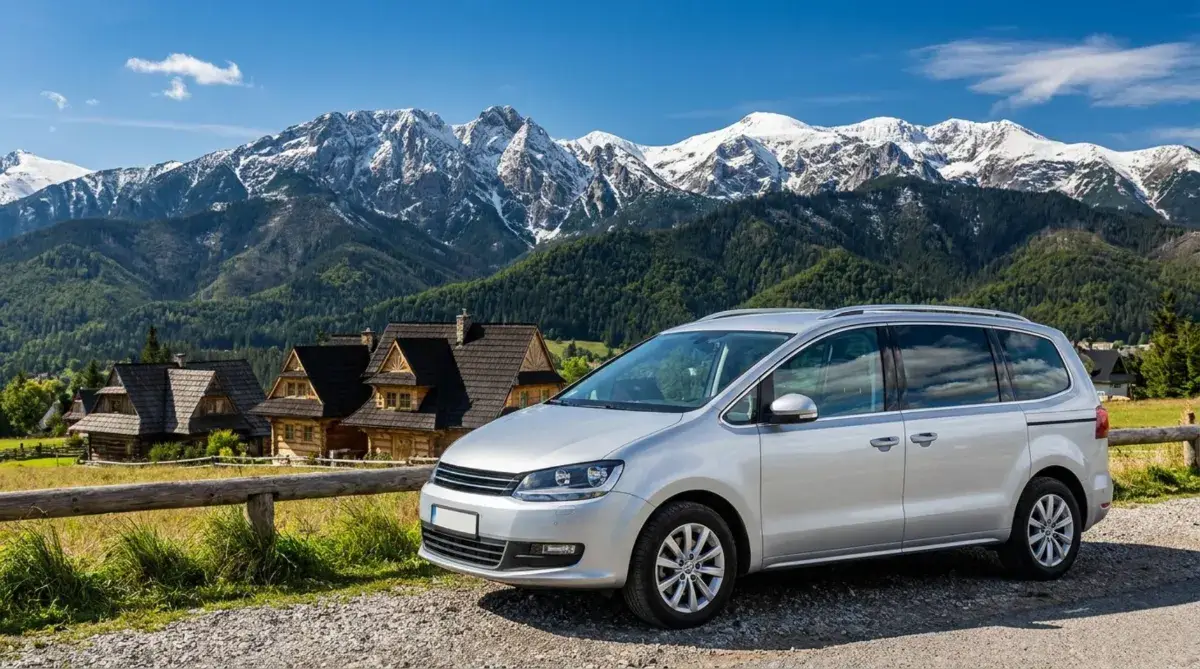
Driving south toward the High Tatras is one of Poland's signature road trips. The journey from Kraków along the "Zakopianka" route winds through picturesque valleys and the Podhale foothills before arriving in Zakopane. A 7-seater provides ample room for trekking poles, mountain strollers, and layers of outdoor clothing.
The winding mountain highways present scenic vistas of traditional timber architecture and dense pine forests. Modern, well-maintained vehicles equipped with responsive turbo-diesel or hybrid powertrains navigate these inclines with ease. Having your own vehicle also makes it simple to visit regional thermal baths in Chochołów and quiet trailheads on your own schedule.
Baltic Coast Trips to Gdynia, Sopot, and Kołobrzeg
Poland's northern coast features expansive sandy beaches, coastal pine groves, and historic port cities. The Tri-City metropolitan area-Gdańsk, Sopot, and Gdynia-combines maritime heritage, iconic wooden piers, and seaside dining, all connected by modern expressways.
Driving west toward coastal retreats like Łeba, Ustka, and Kołobrzeg lets your group explore the shifting sand dunes of Słowiński National Park and historic seaside lighthouses. A large vehicle easily holds beach shelters, picnic hampers, extra layers, and towels, allowing you to stop whenever coastal viewpoints catch your eye.
Lake District Holidays in Masuria and Cross-Border Travel from Poland
The Warmian-Masurian Voivodeship, known as the Land of a Thousand Lakes, is a favourite destination for kayaking, sailing, and nature retreats. Driving between Giżycko, Mikołajki, and Mrągowo takes you along canopy-lined lanes and peaceful waterside routes, creating a calm driving experience.
Poland's central European position also makes it a convenient base for international road trips. Reputable rental providers allow travel into neighbouring European Union and Schengen Zone countries, such as Germany, the Czech Republic, Slovakia, and Lithuania. If you plan to cross national borders, let your rental provider know before collection so they can prepare the required cross-border authorisation documents and insurance coverage.
How to Choose and Book Your 7-Seater Rental Car
Compare Passenger Capacity, Boot Space, and Fuel Economy
Before confirming your booking, verify the vehicle's exact seat configuration. Some models utilise a "5+2" arrangement, where the rearmost seats are compact units designed primarily for children or shorter journeys. If you're travelling with seven adults, choose a model featuring three rows of full-sized seating.
Cargo volume is equally vital. When all seven seats are upright, smaller 7-seater SUVs might offer only 150 to 250 litres of cargo space-roughly enough for two carry-on cases. Evaluate your group's luggage needs realistically. If everyone is bringing a standard suitcase, reserving a passenger van with an extended wheelbase ensures a smooth journey without luggage intruding into passenger space.
Confirm Pickup Location, Rental Dates, and Mileage
We recommend reserving your 7-seater well ahead of time. Rental fleets naturally carry fewer multi-passenger vehicles than compact cars. Peak travel windows, such as the July-August summer season and winter ski holidays, see high demand across Poland. Booking early secures your vehicle class and locks in better pricing.
Always review the mileage policy in your rental agreement. Transparent rental terms mean you understand your driving allowances clearly. Many quality rental packages provide unlimited mileage, while others include daily allowances like 200 or 250 kilometres. If your itinerary involves long cross-country drives, selecting an agreement with unlimited kilometres makes route planning simple and stress-free.
Driver's Licence, Passport, Payment Card, Age, and Experience Requirements
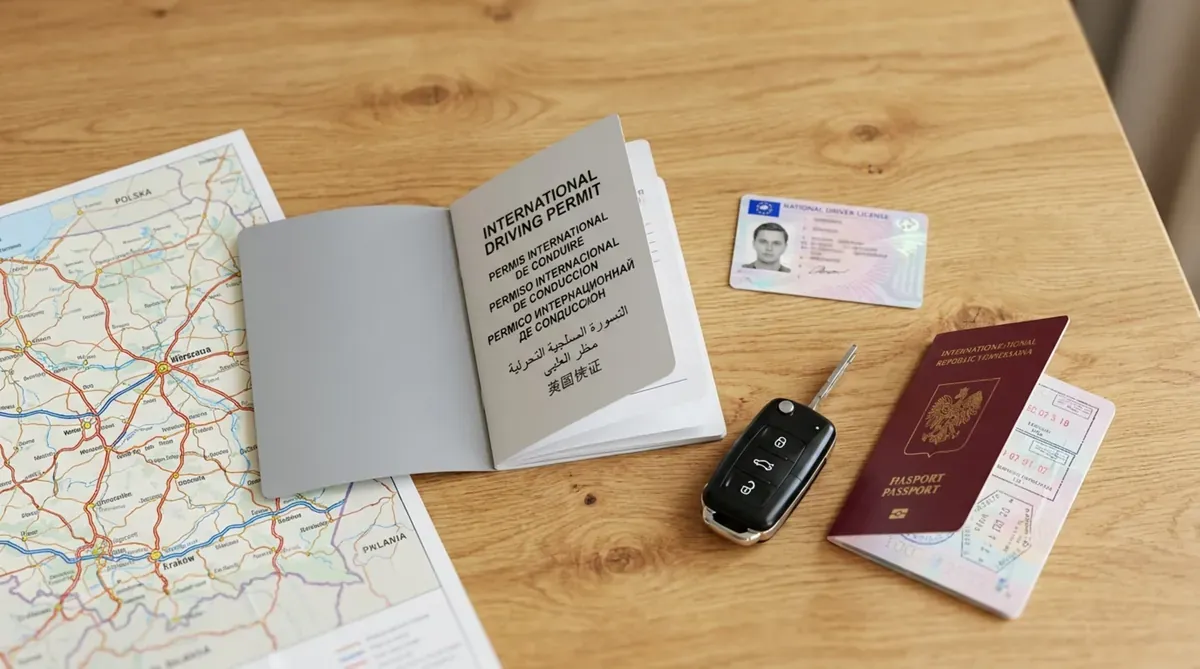
To rent a 7-seater in Poland, drivers must hold a valid driving licence, typically held for at least one or two years. Licences issued in the EU and the UK are directly accepted. If you hold a licence issued outside Europe, carrying an International Driving Permit (IDP) alongside your national photocard licence ensures compliance with Polish road authorities.
Rental policies also outline minimum age requirements. While compact models might be accessible from age 21, larger 7-seaters and passenger vans generally require drivers to be at least 23 or 25 years old. A standard young-driver fee might apply depending on your age. The primary driver must present a valid passport or national ID card and a payment card in their name for the rental security deposit.
Child Seats, Family Safety Equipment, and Vehicle Inspection at Pickup
Under Polish law, children shorter than 150 cm must use an approved child safety seat or booster appropriate for their height and weight. You can easily add infant carriers, toddler seats, or booster cushions when booking your car rental. At collection, verify that your safety seats comply with European safety benchmarks (ECE R44/04 or i-Size/R129) and mount firmly to the vehicle's ISOFIX points.
Take a few minutes to inspect your vehicle before leaving the depot. Use your smartphone to take clear photos or a short walkaround video of the exterior panels, alloy wheels, mirrors, and glass. Ensure the handover agent documents any pre-existing stone chips or interior marks on the digital inspection sheet so you can travel with confidence.
Rental Prices, Deposits, and Flexible Payment Options
What Determines the Cost of a 7-Seater Car Rental in Poland?
Rental rates for 7-seaters depend on seasonality, vehicle category, booking lead time, and overall demand. Larger multi-passenger vehicles naturally have higher fleet acquisition and maintenance expenses than compact city runabouts, which is reflected in their daily rates.
Transmission type also plays a role. While manual gearboxes are common across Europe, modern 7-seater SUVs and passenger vans frequently come equipped with smooth automatic transmissions. Automatics may carry a slight premium, but they provide exceptional ease when navigating heavy city traffic or undulating mountain highways.
Daily, Weekly, and Seasonal Rental Rates
Rental pricing structures reward longer booking durations with lower effective daily rates. A 7- to 14-day booking provides a much more economical daily rate than a 48-hour rental. Aligning your booking around full weekly blocks can optimise your travel budget.
Seasonal demand significantly impacts vehicle availability and pricing in Poland. High-demand windows include mid-summer (July and August), the Christmas and New Year period, and the early May "Majówka" bank holiday weekend. Securing your booking several months in advance for these periods ensures vehicle availability and avoids last-minute price increases.
Deposits, Insurance, Mileage, Fuel, and Additional Charges
During vehicle handover, rental providers place a temporary pre-authorisation hold on the primary driver's credit card. This deposit covers potential excess liabilities, roadside incidents, or fuel discrepancies upon return. For 7-seater models, deposits typically range from 2,500 PLN to 6,000 PLN (roughly €550 to €1,400), depending on your vehicle category and protection package.
To reduce financial liability during your holiday, consider opting for full insurance protection with excess reduction. This coverage minimizes or eliminates personal liability for accidental damage or theft and often reduces the required security deposit. In addition, transparent rental terms should offer a clear "full-to-full" fuel policy: you collect your car with a full tank and return it full, paying only for the fuel you actually use.
[Explore passenger bus rental]
Airport Delivery, Pickup, and One-Way Rentals
7-Seater Car Rental at Warsaw, Kraków, and Gdańsk Airports
Most international travellers arrive through key transit gateways, including Warsaw Chopin Airport (WAW), Warsaw Modlin (WMI), Kraków-Balice (KRK), and Gdańsk Lech Wałęsa (GDN). Dedicated car rental facilities operate directly within or adjacent to terminal arrival halls, supported by nationwide availability across Poland.
Airport collection is structured for a fast, straightforward handover. Once you clear baggage claim, you confirm your agreement and take a short walk to the covered collection bay. This streamlined process is particularly convenient when travelling with tired children, older family members, or bulky baggage.
How Airport Delivery Saves Time for Families and Groups
For added convenience, modern car delivery services allow you to skip rental counter queues altogether. A representative tracks your inbound flight, greets your party directly at the arrivals hall, and brings the vehicle to the roadside pickup zone or adjacent short-term terminal car park.
Direct delivery removes the need for terminal shuttle transfers and long counter queues. You can review your rental agreement digitally, inspect your modern vehicle, load your bags, and begin your journey immediately. For travelling families, starting your road trip without delay makes all the difference.
One-Way Rentals Between Polish Cities and Return Requirements
One-way rental options allow you to explore Poland efficiently without having to double back to your starting point. You can collect a spacious 7-seater in Gdańsk on the northern coast, tour southward through the Mazovian plains, and return the vehicle in Kraków or Katowice.
One-way bookings include an intercity return fee to cover vehicle repositioning, but the time saved on long return drives often justifies the cost. When returning your car, allow around 20 minutes for the check-in inspection. Retain your final fuel receipt from a petrol station close to the drop-off depot, and double-check every row and charging port for family belongings before handing back the keys.
Practical Driving Advice for Families and Groups
Parking a 7-Seater in Polish Cities
Parking a larger vehicle in busy city centres requires foresight. Poland's municipal paid parking zones (Strefa Płatnego Parkowania) are designated by blue "D-44" road signs. Parking fees can be paid via roadside pay stations or convenient smartphone apps like moBiLET, SkyCash, or Flowbird. Parking meters accept cards, coins, and Polish BLIK mobile payments, requiring you to enter the vehicle's registration number.
Because on-street parallel parking spaces can be tight, choosing guarded open-air parking facilities (marked as Parking Strzeżony) or modern underground garages is often a simpler alternative. Guarded facilities offer wider bays, minimize the risk of accidental scrapes, and provide monitored security around the clock.
Tolls, Motorways, Speed Limits, and Road Rules
Poland's highway infrastructure is modern, well-maintained, and intuitive to navigate. Speed regulations are strictly monitored through fixed speed cameras and highway patrols:
Motorways (Autostrada - marked with an 'A'): 140 km/h
Dual-carriageway expressways (Droga ekspresowa - 'S'): 120 km/h
Single-carriageway expressways and rural primary roads: 90 to 100 km/h
Built-up urban zones: 50 km/h at all times, unless local signage indicates a lower limit (such as 30 km/h in residential zones).
Certain highway corridors charge tolls, including segments of the A1 AmberOne and the A4 between Kraków and Katowice. Many state-managed motorway sections use video tolling or automated digital payments through apps like Autopay and the national e-TOLL system, eliminating the need to stop at manual toll barriers. Check with your rental provider to see if your car is pre-registered for automated toll billing.
Polish traffic regulations require dipped headlights or daytime running lights at all times throughout the year. The legal blood alcohol limit is 0.2‰, effectively representing zero tolerance. Holding a mobile phone while driving is strictly prohibited. Your vehicle must also carry an emergency warning triangle and high-visibility reflective vests for safety.
Winter Driving, Seasonal Tyres, and Safe Seat and Luggage Arrangement
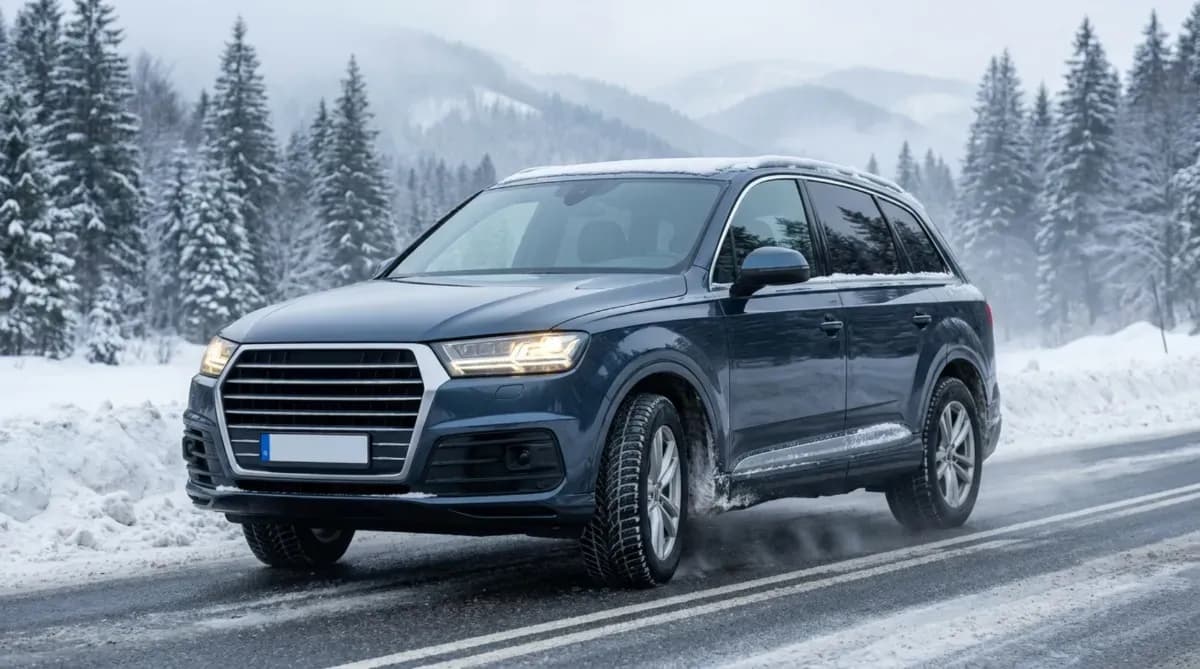
Poland experiences pronounced seasonal shifts. Winter conditions bring freezing rain, packed snow, and slick road surfaces, particularly in mountainous southern districts. Professional rental fleets fit winter tyres from November through April. If you're travelling during colder months, confirm that your vehicle's tyres bear the standard 3PMSF (Three-Peak Mountain Snowflake) symbol for certified winter traction.
When packing a fully occupied 7-seater, place the heaviest hardshell cases on the cargo floor firmly against the back of the third-row seating. Never stack loose, heavy luggage higher than the rear headrests without a dedicated cargo net, as unsecured items can shift forward under firm braking.
Finally, pair your smartphone via Apple CarPlay or Android Auto before setting off so your route displays clearly on the central dashboard screen. Connect your charging cables across the passenger rows, set your temperature controls, and enjoy a safe, comfortable travel experience across Poland.