
03.08.2026
Types of Rental Cars in Poland: From Economy to Premium Explained
Which type of rental car is best suited for traveling across Poland?
Selecting the right vehicle category depends on your passenger count, luggage requirements, and travel route, with options ranging from agile economy hatchbacks for city navigation to spacious SUVs and premium sedans for long-distance comfort.
Types of Rental Cars in Poland Explained
Car rental providers in Poland categorize vehicles into standardized classes to help you understand vehicle dimensions, capacity, and key features before booking.
In European car rental, reservations typically secure a vehicle class rather than an exact make and model, designated by the industry standard term "or similar." For instance, reserving a compact hatchback might provide a Volkswagen Polo, a Toyota Yaris, or an equivalent model within the same segment.
Grouping modern and well-maintained vehicles by size, comfort, and engine performance gives you the freedom to travel with confidence, making it easy to compare vehicle categories across different mobility services.
What Defines Car Classes and Segments in Polish Rentals?
Vehicle segmentation in Poland follows standard European classifications based on dimensions, passenger seating, door configuration, and luggage volume. Technical attributes such as engine displacement, transmission type, fuel efficiency, and standard amenities like climate control also define each tier.
Fleet operators use these standardized tiers to manage availability smoothly across nationwide networks while ensuring you receive a vehicle matching your selected specifications.
Each vehicle segment serves specific travel needs. Mini and economy categories deliver cost-effective mobility for urban trips, while compact and intermediate models offer added legroom for cross-country routes.
Larger vehicle classes-such as standard sedans, station wagons, SUVs, passenger vans, and premium models-deliver enhanced comfort, storage, and utility for specialized requirements.
What Is the Car Rental Classification System (ACRISS Codes)?
Most professional rental companies rely on the four-letter ACRISS (Association of Car Rental Industry Systems Standards) coding system to define vehicle specifications precisely:
First Letter: Vehicle Category (e.g., 'M' Mini, 'E' Economy, 'C' Compact, 'I' Intermediate, 'S' Standard, 'F' Full Size, 'P' Premium, 'L' Luxury, 'X' Special).
Second Letter: Body Style or Number of Doors (e.g., 'B' 2-3 Door, 'D' 4-5 Door, 'W' Wagon/Estate, 'V' Passenger Van, 'T' Convertible, 'F' SUV).
Third Letter: Transmission or Drivetrain (e.g., 'M' Manual Drive, 'A' Automatic Drive, 'N' Manual 4WD, 'B' Automatic 4WD).
Fourth Letter: Fuel Type and Air Conditioning (e.g., 'R' Unspecified Fuel with AC, 'N' Unspecified Fuel without AC, 'D' Diesel with AC, 'V' Petrol with AC, 'E' Electric).
For example, a code of 'CDMR' indicates a Compact class (C), 4-5 Door body style (D), Manual transmission (M), and Petrol or unspecified fuel equipped with air conditioning (R). This standard system provides transparent rental terms so you know exactly what specifications to expect.
Economy and Mini-Class Rental Cars: Features and Benefits
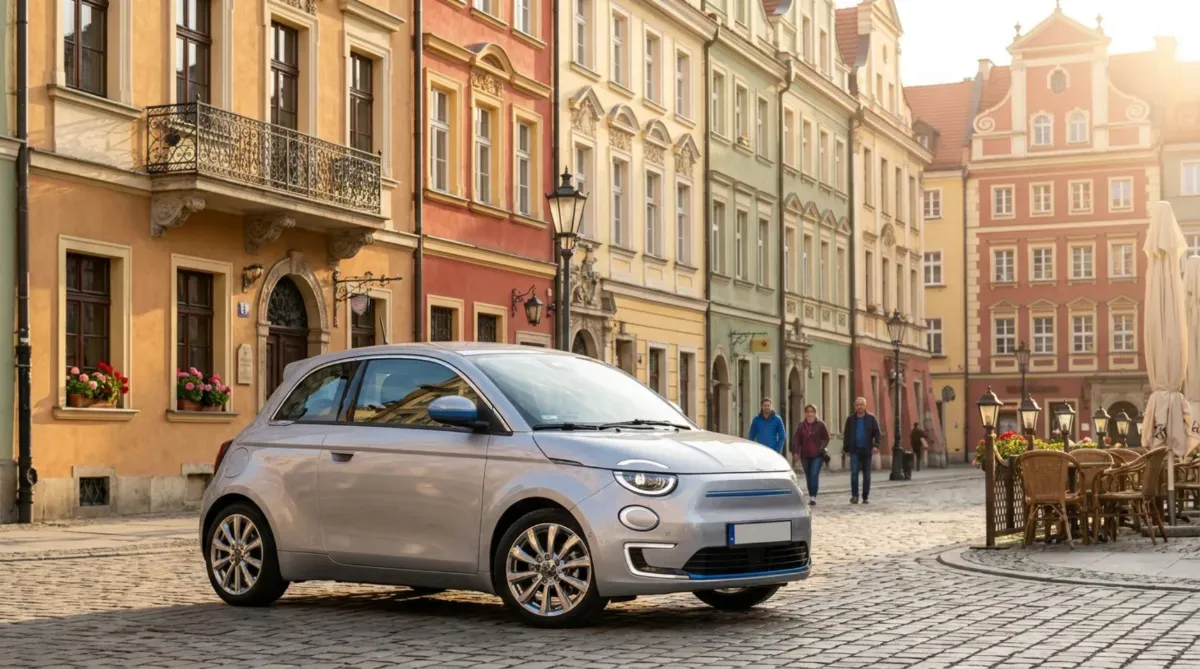
For budget-conscious travelers or those navigating dense urban centers, mini and economy cars offer practical, fuel-efficient transportation. Their compact footprint makes parking straightforward in historic Polish city centers.
These smaller vehicles consume less fuel and maneuver easily through heavy traffic, keeping travel costs manageable when visiting major destinations like Warsaw, Kraków, or Gdańsk.
Mini Cars: Characteristics and Popular Models
Mini cars represent the entry category in rental fleets, typically featuring four seats, three or five doors, and luggage capacity for two small bags. Representative models include the Toyota Aygo and Hyundai i10. These vehicles offer high fuel efficiency and low daily rental rates, making them well suited for solo travelers or couples.
While mini cars excel in congested urban areas and compact parking spaces, trunk space is modest. They're best reserved for short urban commutes with light luggage, as their smaller engines and limited rear legroom are less suited for long highway journeys with multiple passengers.
Economy Class: Key Features and Sample Cars
Economy cars provide an upgrade in interior space and luggage capacity over the mini class. Most economy models offer four to five doors, seating for four passengers, and trunk space for one large suitcase and one carry-on bag. Common examples include the Citroën C3 and Ford Fiesta.
This class balances affordability with everyday utility. It comfortably accommodates two to three adults on longer intercity drives or four passengers on shorter trips. Economy models deliver excellent fuel economy, though luggage capacity remains tight when traveling fully loaded.
Ideal Use Cases for Mini and Economy Rentals
Mini and economy vehicles are ideal for city-centric itineraries across Poland. If your schedule focuses on exploring urban centers like Wrocław, Poznań, or Warsaw, smaller vehicles simplify parking in tight spaces. They're also an efficient choice for day trips and short weekend getaways with light luggage.
For younger drivers meeting standard rental age requirements, economy categories often provide the most accessible entry point to flexible mobility solutions.
Compact and Intermediate Rental Cars: Comfort vs. Value
Compact and intermediate vehicles offer a balance of interior space, highway power, and affordability. They provide added passenger legroom and cargo capacity without stepping into premium pricing tiers.
These categories are well suited for intercity travel across Poland's expressways or trips to regional nature reserves, serving both corporate travelers and small families.
What Makes a Car Compact in Poland?
Compact rental cars are versatile medium-sized vehicles, often designed as five-door hatchbacks or small sedans. They comfortably seat up to five passengers with trunk space for two large suitcases and a small bag. Common fleet models include the Ford Focus and Toyota Corolla.
Compact cars feature modern driver-assist systems, solid fuel economy, and sufficient engine performance for confident highway driving. They provide comfortable travel for small families or groups of two to three adults with moderate luggage.
Intermediate Class Options for Business and Leisure
Intermediate (or mid-size) vehicles offer enhanced comfort, larger cabins, and upgraded cabin amenities, making them popular for corporate travel and family road trips. They seat five adults and typically hold two large suitcases alongside two carry-on bags. Representative models include the Toyota Camry and similar mid-size sedans and crossovers.
The primary advantage of the intermediate segment is passenger comfort-especially in the rear seats-combined with a smooth ride on long-distance highways. Their larger size requires slightly more attention when parking in dense city centers, but they provide a dependable platform for extended travel.
Comparing Compact, Standard, and Intermediate Categories
While dimensional differences between compact, intermediate, and standard tiers can appear subtle on paper, they significantly affect passenger comfort and cargo capacity. Compact vehicles prioritize efficiency and maneuverability, making them ideal for light travel.
Intermediate and standard vehicles provide longer wheelbases, improved suspension tuning for highway cruising, and expanded trunk volumes. If your itinerary involves several days of long-distance driving with three or four passengers, intermediate and standard models ensure a relaxed, comfortable journey.
Standard, Full-Size, and Estate (Station Wagon) Cars
When traveling with larger groups, additional luggage, or on extended road trips, standard, full-size, and estate vehicles deliver the space and stability needed for effortless long-distance travel across Poland.
These models offer generous trunk capacity and quiet cabins, eliminating the need to compromise on luggage space or passenger legroom.
Standard vs. Full-Size: Differences and Examples
Standard vehicles are full-featured sedans designed to seat five passengers comfortably while accommodating multiple large suitcases. They provide solid highway performance and ample legroom for all occupants on extended journeys.
Full-size vehicles represent the largest non-SUV passenger sedans available. They feature wider cabins, premium interior materials, and larger trunks than standard or intermediate sedans. Full-size cars are well suited for executive travel or groups of four to five adults who prefer traditional sedan styling over an SUV.
Estate Cars: Extra Luggage Capacity for Travelers
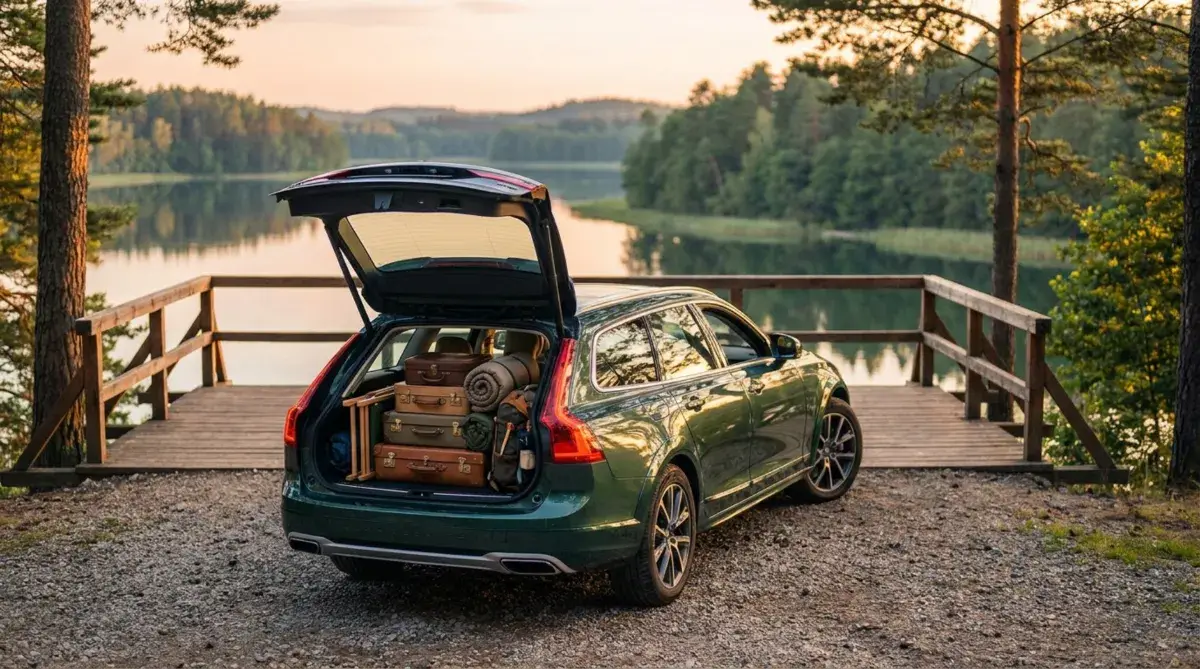
Estate cars (station wagons) are among the most practical rental choices for touring Poland. They retain the driving dynamics and fuel efficiency of a standard passenger car while offering an expanded, wagon-style cargo area that easily accommodates three large suitcases and several carry-ons.
Popular options include the Ford Focus Estate and Hyundai i30 Estate. Station wagons are well suited for family vacations, winter sports excursions, and travelers carrying bulky outdoor gear. While their longer body requires careful parking, they deliver exceptional cargo flexibility.
Premium and Luxury Rental Cars in Poland
If you prioritize superior performance, advanced technology, and high-end cabin appointments, premium and luxury rental vehicles provide a refined driving experience across Poland's highway network.
These tiers feature executive styling, high-output powertrains, and cutting-edge safety features, making them popular for business executives, formal events, and upscale road trips.
Premium Class: Benefits and Available Vehicles
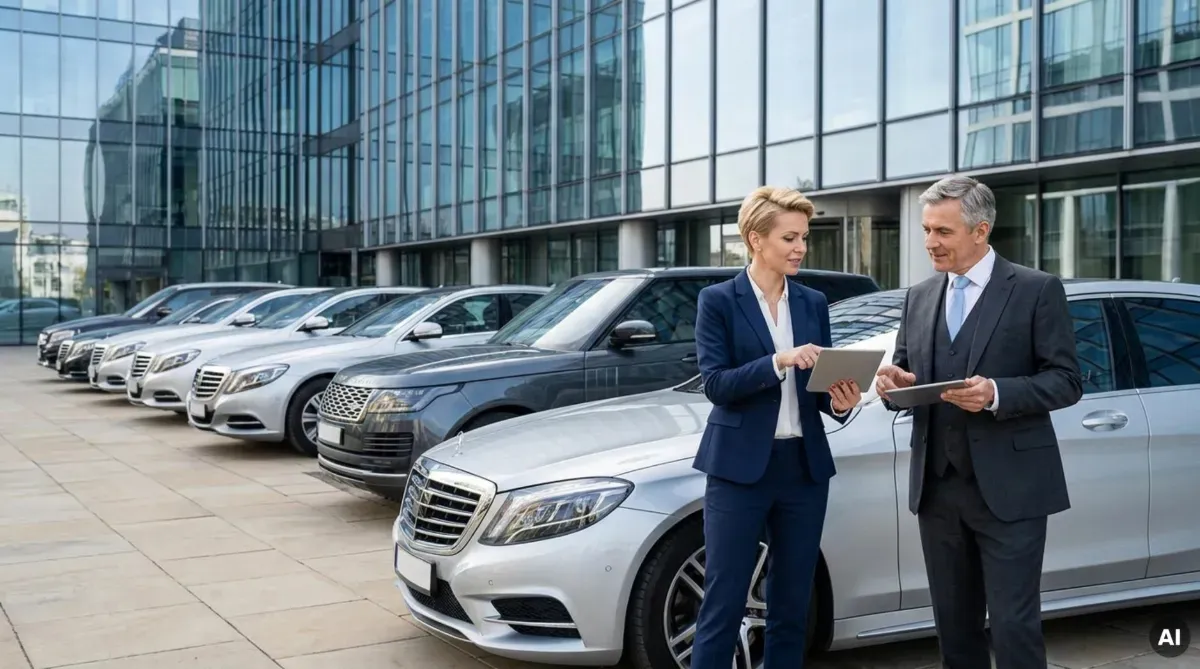
Premium vehicles provide high build quality, refined noise insulation, and advanced driver-assist systems. A standard premium vehicle seats five passengers and accommodates two large suitcases with additional soft bags. Typical models include the Mercedes-Benz C-Class and equivalent executive sedans.
These vehicles offer ergonomic seating, high-resolution digital displays, and adaptive cruise control for relaxed long-distance driving. Premium rentals generally carry specific age requirements (often 25+) and tailored security deposit terms.
Luxury Rentals: Top Brands and Features
Luxury rentals represent top-tier automotive engineering, featuring prestigious marques, powerful engines, and bespoke interior materials. Common models in this category include the BMW 5 Series and Audi A6.
These vehicles deliver superior ride comfort, advanced all-wheel-drive systems, and intuitive infotainment interfaces. They provide reliable, distinguished transportation for executive engagements, VIP transfers, and special occasions across Poland.
When To Consider Premium or Luxury Car Rental?
Upgrading to a premium or luxury vehicle makes sense when your vehicle serves as an extension of your professional image or when you want maximum comfort on an extended driving holiday.
The upgraded acoustic insulation, premium audio, and supportive seating minimize driving fatigue during multi-city itineraries between Warsaw, Poznań, Wrocław, and Kraków.
Family, Group, and Specialized Vehicle Rentals
Traveling with extended families, sports teams, or commercial cargo requires specialized vehicle platforms with dedicated seating and payload configurations.
Poland's rental market provides a broad selection of crossovers, full SUVs, multi-passenger vans, and utility vehicles tailored to group transportation.
SUVs and Crossovers: Size, Utility, and Road Conditions
Crossovers and SUVs provide an elevated seating position, clear road visibility, and generous ground clearance. Compact crossovers, such as the Toyota C-HR or Hyundai Kona, seat five passengers with practical cargo capacity and car-like handling suited for mixed city and highway driving.
Mid-size and full SUVs, like the Suzuki Vitara or larger all-wheel-drive models, offer expanded trunk space for outdoor equipment and enhanced traction on variable road surfaces. While most rental SUVs are configured for on-road comfort rather than technical off-roading, their robust chassis handles gravel roads, mountain passes, and winter conditions dependably.
Minivans and People Carriers: Seating Capacity for Groups
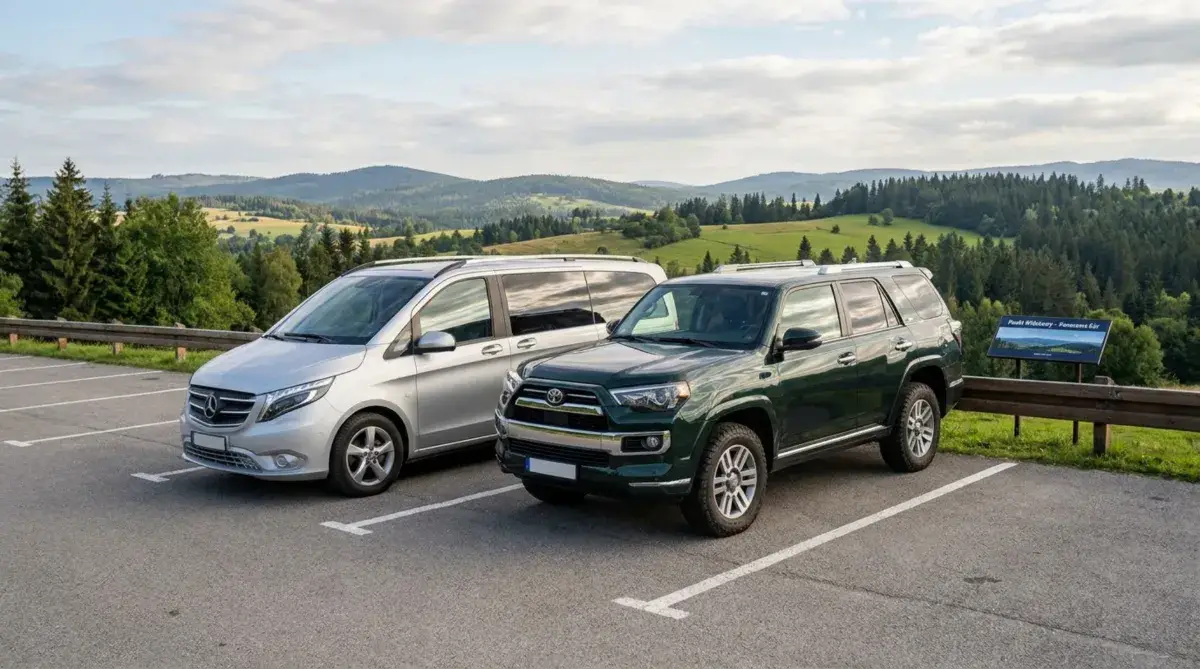
For groups of six or more, multi-passenger vans (minivans and people carriers) eliminate the need to rent multiple cars, keeping travel simple and cost-effective. Available configurations include 5+2, 7-seat, and dedicated 9-seat layouts.
Vehicles like the Volkswagen Touran, Renault Trafic, or Ford Tourneo carry large groups along with four to five full-size suitcases. Dedicated 9-seater passenger vans require only a standard category B driver's license in Poland, making group travel across the country straightforward.
Cargo Vans and Delivery Trucks: Business and Moving Solutions
Commercial mobility solutions address business logistics, equipment transport, and residential moving needs. Fleet options range from compact urban delivery vans to large panel vans (such as L3H2 and L4H2 configurations).
Reliable commercial vehicles like the Ford Transit provide high cargo payloads, wide rear loading doors, and practical tie-down points, offering flexible rental options for commercial and private tasks alike.
Unique and Niche Rental Car Types
Specialized vehicle categories cater to scenic holiday driving and demanding terrain outside standard urban centers.
Convertibles and Sports Cars for Special Occasions
Convertibles provide an open-air driving experience during Poland's warm summer months. These vehicles typically seat two to four passengers with streamlined cargo space suited for weekend bags, making models like the Ford Mustang popular for scenic coastal routes along the Baltic Sea.
4x4 Rentals for Off-Road Trips
For travelers heading into rugged terrain, rural farmlands, or unpaved forestry access roads in southern Poland, true four-wheel-drive vehicles provide dedicated low-range gearing and high ground clearance. Models like the Dacia Duster 4x4 or Toyota Land Cruiser deliver dependable traction where standard sedans cannot go.
Fuel Types, Transmission, and Car Features
Choosing the correct powertrain and onboard specifications ensures your rental fits your driving habits and budget.
Petrol, Diesel, Hybrid and Electric Rental Options
Petrol engines are standard across most vehicle categories, providing smooth performance for mixed city and highway driving. Diesel vehicles remain highly efficient for long-distance highway travel, reducing refueling stops on cross-country journeys.
Hybrid and battery-electric vehicles (EVs) are increasingly common across Poland's urban hubs. Hybrids optimize fuel consumption in stop-and-go city traffic without requiring plug-in charging, while modern EVs deliver quiet, zero-emission travel supported by an expanding nationwide network of fast chargers.
Automatic vs. Manual Transmission in the Polish Market
Manual transmissions remain widely used in Poland and are standard across many entry-level vehicle classes. However, modern automatic transmissions are widely available across all categories, from compact cars to luxury SUVs.
If you're accustomed to driving an automatic, selecting an automatic transmission during the booking process ensures smooth handling in dense traffic and on unfamiliar roads.
Luggage Space, Seats, and Onboard Amenities
Before confirming your reservation, review vehicle capacity against your planned luggage. Modern fleet vehicles come equipped with essential amenities, including air conditioning, modern infotainment with smartphone connectivity (Apple CarPlay and Android Auto), and standard safety sensors.
Additional equipment options-such as certified child safety seats, dedicated GPS units, and additional driver coverage-can be selected during simple and convenient booking to tailor the vehicle to your journey.
Choosing the Right Car for Your Needs in Poland
Selecting the right vehicle involves balancing your itinerary, travel party, seasonal conditions, and comfort preferences.
Rental Considerations: City vs. Country Travel
Urban exploration in cities like Kraków, Warsaw, and Gdańsk benefits from the agile handling and easy parking of mini, economy, or compact cars. For itineraries covering Poland's modern motorway network (such as the A1, A2, and A4) or mountainous southern regions like the Tatras, larger sedans, estate cars, and SUVs deliver superior stability and passenger comfort.
Seasonal Factors: Winter Driving and Summer Road Trips
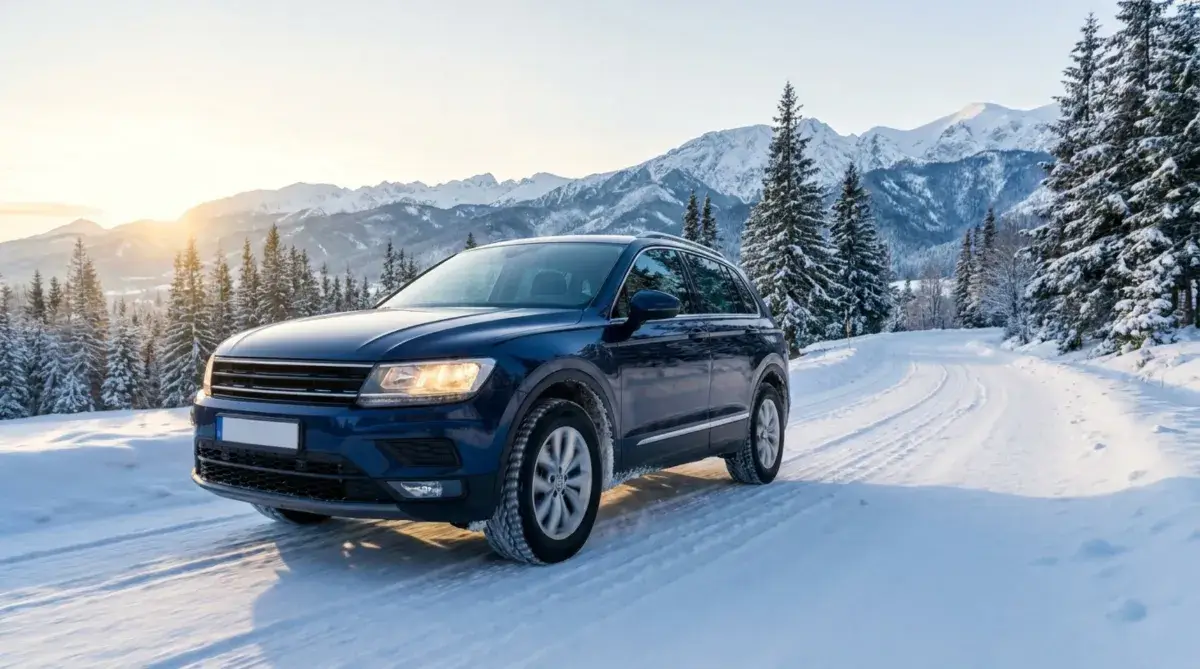
Poland experiences distinct seasons that influence vehicle selection. During winter months (November through March), ensure your rental is equipped with certified winter tires and consider all-wheel drive if traveling to highland regions like Zakopane. Summer travel is ideal for convertibles, estate cars, and well-equipped SUVs with multi-zone climate control.
Matching Your Budget and Comfort Preferences
To secure the best balance of value and comfort, reserve your vehicle in advance and review transparent rental terms with no hidden fees. Consider total travel costs, including fuel efficiency, mileage allowances, and comprehensive insurance options, so you can travel with confidence.
[Explore long-term rental options]
Frequently Asked Questions about Rental Car Types in Poland
Here are clear answers to common questions about vehicle categories and rental policies in Poland.
What is the difference between full-size and standard cars?
While both categories comfortably seat five passengers, full-size vehicles feature larger exterior dimensions, more generous rear legroom, and expanded trunk space compared to standard sedans, providing extra comfort on long-distance trips.
How can I guarantee automatic transmission?
Select the automatic transmission filter during your online reservation and verify that the third letter of the vehicle's ACRISS code is 'A' (Automatic), 'B' (Auto 4WD), or 'D' (Auto AWD). This ensures your booking is confirmed specifically for an automatic model.
Can I choose a specific car model or color?
Standard car rental bookings guarantee a vehicle category and specification level (e.g., Compact Automatic with AC) rather than an exact model or paint color, following the industry "or similar" standard. Specific vehicle guarantees are generally limited to dedicated luxury or specialty fleet tiers.